Tel:
+86 13143444311
Email:sst@szsst88.com
Fax:+0086-755-27322278
Address:Building 9, First Industrial Zone, Tantou Industrial City, Songgang Street, Baoan District, Shenzhen 518105, Guangdong, China
Type:Stainless Torx Screws
Materials:Stainless Steel
Surface treatment:Plain + CD Pattern
Head Type:Low Profile Head
Drive:Torx Recess
Thread:Machine Thread
Point:Blunt
Forming:Single Die Heading + CD Pattern Face
Size:M1 M2 M3 M4 M5 M6 M7 M8 M9 M10 M14
Number:273-2
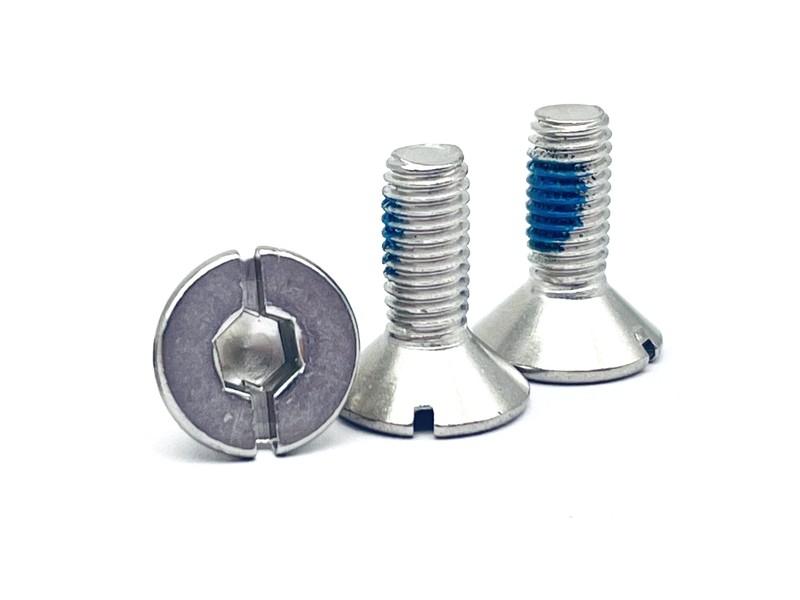
We make stainless Torx screws with a machined CD face, a low profile head, a six-lobe recess and a machine thread, quoting them from M1 to M14 in plain stainless. Ring pitch, head height, recess and thread come from your drawing, and the first article is reviewed against a signed sample in your own housing.
Watch the factory video·Email sst@szsst88.com
ISO 9001:2015 · Manufacturing since 1998 · 8,678+ customers · 89 countries and regions
Made to order – there is no stock catalogue. Each part is produced to your drawing, and production starts after drawing review and first-article approval.
Stainless Torx screws are machine screws with a six-lobe star recess and a finished stainless head, made in the small sizes used inside consumer equipment. On the recorded item the head carries a CD pattern: a set of concentric circular marks machined into the top face, so the screw reads as a bright ring on a dark housing rather than as a fastener. The family is quoted from M1 to M14 with Number 273-2.
CD pattern. Concentric circular marks cut into the head face on a lathe or a special fixture, giving a ringed, reflective finish.
Low profile head. A shallow head that keeps the screw close to the surface, so the decorative face sits at the same level as the product’s trim.
Torx recess. A six-lobe star recess for a Torx bit, cut before the decorative face is finished.
Plain stainless. Passivated and uncoated, so the finish is the metal — and every mark on it is visible.
Most screws are accepted against a drawing and a gauge. Stainless Torx screws with a CD pattern are accepted against a sample and a pair of eyes, because the feature that makes them worth buying is the way light behaves on the head. Nobody measures the lustre of a ring; they compare it with the part that was approved and they decide whether it matches.
On stainless Torx screws that changes what has to be controlled. The geometry is straightforward — head diameter, head height, ring pitch, recess size — but the appearance depends on more than geometry: the sharpness of the cutting tool, the depth of the cut, the direction the tool travelled, the surface left by the operation before it, and the way the part was handled and packed afterwards. Two batches can be dimensionally identical and look different.
The pattern is a second operation. The head is formed first, with the pan or low profile shape and the star recess, and then the face is turned and the rings are cut into it. That order matters: the recess has to be there before the face is finished, because the tool has to run around it, and a recess that is slightly off centre shows up as a ring that is not concentric with the cross — a defect that is invisible in the gauge room and obvious in the hand.
On stainless Torx screws depth is limited by the head. A low profile head is shallow, so the decorative cut can only be a few hundredths deep before it runs out of material or breaks through into the recess. That is the reason a decorative screw and a thin head pull against each other: the pattern needs material to cut, and the design wants the head low.
The stainless body is what makes the finish work. There is no coating to chip or to level out the surface, so the rings are the alloy itself, and they stay as cut. The other side of that is that a scratch cannot be hidden, and a part that is handled carelessly after finishing is scrap — which is why the last operation on this part is usually packing rather than machining.
The recorded range is M1 to M14, covering M1, M2, M3, M4, M5, M6, M7, M8, M9, M10 and M14. Custom lengths up to 2,000 mm are subject to DFM review after drawing submission. For stainless Torx screws with a decorative face the quotation carries head diameter, head height, ring pitch and recess size, because the head is the part that is seen.
| Item | How it is defined | What we control |
|---|---|---|
| Head | Low profile, flat face | Head diameter and height |
| CD pattern | Concentric rings on the face | Ring pitch, depth and direction |
| Recess | Torx, six-lobe star | Recess size and concentricity |
| Thread | Machine thread | Pitch and length, gauged per batch |
| End | Blunt, chamfered | Chamfer cut, not deburred |
| Finish | Plain stainless, passivated | Surface condition and passivation |
Ring pitch is the number that decides how the part looks at arm’s length. Fine rings read as a smooth bright surface and show a fingerprint; coarse rings read as a machined detail and hide small marks. It is a cosmetic parameter, and it belongs on the drawing only if the sample can be matched to it.
Head height is the constraint on everything else. A low head limits the pattern depth and the recess depth at once, and the two compete for the same material. Where the design favours a very low head, the pattern has to be shallow and the recess short, and the part becomes more sensitive to a worn bit at assembly.
Three features define this part: the CD pattern, the low head and the star recess. The first is the reason for the part, the second puts it at the level of the product’s trim, and the third is the drive that has to be cut before the finish.
| Feature | What it gives | What it costs |
|---|---|---|
| CD pattern | A decorative, reflective head | Judged by eye; must match a sample |
| Concentric rings | Bright, directional finish | Shows fingerprints and fine scratches |
| Low profile head | Sits level with the trim | Little depth for pattern and recess |
| Torx recess | Clean drive on a small head | Exact bit required; no cross to fall back on |
| Plain stainless | No coating to chip or level | Every handling mark is permanent |
On stainless Torx screws the value of the pattern is that it turns a fastener into a detail. On a laptop, a controller or a small appliance the screw is one of the few pieces of metal a user touches, and a ringed face catches the light in a way that a plain head does not. That is why the part is specified at all: it is a design element that happens to hold something together.
The cost is that the same property makes the part unforgiving. Fingerprints on a bright ringed face read as smudges, a scratch across the rings breaks the pattern, and a batch that is a little duller than the sample is a complaint rather than a measurement. The part has to be handled as a cosmetic component, not as hardware.
The recorded finish is plain stainless with the CD pattern cut into the face, passivated afterwards. Passivation removes free iron from the cut surface without changing its depth, so the rings keep the geometry that was machined and gain the corrosion resistance of the alloy. Nothing is added, which is what the appearance depends on.
| Option | How it looks | Effect on the head | Typical use |
|---|---|---|---|
| CD pattern, plain | Concentric rings, bright | Rings as cut; passivated after | Consumer electronics |
| CD pattern, polished | Higher gloss, mirror rings | More handling-sensitive | Premium visible fixings |
| Plain turned face | Fine turning marks | No rings; softer read | Hidden or low-visibility joints |
| Bead blasted face | Matte, even | Hides small marks | Industrial housings |
| Black oxide | Dark, low reflection | Pattern reads in relief only | Dark internals |
Where the product is dark, the pattern on stainless Torx screws can be a contrast feature or an invisible one, depending on the light. That is a decision for the designer rather than for the screw maker, but it has to be made with the sample in the environment it will be seen in — the same part looks different on a white bench and inside a black housing.
The one finish to avoid on this part is a coating thick enough to soften the rings. A plating that fills the cut turns a crisp decorative face into a dull one, and on stainless there is no need for it: the alloy already resists corrosion, and the pattern is the point.
Three assemblies where stainless Torx screws with a decorative face are the fixing:
| Where it sits | The screw closes a housing where the fixing is visible on the outside and the head has to read as part of the design. |
| When it goes wrong | A batch that is duller or coarser than the sample, or a scratch on one head, fails the cosmetic inspection. |
| Why it happens | The part is visible, it is touched, and it is judged against a sample rather than a drawing. |
| What we control | Face compared to the approved sample, rings checked for concentricity with the recess. |
| Where it sits | The screw fixes a trim piece or a panel where a bright ringed head is part of the product’s finish. |
| When it goes wrong | A recess that is off centre makes the rings look wrong, and handling marks show on the polished face. |
| Why it happens | The trim is visible, the head is low, and the volume is high enough that consistency matters. |
| What we control | Ring pitch and depth checked, packaging trialled for surface protection. |
| Where it sits | The screw holds a plate or a window frame where the fasteners are on show and the surface has to stay clean. |
| When it goes wrong | Fingerprints and small scratches on a bright ringed face are the most common complaint. |
| Why it happens | The face is visible, it is cleaned in service, and the head is at surface level. |
| What we control | Finish inspected under the agreed lighting, first article reviewed in the housing. |
Four reasons that matter on a part judged by appearance, each tied to what the drawing has to prove:
|
Approved sample is the standard
A physical sample is kept with the drawing, because ring pitch and lustre cannot be described in numbers well enough to match batch to batch. Basis: Signed sample held with the drawing. |
Pattern cut after heading, before passivation
The head and the recess are formed first, the decorative face is turned and cut, and the parts are passivated as a batch, so the rings keep their geometry. Basis: One route with the finish last. |
|
Face checked against the sample, under fixed light
The first article is compared with the approved sample under the lighting the customer will use, because the failure mode is visual, not dimensional. Basis: Visual check under agreed lighting. |
Packed to protect the face
The parts are packed to stop heads rubbing together, because a scratched ringed face cannot be recovered and the whole part becomes scrap. Basis: Handling and packing specified. |
Shi Shi Tong forms these stainless Torx screws from stainless wire on single-die headers that form the low head and the six-lobe recess, rolls the machine thread, turns the decorative CD face on the finished head and passivates the parts. The first article of every run is measured on the head and recess and then compared with the approved sample under the agreed lighting before the batch continues.


|

|
On stainless Torx screws the face operation is where the part is made or lost. The tool that cuts the rings wears, and as it wears the cut gets shallower and duller; a batch cut with a worn tool is dimensionally fine and visibly different. The tool is changed on count rather than on failure, and the first part after each change is compared with the sample.
What decides whether stainless Torx screws pass is the face, the concentricity of the recess, the thread and the alloy. The inspection agreement covers those, and the criteria come from the drawing and the sample.

Face and recess on the projector |

Thread gauged per batch |

Hardness checked on the wire |

Salt-spray testing of the grade |
On stainless Torx screws the face is checked two ways: on the projector for ring pitch, depth and concentricity with the recess, and by eye against the sample for lustre and cleanliness. Both are needed. A face can pass the projector and fail the eye, and that is the defect that generates a complaint on this part.
The thread is gauged per batch, the recess is driven with the production bit, and the alloy is confirmed on the certificate. A final visual sort under the same lighting conditions removes the parts with handling marks before packing, because a single marked head in a visible position is enough to reject the batch in the customer’s hands.
Every shipment of stainless Torx screws is traceable to the wire it was made from and to the passivation batch. The grade and heat number are recorded on the material certificate supplied with the parts, and the inspection records follow the criteria agreed on the drawing and the sample.

ISO 9001:2015 |

RoHS test report |

Registered trademark |

Patent: security screw and driver |
With each batch we supply the material certificate, the inspection record for the criteria on the drawing and, where it is listed, the third-party report for the grade or the passivation. On a decorative part the approved sample is the other document that travels with the batch record, so a repeat order can be compared with the part that was accepted.
More than 8,678 customers in 89 countries and regions have ordered from Shi Shi Tong; 87% of orders come from repeat customers and 56% through referrals. Most projects follow the same route: drawing review, first-article approval, then batches checked against that sample. On a decorative screw the first article is reviewed in the customer’s own housing, because the appearance depends on the environment it is seen in. Buyers visit during the process to review samples and to see how the heads are finished.
|
8,678+
customers served
|
87%
of orders from repeat customers
|
56%
of orders through referrals
|
89
countries and regions shipped to
|
Buyers and quality engineers visit for sample review, process discussion and supplier audits; the visit is arranged around production so the face-turning cell and the passivation line can be seen on the day the parts run.

Customer group visit – sample review |

Customer group visit – process discussion |

Customer group visit – factory tour |

Customer visit – project kick-off |

Danish customer – drawing review |

Industry exhibition – meeting customers |
A set of concentric circular marks cut into the head face, giving a ringed reflective finish. It is a decorative operation on the face, done after the head and recess are formed.
Because the part is judged by appearance. Ring pitch and lustre cannot be fully described in numbers, so a signed sample is what a batch is compared against.
Tool wear. A duller tool cuts shallower rings and a duller face; the part still measures correctly, which is why tool changes are counted rather than triggered by failure.
It can, but a plate that fills the cut softens the rings. On stainless there is no need: the alloy protects itself and the pattern is the point.
Because the eye reads the two together. A recess that is slightly off centre leaves rings that are not concentric with the star, which looks like a defect even when every dimension is in tolerance.
Head diameter and height, ring pitch and depth, recess size, thread size and length, the alloy, and a note that the appearance is judged against the approved sample.
How a stainless Torx screw project runs from drawing to repeat delivery:
|
1
Send the drawing and the reference finish
|
→ |
2
Ring pitch, head height and recess agreed
|
→ |
3
First article reviewed in your housing
|
→ |
4
Batch production and repeat orders
|
Each step is confirmed with you before the next one starts; the approved sample and the drawing revision from the first article are what repeat orders are checked against.
For a quotation, send the drawing with the head diameter and height, the ring pitch and depth, the Torx recess size, the thread size and length, and a reference sample or photo of the finish you want.
|
Head diameter
|
Head height
|
Ring pitch
|
|
Torx size
|
Thread size
|
Finish reference
|
Sending a drawing? The form below does not take attachments. Email the PDF, DXF or STEP file to sst@szsst88.com with the part name and quantity in the subject line – the drawing is reviewed and a quotation follows.

 +86 13143444311
 sst@szsst88.com