Tel:
+86 13143444311
Email:sst@szsst88.com
Fax:+0086-755-27322278
Address:Building 9, First Industrial Zone, Tantou Industrial City, Songgang Street, Baoan District, Shenzhen 518105, Guangdong, China
Type:Stainless steel thumb screw
Materials:Stainless steel
Surface treatment:Plain (cleaned)
Head Type:Knurled cap head (straight knurl)
Drive type:None (no slot; per drawing)
Thread:Machine thread
Forming:CNC turning from bar with knurled head
Number:1349
We manufacture stainless steel thumb screws with a straight-knurled cap head and no slot, turned from bar and hand-tightened, in 303, 304 or 316 to drawing. Head diameter across the knurl, knurl pitch, head height, thread class and finish are made to your drawing.
Watch the factory video·Email sst@szsst88.com
ISO 9001:2015 · Manufacturing since 1998 · 8,678+ customers · 89 countries and regions
Made to order – there is no stock catalogue. Each part is produced to your drawing, and production starts after drawing review and first-article approval.
A stainless steel thumb screw is a machine screw with a knurled head that is turned by hand, without a driver. The one on this page is turned from stainless bar with a straight-knurled cap head, no slot, a plain cleaned finish and a machine thread, so it is chosen where a joint has to be opened and closed by hand and the parts see wash-down or damp air.
Knurled cap head. The head is a cylinder with straight knurl ridges cut around it, so a thumb and forefinger can grip and turn it. The knurl is the drive: there is no slot, no cross and no socket, and the grip comes from the ridges rather than from a tool.
No slot. A stainless steel thumb screw is deliberately tool-free. That suits access panels, guards and covers that are opened often, and it also removes the recess where dirt or cleaning fluid would collect.
Stainless and plain. The body is stainless, turned and cleaned, with no coating to build on the knurl or the thread. The alloy supplies the corrosion resistance, so a scratch on a knurl ridge does not expose a different metal underneath.
Together these decide the fit: the head gives enough grip for hand torque, the knurl survives handling, and the thread engages the tapped hole without galling in service.
This stainless steel thumb screw is turned from bar in the grade on the drawing, with 303, 304 and 316 the common choices. The bar arrives with its mill certificate, so the heat number stays traceable to the parts.
The knurled cap head is turned and knurled in the same set-up as the shank, and the cross knurl ridges are cut with a knurling tool before the thread is produced. A head that is knurled in a second operation can sit off the screw axis, and on a hand-turned part that shows as a wobble when the thumb turns it.
Knurling raises the outside diameter of the head. The head diameter on the drawing is therefore read on the knurled part, not on the smooth blank that went into the tool, and the first article is measured after knurling.
The thread is a machine thread, cut or rolled before cleaning. Plain stainless is the standard finish because it adds no thickness to the knurl or the thread, and passivation restores the chromium film after turning.
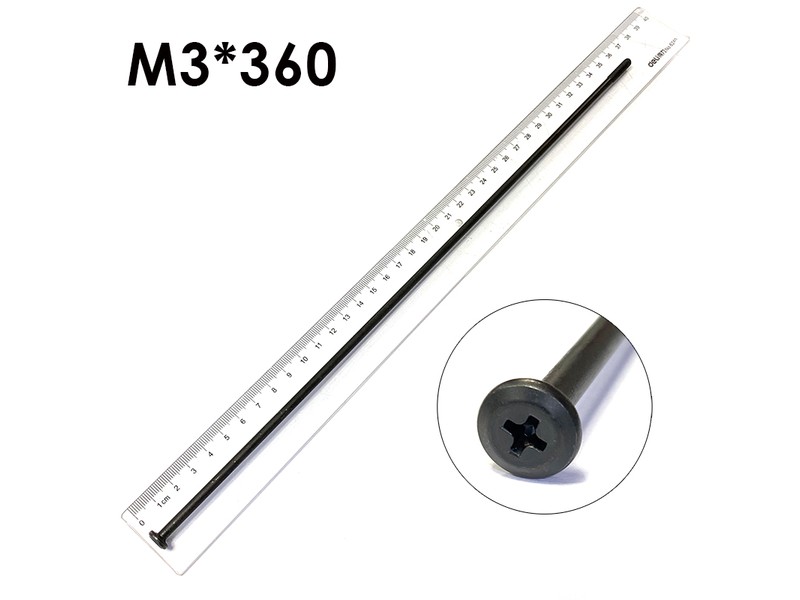
Stainless steel thumb screws of this type are quoted from M3 to M10 and in lengths up to 80 mm, with the knurled head measured on the projector and the thread gauged. Where a long version is required, custom lengths up to 2,000 mm are subject to DFM review after drawing submission.
| Item | How it is defined | What we control |
|---|---|---|
| Head diameter | The knurled cylinder a hand grips | Measured after knurling on the first article |
| Head height | The height the thumb turns against | Checked on the projector |
| Knurl | Straight ridges, pitch and depth | Checked on the projector and against the sample |
| Thread size and length | Machine thread to the drawing | Gauged per batch |
| Shank and length | Plain or threaded section below the head | Measured from the bearing face |
| Bearing face | The face that seats on the panel | Checked for flatness on the first article |
Each size is quoted against the hand that will turn it. A head that is large enough for a bare hand may be too small for a gloved one, and the knurl pitch and head diameter are reviewed with the access the operator has.
Head diameter is measured across the knurl ridges, and the total length from the top of the head. The batch is checked on the features the process can drift on: knurl diameter, head height and thread class.
The straight knurl is what makes a stainless steel thumb screw work by hand. The ridges run along the head axis, so the grip is positive in the turning direction and the thumb does not slip when the joint seats. A diamond knurl grips in both directions but is harder to clean; a straight knurl leaves straight grooves that a cloth can follow.
Pitch and depth are set on the drawing. Too coarse and the ridges cut into a gloved hand; too fine and the grip disappears once the head is wet or oily. The knurl is cut with the tool set to the drawing pitch, and the first article is compared with the accepted sample by feel as well as on the projector.
The head is flat on top. A flat top gives the thumb a face to press against while turning and keeps the part low, and it also gives the knurl a clean edge to run out into. A burr at that edge is the defect that shows first, because it is exactly where the hand sits.
Because there is no drive, the torque the joint sees is hand torque. That is why the thread and the head are reviewed together: a thread that needs more torque than a hand can give will not seat, and a knurl that is too fine will slip before the joint is tight.
This stainless steel thumb screw is supplied plain and cleaned, with no coating. That matters on a knurled head: a coating builds in the grooves, rounds the ridge edges and changes the feel of the grip, and on a part that is turned by hand the feel is part of the function.
| Finish | How it protects | Effect on knurl and thread | Typical use |
|---|---|---|---|
| Plain, cleaned stainless | Alloy resists corrosion; passivation restores the film | No build-up; grip unchanged | Wash-down, food and lab equipment |
| Electropolished | Surface levelled, chromium enriched | Ridge edges softened; grip re-checked | Hygienic and visible parts |
| Bead blasted | Uniform matte surface | Ridges dulled; grip re-checked | Parts where glare matters |
| Black oxide (carbon steel) | Conversion coating, minimal thickness | No measurable build-up | Indoor parts where black is required |
| Zinc plated (carbon steel) | Sacrificial zinc layer | Build-up in grooves; grip and thread checked | Carbon steel equivalents |
Salt-spray exposure is agreed per project and written on the drawing; plain stainless is tested in the condition it ships in. On a hand-turned part the finish is also judged by feel: a knurl that has been over-polished no longer grips, even if it measures correctly.
Packing protects the knurl. Screws are packed so the heads do not rub against each other, and the label carries the batch, the material heat and the finish reference.
Three assemblies where a stainless steel thumb screw is chosen so the joint opens by hand, and what the screw has to do instead:
| Where it sits | The screw holds a guard or a cover that is taken off for cleaning, in an area that is washed down. |
| When it goes wrong | A slotted head collects food residue, and a carbon steel screw rusts at the knurl within weeks. |
| Why it happens | The area is washed, the cover comes off daily, and no tool is kept at the line. |
| What we control | Stainless grade and passivation recorded, knurl left cleanable, and the thread gauged per batch. |
| Where it sits | The screw closes a panel that a gloved hand opens, where a tool would slow the work or shed particles. |
| When it goes wrong | A knurl that is too fine slips in a glove, and a recessed drive traps dust and cleaning fluid. |
| Why it happens | The enclosure is opened often, the operators wear gloves, and the surface is wiped down. |
| What we control | Head diameter and knurl pitch agreed for a gloved grip, and the finish checked for cleanability. |
| Where it sits | The screw fixes a panel that is opened for adjustment, where a tool-free fastener saves time on the floor. |
| When it goes wrong | A knurled head that is too small cannot be turned by hand once it seats, and a burr at the head edge cuts the operator. |
| Why it happens | The panel is opened during set-up, the screw stays captive in the panel, and the joint is hand-tightened. |
| What we control | Head diameter and knurl depth checked, the edge deburred, and the thread matched to the tapped hole. |
Four reasons that matter on a stainless steel thumb screw with a knurled head, each tied to what the drawing has to prove:
|
Knurl and hand torque reviewed together
The knurl pitch, the head diameter and the thread are reviewed before the bar is cut, so a head that cannot be gripped or a thread that needs more than hand torque is raised first. Basis: Knurl, head and thread reviewed before turning. |
Turned and knurled in one set-up
The head, the knurl and the bearing face are produced in one set-up, so the knurl runs true to the screw axis and the part turns without a wobble. Basis: Head and knurl turned on the same axis. |
|
Knurl measured after it is cut
The head diameter is measured across the knurl ridges and the profile checked on the projector, so the part that passes is the part the hand grips. Basis: Knurl diameter and profile checked on the first article. |
First article to repeat production
The first article fixes the drawing revision, material heat, knurling tool and turning set-up; repeat orders are compared against that record. Basis: First article signed off before the batch is released. |
Shi Shi Tong turns these stainless steel thumb screws from bar: the bar is cut and faced, the cap head is turned, the straight knurl is cut with the knurling tool, the thread is produced and the head edge is deburred, all on one route so the knurl stays on the screw axis. The first part of every run is measured on the head and gauged on the thread before the batch continues.
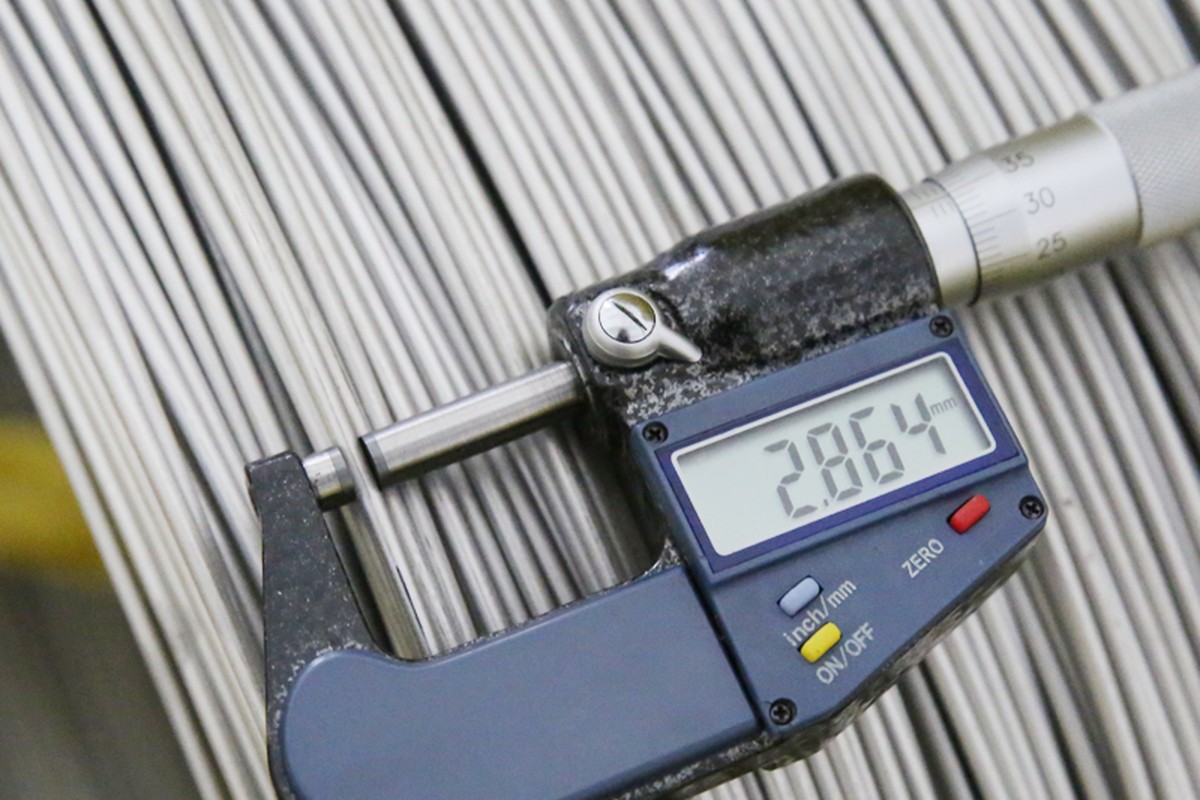
Bar checked before the first cut |
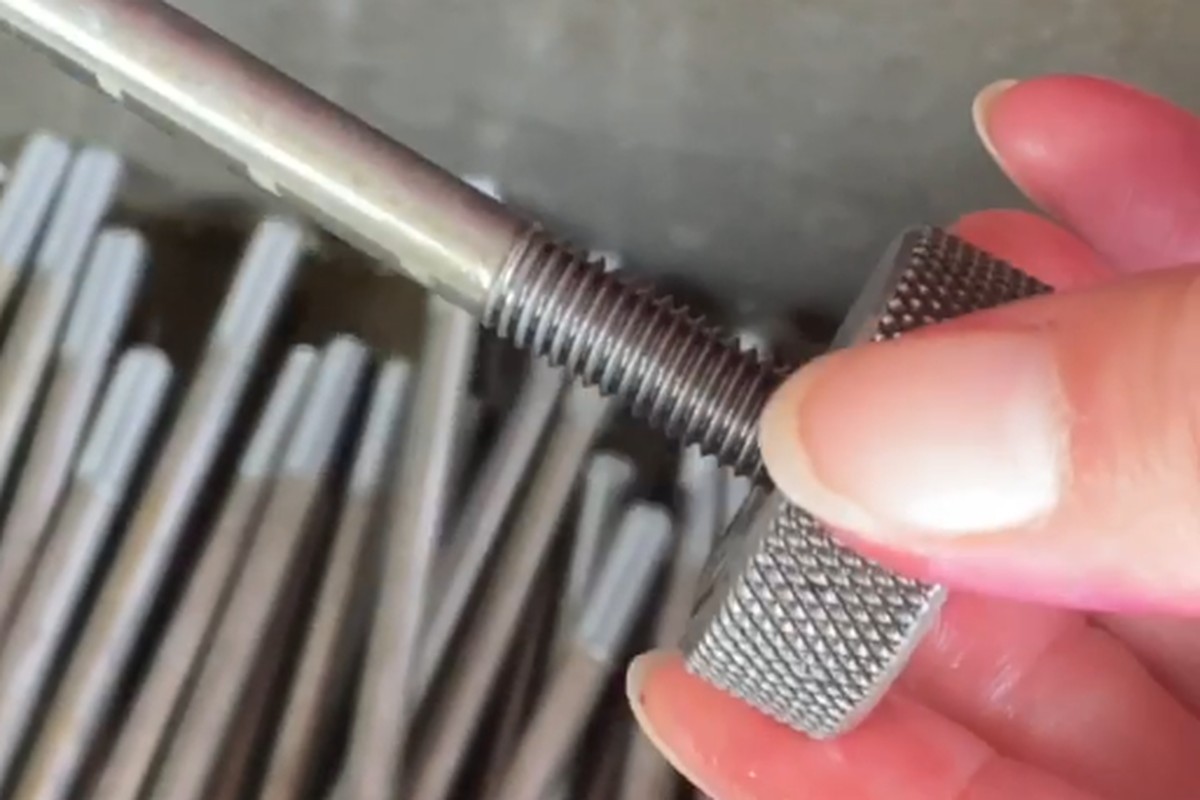
Threads gauged after cleaning |
Between runs the lathe is set to the drawing head and the knurling tool to the pitch; the first part goes to the projector before the run continues, and the setting is recorded. Knurled heads are packed so they do not rub against each other before they reach the assembly.
What decides whether a stainless steel thumb screw passes is not the shine of the knurl: it is the head diameter across the ridges, the knurl pitch and depth, the head height, the bearing face and the thread class. The inspection agreement covers those, and the criteria come from the drawing.

Thread gauging against GO/NO-GO gauges |

Knurl, head height and diameter on the projector |

Hardness testing where the drawing requires it |

Salt-spray testing of the stainless part |
Each batch is recorded against the drawing revision: knurl and head from the first article, the bearing face checked, and the thread gauged per batch. If a gauge or the knurl check fails, the parts back to the last good setting are held and re-checked.
Third-party test reports, when the drawing specifies them, are raised with the batch and filed against the same batch number as the dimensional record.
Every stainless steel thumb screw shipment is traceable to the bar it was made from. The grade, heat number and standard are recorded on the material certificate supplied with the parts, and the inspection records follow the criteria agreed on the drawing.

ISO 9001:2015 |

RoHS test report |

Registered trademark |

Patent: security screw and driver |
With each batch we supply the material certificate, the inspection record for the criteria on the drawing and, where it is listed, the third-party report for the material or the finish. The documents carry the drawing revision and the batch number, so the paperwork can be matched to the parts.
More than 8,678 customers in 89 countries and regions have ordered from Shi Shi Tong; 87% of orders come from repeat customers and 56% through referrals. Most projects follow the same route: drawing review, first-article approval, then batches checked against that sample. Knurled heads are approved by hand as well as on the projector, because grip is what the part is for. Buyers visit during the process to review samples and to see how the heads are turned and knurled.
|
8,678+
customers served
|
87%
of orders from repeat customers
|
56%
of orders through referrals
|
89
countries and regions shipped to
|
Buyers and quality engineers visit for sample review, process discussion and supplier audits; the visit is arranged around production so the turning cells and the passivation line can be seen on the day the parts run.

Customer group visit – sample review |

Customer group visit – process discussion |

Customer group visit – factory tour |

Customer visit – project kick-off |

Danish customer – drawing review |

Industry exhibition – meeting customers |
It is a machine screw with a knurled head that is turned by hand instead of with a driver. This one has a straight-knurled cap head, no slot, a machine thread and a plain cleaned stainless finish.
Straight ridges give a positive grip in the turning direction and leave straight grooves that are easier to clean. A diamond knurl grips in both directions but traps more dirt, which matters on wash-down equipment.
As much as a hand can give and the thread can hold. The knurl, the head diameter and the thread are reviewed together, so the joint seats at hand torque without the grip slipping or the thread galling.
Stainless steel thumb screws of this type are quoted from M3 to M10 and in lengths up to 80 mm. Where a long version is required, custom lengths up to 2,000 mm are subject to DFM review after drawing submission.
The grade comes from the drawing, with 303 for machinability, 304 for general service and 316 where chlorides or wash-down are involved. The grade and heat number are on the material certificate.
Head diameter across the knurl, head height, knurl pitch and depth, thread size and length, shank and total length, material, finish and the hand or glove access at assembly.
How a stainless steel thumb screw project runs from drawing to repeat delivery:
|
1
Send the drawing or sample
|
→ |
2
Knurl and head review
|
→ |
3
First article approval
|
→ |
4
Batch production and repeat orders
|
Each step is confirmed with you before the next one starts; the drawing revision from the first article is what repeat orders are checked against.
For a stainless steel thumb screw quotation, send the drawing with the head diameter across the knurl, head height, knurl pitch and depth, thread size and length, shank and total length, material and finish, and how the screw is turned by hand at assembly.
|
Head diameter across knurl
|
Head height
|
Knurl pitch and depth
|
|
Thread size and length
|
Shank and total length
|
Material and finish
|
Sending a drawing? The form below does not take attachments. Email the PDF, DXF or STEP file to sst@szsst88.com with the part name and quantity in the subject line – the drawing is reviewed and a quotation follows.
Product Name:Stainless steel thumb screw | Flat knurled thumb screws | Thumb screw manufacturers

 +86 13143444311
 sst@szsst88.com