
Tel:
+86 13143444311
Email:sst@szsst88.com
Fax:+0086-755-27322278
Address:Building 9, First Industrial Zone, Tantou Industrial City, Songgang Street, Baoan District, Shenzhen 518105, Guangdong, China
Type:Stainless steel button head socket cap screw, M4 × 230 mm
Materials:Stainless steel
Surface treatment:Plain
Head Type:Button head
Size:M4 × 230 mm
Drive type:Hex socket (Allen)
Thread:Partial (half) machine thread, chamfered end
Forming:Split-die cold heading (one-piece)
Number:1070
We manufacture stainless steel button head cap screws in long lengths, including the recorded M4 x 230 mm part, cold headed in a split die with a hex socket and a partial machine thread. Head diameter, socket depth, thread start and length are taken from your drawing.
Watch the factory video·Email sst@szsst88.com
ISO 9001:2015 · Manufacturing since 1998 · 8,678+ customers · 89 countries and regions
Made to order – there is no stock catalogue. Each part is produced to your drawing, and production starts after drawing review and first-article approval.
A stainless steel button head cap screw is a machine screw with a low domed head and a hex socket drive, made in stainless so the corrosion resistance comes from the alloy rather than from a coating. The recorded item on this page is M4 x 230 mm: a long, slender body formed in one piece by split-die cold heading, with a partial machine thread on the leading section and a chamfer at the end.
Button head. The head is a shallow dome with a flat bearing face underneath. It is lower and rounder than a socket cap head, so it presents a smooth profile on a visible assembly while still taking a socket key.
Hex socket drive. The load goes through six flats inside the head instead of a cross recess, which allows a higher tightening torque on a compact head and keeps the driver from slipping out at an angle.
Long shank, partial thread. At 230 mm the plain shank is the working length: it passes through clearance holes and spacers, and the thread on the leading section engages the tapped hole at the far end.
Together these decide the joint: the domed head sits on the plate, the long shank reaches through the stack, the socket takes the tightening torque, and the partial thread clamps the far end. That is why a stainless steel button head cap screw is specified by head, socket size, thread position and length together rather than by diameter alone.
The body of this stainless steel button head cap screw is stainless wire, with 304 and 316 the common grades and the heat number kept with the batch record. The grade is fixed on the drawing because it decides what the part can survive: a wash-down frame and an indoor fixture are not the same specification even when the screw looks identical.
The button head is upset in a split die that closes around the shank and supports it while the head is formed. On a part this long that support is what keeps the head concentric with the shank and square to the bearing face, which is what stops the head tipping as the socket key is turned.
The hex socket is formed in the same operation. Its depth and its flats are held so a standard key engages fully, because a socket that is too shallow rounds off under torque and a socket that is too deep leaves too little material under the head.
Plain stainless is the standard finish here. Passivation restores the chromium film after forming and deburring without adding thickness, so the socket, the thread and the head keep the dimensions they were measured at, and there is no coating to chip at the head edge.
Stainless steel button head cap screws of this type are quoted in metric sizes and in long lengths; the recorded item on this page is M4 x 230 mm with a partial thread and a chamfered end. Custom lengths up to 2,000 mm are subject to DFM review after drawing submission, because the heading, the thread roll and the packing all change with the length.
| Item | How it is defined | What we control |
|---|---|---|
| Head diameter and height | The dome that bears on the plate | Checked on the projector on the first article |
| Socket size and depth | Hex key engagement in the head | Checked with the matching key on the first article |
| Plain shank diameter | The section that passes through the stack | Measured against the clearance hole on the drawing |
| Thread length and start | Partial thread on the leading section | Measured on the first article, gauged per batch |
| Total length | From the bearing face to the tip | Datum stated on the drawing; measured on the shop plate |
| End chamfer | Lead-in at the tip | Formed to the drawing; checked on the first article |
Each size is quoted against the stack the screw passes through. The plain shank length, the clearance holes and the thread engagement at the far end are reviewed together, because a long screw that runs out of plain shank grips the stack instead of clamping it, and one with too little thread in the tapped hole works loose under vibration.
Total length is measured from the bearing face rather than from the top of the dome, and the thread length from the tip. Those two datums are stated on the drawing because the same nominal length reads differently depending on where it is taken from.
The button head is the feature that decides where this screw can be used. It is a shallow dome with a flat bearing face, so the head sits low on the plate and presents no sharp edge, and the socket sits in the middle of the dome where the material is thickest.
| Parameter | Why it matters on this part | What we control |
|---|---|---|
| Head diameter | Bearing area on the plate | Set from the plate on the drawing; checked on the first article |
| Head height | Low profile on a visible assembly | Measured from the bearing face on the projector |
| Socket size | Key engagement under torque | Matched to the head; checked with the driver |
| Socket depth | Material left under the head | Checked on the first article |
| Thread start | Plain shank clears the stack | Set on the drawing; measured on the first article |
The socket takes an Allen key, and the load is carried on six flats. That is what allows a compact head to take a real tightening torque: on a Phillips recess the bit can cam out once the torque climbs, while a socket key stays engaged as long as the socket is deep enough and the key is the right size.
The key size is part of the drawing, not a workshop choice. A key that is one size small bears on the corners of the hexagon and rounds them, and a key that is one size large will not enter. On a long screw that has to be driven from an awkward position, the socket and the key are matched before the batch runs.
The partial thread is rolled on the leading section, so the plain shank above it can pass through the stack and only the tip engages. The chamfer at the end is the lead-in that lets the thread start in a tapped hole without cross-threading, and it is formed to the drawing rather than left as cut.
This stainless steel button head cap screw is supplied plain and passivated. There is no coating to build on the socket or the thread, so the key still enters to full depth and the thread keeps the class that engages the tapped hole.
| Finish | How it protects | Effect on socket and thread | Typical use |
|---|---|---|---|
| Plain, passivated stainless | Passive film forms in air | No build-up; socket and thread as formed | Fixtures, frames and clean equipment |
| Electropolished | Surface levelled, chromium enriched | A few microns removed; key fit re-checked | Hygienic and visible parts |
| Bead blasted | Uniform matte surface | No dimensional change | Parts where glare matters |
| Black oxide (stainless) | Chemical conversion, thin film | Minimal thickness; socket re-checked | Dark visible parts, dry environments |
| Zinc plated (steel equivalent) | Sacrificial zinc layer | Build-up in socket; key re-checked | Steel parts where cost matters |
Salt-spray exposure is agreed per project and written on the drawing; plain stainless is tested in the condition it ships in. On this part the finish matters most inside the socket and on the thread, because those are the two places where a coating would change whether the key and the tapped hole still fit.
Packing protects the long shank as much as the finish. The parts are packed straight, in tubes or in trays with the shanks supported, and the label carries the batch and the material heat, so a long screw does not take a set between the packing table and the assembly.
Three assemblies where a long stainless button head cap screw is chosen for its head and its reach:
Machine-tool fixtures and modular frames
|
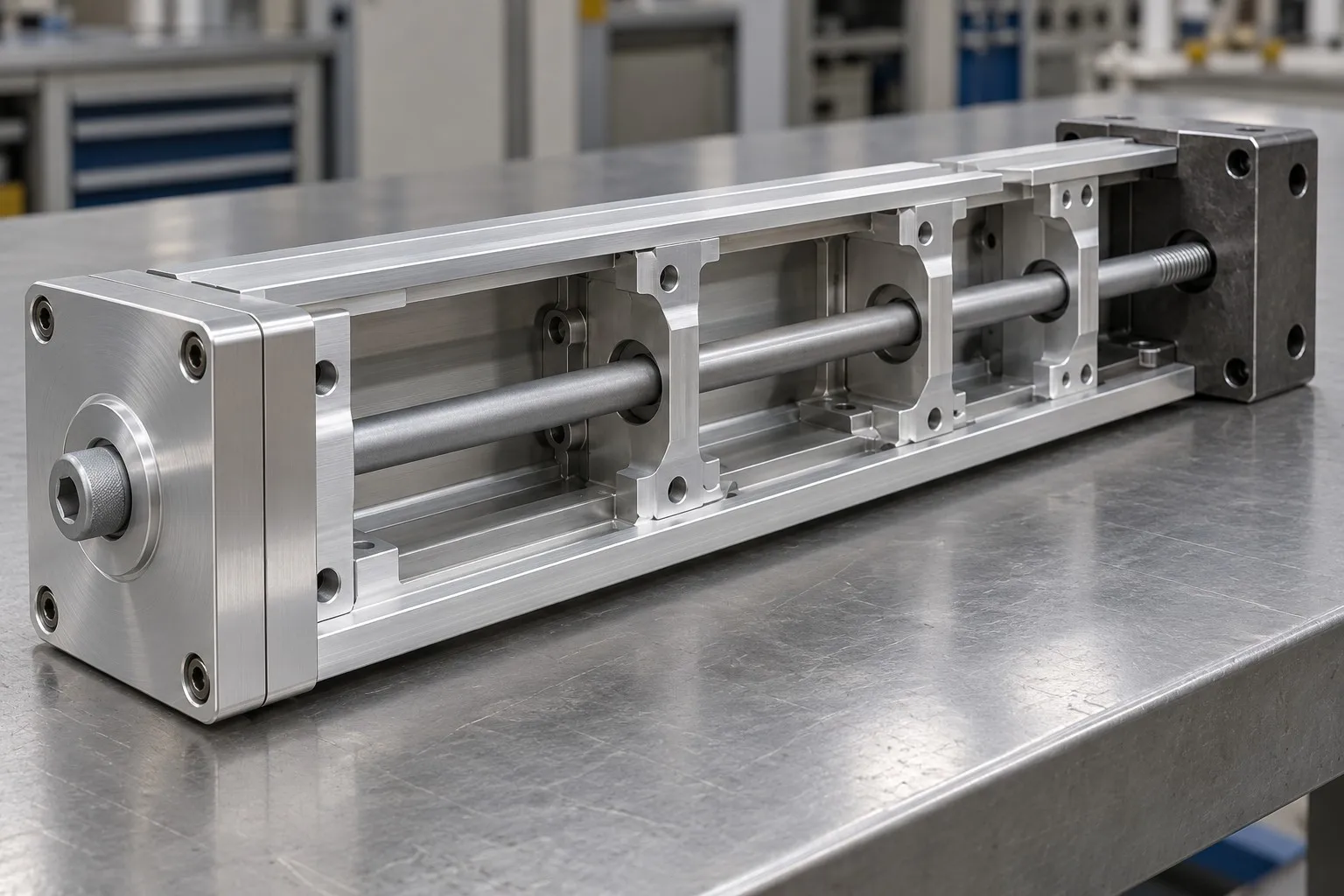
Long button head screws through a machined fixture frame |
Power tools and drive housings
|
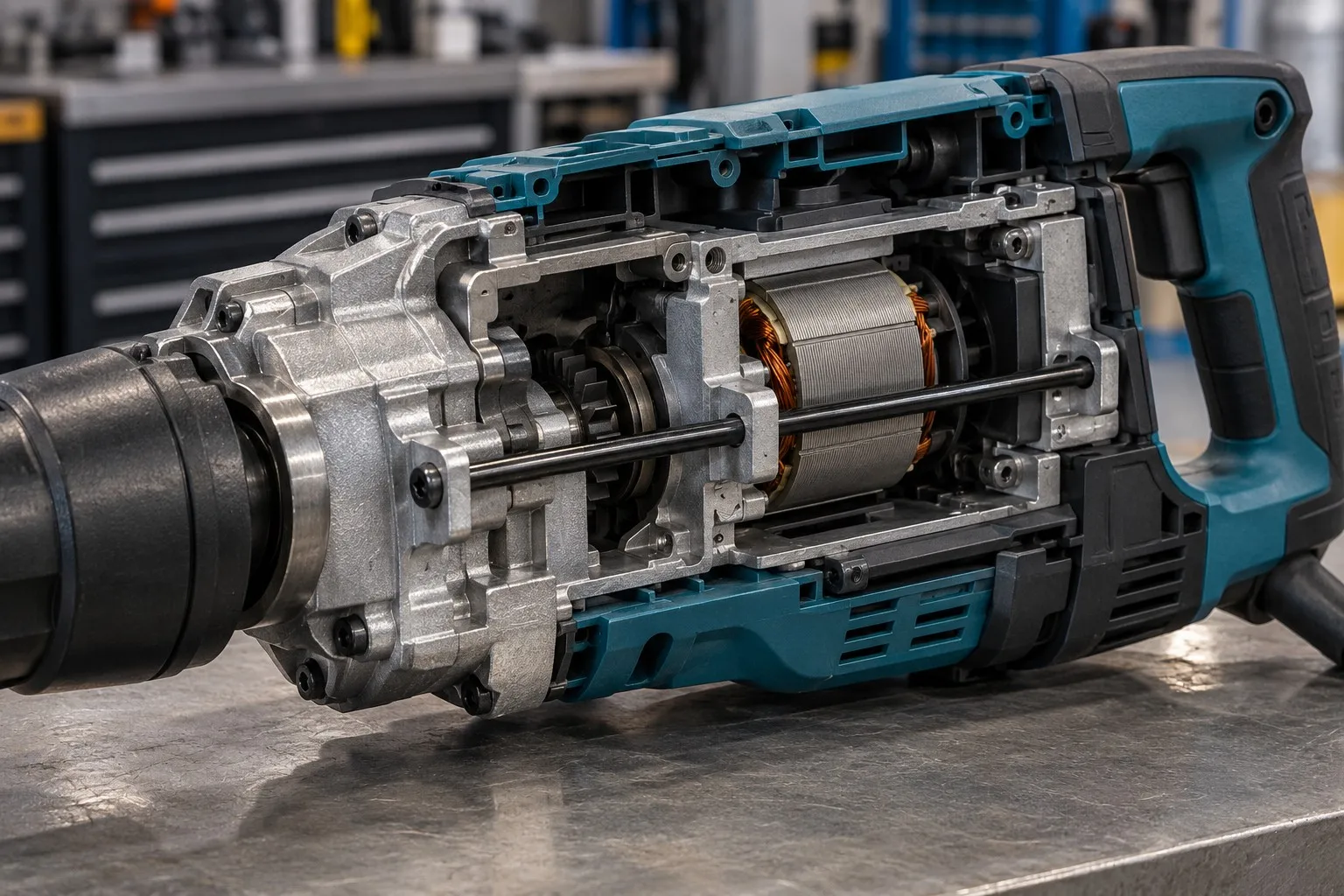
Through-screws in a power tool drive housing |
Robot and automation frames
|
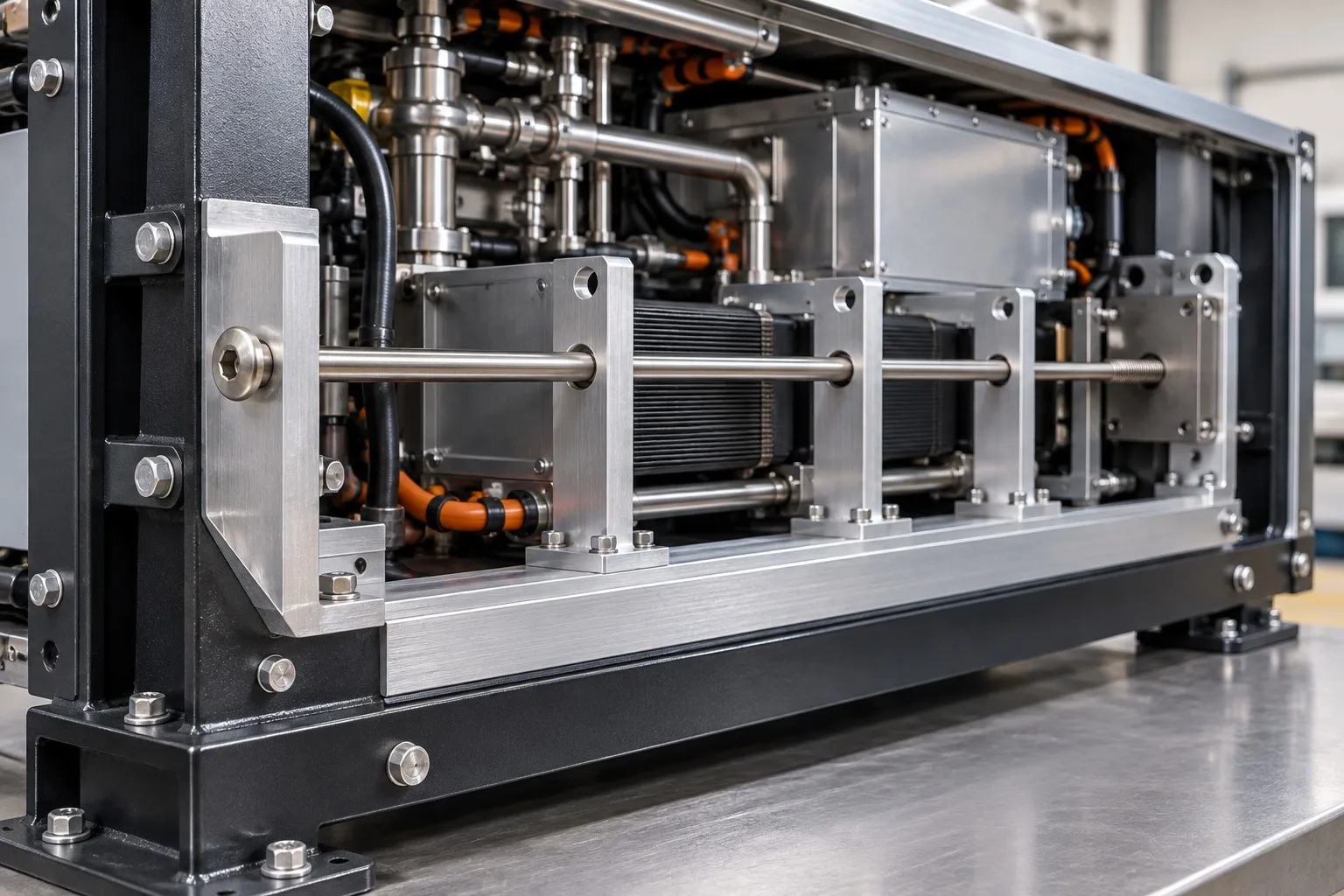
Long button head screws on a robot gantry frame |
Four reasons that matter on a long socket-driven screw, each tied to what the drawing has to prove:
|
Stack and socket reviewed with the head
The plain shank, the thread start and the socket size are reviewed before the die is cut, so a screw that cannot be driven or cannot reach is raised first. Basis: Stack, thread and socket reviewed before tooling. |
Headed and threaded in one route
The button head and the hex socket are formed in a split die that supports the long shank, and the thread is rolled at the tip, so the head stays concentric. Basis: One route from wire to finished part. |
|
Socket and thread checked on the part
The socket is driven with the matching key and the thread is gauged on the first article, then the part is assembled in the stack it was drawn for. Basis: First article driven and assembled in the stack. |
First article to repeat production
A repeat order is measured against the first article, where drawing revision, wire heat, die set and thread roll were fixed. Basis: First article signed off before the batch is released. |
Shi Shi Tong forms these stainless steel button head cap screws on a split-die header: the die closes around the wire and supports the shank while the button head is upset, the hex socket is formed in the same operation, the partial thread is rolled on the leading section, and the parts are deburred and passivated. The first part of every run is measured on the head, the socket and the thread, and driven with the matching key, before the batch continues.


|

|
Between runs the die insert is changed to the drawing head and socket, and the thread rolls to the size; the first part goes to the projector and the gauges before the run continues. Long parts are handled in trays from the header to the packing table and packed straight, so the shank does not take a set between the machine and the assembly.
What decides whether a stainless steel button head cap screw passes is not only the thread: it is the head diameter and height, the socket size and depth, the plain shank and the thread class at the far end. The inspection agreement covers those, and the criteria come from the drawing and the stack sample.

Head and shank on the projector |

Thread gauging against GO/NO-GO gauges |

Hardness testing where the drawing requires it |

Salt-spray testing of the passivated part |
Each batch is recorded against the drawing revision: head and socket from the first article, the part assembled in the stack, and the thread gauged per batch. If a key or the stack check fails, the parts back to the last good setting are held and re-checked.
Where the drawing asks for a third-party report, it is ordered alongside the batch and filed with the inspection record under one batch number.
Every shipment of stainless steel button head cap screws is traceable to the wire it was made from. The grade, heat number and standard are recorded on the material certificate supplied with the parts, and the inspection records follow the criteria agreed on the drawing.

ISO 9001:2015 |

RoHS test report |

Registered trademark |

Patent: security screw and driver |
With each batch we supply the material certificate, the inspection record for the criteria on the drawing and, where it is listed, the third-party report for the material or the finish. The documents carry the drawing revision and the batch number, so the paperwork can be matched to the parts.
More than 8,678 customers in 89 countries and regions have ordered from Shi Shi Tong; 87% of orders come from repeat customers and 56% through referrals. Most projects follow the same route: drawing review, first-article approval, then batches checked against that sample. Long socket screws are approved in the stack they were drawn for, so the plain shank, the thread start and the socket are signed off together. Buyers visit during the process to review samples and to see how the heads and sockets are formed.
|
8,678+
customers served
|
87%
of orders from repeat customers
|
56%
of orders through referrals
|
89
countries and regions shipped to
|
Buyers and quality engineers visit for sample review, process discussion and supplier audits; the visit is arranged around production so the header and the thread line can be seen on the day the parts run.

Customer group visit – sample review |

Customer group visit – process discussion |

Customer group visit – factory tour |

Customer visit – project kick-off |

Danish customer – drawing review |

Industry exhibition – meeting customers |
It is a machine screw with a low domed head and a hex socket drive, made in stainless steel with a machine thread. This one is M4 x 230 mm, formed in one piece by split-die cold heading with a partial thread and a chamfered end.
The button head is lower and rounder, so it presents a smooth profile on a visible assembly and still takes a socket key. A socket cap head is taller and squarer, and is chosen where the joint has to take a higher clamp load.
An Allen key in the size stated on the drawing. The key loads six flats inside the head, which holds the driver in place under torque; a key one size small bears on the corners and rounds them.
So the plain shank can pass through clearance holes and spacers and the thread engages only the tapped hole at the far end. The thread start is fixed relative to the bearing face, so the plain length is the same on every part.
Parts of this type are quoted in metric sizes and in long lengths. Custom lengths up to 2,000 mm are subject to DFM review after drawing submission.
Head diameter and height, socket size and depth, total length and the datum it is measured from, plain shank diameter and length, thread size, pitch, length and start, end chamfer, material and grade, and the stack the screw passes through.
How a stainless steel button head cap screw project runs from drawing to repeat delivery:
|
1
Send the drawing or sample
|
→ |
2
Stack, socket and thread review
|
→ |
3
First article in the assembly
|
→ |
4
Batch production and repeat orders
|
Each step is confirmed with you before the next one starts; the drawing revision from the first article is what repeat orders are checked against.
For a quotation, send the drawing with the head diameter and height, socket size and depth, total length and its datum, plain shank diameter and length, thread size, pitch, length and start, end chamfer, material and grade, and the stack the screw passes through.
|
Head diameter and height
|
Socket size and depth
|
Total length and datum
|
|
Plain shank and thread start
|
Thread size, pitch and length
|
Material and grade
|
Sending a drawing? The form below does not take attachments. Email the PDF, DXF or STEP file to sst@szsst88.com with the part name and quantity in the subject line – the drawing is reviewed and a quotation follows.

 +86 13143444311
 sst@szsst88.com














