Tel:
+86 13143444311
Email:sst@szsst88.com
Fax:+0086-755-27322278
Address:Building 9, First Industrial Zone, Tantou Industrial City, Songgang Street, Baoan District, Shenzhen 518105, Guangdong, China
Type:Socket Head Shoulder Screw Metric Fasteners
Materials:Steel
Surface treatment:Black Zinc Plated
Head Type:Low Cap Head
Drive:Hexagon socket (Allen)
Thread:Machine thread
Point:Blunt
Forming:Multi-station heading
Size:M1 M2 M3 M4 M5 M6 M7 M8 M9 M10 M14
Number:504
We make socket head shoulder screws in black zinc plated carbon steel with a low cap head, a hexagon socket, a toleranced shoulder and a machine thread, quoting them from M1 to M14. Head height, socket depth, shoulder tolerance and length come from your drawing, and the first article is fitted in your pocket.
Watch the factory video·Email sst@szsst88.com
ISO 9001:2015 · Manufacturing since 1998 · 8,678+ customers · 89 countries and regions
Made to order – there is no stock catalogue. Each part is produced to your drawing, and production starts after drawing review and first-article approval.
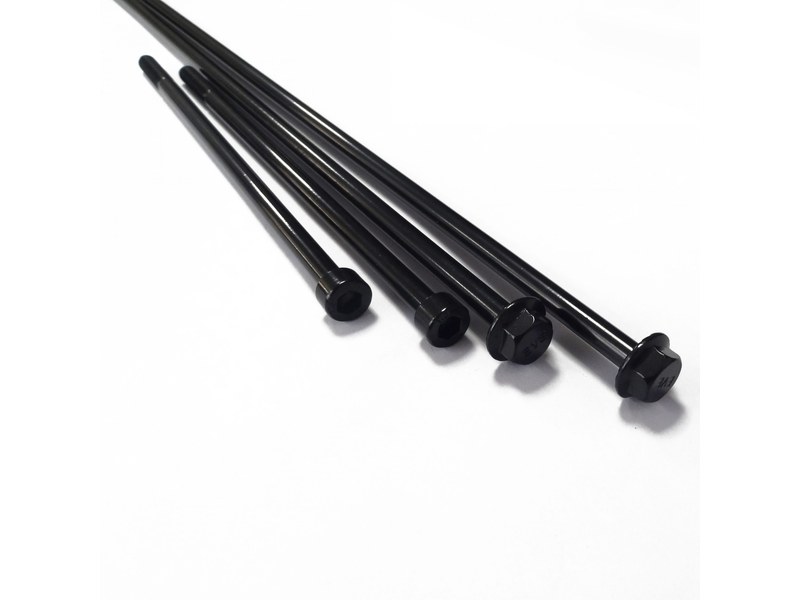
A socket head shoulder screw is a fastener with a cylindrical head, an internal hexagon, a plain shoulder and a machine thread. This one has a low cap head — the cylinder cut down in height — in black zinc plated steel, quoted from M1 to M14 with Number 504.
Low cap head. A cylinder with a flat top and a flat bearing face, reduced in height so it sits into a shallow counterbore.
Hexagon socket. A socket in the flat top, driven with an Allen key.
Shoulder. A plain section that runs in a bore and carries the radial load of the joint.
Black zinc. A dark sacrificial zinc deposit over carbon steel, chosen where the head should not stand out.
A socket head shoulder screw of this form is used where a pocket has to be shallow and the drive still has to be positive: thin case walls, small mechanisms and dark housings where the head is seen and the shoulder does the locating.
On a socket head shoulder screw the head height and the socket depth are the same decision. A standard cap head has room for a deep hexagon, which is why it takes high torque; a low cap head has the same diameter but less height, so the socket is shallower and the key engages less of its length. The screw is easier to hide and harder to drive.
That is a fair trade when the joint is designed for it. A low cap head is used where the counterbore has to be shallow — a thin panel, a case wall, a part that cannot lose material — and in those places the joint is usually clamped lightly and the head only has to take the torque of tightening, not the load of the joint. The hexagon is there to make that possible without a slot.
The shoulder underneath is unaffected by the head height. It still runs in a bore and carries the radial load, and its fit is still what decides whether the joint is tight or rattles. A low head changes the pocket the head needs, not the bearing the shoulder gives.
Black zinc is the finish that matches the head. It is a thin, dark, sacrificial deposit; it keeps the hexagon at size, it keeps the bearing face flat, and it disappears into a dark housing. On a low head the socket is the part that wears first, because the key has less to grip, and a thin coating is the one that does not make that worse.
The bearing face is the last thing to check. A low cap head has a flat underside that sits in its counterbore, and the counterbore has to be deep enough for the head and flat enough for the face. A head that bottoms on a rough pocket stands the screw off, and the shoulder no longer sits where the drawing put it.
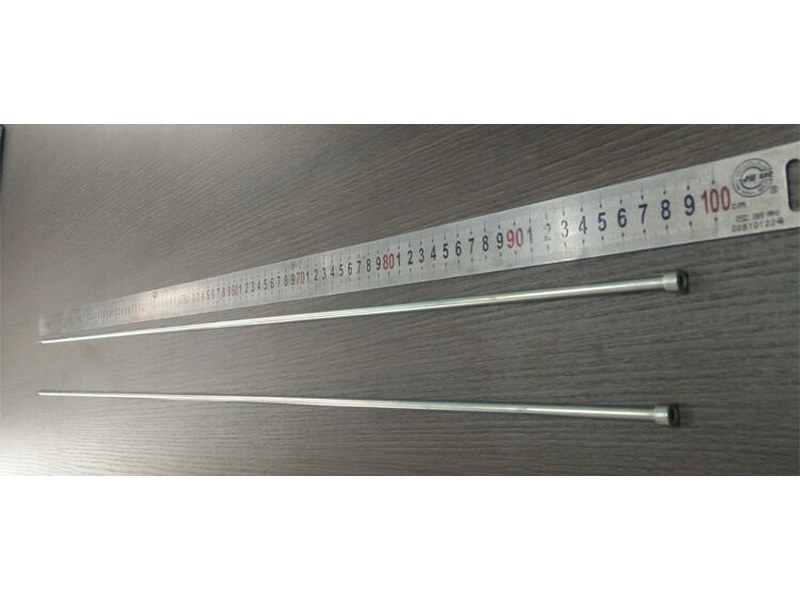
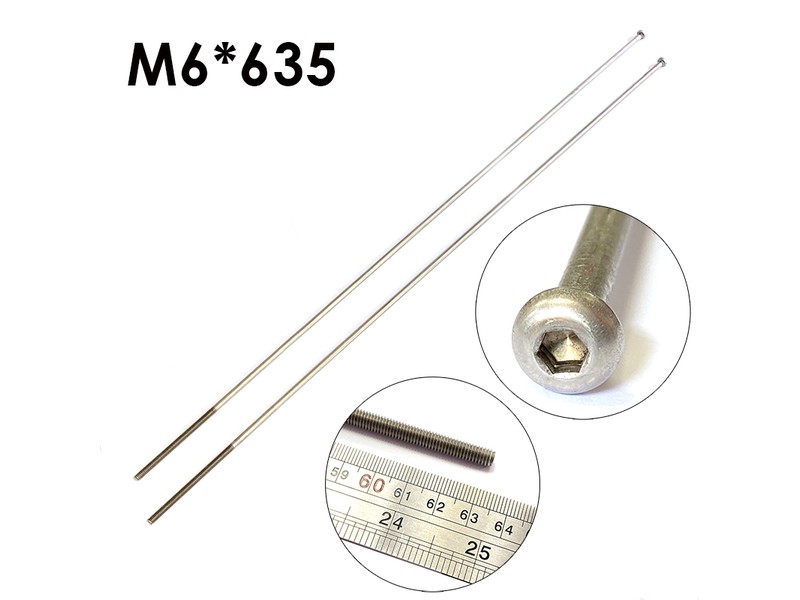
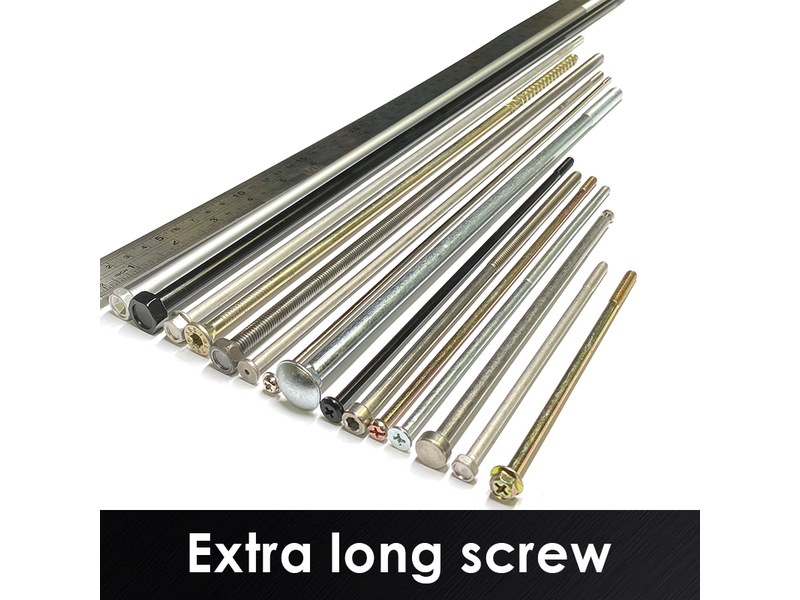
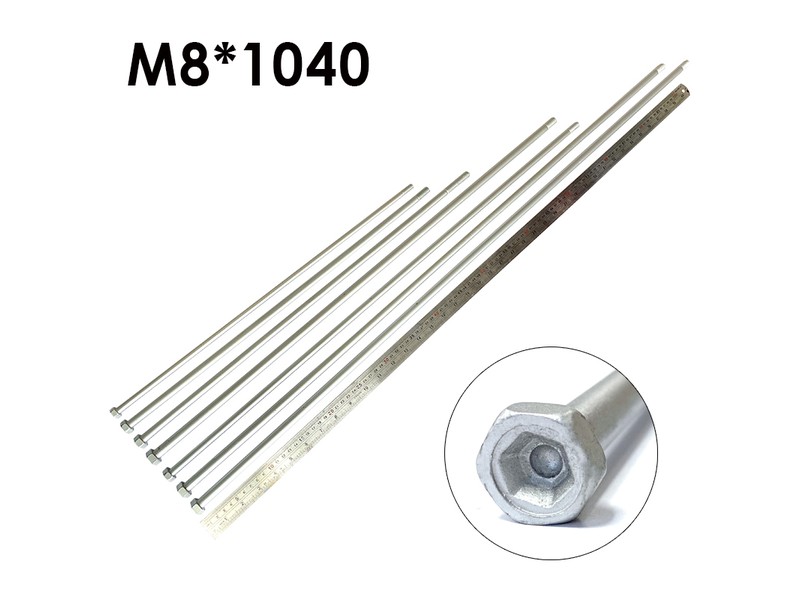
The recorded range is M1 to M14, with shoulder diameters and lengths made to the drawing. Custom lengths up to 2,000 mm are subject to DFM review after drawing submission. For a socket head shoulder screw the quotation carries head diameter and height, socket size and depth, shoulder diameter and tolerance, shoulder length and the thread.
| Item | How it is defined | What we control |
|---|---|---|
| Head | Low cap head | Head diameter and reduced height |
| Socket | Internal hexagon, shallow | Across flats, depth and corner condition |
| Shoulder | Plain bearing section | Diameter, tolerance and length |
| Thread | Machine thread | Pitch, length and gauging after plating |
| Material | Carbon steel | Grade and heat number on the certificate |
| Finish | Black zinc plated | Thickness and coverage in the socket |
| Counterbore | Pocket the head sits in | Depth and face flatness |
Head height should be quoted with a tolerance, because on a low cap head it is the clearance feature as well as the drive. A head a few hundredths high is a cover that does not sit flat, and there is no washer or flange to hide it.
Socket depth belongs on the drawing for the same reason as on any shallow socket: two suppliers can both make a low head and cut the hexagon to different depths, and the torque one will take is not the torque the other will.
Three features define the part: the reduced head height, the hexagon socket and the shoulder. The first fits a shallow pocket, the second is the drive, and the third locates the joint.
| Feature | What it gives | What it costs |
|---|---|---|
| Low cap head | Fits a shallow counterbore | Shallow socket, lower torque |
| Flat bearing face | Full ring of contact in the pocket | Pocket must be flat |
| Hexagon socket | Positive drive, no cam-out | Rounds if over-tightened with a worn key |
| Shoulder | A bearing and locator | Fit must be held |
| Black zinc | Dark finish, thin coating | Wear shows as a bright line |
The shallow pocket is why the head exists. Where a standard cap head would need a counterbore deep enough to hold the cylinder, a low head needs a fraction of that, and on thin material the difference is whether the pocket can be cut at all.
The cost is the drive. A shallow hexagon with a worn key is the usual failure, and on a black zinc screw the rounded socket shows as a bright ring that cannot be hidden.
The recorded finish is black zinc plating over carbon steel. It is a thin sacrificial deposit with a dark chromate, and on a low cap head it has to be checked inside the socket: a deposit that narrows a shallow hexagon is a socket the key will not enter fully, which is exactly the problem this head is most sensitive to.
| Option | How it protects | Effect on socket and shoulder | Typical use |
|---|---|---|---|
| Black zinc plated | Sacrificial zinc, dark | Thin build; socket re-checked | Dark housings and frames |
| White zinc plated | Sacrificial zinc, bright | Thin build; socket as cut | General indoor work |
| Black oxide | Conversion film, oiled | No measurable build | Internal mechanisms |
| Nickel plated | Hard barrier deposit | Socket narrowed; gauged after plating | Visible consumer parts |
| Stainless alternative | Passive film, no build | Socket and shoulder as made | Wet and food service |
Where the joint is wet, the material should change rather than the coating. A low head has very little material to lose to corrosion before the socket goes, and the shoulder behind it is the bearing the joint depends on.
Where the part is serviced often, black oxide is a better dark finish than black zinc: it is a conversion layer rather than a deposit, so it does not narrow the socket and it wears into the steel instead of rubbing off in flakes.
Three assemblies where a socket head shoulder screw is the fixing:
| Where it sits | The screw pivots a lever inside a thin-walled case where the counterbore cannot be deep and the head must sit close to the surface. |
| When it goes wrong | A standard cap head would need a pocket deeper than the wall allows. |
| Why it happens | The wall is thin, the head is low, and the drive is a key. |
| What we control | Head height and socket depth checked; first article fitted in the pocket. |
| Where it sits | The screw locates a plate and forms a pivot where the shoulder is the bearing and the head is driven from above. |
| When it goes wrong | A shallow socket rounds, and the pivot cannot be adjusted again. |
| Why it happens | The joint is precise, the head is low, and the drive is a key. |
| What we control | Socket driven at joint torque on the first article. |
| Where it sits | The screw holds a panel where the head is visible and a dark finish keeps it from standing out. |
| When it goes wrong | The black zinc wears at the socket and shows a bright ring. |
| Why it happens | The joint is visible, it is dark, and it is serviced. |
| What we control | Coating and socket checked; first article assembled twice. |
Four reasons that matter on a low-head part, each tied to what the drawing has to prove:
|
Head height and socket agreed
Head height and socket depth are confirmed together, because on a socket head shoulder screw the low head leaves a shallow hexagon. Basis: Head height and socket agreed. |
Headed, threaded, plated in one route
The head and hexagon are formed in one strike, the shoulder sized and the thread rolled, then the parts plated within one route. Basis: One route from wire to plated screw. |
|
Socket gauged after plating
The socket is gauged after plating, because the deposit is a real fraction of a shallow recess. Basis: Socket gauged after plating. |
Counterbore recorded
The head height and the counterbore it needs are recorded from the first article, so a repeat order fits the same pocket. Basis: Counterbore recorded. |
Shi Shi Tong forms these socket head shoulder screws on multi-station headers that form the low cap head and cut the hexagon, then size the shoulder, roll the machine thread and black zinc plate the parts. The first part of every run is measured on head height, socket depth, shoulder diameter and length before the batch continues.


|

|
A low cap head is harder to form than a full-height one. The punch has to stop the metal at a height it would rather overshoot, and the hexagon is cut into a face with less material behind it; a punch that is slightly worn leaves a head that measures right and a socket that is shallow at one corner.
What decides whether socket head shoulder screws pass is the head height, the socket, the shoulder and the thread. The inspection agreement covers those, and the criteria come from the drawing.

Head and socket on the projector |

Thread gauged after plating |

Hardness checked on the wire |

Coating proved by salt spray |
The head is checked for height and face flatness, the socket for across flats and depth, and the shoulder for diameter and length. The thread is gauged after plating, and the coating is checked for thickness inside the socket.
The first article is driven with the production key and then fitted in the customer pocket. A socket that survives being driven but leaves the head high in the pocket is still a part that fails, and only the fit shows it.
Every shipment of socket head shoulder screws is traceable to the wire it was made from and to the plating batch. The grade and heat number are recorded on the material certificate supplied with the parts, and the inspection records follow the criteria agreed on the drawing.

ISO 9001:2015 |

RoHS test report |

Registered trademark |

Patent: security screw and driver |
With each batch we supply the material certificate, the inspection record for the criteria on the drawing and, where it is listed, the third-party report for the coating. The documents carry the drawing revision and the batch number, so a repeat order keeps the same head height and socket depth.
More than 8,678 customers in 89 countries and regions have ordered from Shi Shi Tong; 87% of orders come from repeat customers and 56% through referrals. Most projects follow the same route: drawing review, first-article approval, then batches checked against that sample. On a socket head shoulder screw the first article is fitted in the customer pocket and driven with the production key, because the head and the drive are both interfaces. Buyers visit during the process to review samples.
|
8,678+
customers served
|
87%
of orders from repeat customers
|
56%
of orders through referrals
|
89
countries and regions shipped to
|
Buyers and quality engineers visit for sample review, process discussion and supplier audits; the visit is arranged around production so the headers and the plating line can be seen on the day the parts run.

Customer group visit – sample review |

Customer group visit – process discussion |

Customer group visit – factory tour |

Customer visit – project kick-off |

Danish customer – drawing review |

Industry exhibition – meeting customers |
It fits a shallow counterbore, so a thin wall or a case can take the joint without a deep pocket.
Yes. The hexagon is shallower, so the key engages less and the socket is the limit rather than the thread.
At least the head height, with a flat face. A head that bottoms on a rough pocket stands the screw off.
A clearance fit sized to the bore and to the play the joint allows.
It can, which is why the socket is gauged after plating on a low head.
Head diameter and toleranced height, socket size and depth, shoulder diameter and tolerance, shoulder length, thread and the finish.
How a socket head shoulder screw project runs from drawing to repeat delivery:
|
1
Send the drawing and the pocket it sits in
|
→ |
2
Head height, socket and shoulder agreed
|
→ |
3
First article fitted and driven with the key
|
→ |
4
Batch production and repeat orders
|
Each step is confirmed with you before the next one starts; the drawing revision from the first article is what repeat orders are checked against.
For a quotation, send the drawing with the head diameter and height, socket size and depth, shoulder diameter and tolerance, shoulder length, thread and the finish.
|
Head diameter
|
Head height
|
Socket size
|
|
Shoulder diameter
|
Shoulder length
|
Thread
|
Sending a drawing? The form below does not take attachments. Email the PDF, DXF or STEP file to sst@szsst88.com with the part name and quantity in the subject line – the drawing is reviewed and a quotation follows.

 +86 13143444311
 sst@szsst88.com