Tel:
+86 13143444311
Email:sst@szsst88.com
Fax:+0086-755-27322278
Address:Building 9, First Industrial Zone, Tantou Industrial City, Songgang Street, Baoan District, Shenzhen 518105, Guangdong, China
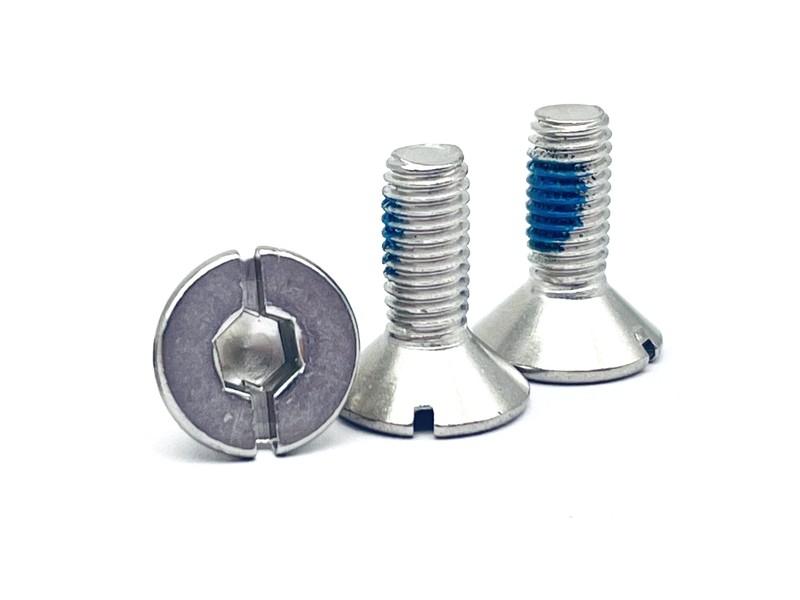
Type:Motherboard Case Screws
Materials:Brass
Surface treatment:Plain
Head Type:Hex Head
Drive:Hex Head
Thread:Machine Thread
Point:Blunt
Forming:Single Die Heading
Size:M1 M2 M3 M4 M5 M6 M7 M8 M9 M10 M14
Number:425
We make motherboard case screws in brass with a hex head and a machine thread, sized to the standoff they run into and quoted from M1 to M14. Thread standard, length, across flats and conductivity come from your drawing, and the first article is run into your own standoff.
Watch the factory video·Email sst@szsst88.com
ISO 9001:2015 · Manufacturing since 1998 · 8,678+ customers · 89 countries and regions
Made to order – there is no stock catalogue. Each part is produced to your drawing, and production starts after drawing review and first-article approval.
Motherboard case screws are the small hex head screws that pull a mainboard down onto its standoffs and hold it to the case, usually in brass so the fixing also carries a ground path. The recorded item on this page is plain brass with a hex head and a machine thread, quoted from M1 to M14 with Number 425.
Hex head. Six flats on a short head, turned with a nut driver or a small spanner. On a case screw the hex is the whole drive: no recess, no slot, and a shape that a driver can reach in a crowded corner of a chassis.
Machine thread. A rolled thread with a blunt chamfered end, made to run into the internal thread of a standoff rather than to cut one. The length matters more than usual, because the standoff has a bottom.
Brass body. Soft enough to cut cleanly, conductive, and non-magnetic. On a board fixing the conductivity is not incidental: the screw, the standoff and the chassis form the ground path from the board to the case.
Motherboard case screws only exist as half a joint. The standoff is fixed to the chassis, the board sits on it, and the screw passes through the board’s mounting hole into the standoff’s thread. Everything about the screw is therefore defined by the standoff: its thread, its length, and the torque it is safe to apply.
On motherboard case screws the length is the dimension that causes damage. A case screw that is longer than the standoff is deep runs to the bottom of the standoff and then presses the standoff’s threads against the chassis on the far side, or lifts the board. A screw that is too short engages only a turn or two and strips the brass thread when it is tightened.
The hex head is a practical choice for the chassis. There is usually no room for a driver straight onto a board fixing near the rear panel or the drive cage, and a hex can be reached from the side with a nut driver. It also gives a defined torque without the cam-out of a small recess, which on a brass thread is what stops the assembly stripping the standoff.
The blunt end is what makes the screw safe in a blind hole. The thread runs to a chamfer, not to a point, so the screw can bottom gently on the end of the standoff’s thread instead of drilling into it. A pointed screw in a standoff usually means the wrong screw was picked from the box.
Plain brass is conductive and needs no plating to do its job. That is why the finish on a case screw is often left as brass: nickel or zinc on the thread adds contact resistance at the joint, which on a grounding path is the opposite of what the fixing is for.
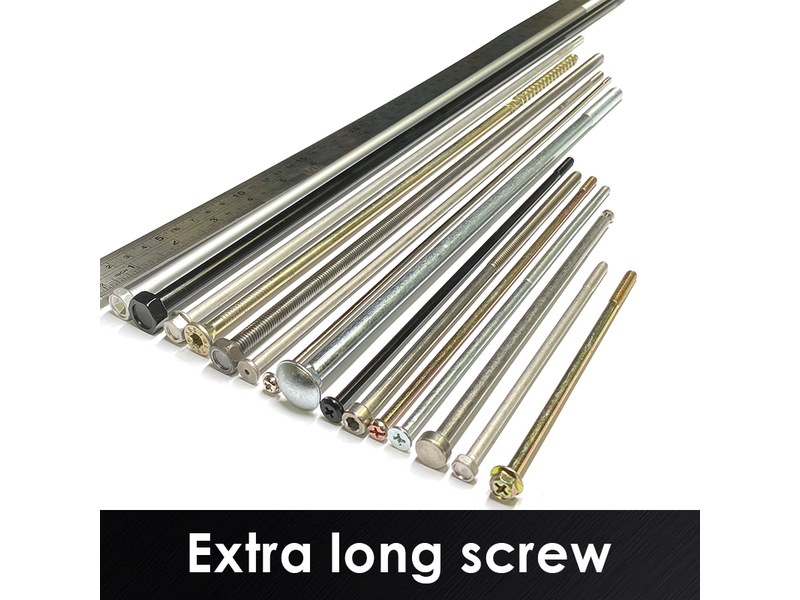
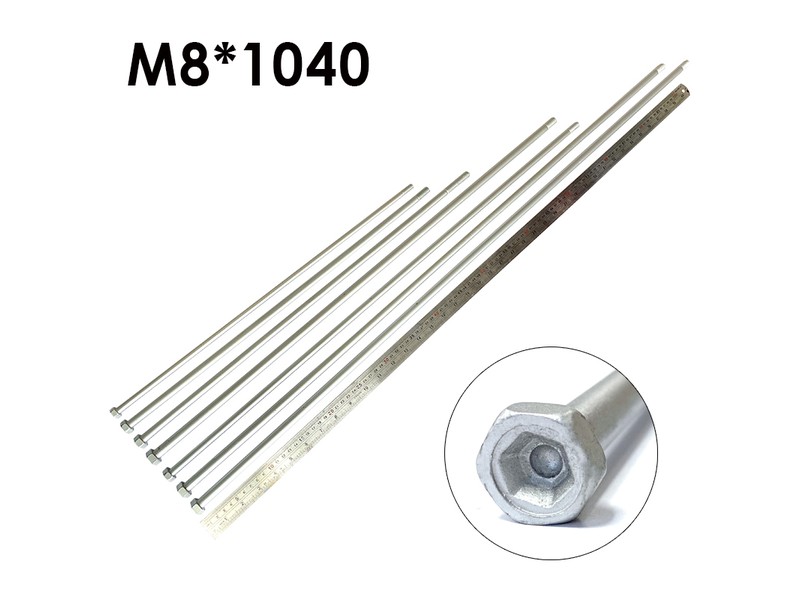
The family is quoted from M1 to M14, with M1, M2, M3, M4, M5, M6, M7, M8, M9, M10 and M14 in the recorded range. Custom lengths up to 2,000 mm are subject to DFM review after drawing submission; a motherboard case screw is normally short and its length is tied to the standoff height rather than chosen freely.
| Item | How it is defined | What we control |
|---|---|---|
| Head | Hex head, six flats | Across flats and head height |
| Thread | Machine thread, per the standoff | Pitch and length, gauged per batch |
| End | Blunt, chamfered | Chamfer cut, not deburred |
| Length | Under the head to the end | Measured against the standoff depth |
| Finish | Plain brass | Surface condition, contact faces clean |
| Alloy | Brass, per the drawing | Confirmed on the material certificate |
The thread standard is worth settling early. A board fixed with 6-32 UNC standoffs needs 6-32 screws, and one fixed with M3 standoffs needs M3; the two look alike at a glance and neither will run in the other’s thread. A mixed box of case screws is the most common cause of a stripped standoff in a build.
Across-flats is a handling dimension. A 5.5 mm hex and a 5.4 mm hex both look like a hex until a driver is applied, and brass is soft enough that a loose fit rounds the corners on the first turn. The across-flats figure is quoted on the drawing and checked at both ends of the head.
Three features define motherboard case screws: the hex head, the brass body and the thread that matches the standoff. The first is access, the second is conductivity, and the third is the difference between a build that closes and one that strips.
| Feature | What it gives | What it costs |
|---|---|---|
| Hex head | Access in a crowded chassis, defined torque | Needs a nut driver or spanner |
| Brass body | Conductive, non-magnetic, cuts cleanly | Soft thread; strips if over-torqued |
| Matching thread | Runs into the standoff cleanly | Standard must be agreed on the drawing |
| Blunt end | Safe in a blind hole | Length has to match the standoff depth |
| Plain finish | Contact faces stay conductive | Tarnishes; shows handling marks |
The conductivity is the feature that is most often taken for granted. On a board that grounds through its mounting holes, the case screw is part of the path, and a plated screw with a thin deposit at the thread adds resistance that shows up as noise or as an intermittent fault rather than as a loose part. Where the joint has to conduct, the plain brass is the specification.
The softness is the cost of that choice. A brass thread that is over-torqued deforms rather than breaking, so the failure is a standoff that no longer holds and a screw that turns freely — a state that an assembler reads as cross-threading and answers with more force.
Motherboard case screws are finished plain and cleaned, in brass. There is no coating on the thread or the contact faces, which is what a grounding case screw needs, and the tone is the alloy rather than a deposit that can chip at the corners of the hex.
| Finish | How it protects | Effect on thread and contact | Typical use |
|---|---|---|---|
| Plain brass | Natural oxide, thin and conductive | None; gauged as made | Grounding board fixings |
| Nickel plate | Hard barrier deposit | A few microns; thread re-checked | Visible parts, corrosion resistance |
| Black oxide | Dark conversion film | Almost no change | Black interiors, non-conductive |
| Zinc plate on steel | Sacrificial zinc | A few microns; thread re-checked | Cost-driven case screws |
| Stainless, plain | Passive chromium oxide film | None; gauged as formed | Wet or washed enclosures |
Brass darkens in storage and in a case. The tarnish is cosmetic and it is also conductive, so it does not defeat the grounding function the way a coating would; but on a part that is inspected on arrival, a dull screw reads as an old one, so plain brass is packed dry and handled with gloves where the appearance matters.
Plating a case screw is a decision about whether the joint conducts. Nickel on the thread insulates the contact, which is fine where the board grounds through a dedicated post but wrong where the standoff is the ground path. The drawing should say which, because the two parts look identical in a box.
Three assemblies where motherboard case screws in brass are the fixing:
| Where it sits | The screw holds the mainboard on its standoffs and closes the case, where access is tight and the fixing is turned with a nut driver. |
| When it goes wrong | A screw of the wrong length bottoms in the standoff, and a screw of the wrong thread strips it. |
| Why it happens | The board is mounted on a tray, the standoffs are fixed, and the build is repeated. |
| What we control | Thread standard and length checked against the standoff, across flats held. |
| Where it sits | The screw fixes a board or a plate inside a sealed enclosure where the joint may have to carry a ground and the space around the fixing is small. |
| When it goes wrong | A plated screw adds resistance at the joint, and a hex that is under size rounds off on the first turn. |
| Why it happens | The enclosure is sealed, the fixing is a ground path, and the build repeats. |
| What we control | Plain brass confirmed, across flats and thread gauged, contact faces left clean. |
| Where it sits | The screw fixes a module or a backplane where the fixing must be non-magnetic and the head has to be turned from the side. |
| When it goes wrong | A magnetic screw disturbs a transformer or a sensor, and a soft head that rounds cannot be removed for service. |
| Why it happens | The assembly is sensitive to magnetism, and the joint is serviced. |
| What we control | Alloy on the certificate, head and thread checked, parts packed to keep the tone. |
Four reasons that matter on a brass hex case screw, each tied to what the drawing has to prove:
|
Thread, length and standoff reviewed together
The thread standard, the length and the standoff it runs into are reviewed as one set, so a screw that would bottom or strip is raised before the batch is made. Basis: Thread, length and standoff reviewed as one set. |
Forming, rolling and cleaning in one route
The hex head is formed, the thread is rolled to a blunt end and the parts are cleaned and inspected in one route, so the faces stay conductive. Basis: One route from wire to clean screw. |
|
Across flats and thread checked
The across-flats dimension is checked with the driver size, and the thread is gauged against the standoff thread on the first article. Basis: First article run into the mating standoff. |
First article fixes the setting
The first article fixes the alloy, the forming tool and the roll; repeat orders are compared against that record. Basis: First article signed off before the batch is released. |
Shi Shi Tong forms these motherboard case screws from brass wire, upsets the hex head, rolls the machine thread to a blunt chamfered end and cleans the parts before inspection and packing. The first part of every run is measured across the flats, entered into a thread gauge and run into a sample standoff before the batch continues.


|

|
Brass is forgiving to form and unforgiving to over-work. The hex is upset in one blow and the corners come out sharp; a second blow or a worn die rounds them slightly, which is invisible on the bench and fatal in a driver. The across-flats figure is checked at both ends of the head because a head that tapers will grip at one end and slip at the other.
What decides whether motherboard case screws pass is the head, the thread, the length and the alloy. The inspection agreement covers those, and the criteria come from the drawing.

Across flats and head height on the projector |

Thread gauged per batch |

Hardness checked against the alloy temper |

Salt-spray testing where a coating is specified |
The head of a motherboard case screw is checked for across flats, height and the condition of the flats. A brass hex that has been formed with a worn die has slightly rounded corners, and the measurement across the flats still reads correctly; the check that catches it is the driver fit, which is why the first article is tried with the production driver.
The thread is gauged and run into a sample standoff, and the length is measured under the head against the standoff depth. On a case screw those two checks belong together: a thread that is right and a length that is long still ends as a stripped standoff or a cracked board.
The alloy is confirmed on the certificate. Where the joint is a ground path, that certificate is the only evidence the customer has that the screw is brass rather than plated steel.
Every shipment of motherboard case screws is traceable to the bar or wire it was made from. The alloy, temper and heat number are recorded on the material certificate supplied with the parts, and the inspection records follow the criteria agreed on the drawing.

ISO 9001:2015 |

RoHS test report |

Registered trademark |

Patent: security screw and driver |
With each batch we supply the material certificate, the inspection record for the criteria on the drawing and, where it is listed, the third-party report for the alloy. The documents carry the drawing revision and the batch number, so the paperwork can be matched to the parts.
More than 8,678 customers in 89 countries and regions have ordered from Shi Shi Tong; 87% of orders come from repeat customers and 56% through referrals. Most projects follow the same route: drawing review, first-article approval, then batches checked against that sample. On motherboard case screws the first article is also run into the customer’s own standoff, so the thread and the length are proved against the part it will meet. Buyers visit during the process to review samples and to see how the heads and threads are formed.
|
8,678+
customers served
|
87%
of orders from repeat customers
|
56%
of orders through referrals
|
89
countries and regions shipped to
|
Buyers and quality engineers visit for sample review, process discussion and supplier audits; the visit is arranged around production so the headers and the gauging bench can be seen on the day the parts run.

Customer group visit – sample review |

Customer group visit – process discussion |

Customer group visit – factory tour |

Customer visit – project kick-off |

Danish customer – drawing review |

Industry exhibition – meeting customers |
Motherboard case screws take whatever the standoff is: 6-32 UNC on many cases and M3 on most others. The two look similar and do not interchange, so the standoff decides.
Long enough to engage the standoff fully and short enough not to bottom in it. The length is quoted against the standoff depth, not as a free number.
It is conductive and non-magnetic, so the fixing can carry a ground path and will not disturb a sensor or a transformer. A plated steel screw insulates the joint.
Only if the board grounds elsewhere. Nickel or zinc on the thread adds resistance at the joint, which is exactly what a grounding case screw is there to avoid.
Access. A nut driver reaches a fixing near the rear panel or the drive cage where a driver cannot go straight on, and the hex gives a defined torque without cam-out.
Thread standard, length under the head, across flats and head height, end form, alloy and whether the finish must stay conductive.
How a motherboard case screw project runs from drawing to repeat delivery:
|
1
Send the drawing and the standoff sample
|
→ |
2
Thread, length and head review
|
→ |
3
First article run into your standoff
|
→ |
4
Batch production and repeat orders
|
Each step is confirmed with you before the next one starts; the drawing revision from the first article is what repeat orders are checked against.
For a quotation, send the drawing with the thread standard, the length under the head, the across flats and head height, the end form, the alloy and any conductivity requirement for the finish.
|
Thread standard
|
Length
|
Across flats
|
|
Head height
|
Alloy
|
Finish
|
Sending a drawing? The form below does not take attachments. Email the PDF, DXF or STEP file to sst@szsst88.com with the part name and quantity in the subject line – the drawing is reviewed and a quotation follows.

 +86 13143444311
 sst@szsst88.com