Tel:
+86 13143444311
Email:sst@szsst88.com
Fax:+0086-755-27322278
Address:Building 9, First Industrial Zone, Tantou Industrial City, Songgang Street, Baoan District, Shenzhen 518105, Guangdong, China
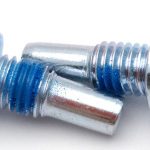
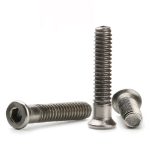
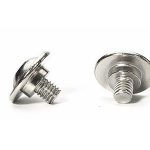
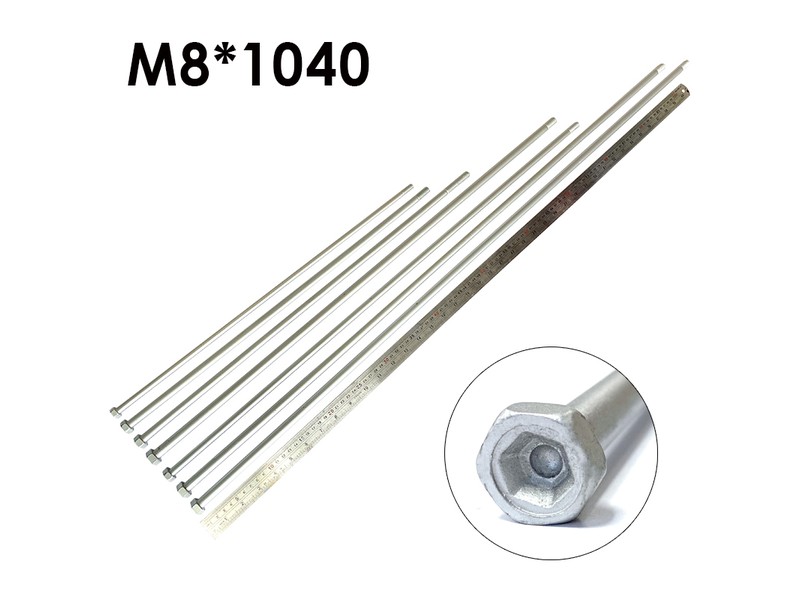
Type:hammer head screws
Materials:carbon steel
Surface treatment:blue zinc plated
Head Type:T head
Drive:None (Slot Lock)
Thread:Machine Thread
Slot:Profile Series
Forming:Single Die Heading
Size:M1 M2 M3 M4 M5 M6 M7 M8 M9 M10 M14
Number:489
We make hammer head screws in blue zinc plated carbon steel with a T head that slips into an aluminium profile slot and locks on a quarter turn, with a machine thread for a nut. Head width, thickness, slot series and thread come from your drawing, and the first article is tried in a sample profile.
Watch the factory video·Email sst@szsst88.com
ISO 9001:2015 · Manufacturing since 1998 · 8,678+ customers · 89 countries and regions
Made to order – there is no stock catalogue. Each part is produced to your drawing, and production starts after drawing review and first-article approval.
Hammer head screws are T-head bolts made for aluminium extrusion profiles: the head slips into the T-slot, turns a quarter turn as the screw is tightened, and locks against the slot walls. The recorded item is blue zinc plated carbon steel with a T head and a machine thread, quoted from M1 to M14 with Number 489.
T head. A rectangular head with two lugs that fit through the slot and seat against the internal flanges. There is no drive on the head, because the head is never seen — it is inside the profile.
Machine thread. A rolled thread with a blunt chamfered end, made to take a nut or a tapped plate on the outside of the profile. The joint tightens from the nut end, not from the head.
Blue zinc. Electroplated zinc with a blue-white passivation. It is sacrificial and it is thin, which matters because the head has to slide in a slot with very little clearance.
A hammer head screw works because the head is a key as much as a bearing surface. It drops into the slot through the wide opening, and when the screw is turned the rectangular head comes round until its lugs sit on the inner flanges. From that point the head can no longer rotate, and the nut on the outside does the tightening.
That sequence is the whole feature. A hammer head lets one person assemble a joint in a slot without a second spanner on the head, and it lets the fixing be placed anywhere along the profile instead of at a drilled position. What it does not do is clamp firmly at the moment it is dropped in: until the head has turned and seated, the joint is loose and can slide.
On hammer head screws the head dimensions are matched to the slot series. A 20-series profile, a 30-series and a 40-series each have their own slot width and flange thickness, and a hammer head screw made for one will either not enter another or enter and not lock. That is why the drawing for these parts quotes the profile series as well as the thread.
Because the head is inside the profile, its surface finish is not decorative. What matters is the thickness and the outline: a coating that is a few microns too thick makes the head tight in the slot, and a coating that is uneven makes it bind at one end and rattle at the other. The head is the mating feature, and it is inspected as one.
On hammer head screws the thread and the nut do the clamping. A hammer head screw is normally used with a flange nut or a T-nut on the outside, and the joint’s stiffness comes from the profile wall between them; the screw only has to pull the nut down hard enough to seat the assembly on the slot face.
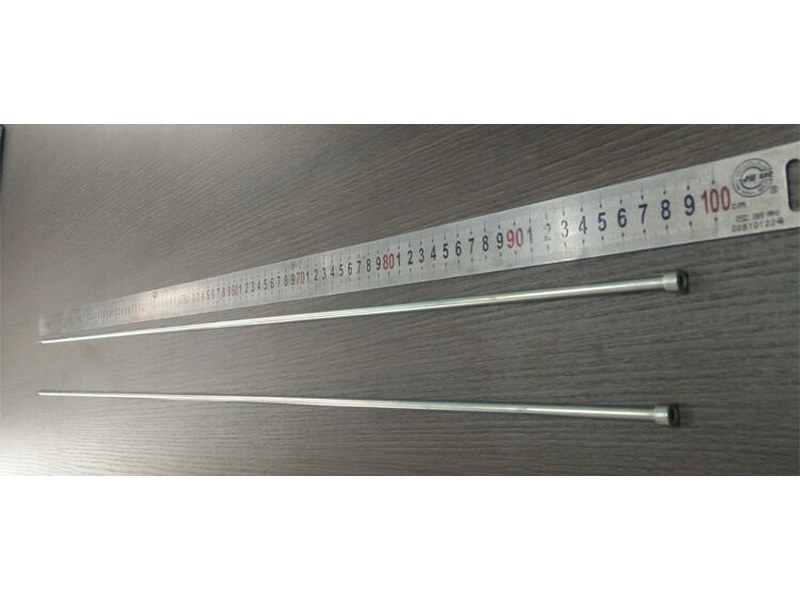
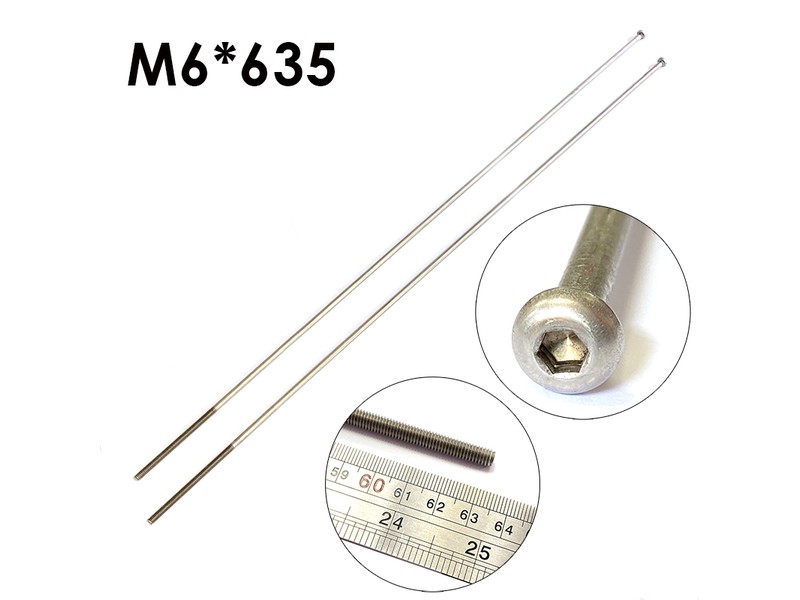
The family is quoted from M1 to M14, with the slot series quoted alongside: a hammer head is only useful against the profile it fits. Custom lengths up to 2,000 mm are subject to DFM review after drawing submission; on hammer head screws the head width and thickness and the thread length are quoted together.
| Item | How it is defined | What we control |
|---|---|---|
| Head | T head with two lugs | Head width, thickness and lug length |
| Slot | Profile series the head fits | Checked against a sample profile |
| Thread | Machine thread | Pitch and length, gauged per batch |
| End | Blunt, chamfered | Chamfer cut, not deburred |
| Plating | Blue zinc, blue-white passivation | Thickness range and head clearance |
| Length | From under the head to the end | Measured on the shop plate |
Head thickness is the dimension that decides whether the part turns. Too thin and the lugs do not reach the inner flanges, so the head spins in the slot instead of locking; too thick and the head will not enter through the opening. The window is small and it is set by the profile, not by the screw.
Length is measured from under the head, because that face seats against the inner flange. On a joint with a plate between the profile and the nut, the length is chosen so that the thread engages the nut fully without the screw bottoming in the profile.
Three features define hammer head screws: the T head, the machine thread and the zinc finish. The first turns a slot into a fixing position, the second does the clamping, and the third keeps the head sliding.
| Feature | What it gives | What it costs |
|---|---|---|
| T head | Fixing anywhere along a slot | Only locks if the head matches the slot |
| Quarter-turn lock | One-person assembly, no head spanner | Joint is loose until the head seats |
| Machine thread | Clamps with a nut or a T-nut | Needs a nut and access to it |
| Blue zinc | Sacrificial, thin, keeps the head sliding | Wears at the contact faces |
| No drive on the head | Nothing to strip at the head | The head cannot be held with a tool |
The alternative is a drilled hole and a standard bolt, which fixes the position before assembly and needs access to both sides. A hammer head moves the decision to the bench: the fixing can go wherever the part lands, and a joint can be adjusted by loosening the nut and sliding it, which is what makes extrusion framing quick to build.
The second alternative is a T-nut in the slot, which does the same job from the other side. The choice between them is about access: a hammer head is used where the nut side is reachable and the slot side is not, and a slot nut where the opposite is true. Many assemblies use both, at different joints in the same frame.
Hammer head screws carry a blue zinc finish with a blue-white passivation, applied after the thread is rolled. It is sacrificial and it is thin, which is exactly what a head that has to slide in a slot needs: a thicker coating would close the clearance and a harder one would gall on the aluminium.
| Finish | How it protects | Effect on the head and slot | Typical use |
|---|---|---|---|
| Blue zinc | Sacrificial zinc, blue-white passivation | A few microns; head clearance kept | General framing |
| White zinc | Sacrificial zinc | A few microns; re-checked | Where a brighter tone is wanted |
| Black zinc | Zinc with dark passivation | A few microns; re-checked | Dark or visible frames |
| Dacromet | Zinc-aluminium flake layer | Film builds; head re-checked | Outdoor and wet installations |
| Stainless, plain | Passive chromium oxide film | None; head as formed | Clean rooms and washdown frames |
The plating also matters at the head-to-aluminium contact, because zinc and aluminium are close enough in the galvanic series that a coated steel head in an aluminium slot does not drive much corrosion. That is one reason plated steel is used here rather than bare steel, and it is why a heavily worn head, with the zinc gone, is worth replacing.
Where the frame is outdoors, the finish has to change. Blue zinc on a head that sits in a slot where water collects is consumed quickly, and the joint then seizes in the slot; a flake coating or a stainless head is the answer, and the slot clearance has to be re-checked for the thicker film.
Three assemblies where hammer head screws are the fixing:
| Where it sits | The screw locks into a profile slot and clamps a plate or a bracket through a nut, so a frame can be built without drilling the profile. |
| When it goes wrong | A head that does not match the slot series either will not enter or spins when the nut is tightened. |
| Why it happens | The frame is built from profiles, the position is decided at assembly, and the joint is adjusted later. |
| What we control | Head width and thickness checked against a sample profile, thread gauged. |
| Where it sits | The screw holds a panel, a hinge or a bracket on a profile frame where the slot side is inaccessible and the nut side is open. |
| When it goes wrong | A loose head slides while the nut is turned, and the panel ends up off position. |
| Why it happens | The slot is closed off, the nut is accessible, and the joint is assembled on site. |
| What we control | Head checked for lock-up in a sample, plating thickness held. |
| Where it sits | The screw fixes a sensor bracket or a guide rail to a profile where the position is set during commissioning and re-set later. |
| When it goes wrong | A joint that will not slide when loosened costs time at every adjustment. |
| Why it happens | The position is adjustable, the structure is a profile, and the joint is re-set often. |
| What we control | Head clearance and plating checked, thread gauged per batch. |
Four reasons that matter on a slot-locking bolt, each tied to what the drawing has to prove:
|
Head and profile series reviewed together
The head width and thickness, the slot series and the nut are reviewed as one set, so a head that would not enter or would not lock is raised before the die is cut. Basis: Head and profile series reviewed as one set. |
Heading, rolling and plating in one route
The T head is formed, the machine thread is rolled and the parts are blue zinc plated in one route, so the head outline stays as formed. Basis: One route from wire to plated bolt. |
|
Head tried in a sample profile
The head is measured and then tried in a sample profile to confirm it enters and locks, because the fit is a slot rather than a dimension. Basis: First article tried in a sample profile. |
First article fixes the setting
The first article fixes the wire heat, the die set and the plating; repeat orders are compared against that record. Basis: First article signed off before the batch is released. |
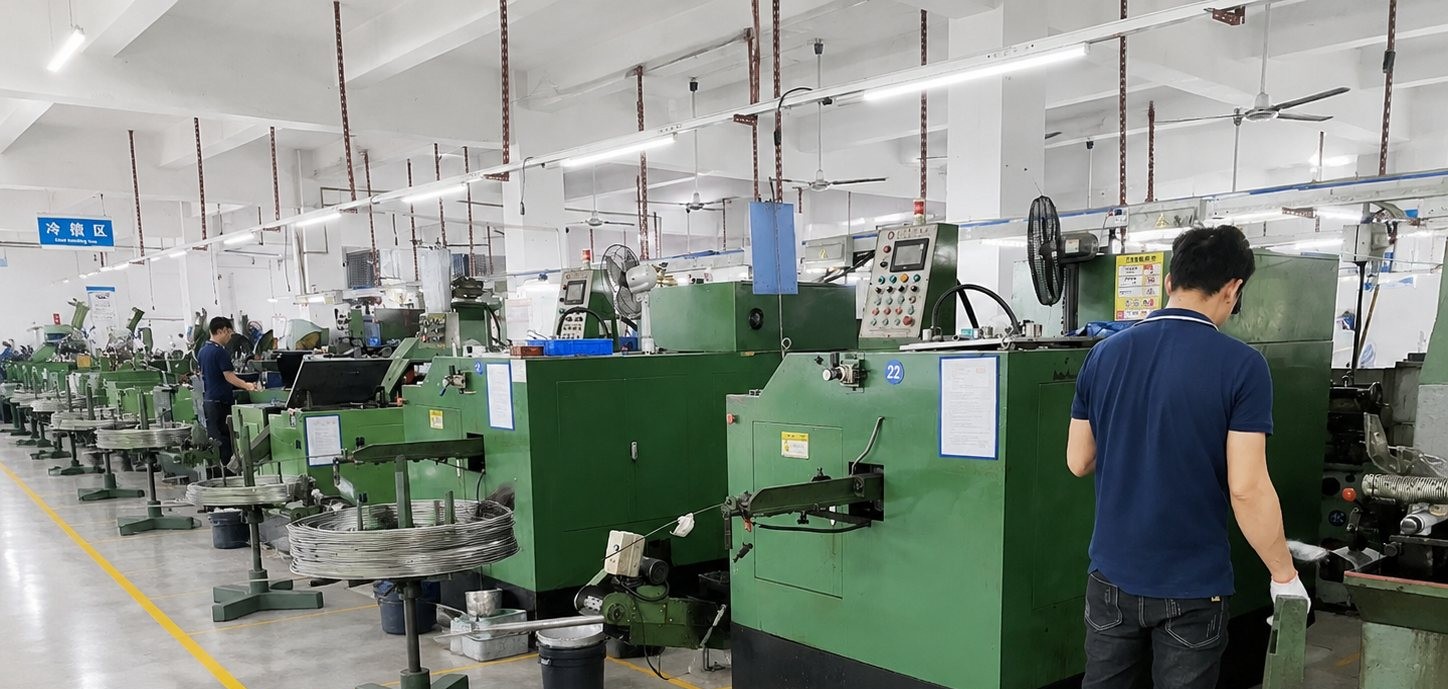
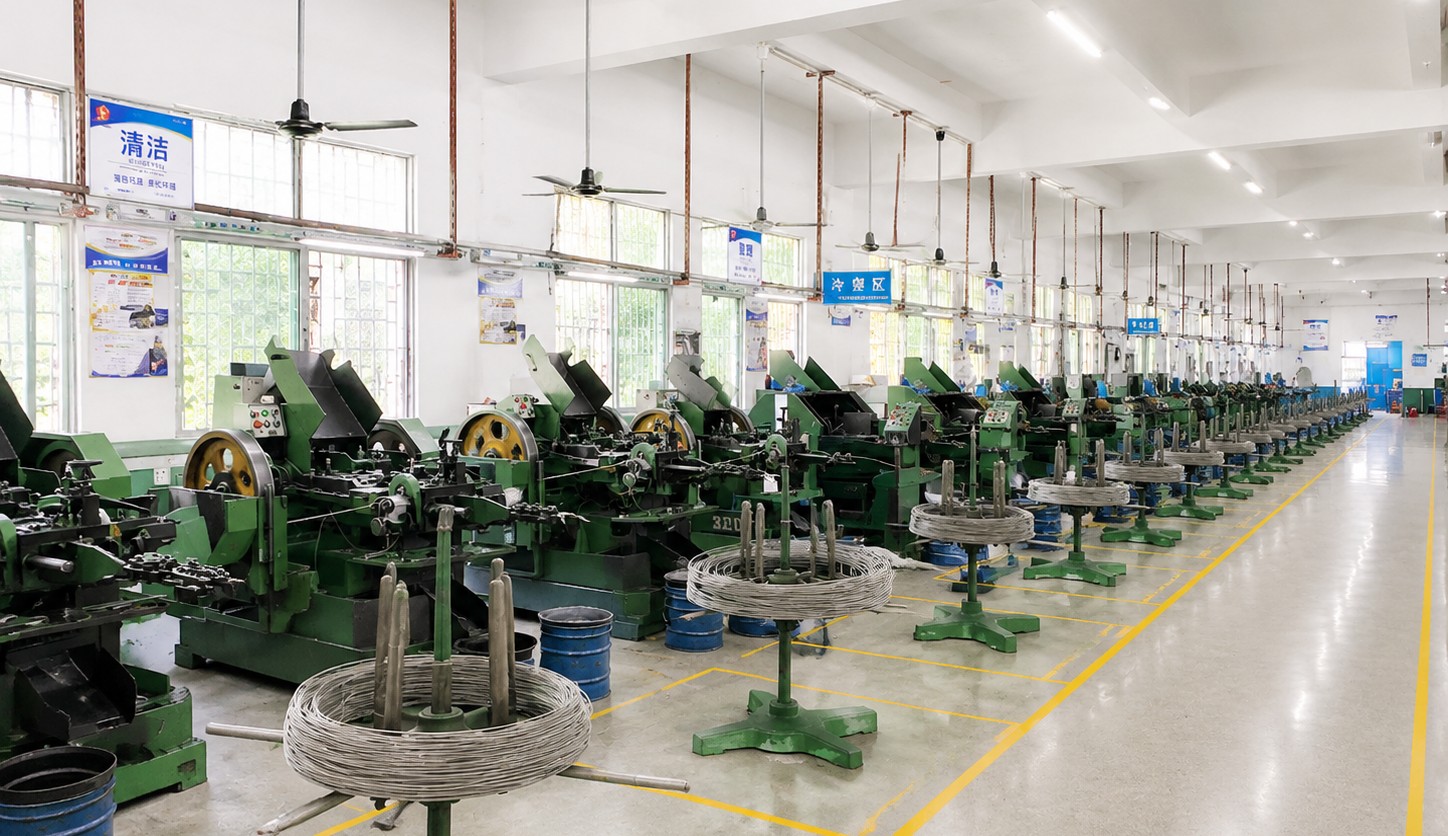
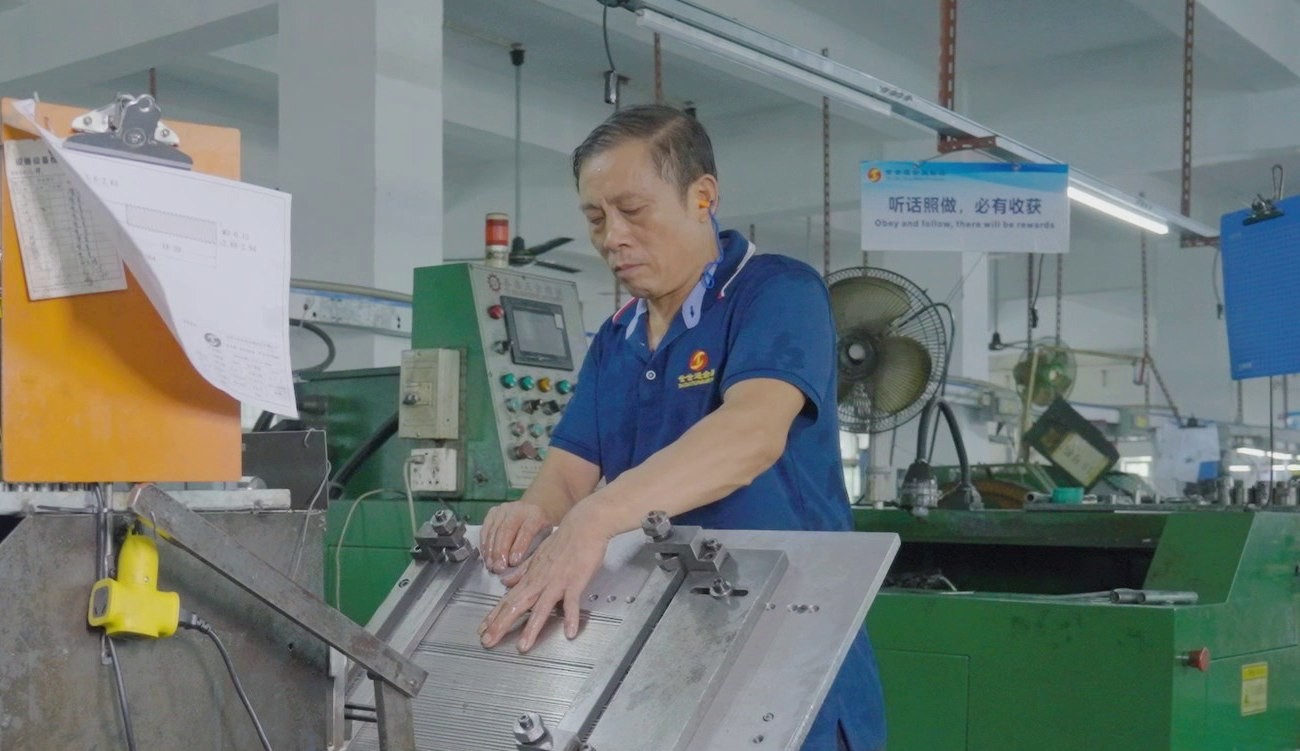
Shi Shi Tong forms these hammer head screws from carbon steel wire on single-die headers that upset the T head, rolls the machine thread to a blunt chamfered end and blue zinc plates the parts. The first part of every run is measured on the head, tried in a sample profile to confirm that it enters and locks, and entered into a thread gauge before the batch continues.
|
|
The T head is formed in one blow, and the two lugs are what the die has to get even. A die that is slightly off leaves one lug longer than the other, and the head then enters the slot at an angle and locks on one side only — a failure that shows as a joint that can be turned by hand after it has been tightened.
What decides whether hammer head screws pass is the head, the thread and the plating. The inspection agreement covers those, and the criteria come from the drawing and from the profile series.
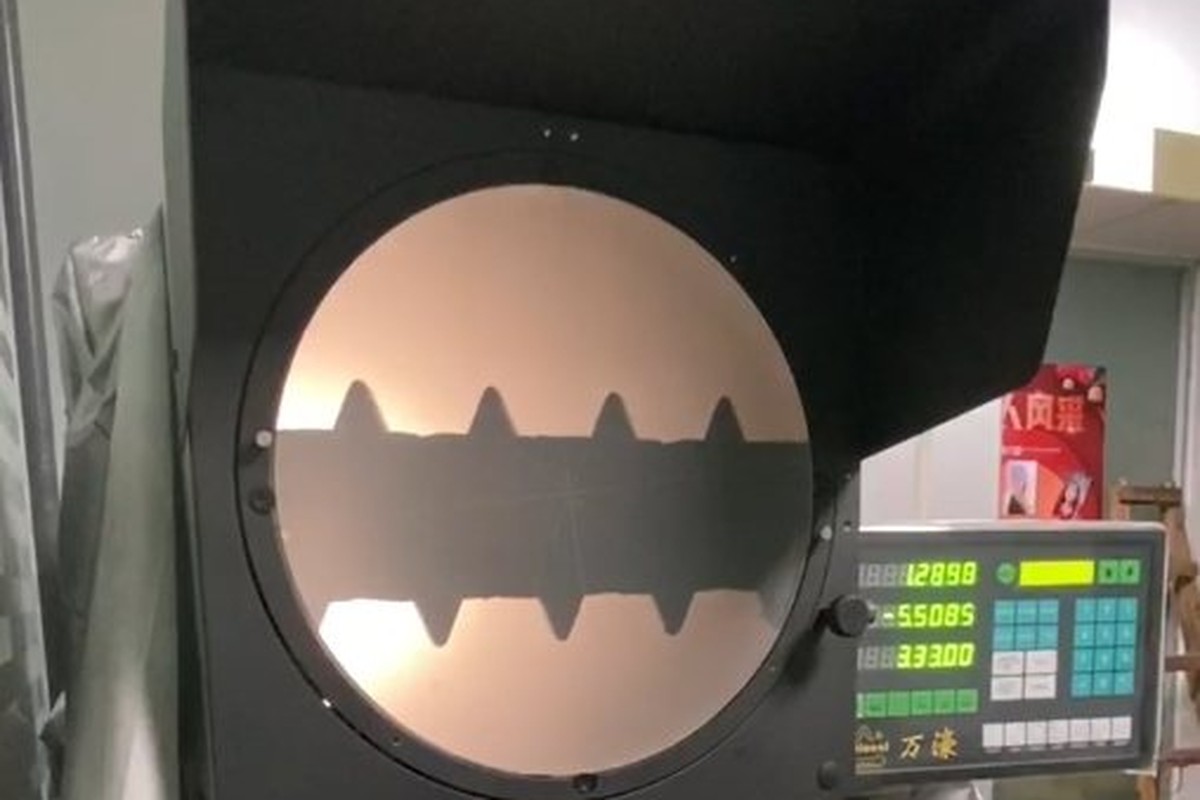
Head width and lug length on the projector |
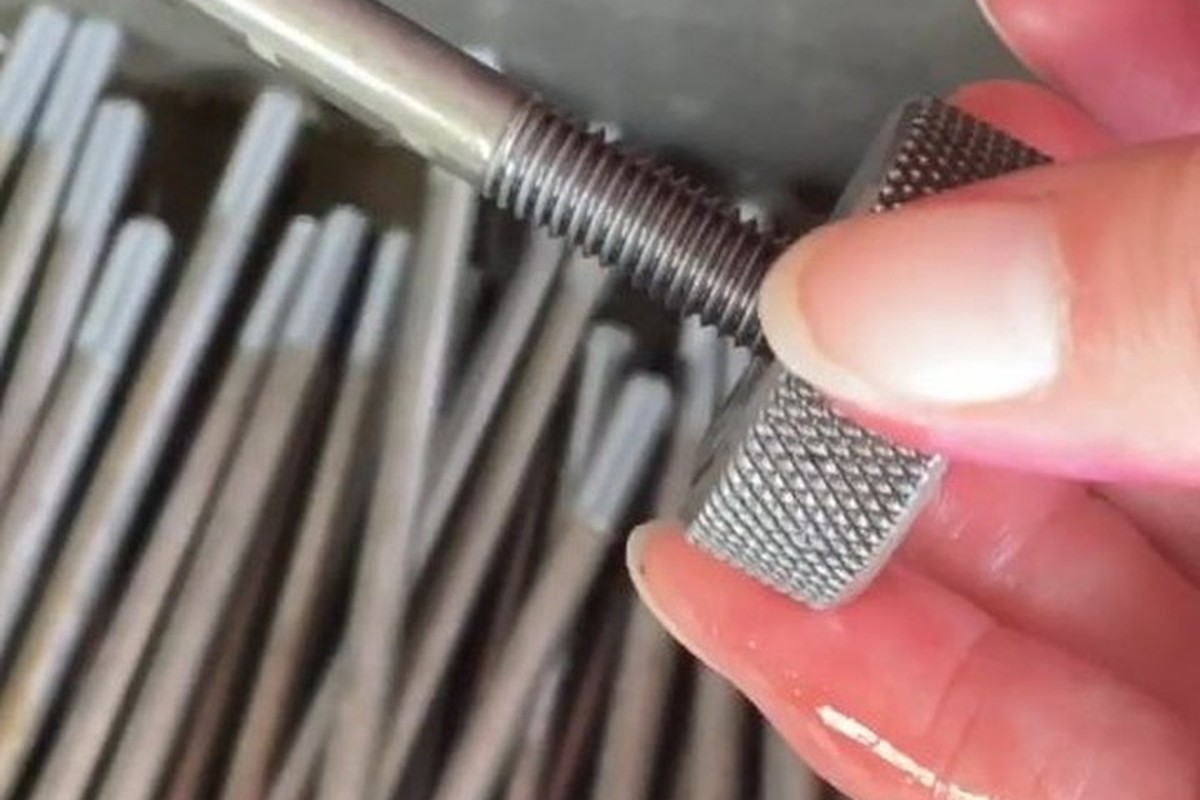
Thread gauged per batch |
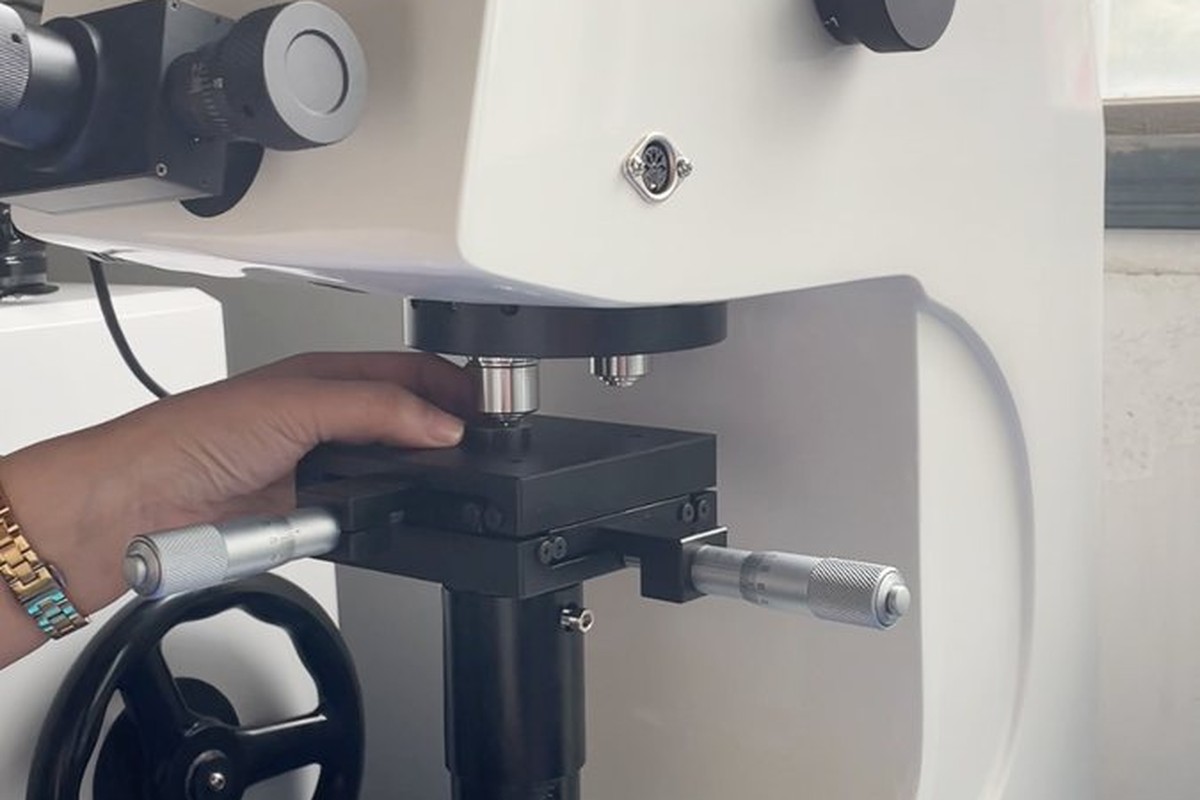
Hardness testing against the property class |
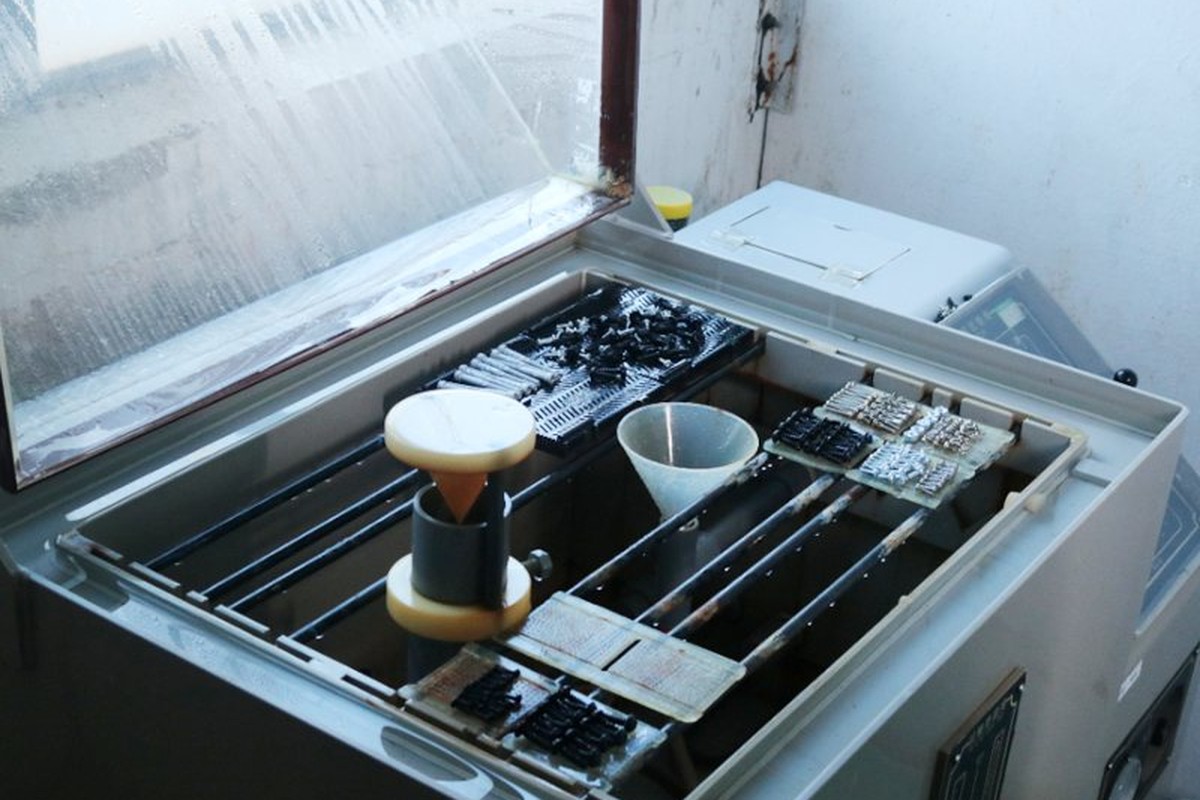
Salt-spray testing of the blue zinc plate |
The head of a hammer head screw is measured for width, thickness and lug length on the projector, then tried in a sample profile. The profile is the authority: a head that measures within tolerance and binds in the slot is a head that will not assemble, and the only way to find that is to put it in.
The thread is gauged per batch and run into a sample nut, and the plating is checked for thickness — on this part the coating is a clearance dimension rather than a cosmetic one. The head outline after plating is compared with the same sample profile.
Every shipment of hammer head screws is traceable to the wire it was made from and to the plating batch. The grade and heat number are recorded on the material certificate supplied with the parts, and the inspection records follow the criteria agreed on the drawing.
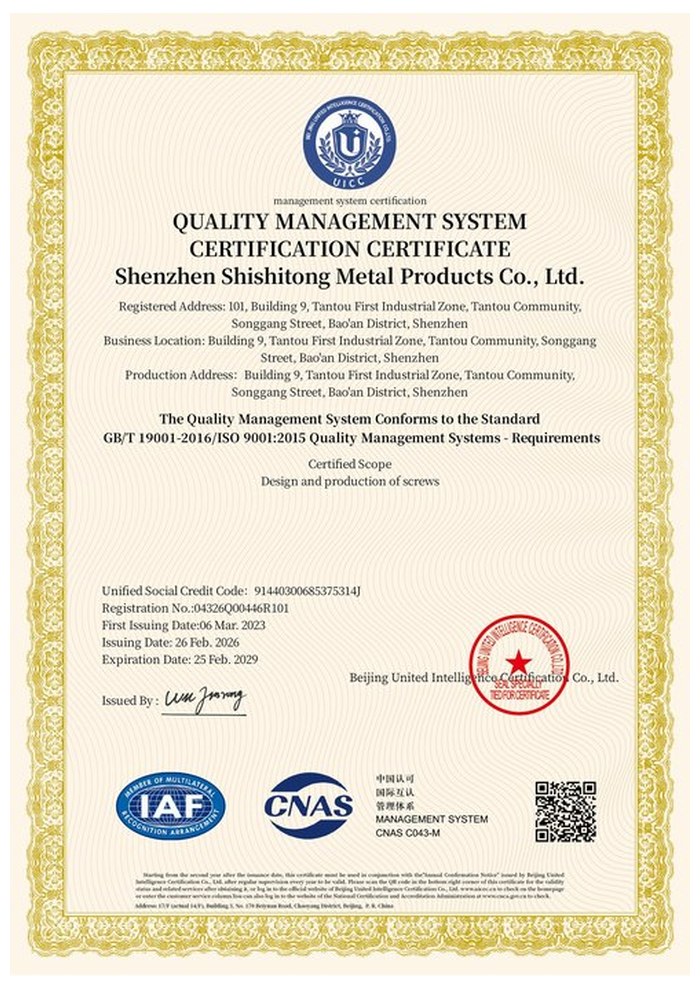
ISO 9001:2015 |
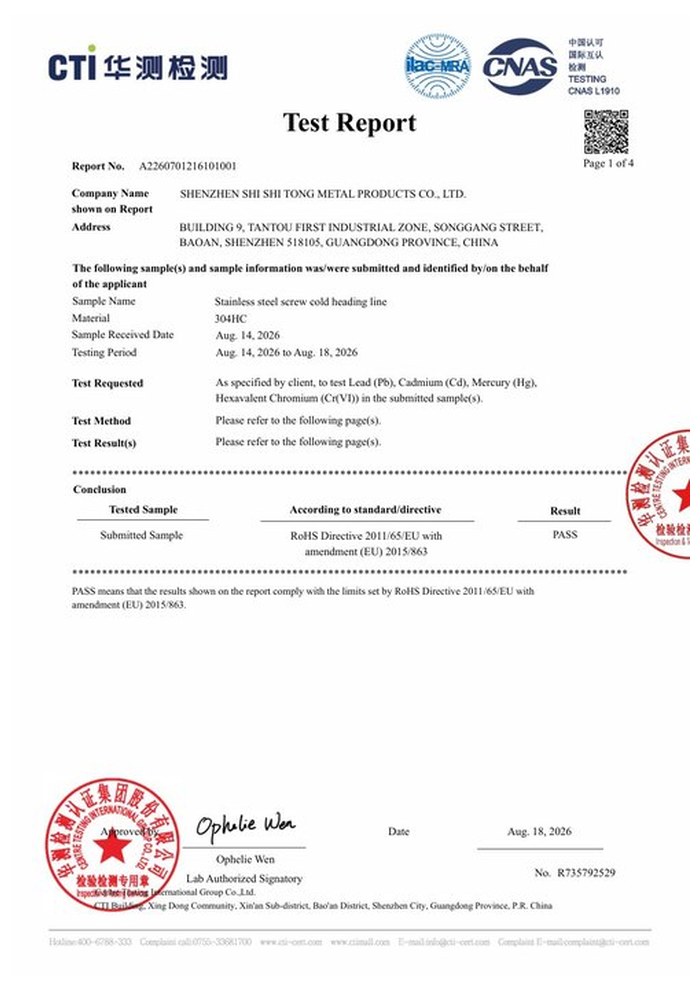
RoHS test report |
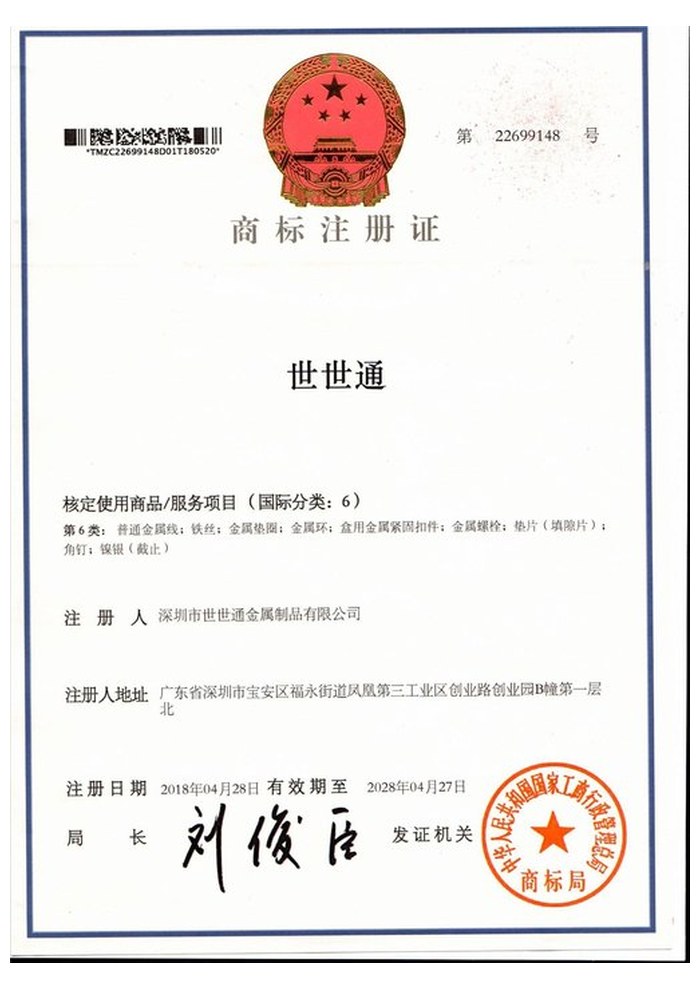
Registered trademark |
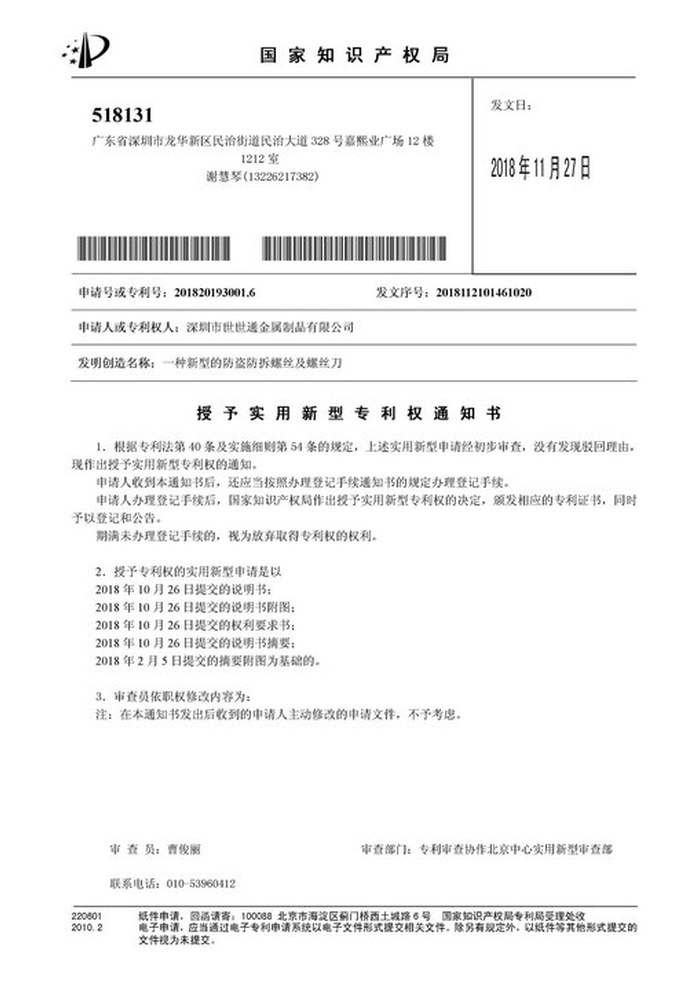
Patent: security screw and driver |
With each batch we supply the material certificate, the inspection record for the criteria on the drawing and, where it is listed, the third-party report for the material or the plating. The documents carry the drawing revision and the batch number, so the paperwork can be matched to the parts.
More than 8,678 customers in 89 countries and regions have ordered from Shi Shi Tong; 87% of orders come from repeat customers and 56% through referrals. Most projects follow the same route: drawing review, first-article approval, then batches checked against that sample. On a slot-locking bolt the first article is tried in the customer’s own profile, because the slot is the tolerance that matters. Buyers visit during the process to review samples and to see how the heads are formed.
|
8,678+
customers served
|
87%
of orders from repeat customers
|
56%
of orders through referrals
|
89
countries and regions shipped to
|
Buyers and quality engineers visit for sample review, process discussion and supplier audits; the visit is arranged around production so the headers and the plating line can be seen on the day the parts run.

Customer group visit – sample review |

Customer group visit – process discussion |

Customer group visit – factory tour |

Customer visit – project kick-off |

Danish customer – drawing review |
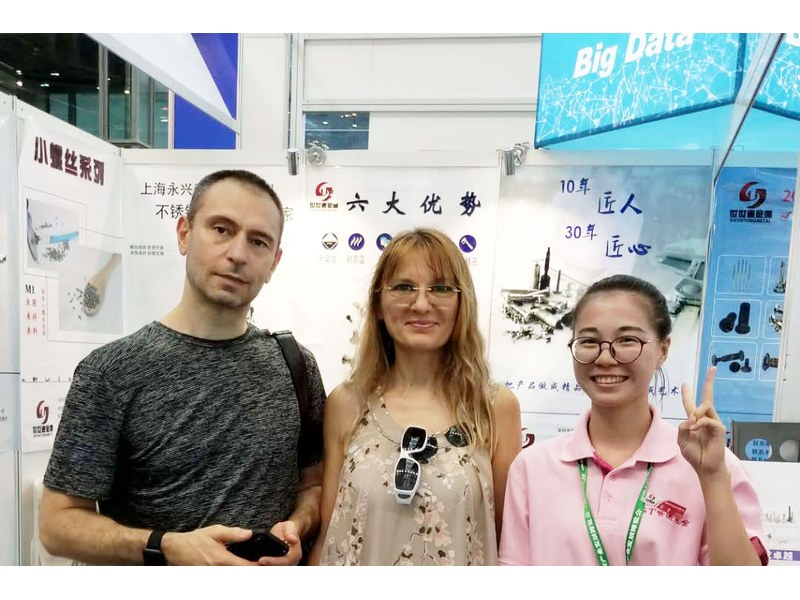
Industry exhibition – meeting customers |
The head drops through the slot opening, and turning the screw brings the lugs round onto the inner flanges. After that the head cannot rotate and the nut does the tightening.
Because the head has not turned yet. Until it seats on the flanges the fixing can slide along the slot, which is the feature that lets positions be set at assembly.
By the profile series. A 20, 30 and 40 series each have their own slot width and flange thickness, and the head has to match the series rather than the thread.
No. The head needs the flanges to lock against; in a flat plate it has nothing to turn against and the joint cannot be tightened.
The zinc protects the head in a slot where water can collect, and a thin coating keeps the slot clearance. A worn head loses that protection.
Head width, thickness and lug length, the profile series, thread size and length, overall length, and the plating.
How a hammer head screw project runs from drawing to repeat delivery:
|
1
Send the drawing and a sample profile
|
→ |
2
Head, slot series and thread review
|
→ |
3
First article tried in the profile
|
→ |
4
Batch production and repeat orders
|
Each step is confirmed with you before the next one starts; the drawing revision from the first article is what repeat orders are checked against.
For a quotation, send the drawing with the head width, thickness and lug length, the profile series, the thread size and length, the overall length and the plating.
|
Head width
|
Head thickness
|
Lug length
|
|
Profile series
|
Thread and length
|
Plating
|
Sending a drawing? The form below does not take attachments. Email the PDF, DXF or STEP file to sst@szsst88.com with the part name and quantity in the subject line – the drawing is reviewed and a quotation follows.

 +86 13143444311
 sst@szsst88.com