Tel:
+86 13143444311
Email:sst@szsst88.com
Fax:+0086-755-27322278
Address:Building 9, First Industrial Zone, Tantou Industrial City, Songgang Street, Baoan District, Shenzhen 518105, Guangdong, China
Type:Chicago Screw Posts
Materials:Customized
Surface treatment:Customized
Head Type:Customized
Size:M1 M2 M3 M4 M5 M6 M7 M8 M9 M10
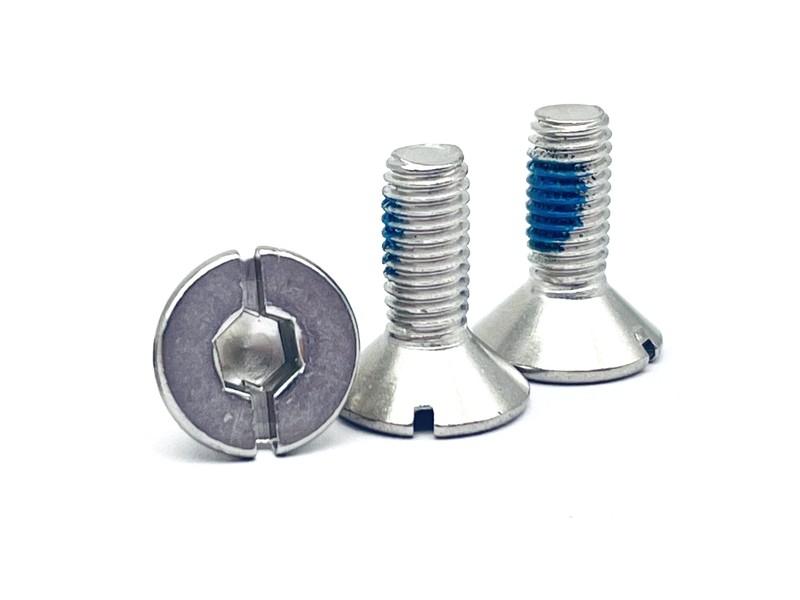
Drive:Slotted, as shown; other drives set on the drawing
Thread:Matched thread on post and cap
Forming:Headed and turned two-piece set
We manufacture Chicago screw posts as a matched male post and female cap, in brass, stainless steel, aluminium or black oxide carbon steel, with the barrel length set to your stack and both heads made to your drawing. Barrel, thread engagement, head style and finish are checked as an assembled pair.
Watch the factory video·Email sst@szsst88.com
ISO 9001:2015 · Manufacturing since 1998 · 8,678+ customers · 89 countries and regions
Made to order – there is no stock catalogue. Each part is produced to your drawing, and production starts after drawing review and first-article approval.
A Chicago screw post is a two-piece fastener: a male post with a threaded barrel and a female cap that screws onto it. The pair clamps a stack of sheets or leather between two heads, and the barrel length sets how thick the stack can be. It is also called a binding post, a sex bolt or a barrel nut.
Two pieces, one stack. The post passes through the hole from one side and the cap closes from the other. The barrel is the spacer: its length equals the stack plus the thread engagement, so the head of the post and the head of the cap sit on the two faces.
Matched thread. The post and the cap are a pair. The thread on the barrel and the thread in the cap have to match in size, pitch and class, and the engagement has to be long enough to hold without bottoming before the stack is clamped.
Heads made to order. The head on each piece is set on the drawing: flat, domed or slotted, with the diameter and height the customer wants. Materials and finishes are also made to order, from brass and nickel to stainless and black oxide.
Together these decide the joint: the heads sit on the faces, the barrel sets the stack, and the matched thread holds the pair without loosening in handling.
A Chicago screw post is supplied as a matched pair in the material on the drawing. Brass is the common choice for visible binding work: it machines well, takes a nickel or chrome finish and keeps a warm tone where it is left raw. Stainless is chosen where the joint sees damp or repeated handling, and carbon steel with black oxide where cost matters more than corrosion.
The two pieces do not have to be the same material, but they usually are. A brass cap on a stainless post can seize if the pair is assembled dry, and a plated cap on a plain post shows a colour difference at the seam. The drawing states the pair, and the first article is assembled as a pair.
Bar stock is checked before the parts are made: diameter, straightness and the mill certificate. The post is the longer piece and the one that shows the material, so a bar that is out of round or a lot that does not match the certificate is caught before the first cut.
Head style is part of the material call-out. A domed cap and a flat cap use different dies, and a slotted cap needs the slot cut after the head is formed. All of that is set on the drawing before the run.
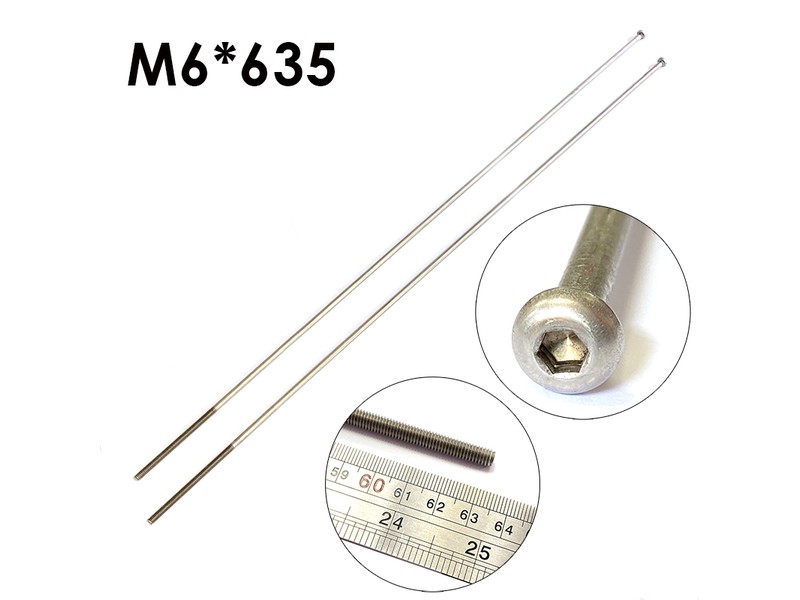
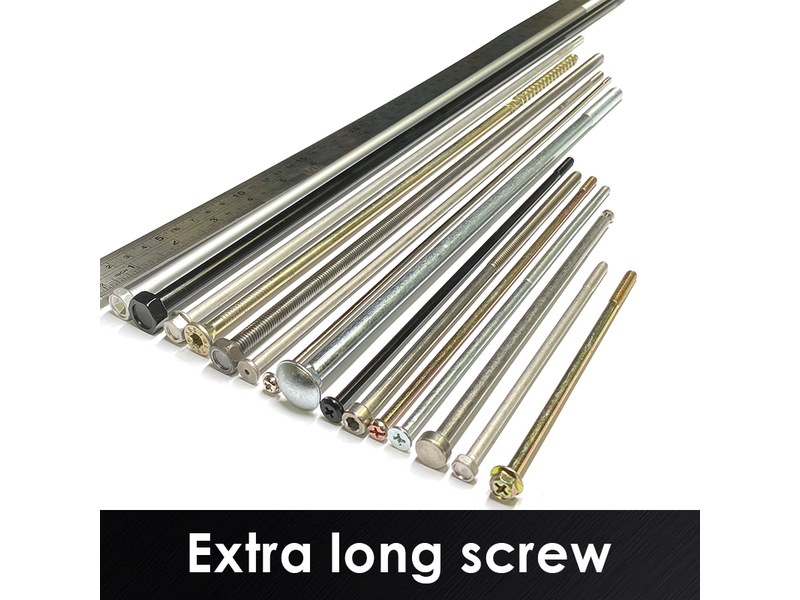
Chicago screw posts of this type are quoted from M1 to M10 barrel sizes, with the barrel length set to the stack on the drawing and the head measured on the projector. Where a long barrel is required, custom lengths up to 2,000 mm are subject to DFM review after drawing submission.
| Item | How it is defined | What we control |
|---|---|---|
| Barrel diameter | The post that passes through the hole | Measured with micrometers on the first article |
| Barrel length | The stack the post clamps | Set to the drawing and checked on the first article |
| Head diameter and height | Flat, domed or slotted heads on both pieces | Checked on the projector |
| Thread | Matched thread on post and cap | Gauged as a pair per batch |
| Engagement | How far the cap runs onto the post | Checked with the stack sample |
| Finish | Plating or oxide on both pieces | Checked as a pair against the sample |
Each pair is quoted against the stack it clamps. A barrel that is right for one sample book is too long for the next, so the stack thickness, the hole diameter and the head diameter are reviewed together rather than picked from a table.
Barrel length is measured under the head, and the head height from the bearing face. The batch is checked on the features the process can drift on: barrel length, thread class and head profile, all measured as a pair.
The male post is the piece with the barrel. It has a head at one end, an unthreaded barrel through the stack and an external thread at the other end. The head is usually the larger of the two and sits on the outside face; the barrel is what the sheets or the leather turn on.
The female cap is the shorter piece. It has a head and an internal thread that runs onto the post. The cap is what sets the clamp: as it turns down, it pulls the stack together, and it stops when the head meets the face.
The pair has to be matched in two ways. The thread has to engage without binding, and the engagement has to be shorter than the barrel thread so the cap does not bottom before the stack is tight. Both are checked with a stack sample, not only with a gauge.
Head style decides how the pair is turned. A domed cap is finger-tightened; a slotted cap takes a screwdriver; a flat cap is often knurled or plain and turned by hand. The drawing states it, and the first article is assembled the way the customer will assemble it.
The finish on a Chicago screw post is part of the product, because both heads are visible. Nickel and chrome give a bright decorative surface on brass or steel; black oxide gives a low-sheen dark finish on carbon steel; anodizing gives colour on aluminium; and raw brass is left unlacquered where it will be handled and allowed to tone.
| Finish | How it protects | Effect on thread and heads | Typical use |
|---|---|---|---|
| Nickel plated | Barrier layer with a warm bright tone | Build-up on thread; pair gauged after | Sample books and leather goods |
| Chrome plated | Hard reflective layer | Build-up on thread; pair gauged after | Visible binding and display |
| Black oxide | Conversion coating, minimal thickness | No measurable build-up | Dark bindings and equipment |
| Anodized (aluminium) | Oxide layer, dyed or clear | Builds on thread; pair re-checked | Coloured lightweight posts |
| Raw brass | No coating; natural tone | No build-up; thread as machined | Decorative posts left to age |
Salt-spray exposure is agreed per project and written on the drawing. Because the pair is assembled and re-assembled, the finish is checked at the thread as well as on the heads: a plated thread that is too tight seizes, and a plated thread that is too loose shows at the seam.
Packing keeps the pairs together and protects the heads. Post and cap are bagged as a set, and the label carries the batch, the material and the finish reference.
Three products where Chicago screw posts are chosen so a stack can be opened, re-ordered and closed again, and what the pair has to do instead:
| Where it sits | The post passes through a stack of swatches and the cap closes the stack, so pages can be added or removed without re-binding. |
| When it goes wrong | A barrel that is too long leaves the stack loose, and a cap that bottoms before the stack is tight cannot clamp it. |
| Why it happens | The stack changes as samples are added, the book is opened daily, and the heads are visible. |
| What we control | Barrel length set to the stack, thread matched as a pair, and the finish checked on both heads. |
| Where it sits | The post holds a strap or a panel where the joint is visible and the leather moves in use. |
| When it goes wrong | A head that is too small pulls through the leather, and a plated thread that seizes stops the strap being changed. |
| Why it happens | The leather is thick, the heads show, and the joint is opened to change the strap. |
| What we control | Head diameter and barrel length checked, and the pair assembled and cycled on the first article. |
| Where it sits | The post holds a card or a cover where the stack is thin and the heads are part of the look. |
| When it goes wrong | A post that is too long stands off the cover, and a finish that wears at the head shows on a handled item. |
| Why it happens | The item is handled daily, the stack is thin, and the heads are seen. |
| What we control | Barrel length for the thin stack, head finish checked, and the pair packed as a set. |
Four reasons that matter on a Chicago screw post, each tied to what the drawing has to prove:
|
Barrel length and stack reviewed together
The barrel length, the stack thickness and the head diameter are reviewed before the parts are made, so a pair that would not clamp or would pull through is raised first. Basis: Barrel and stack reviewed before production. |
Post and cap made as a matched pair
The post and the cap are produced as a pair, threaded to match and finished together, so the engagement and the colour are right at the seam. Basis: Post and cap produced and finished as a set. |
|
Assembled and cycled on the first article
The pair is assembled with a stack sample and cycled on the first article, so the engagement and the finish are checked in the way the customer uses it. Basis: Pair assembled and cycled on the first article. |
First article to repeat production
The first article fixes the drawing revision, material, thread and finish; repeat orders are compared against that record. Basis: First article signed off before the batch is released. |
Shi Shi Tong makes these Chicago screw posts as a pair. The post is turned or headed to the barrel and head on the drawing, the thread is produced on the barrel, and the cap is made to the same drawing and threaded to match. The parts are finished together, and the first pair of every run is assembled with a stack sample before the batch continues.
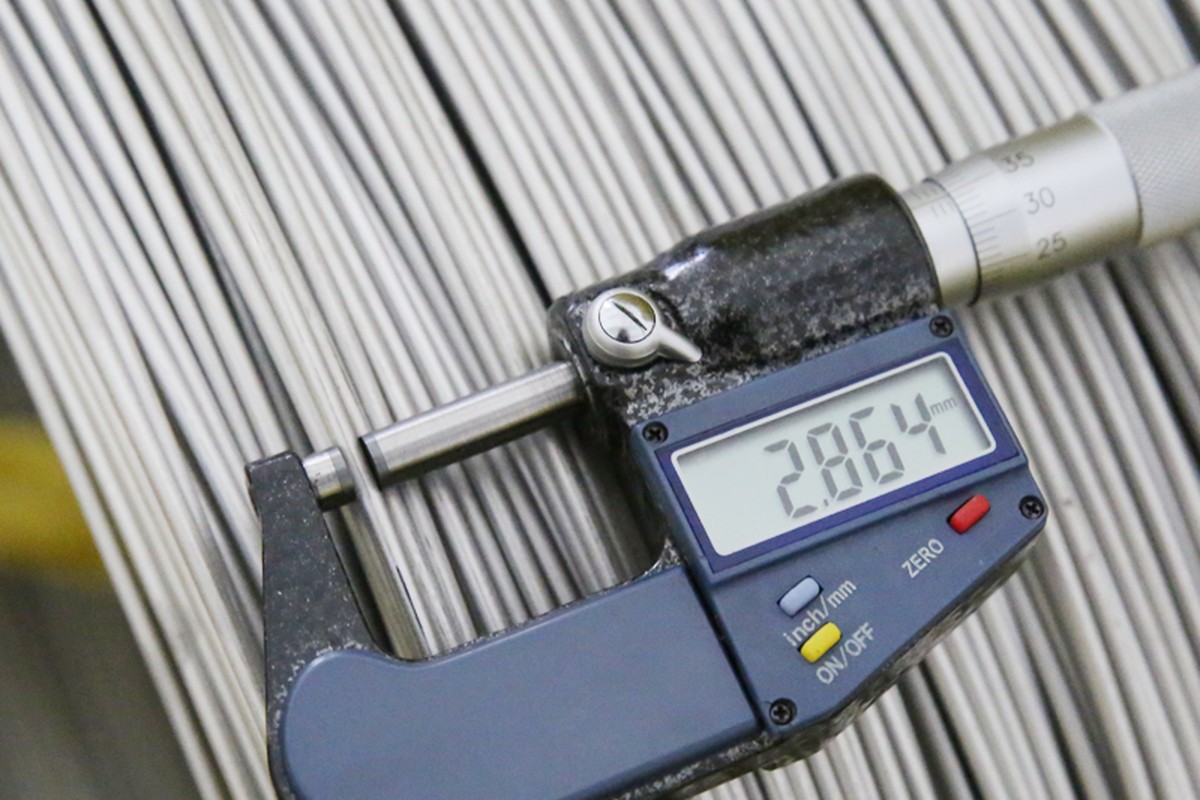
Bar checked before the first cut |
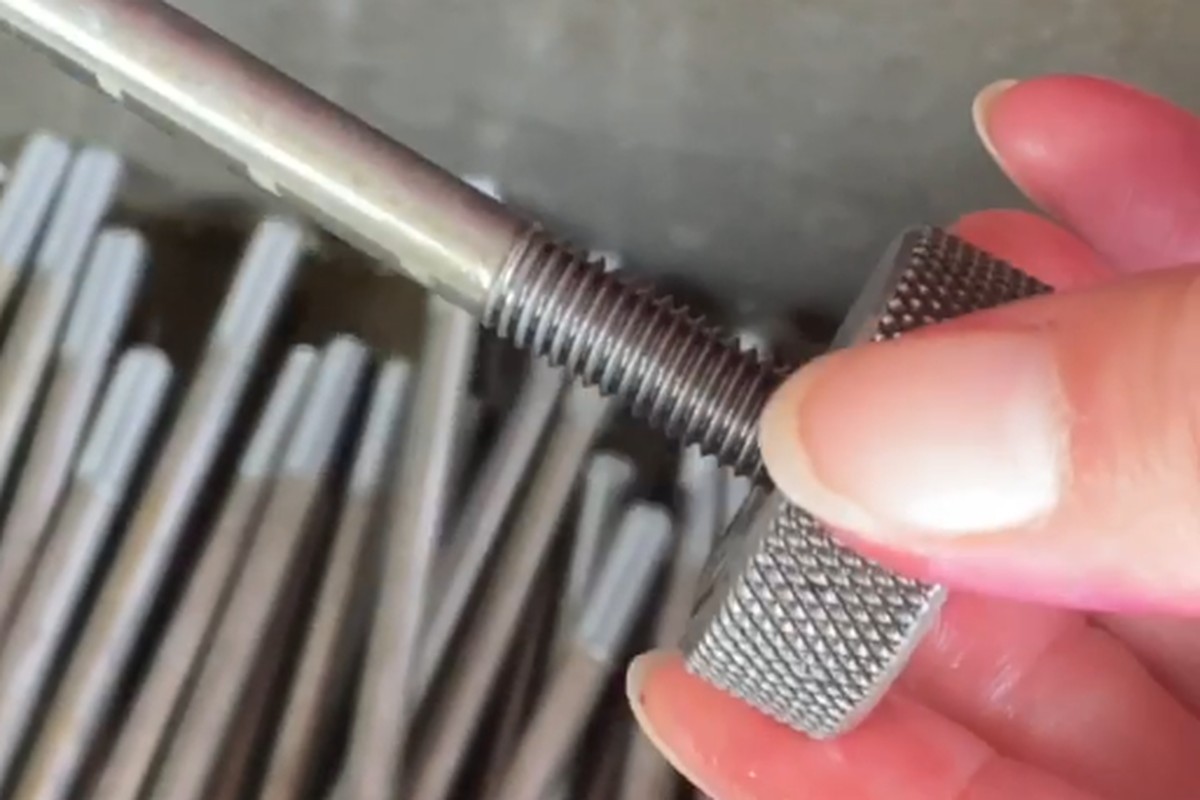
Post and cap threads gauged as a pair |
Between runs the machine is set to the drawing barrel and head, and the cap thread is set to match; the first pair goes to the gauges and to the stack sample before the run continues. Post and cap are packed as a set so the pair that was measured is the pair that ships.
What decides whether a Chicago screw post passes is not the shine on the heads: it is the barrel diameter and length, the head profile, the matched thread and the engagement in the stack. The inspection agreement covers those, and the criteria come from the drawing and the stack sample.

Heads and barrel on the projector |

Post and cap thread gauged as a pair |

Hardness testing where the drawing requires it |

Salt-spray testing of the plated finish |
Each batch is recorded against the drawing revision: heads and barrel from the first article, the pair assembled with the stack sample, and the thread gauged as a set. If a gauge or the stack check fails, the pairs back to the last good setting are held and re-checked.
Third-party test reports, when the drawing specifies them, are raised with the batch and filed against the same batch number as the dimensional record.
Every Chicago screw post shipment is traceable to the material it was made from. The grade, lot number and standard are recorded on the material certificate supplied with the parts, and the inspection records follow the criteria agreed on the drawing.

ISO 9001:2015 |

RoHS test report |

Registered trademark |

Patent: security screw and driver |
With each batch we supply the material certificate, the inspection record for the criteria on the drawing and, where it is listed, the third-party report for the material or the finish. The documents carry the drawing revision and the batch number, so the paperwork can be matched to the parts.
More than 8,678 customers in 89 countries and regions have ordered from Shi Shi Tong; 87% of orders come from repeat customers and 56% through referrals. Most projects follow the same route: drawing review, first-article approval, then batches checked against that sample. Chicago screw posts are approved as an assembled pair, so the engagement and the finish are signed off together. Buyers visit during the process to review samples and to see how the posts and caps are made.
|
8,678+
customers served
|
87%
of orders from repeat customers
|
56%
of orders through referrals
|
89
countries and regions shipped to
|
Buyers and quality engineers visit for sample review, process discussion and supplier audits; the visit is arranged around production so the turning cells and the plating line can be seen on the day the parts run.

Customer group visit – sample review |

Customer group visit – process discussion |

Customer group visit – factory tour |

Customer visit – project kick-off |

Danish customer – drawing review |

Industry exhibition – meeting customers |
It is a two-piece fastener: a male post with a threaded barrel and a female cap that screws onto it. The pair clamps a stack between two heads, and the barrel length sets how thick the stack can be.
It equals the stack plus the thread engagement, so both heads sit on the faces. A barrel that is too long leaves the stack loose; one that is too short stops the cap before the stack is clamped.
They can, but they are usually the same. A brass cap on a stainless post can seize dry, and a plated cap on a plain post shows at the seam, so the pair is specified together.
Chicago screw posts of this type are quoted from M1 to M10 barrel sizes, with the barrel length set to the stack. Where a long barrel is required, custom lengths up to 2,000 mm are subject to DFM review after drawing submission.
By hand on a domed cap, with a screwdriver on a slotted cap, or by hand on a flat knurled cap. The drawing states the head style, and the first article is assembled the way the customer will.
Barrel diameter and length, the stack it clamps, head style and diameter for both pieces, thread specification, material for each piece, finish and quantity.
How a Chicago screw post project runs from drawing to repeat delivery:
|
1
Send the drawing or sample
|
→ |
2
Stack and barrel review
|
→ |
3
First article approval
|
→ |
4
Batch production and repeat orders
|
Each step is confirmed with you before the next one starts; the stack sample and the drawing revision from the first article are what repeat orders are checked against.
For a Chicago screw post quotation, send the drawing with the barrel diameter and length, the stack it clamps, the head style and diameter for both pieces, the thread specification, the material for each piece, the finish and the quantity.
|
Barrel diameter and length
|
Stack thickness
|
Head style and diameter
|
|
Thread specification
|
Material per piece
|
Finish and quantity
|
Sending a drawing? The form below does not take attachments. Email the PDF, DXF or STEP file to sst@szsst88.com with the part name and quantity in the subject line – the drawing is reviewed and a quotation follows.

 +86 13143444311
 sst@szsst88.com