
Tel:
+86 13143444311
Email:sst@szsst88.com
Fax:+0086-755-27322278
Address:Building 9, First Industrial Zone, Tantou Industrial City, Songgang Street, Baoan District, Shenzhen 518105, Guangdong, China
Type:Small Shoulder Screw
Materials:Carbon Steel
Surface treatment:Nickel Plated
Head Type:Cap head with shoulder
Drive:Phillips cross recess
Thread:Triangle forming thread
Point:Plain, chamfered
Forming:Thread rolled; shoulder turned
Size:M1 M2 M3 M4 M5 M6 M7 M8 M9 M10
We make small shoulder screws in carbon steel with a nickel plate, a cap head and a triangle forming thread, quoted with the shoulder and pilot hole to the drawing. The three-lobed thread forms its own thread without chips, and the shoulder stops it at the depth the joint needs.
Watch the factory video·Email sst@szsst88.com
ISO 9001:2015 · Manufacturing since 1998 · 8,678+ customers · 89 countries and regions
Made to order – there is no stock catalogue. Each part is produced to your drawing, and production starts after drawing review and first-article approval.
A small shoulder screw has a short ground shoulder in front of a small thread, so a miniature part can be located and held by one fastener. The part recorded here is carbon steel with a nickel plate, finished with a cap head and a cross recess, and quoted with the shoulder made to the drawing.
Small shoulder. A short locating diameter, small enough for miniature bearing bores and thin brackets.
Triangle thread. A forming thread with a three-lobed cross-section that displaces material instead of cutting it.
Cap head. A cylindrical head with a flat top and a cross recess.
They are used where a small part has to be positioned and held without a nut, often into a light alloy or a ductile boss that can take a formed thread. Small shoulder screws with a triangle thread screw into that boss by displacing metal rather than removing it, which is what makes the form practical in a sealed part.
A conventional thread is round: every point on the major diameter is the same distance from the axis. A triangle thread is not. Its cross-section has three lobes, so the major diameter is reached at three places and falls away between them. That difference is the whole point of the form, and it changes how the screw behaves in the hole.
When a round forming screw is driven into a pilot hole, the thread pushes material outward in a continuous ring, and the force needed rises with the depth of engagement. When a triangle thread is driven, contact with the hole wall comes in three narrow zones rather than around the circumference. The material is squeezed into the spaces between the lobes, and the driving torque is lower for the same engagement because less material is displaced at once.
The result is a thread formed by flow rather than by cutting. There is no chip, which matters inside a small housing where a chip cannot be cleaned out, and the grain of the material follows the formed thread rather than being severed by a cutting edge. A formed thread in a ductile material also tends to hold better under vibration, because the material has been worked around the screw rather than cut away from it.
The shoulder then decides where forming stops. Because the thread is making its own path, the only feature that limits how deep the screw goes is the step between the shoulder and the thread. That step has to be square and it has to be at the right length, or the screw either stops short of seating or keeps forming past the intended depth.
The pilot hole is the other half of the design. A hole that is too small raises the driving torque and can crack a thin boss; a hole that is too large leaves the lobes with nothing to press against. Both failures look like a screw problem but are decided by the hole, which is why small shoulder screws are quoted together with it.
The part is quoted to the drawing with the shoulder, the thread and the head stated separately. Custom lengths up to 2,000 mm, subject to DFM review after drawing submission. The quotation for small shoulder screws carries the shoulder diameter and length, the thread size and type, the head dimensions, and the pilot hole and material it will be driven into.
| Item | How it is defined | What we control |
|---|---|---|
| Shoulder | Short ground diameter | Diameter, length and roundness |
| Thread | Triangle forming thread | Lobe form, major diameter and pitch |
| Head | Cap head, flat top | Diameter, height and bearing face |
| Pilot hole | In the customer part | Agreed size and material |
| Seat | Step between shoulder and thread | Squareness and position |
| Plate | Nickel | Thickness and coverage |
The thread is specified by its type and size rather than only by the diameter, because a triangle thread and a machine thread of the same nominal size are not interchangeable. A hole drilled for one will not suit the other.
The shoulder is agreed against the bore, as on any locating part. On a small screw the shoulder is short, so its length has to be right to the thickness it passes through; a shoulder that is a little long stands the head off, and one that is a little short lets the part move axially.
The head is the third dimension on small shoulder screws, because on a small part the head is where the torque enters and where the joint is seen. Its height sets the depth available for the cross recess, and its diameter sets the bearing area on a thin part.
Four properties decide these small shoulder screws, and each one carries a cost:
| Property | What it gives | What it costs |
|---|---|---|
| Triangle thread | Forming without chips, lower torque | Pilot hole must be right |
| Ground shoulder | A defined locating diameter | Short length leaves little margin |
| Cap head | A flat top with a full cross | Stands above the surface |
| Nickel plate | Bright, hard, thin film | No sacrificial protection at a scratch |
The value is a chip-free joint. In a small assembly where the screw goes into a closed boss, a forming thread leaves nothing behind to remove, and the shoulder sets the depth so the joint closes the same way every time.
The cost is that the joint depends on the hole. A forming thread has no tolerance for a hole that was drilled to a clearance size, and the drawing has to carry both the screw and the hole to make the joint work.
The recorded finish is nickel plated over carbon steel. It gives a bright, hard surface with a thin film, so the thread keeps its lobe form and the shoulder keeps its diameter, and the finished part has an appearance that suits visible small fixings.
| Option | How it protects | Effect on shoulder and thread | Typical use |
|---|---|---|---|
| Nickel plated | Hard bright barrier | Thin build; lobe form preserved | Visible small fixings |
| Zinc plated | Sacrificial zinc | Softer plate can smear while forming | Dry indoor joints |
| Blue zinc | Sacrificial zinc, thicker | Build on shoulder; re-check | Appliances and enclosures |
| Black oxide | Conversion film, oiled | No measurable build | Dark mechanisms |
| Stainless, passivated | Passive film, no coating | No build; different material | Wet and food areas |
On a forming thread the coating is the first surface the material meets, so a soft plate can smear rather than bite and the driving torque changes between batches. A nickel plate is harder than zinc and holds the lobe form better, which is why it suits a small forming screw that is driven by hand.
The shoulder gets the opposite requirement: it has to stay on size, and a plate applied after grinding changes it. Where the shoulder is a locating fit, the drawing states whether the dimension applies before or after plating.
Three assemblies where a small forming screw and a locating shoulder are the requirement:
| Where it sits | The screw passes through a lid or a bracket into a boss that has no room for a tapped insert. |
| When it goes wrong | The boss splits, or the screw does not reach its seat. |
| Why it happens | The pilot hole is wrong for the material, or the forming torque is too high for the boss. |
| What we control | Pilot hole and thread agreed with the customer; first article driven into a real boss. |
| Where it sits | The screw locates a plate in an aluminium or zinc alloy frame where the position has to repeat. |
| When it goes wrong | The plate shifts, or the formed thread strips at low torque. |
| Why it happens | The alloy is thin, or the engagement is short. |
| What we control | Shoulder length and thread engagement checked; first article assembled in the frame. |
| Where it sits | The screw is the pivot of a small arm or a lever that moves inside a compact assembly. |
| When it goes wrong | The pivot develops play and the motion becomes loose. |
| Why it happens | The shoulder is short of the bore, or the formed thread relaxes. |
| What we control | Shoulder fit and seat checked; first article cycled in the mechanism. |
Four reasons that matter when a forming thread is decided by the hole, each tied to something the drawing or the first article proves. All four show in the sample.
|
Pilot hole asked for
The quotation asks for the pilot hole size and the material, because a triangle thread only works if the hole suits it. Basis: Pilot hole agreed. |
Thread formed, not cut
The thread is formed with its three lobes on the thread rolling setup, so the lobe form is consistent from part to part. Basis: Lobe form held. |
|
Driven into your boss
The first article is driven into the customer boss so the forming torque and the seat are proved in the real material. Basis: Driven in the real boss. |
Same torque on repeat runs
Thread form, shoulder limits and plate are recorded with the drawing revision, so a repeat batch drives the same way. Basis: Same driving torque. |
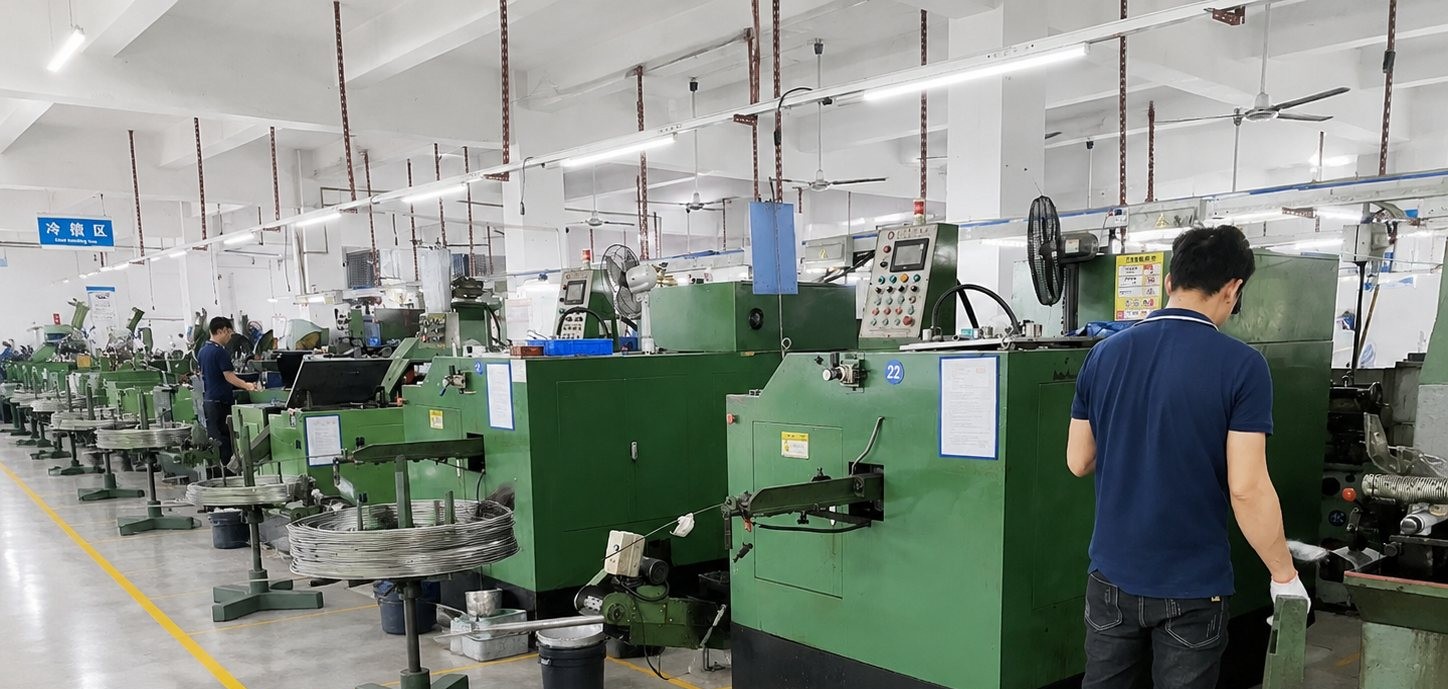
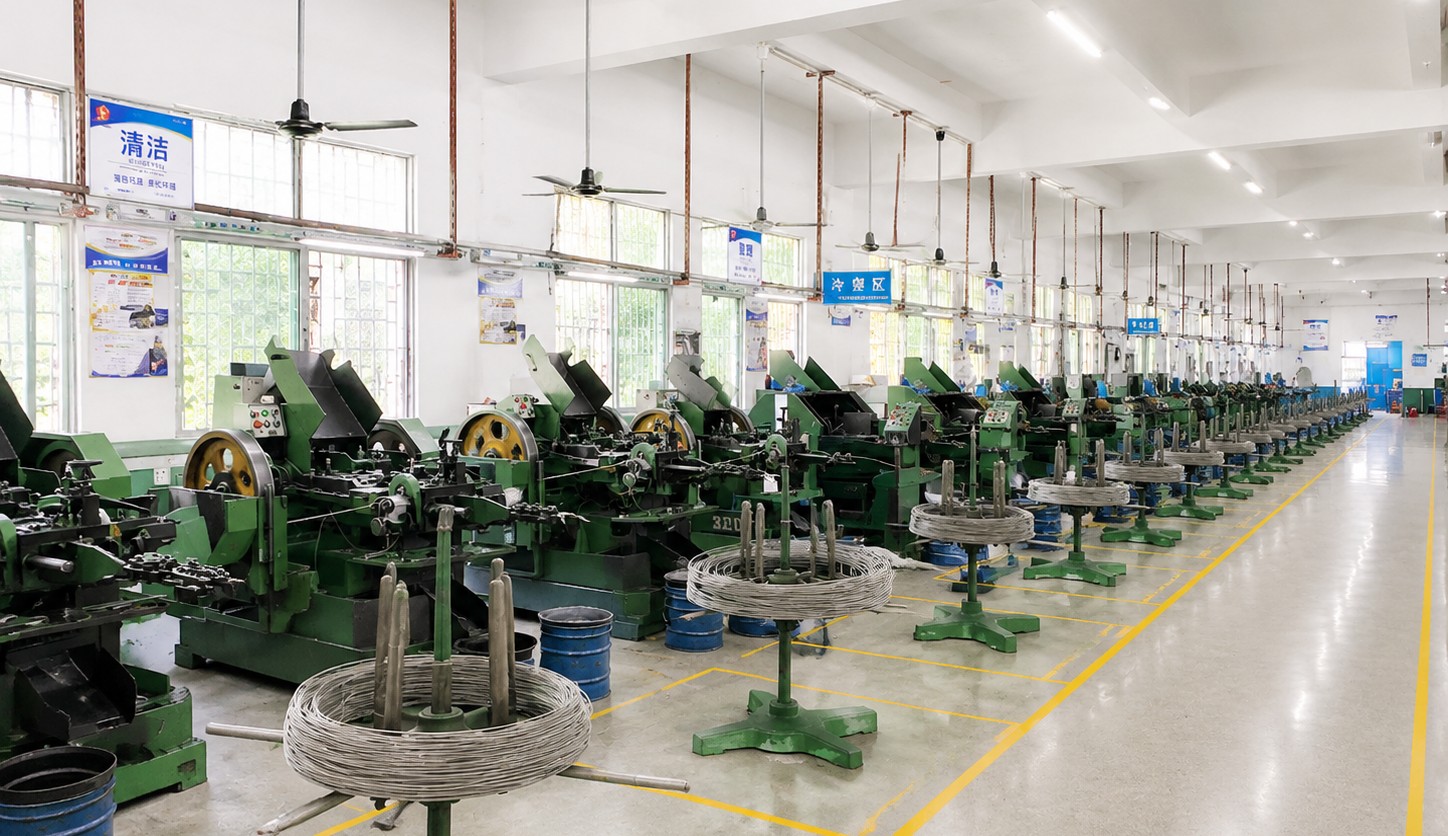
These screws are formed and turned from carbon steel, with the head formed, the shoulder turned, the triangle thread formed, and the parts then nickel plated. The first piece of every run is measured on head diameter and height, shoulder diameter and length, thread form and major diameter, and plate thickness.
|

|
Forming the triangle thread is where the part is made or lost. The thread is rolled with a profile that leaves three lobes around the circumference, and the lobes have to be evenly spaced and of the same height, because an uneven thread drives hard on one side and forms a poor thread in the boss on the other.
The shoulder is turned after the head and before plating, and it is kept short and square. On a small part the step that stops the forming is a narrow face, and any radius there moves the seating point by the size of that radius.
On small shoulder screws plating comes last and is kept thin. On a forming thread the plate sits on the surface that will do the squeezing, so a heavy layer changes the driving torque; on the shoulder it changes the fit. Both are checked on a plated sample rather than assumed.
What decides whether small shoulder screws pass is the thread form, the shoulder and the plate. The inspection agreement covers those, and the criteria come from the drawing.

Thread form on the projector |

Thread gauged |

Core hardness checked |

Salt-spray testing of the plate |
On small shoulder screws the thread is checked on the projector for the lobe form as well as for the major diameter, because a thread can measure right on diameter and still be round. The lobe height and spacing are what make it a forming thread rather than a machine thread.
The shoulder is measured for diameter, roundness and length, and the step for squareness. The head is checked for diameter, height and flatness, and the recess for depth and width.
Driving torque is checked by driving a sample into a plate of the specified material with the specified pilot hole. That is the only test that brings the screw, the hole and the material together, and it is recorded with the batch.
Every batch of small shoulder screws is traceable to the wire or bar it was made from and to the plating lot that finished it. The grade and heat number appear on the material certificate supplied with the parts, and the plating report carries the layer thickness and the lot number.

ISO 9001:2015 |

RoHS test report |

Registered trademark |

Patent: security screw and driver |
With each shipment we supply the material certificate, the inspection record for the dimensions on the drawing, including the shoulder and the thread form, and the plating report. The records carry the drawing revision and the batch number, so a repeat order of small shoulder screws drives the same way.
More than 8,678 customers in 89 countries and regions have ordered from Shi Shi Tong; 87% of orders come from repeat customers and 56% through referrals. Most projects follow the same route: drawing review, first-article approval, then batches checked against that sample. On a forming part the first article is driven into the customer’s own boss, because the thread only exists once it has been formed there. Buyers visit during the process to review samples.
|
8,678+
customers served
|
87%
of orders from repeat customers
|
56%
of orders through referrals
|
89
countries and regions shipped to
|
Repeat orders of small shoulder screws are checked against the same first article, so the driving torque a boss saw once is reproduced. Buyers and quality engineers visit for sample review, process discussion and supplier audits; the visit is arranged around production so the thread rolling setup and the plating line can be seen on the day the parts run.

Customer group visit – sample review |

Customer group visit – process discussion |

Customer group visit – factory tour |

Customer visit – project kick-off |

Danish customer – drawing review |

Industry exhibition – meeting customers |
The cross-section has three lobes instead of a continuous round diameter, so the thread displaces material in three zones rather than cutting a ring.
No chips, and the material is worked around the thread rather than removed, which holds better in a ductile boss.
It decides the joint. Too small and the boss can split; too large and there is nothing for the lobes to press against.
The shoulder. Because the thread forms its own path, the step between shoulder and thread is the only stop.
A formed thread can be re-driven a limited number of times. Each re-drive works the material again.
Shoulder diameter and length, thread type and size, head dimensions, pilot hole size and the material it forms into.
How a small shoulder screw project runs from drawing to repeat delivery:
|
1
Send the drawing, pilot hole and material
|
→ |
2
Thread form and shoulder agreed
|
→ |
3
First article driven into your boss
|
→ |
4
Batch production and repeat orders
|
Each step is confirmed with you before the next one starts; the drawing revision from the first article is what repeat orders are checked against.
For a quotation, send the drawing with the shoulder diameter and length, thread type and size, head dimensions, the pilot hole size and the material the screw will form into.
|
Shoulder diameter
|
Shoulder length
|
Thread type
|
|
Head size
|
Pilot hole
|
Base material
|
Sending a drawing? The form below does not take attachments. Email the PDF, DXF or STEP file to sst@szsst88.com with the part name and quantity in the subject line – the drawing is reviewed and a quotation follows.

 +86 13143444311
 sst@szsst88.com







