Tel:
+86 13143444311
Email:sst@szsst88.com
Fax:+0086-755-27322278
Address:Building 9, First Industrial Zone, Tantou Industrial City, Songgang Street, Baoan District, Shenzhen 518105, Guangdong, China
Place of Origin:Guangdong,China(Mainland)
Brand Name:Shi Shi Tong
Materials:Carbon Steel
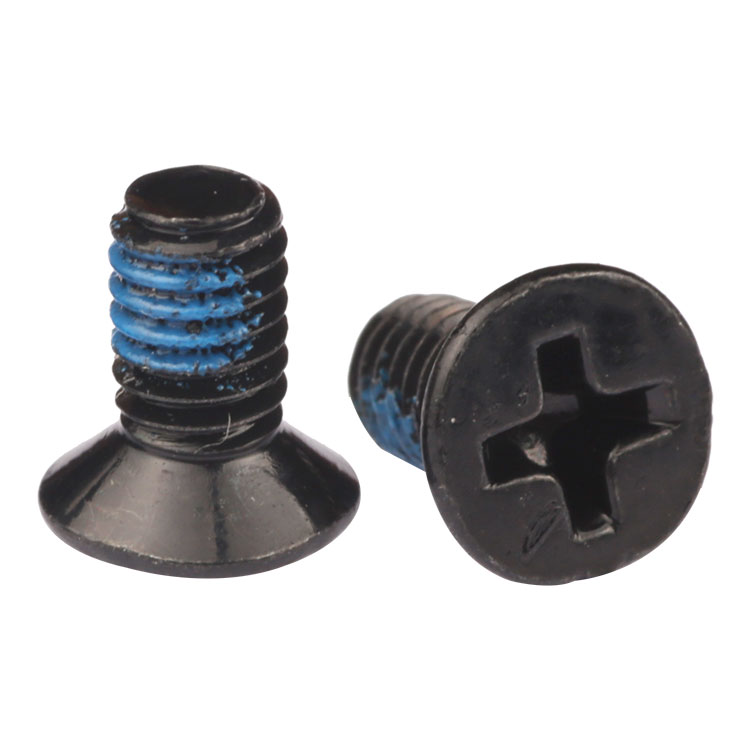
Surface treatment:Black zinc
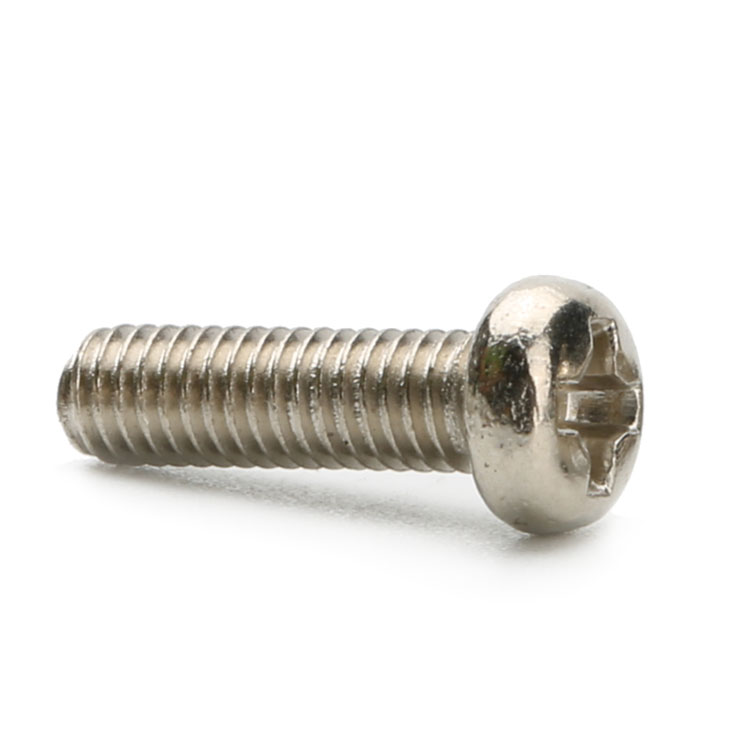
Head Type:Cheese Head
Drive:Slot and Phillips
Thread:M6 machine thread
Point:Plain, chamfered
Forming:Cold headed; serration and recess formed; thread rolled
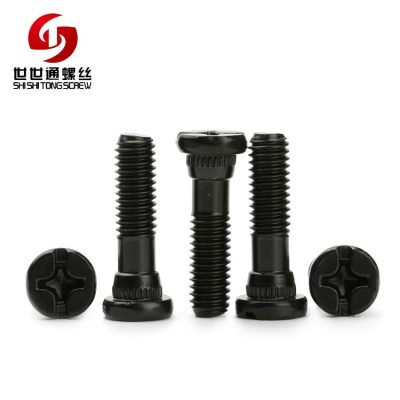
Size:M6*19mm,Diameter 10mm,Thickness 2.7mm
We make non-standard black zinc plated screws to drawing, with the serrated under-head, the shoulder and the slot-and-Phillips recess formed before plating and measured after it. The teeth grip the panel, the shoulder sets the clamp length and the black is a thin layer, so the drawing has to fix all three rather than describe the screw as black and M6.
Watch the factory video·Email sst@szsst88.com
ISO 9001:2015 · Manufacturing since 1998 · 8,678+ customers · 89 countries and regions
Made to order – there is no stock catalogue. Each part is produced to your drawing, and production starts after drawing review and first-article approval.
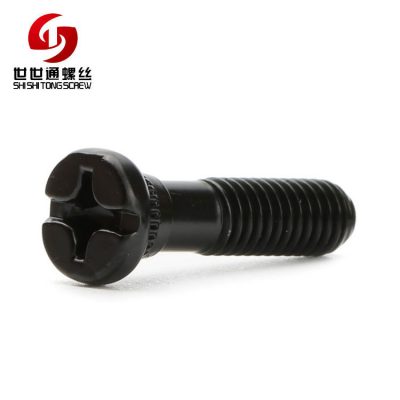
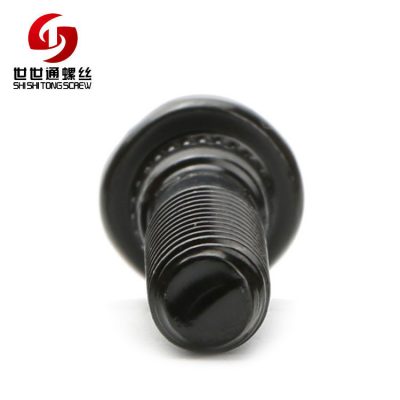
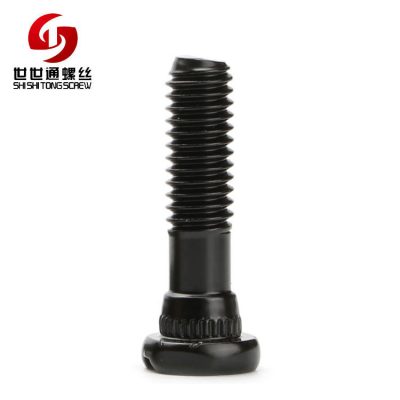
A black zinc plated screw is a carbon steel screw with a black zinc coating. This one is non-standard: a cheese head 10 mm across and 2.7 mm high, a serrated ring under the head, a smooth shoulder and an M6 thread 19 mm long, with a straight slot and a Phillips cross in the same recess, finished in black zinc.
Cheese head. A cylindrical head with a flat top and a softly rounded edge.
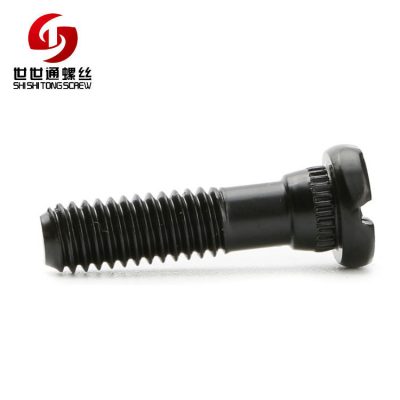
Serrated under-head. A ring of teeth under the head that bites the panel it clamps.
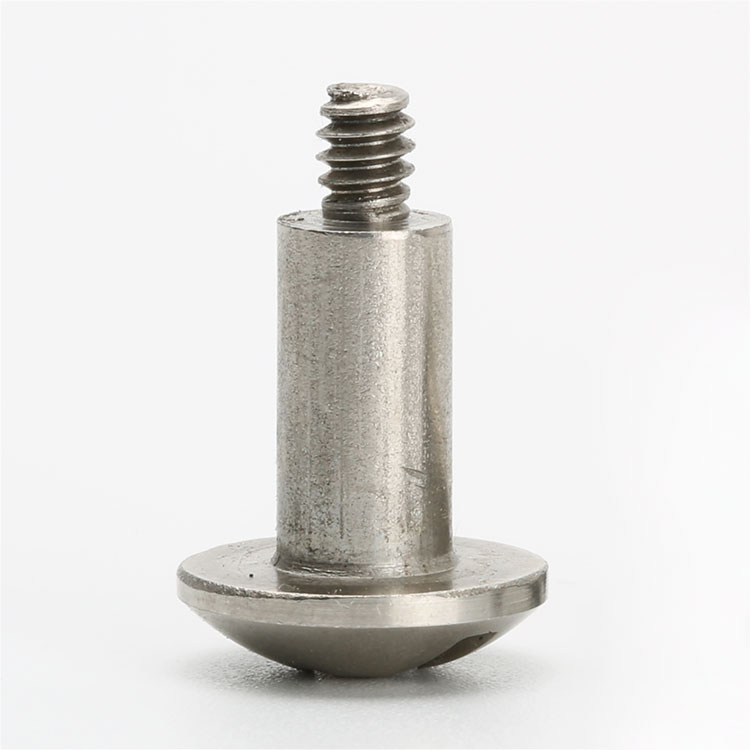
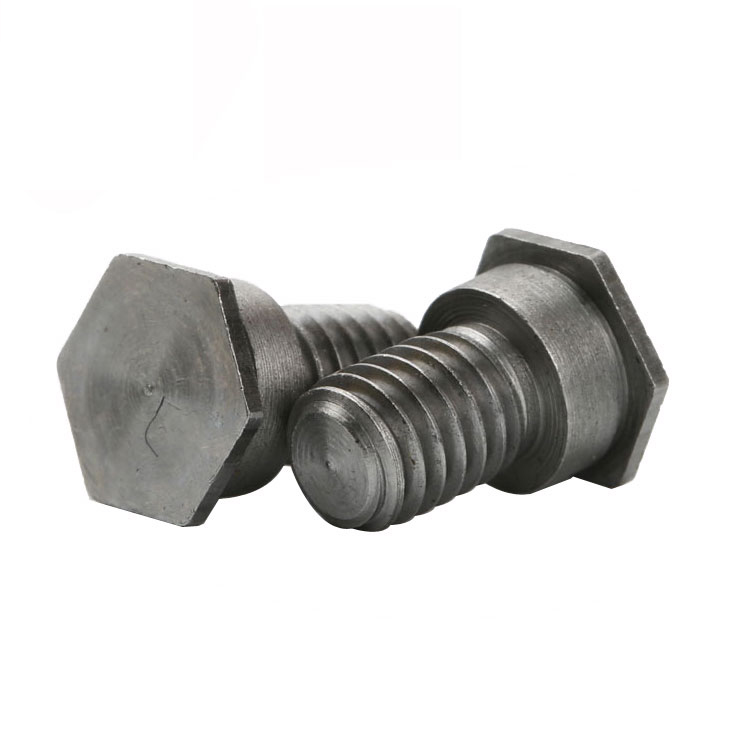
Shoulder. An unthreaded band below the head that sets the clamped length.
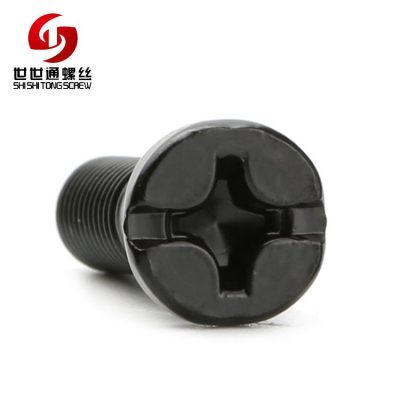
Combination recess. A slot and a Phillips cross in one head, for either driver.
They are used where the fixing is black hardware: audio and AV racks, automotive trim and brackets, optical and photographic equipment, and any assembly where a black screw has to stay black after it has been driven and where the joint must not shake loose.
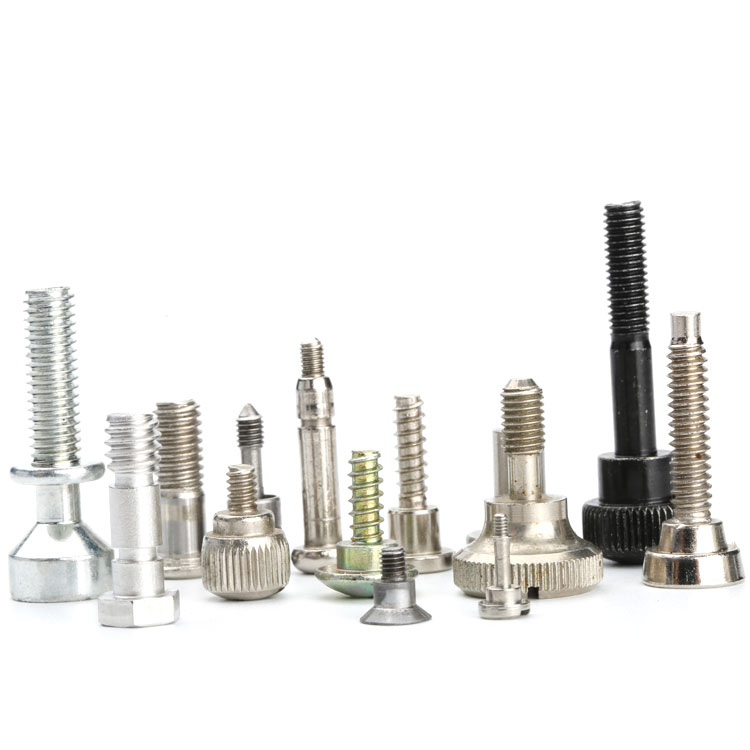
The word non-standard on this screw covers four features that are not in any catalogue: the head is thinner than a standard cheese head of the same diameter, the serrations under it are cut to a tooth count and height agreed with the customer, the shoulder is a set length, and the recess is a combination. Each of those came from a drawing rather than from a standard, which is why the part is quoted from a drawing and not from a size list.
The serrations are the feature most often mistaken for decoration. A ring of teeth under the head presses into the panel when the screw is tightened, and that bite is what keeps the joint from loosening under vibration. The tooth height decides how deep the bite goes: too shallow and the joint creeps, too deep and the teeth cut through a thin panel or a coating.
The shoulder sets how much of the joint is clamped. Between the serrated face and the first thread there is a plain band, and its diameter and length decide whether the screw locates in a bore or simply passes through a clearance hole. A black zinc plated screw with a shoulder is doing two jobs at once, and the drawing has to say which one matters.
The combination recess lets one part run on two driver types. That is convenient for a service kit, and it costs head material: the slot removes material from the cross and the cross removes material from the slot, so the head has to be tall enough for both. On this screw the head is deliberately thin, which puts the recess depth and the head height in direct competition.
The black zinc layer is the fourth feature, and the thinnest. It is a zinc coating with a black passivate or dye, and it adds only a few microns. It changes the recess and the thread slightly, and it is exactly the layer that the serrations and the bit wear through first, which is why the colour has to be checked where it will wear rather than on the flat of the head.
Read together, the four features explain the price difference from a catalogue screw. A black zinc plated screw of this kind is not a standard part with a black coat; it is four agreements, and the first article is where they are proved against each other.
A black zinc plated screw of this kind is quoted by head diameter and height, serration tooth count and height, shoulder diameter and length, recess type and depth, thread size and pitch, length, material and finish. Custom lengths up to 2,000 mm, subject to DFM review after drawing submission. The sample is M6 by 19 mm with a 10 mm head, 2.7 mm high.
| Item | How it is defined | What we control |
|---|---|---|
| Head | Cheese head, 10 mm across, 2.7 mm high | Diameter, height and top radius |
| Serration | Teeth under the head | Tooth count, height and angle |
| Shoulder | Unthreaded band below the head | Diameter and length |
| Recess | Slot and Phillips combination | Width, depth and cross size |
| Thread | M6 machine thread, 19 mm long | Size, pitch and length |
| Finish | Black zinc | Thickness, colour and coverage |
The serration is written as a tooth count and a height, not as a decorative finish. A ring that is described only as knurled can be made with teeth too small to bite, and the joint then depends on torque alone.
The shoulder is written with its length between the serrated face and the first full thread, because that length is what the joint clamps. A shoulder measured from the head face instead of from the serration changes the clamp by the tooth height.
The recess is written as a combination and with a depth that leaves material between the slot floor and the bearing face. On a 2.7 mm head that is the dimension that decides whether the head survives the driver, and it is measured on the first article rather than assumed.
Four properties decide this part, and each carries a cost:
| Property | What it gives | What it costs |
|---|---|---|
| Serrated under-head | A bite into the panel that resists loosening | Marks the panel and the coating |
| Shoulder | A defined clamp length and a locator | A second diameter to hold to tolerance |
| Combination recess | Slot or Phillips, one part | Head material shared between two shapes |
| Black zinc | A dark finish at low cost | Thin layer; colour varies between lots |
The value is a black fixing that grips the panel, holds a set clamp length and can be driven with whatever the line has, without a separate washer or a locking compound.
The cost is that every one of those features is a dimension, and each one interacts with the others: teeth against panel thickness, shoulder against the bore, recess against head height, coating against both the recess and the thread.
The recorded finish is black zinc. It is a zinc coating with a black passivate or dye over it, applied after the thread and the serrations are formed, and it protects the steel sacrificially at the scratches where the colour has gone.
| Option | How it protects | Effect on recess and thread | Typical use |
|---|---|---|---|
| Black zinc | Thin sacrificial zinc layer | Small build; colour wears at the edges | AV, electronics and trim |
| Black oxide and oil | Conversion layer plus film | No build; thin protection | Dry indoor mechanisms |
| Black phosphate and oil | Conversion layer that holds oil | No build; dark grey-black | Machine parts indoors |
| Zinc-nickel black | Thicker alloy layer | Build; thread re-checked | Damp and outdoor joints |
| Black chrome over zinc | Decorative layer over zinc | Build; colour checked | Visible premium hardware |
Black zinc reads as a deep, slightly uneven black, and the unevenness is normal: the dye takes differently on a flat face than inside a recess or a serration valley. A customer asking for a uniform black across an 8,000 piece order is asking for a colour standard, not just a finish, and the standard is set against a retained sample.
Thickness matters more here than on a plain zinc screw because the recess is shallow. A heavier black zinc on a thin head can fill the top of the cross enough that the bit body sits high and the driver cams out before the screw has seated.
Where the serrations bite, the coating goes first. Bare steel at the teeth is expected and is why the zinc underneath still matters; the exposed steel is galvanically protected by the surrounding zinc until the layer is used up. In a damp joint that is a matter of a few months rather than a season.
Three products where the screw is black, gripped and seen:
| Where it sits | The screw holds a rack ear, a panel or a speaker baffle where black hardware is wanted. |
| When it goes wrong | Paint chips around the head, or the panel works loose under transport vibration. |
| Why it happens | A serrated head biting a painted panel, with a coating that wears at the teeth. |
| What we control | Serration height and torque agreed; sample fitted and shaken on the panel. |
| Where it sits | The screw fixes an interior bracket or a trim piece where black is the finish. |
| When it goes wrong | The trim rattles, or the head leaves a bright ring where the paint has gone. |
| Why it happens | A shoulder that is short of the trim thickness, or no serration to take up the clearance. |
| What we control | Shoulder length and serration agreed; sample fitted to the trim. |
| Where it sits | The screw closes a housing where a bright screw would show on the product face. |
| When it goes wrong | The black wears to a grey ring, or the recess fills and the bit will not seat. |
| Why it happens | A thin coating over a shallow recess, and a driver used at the end of its life. |
| What we control | Coating thickness and recess depth controlled; bit checked at the station. |
Four points that decide whether a non-standard black screw is repeatable:
|
Serration written as dimensions
Tooth count, height and angle are on the drawing, because a knurled ring that looks right may not bite. Basis: Teeth specified. |
Serrations formed before plating
The teeth are formed in the head, then plated, so the coating is measured over them rather than assumed. Basis: Coating over formed teeth. |
|
Recess driven at line torque
The first article is driven with the production bit and inspected for wear at the slot and cross. Basis: Recess proved under drive. |
Colour locked to a sample
A retained sample sets the black, and each lot is compared with it under the same light. Basis: Same black across lots. |
A black zinc plated screw of this type fails on the details that no catalogue lists: the bite of the teeth, the length of the shoulder and the depth of a combination recess in a thin head. These four points are where they are proved.
These screws are cold headed from carbon steel wire, with the serrated ring and the combination recess formed in the heading die, the shoulder turned or formed, the thread rolled, and the part then black zinc plated. The first piece of every run is measured on head, serration, shoulder, recess and thread before plating and again after it.


|

|
A non-standard head means a non-standard die. The serrations and the recess are formed in the same blow, so the die carries both features and wears in both at once; a die that is polishing the recess is also dulling the teeth, and the first sign is usually a batch that no longer grips.
The shoulder is the feature that makes this part a turned or a headed part depending on the drawing. Where the shoulder is much smaller than the head, the blank can be headed and the shoulder formed; where it is a long, closely toleranced band, the part is turned from bar and the head is milled. The choice is a cost decision made at the drawing review.
Plating is done in a barrel, which means the parts touch each other. On a serrated head that contact can chip the black at the tooth tips before the parts reach the customer, so the load is sized and the parts are inspected for chips at the teeth as well as for colour.
What decides whether a batch of black zinc plated screws passes is the teeth that grip, the shoulder that sets the clamp and the recess that takes the bit. The inspection agreement covers all three.

Head, teeth and shoulder on the projector |

Thread checked after plating |

Salt-spray sample |

Wire and part checked |
The serration is measured for tooth height and pitch on the projector and checked with a strip of the panel material, because the useful question is how far the teeth go into that material rather than how tall they are. A tooth that measures correctly can still be too rounded to bite.
The shoulder is measured for diameter and for length between the serrated face and the first full thread. That length is what the customer’s joint sees, and it is measured from the serrated face even where the drawing dimensions it from the top of the head.
The recess is measured for slot width, cross size and depth, and the first article is driven with the production bit and inspected for bright wear at the slot ends and at the cross corners. On a thin head those two places are where the driver shows first.
The finish is checked for thickness, colour against the retained sample and chips at the tooth tips. Where salt-spray hours are specified, a sample is run and the result recorded with the coating thickness, because black zinc on carbon steel is a thin layer and the record should say what it survived.
Every batch of black zinc plated screws is traceable to the wire it was headed from and to the plating lot. The material certificate states the steel grade and the heat number, and the inspection record carries the head, serration, shoulder, thread and coating thickness against the drawing.

ISO 9001:2015 |

RoHS test report |

Registered trademark |

Patent: security screw and driver |
With each shipment we supply the material certificate and the inspection record for the head, shoulder, thread and coating. The records carry the batch number, so a repeat order of black zinc plated screws can be compared with the first on the two features that decide the joint: the tooth height and the shoulder length.
More than 8,678 customers in 89 countries and regions have ordered from Shi Shi Tong; 87% of orders come from repeat customers and 56% through referrals. Most projects follow the same route: drawing review, first-article approval, then batches checked against that sample. On a non-standard black screw the first article is fitted to the customer’s panel or bracket, because the teeth and the shoulder only prove themselves in that joint. Buyers visit during the process to review samples.
|
8,678+
customers served
|
87%
of orders from repeat customers
|
56%
of orders through referrals
|
89
countries and regions shipped to
|
Buyers and quality engineers visit for sample review, process discussion and supplier audits; the visit is arranged around production so the heading cells and the plating line can be seen on the day the parts run.

Customer group visit – sample review |

Customer group visit – process discussion |

Customer group visit – factory tour |

Customer visit – project kick-off |

Danish customer – drawing review |

Industry exhibition – meeting customers |
The head height, the serration, the shoulder and the recess were set by a drawing rather than by a standard. The part is quoted from a drawing, not from a size list.
They bite the panel when the screw is tightened and resist loosening under vibration. Tooth height decides how deep that bite goes.
At the teeth and in the recess it will, because those are the contact points. The zinc under the black still protects the steel sacrificially until it is used up.
Close, but not identical, because a dye takes differently on a flat face than in a recess. A colour standard held against a retained sample is how the batch is judged.
Yes, and on a head this thin a Phillips-only recess can be cut deeper and hold the bit better. The combination is there for the service kit, not for strength.
Head diameter and height, serration tooth count and height, shoulder diameter and length, recess type and depth, thread, length, steel grade and finish.
How a non-standard black screw project runs from drawing to repeat delivery:
|
1
Send the drawing and the panel it goes into
|
→ |
2
Head, serration, shoulder and finish agreed
|
→ |
3
First article fitted and colour-matched
|
→ |
4
Batch production and repeat orders
|
Each step is confirmed with you before the next one starts; the drawing revision used for the first article is what repeat orders are checked against.
For a quotation, send the drawing with the head diameter and height, serration, shoulder diameter and length, recess, thread, length, steel grade and finish.
|
Head
|
Serration
|
Shoulder
|
|
Recess
|
Thread
|
Finish
|
Sending a drawing? The form below does not take attachments. Email the PDF, DXF or STEP file to sst@szsst88.com with the part name and quantity in the subject line – the drawing is reviewed and a quotation follows.

 +86 13143444311
 sst@szsst88.com