Tel:
+86 13143444311
Email:sst@szsst88.com
Fax:+0086-755-27322278
Address:Building 9, First Industrial Zone, Tantou Industrial City, Songgang Street, Baoan District, Shenzhen 518105, Guangdong, China
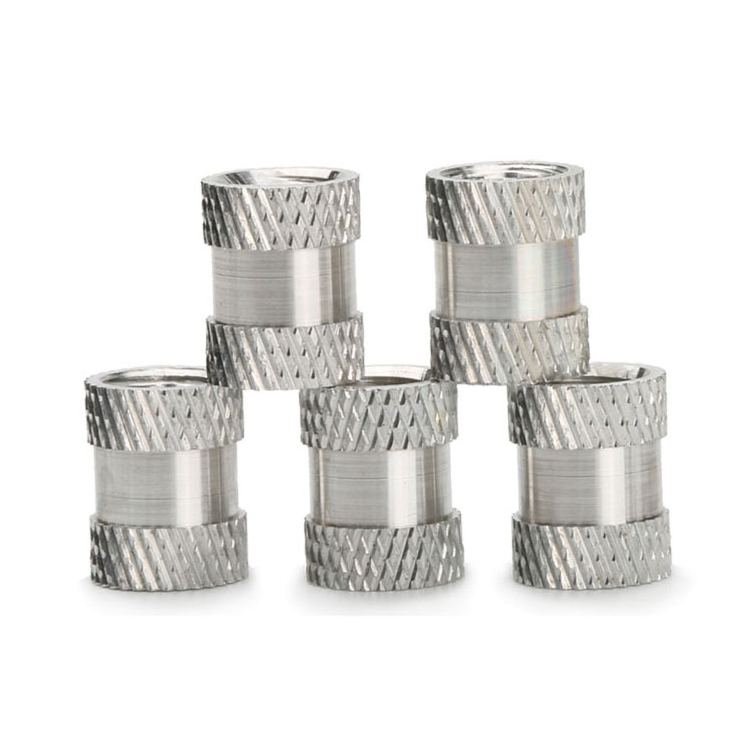
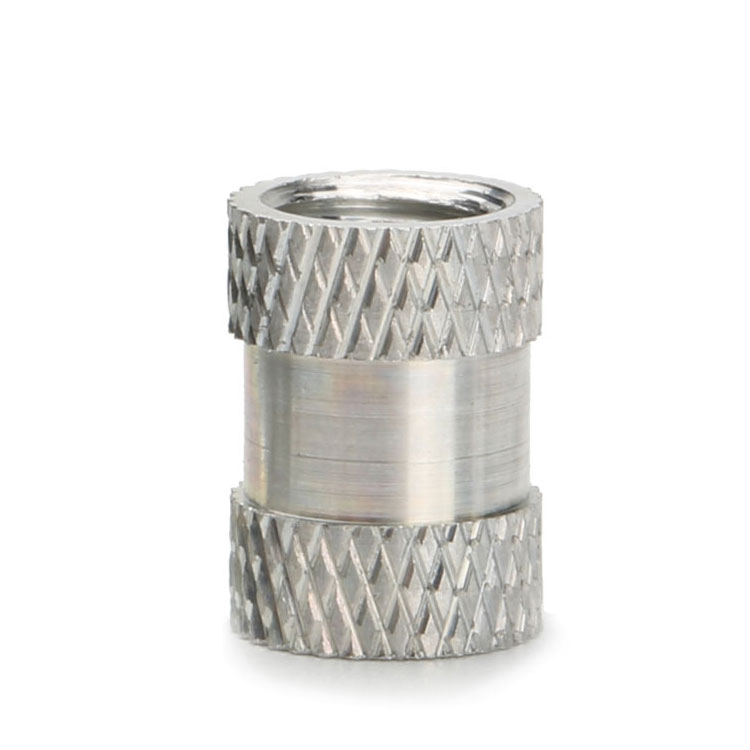
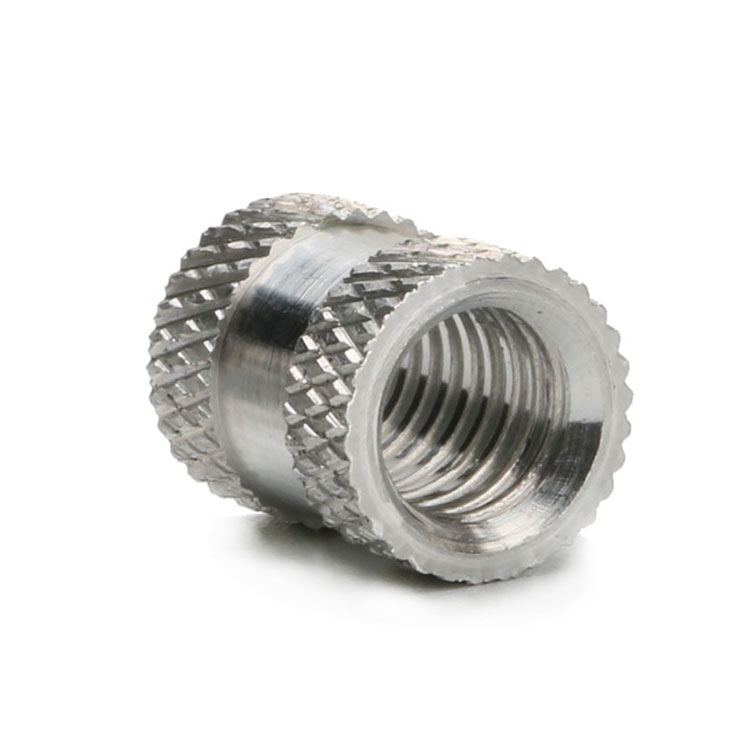
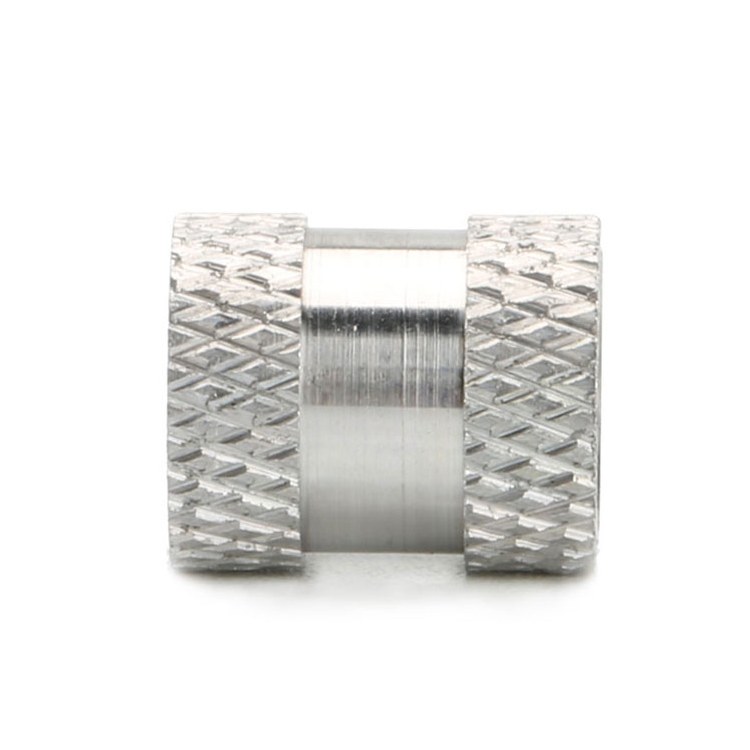
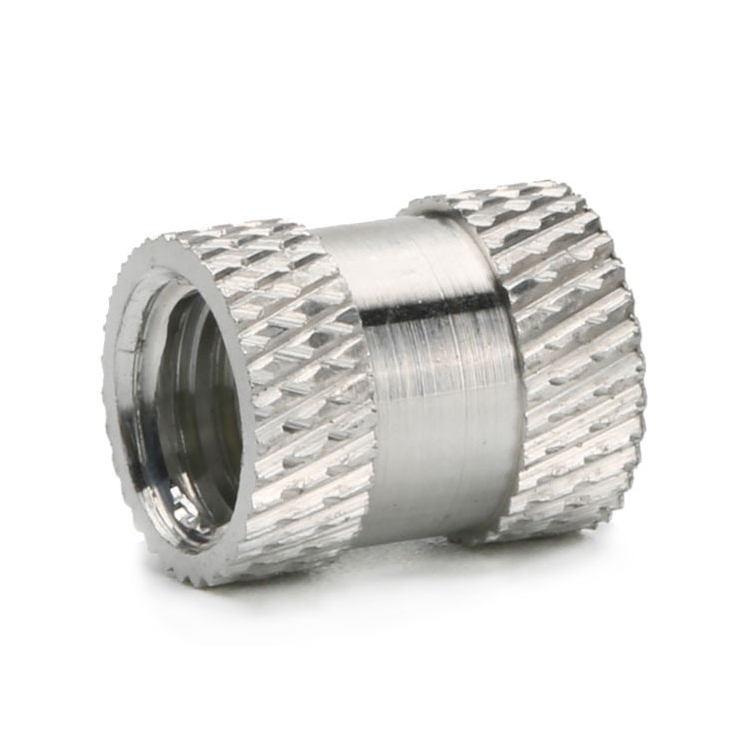
Type:Metric Aluminum Nuts, Knurled Thumb Nuts; diamond knurl bands at both ends, plain band in the middle, through machine thread (Non-Standard)
Materials:Aluminum; alloy and temper per drawing
Surface treatment:Plain, cleaned (no anodizing, no plating, no oil film)
Body:Cylindrical body, turned; knurl bands raised, plain band turned concentric and used as the measuring datum
Knurl:Diamond (cross) knurl at both ends; band diameter, pitch and depth per drawing
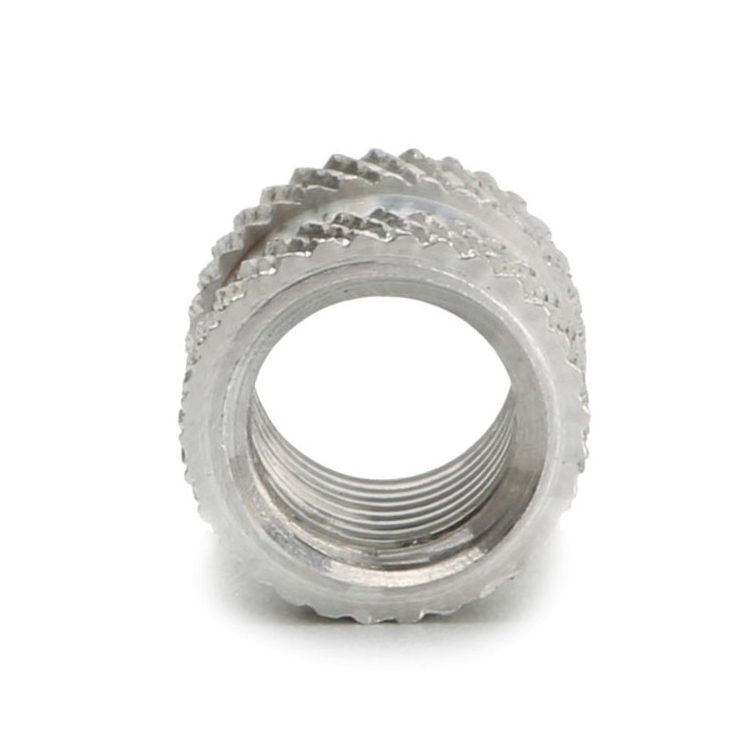
Thread:Internal machine thread, 60 degrees, cut or tapped through the full body
Chamfer:Both bore entries chamfered; no counterbore
Drive:Fingers on the knurl; no wrench flats, no recess, no slot
Forming:Turned from bar, knurled, drilled and tapped, deburred, cleaned and sorted
Size:M1 M2 M3 M4 M5 M6 M7 M8 M9 M10 M14
Number:387
We manufacture metric aluminum nuts as knurled thumb nuts: a turned cylindrical body with diamond knurl bands at both ends, a plain datum band between them and a thread tapped straight through. Body dimensions, band widths, thread and alloy are taken from your drawing.
Watch the factory video·Email sst@szsst88.com
ISO 9001:2015 · Manufacturing since 1998 · 8,678+ customers · 89 countries and regions
Made to order – there is no stock catalogue. Each part is produced to your drawing, and production starts after drawing review and first-article approval.
Metric aluminum nuts are threaded nuts in aluminium, sized to the metric thread system so that any M-series screw or stud of the same pitch will fit. The recorded item on this page is a knurled thumb nut: a turned cylindrical body with diamond knurl bands at both ends, a plain band between them, and a machine thread tapped straight through. It is quoted from M1 to M14 with Number 387.
Knurled thumb nuts. There are no wrench flats and no socket. The knurl is the drive, turned between the fingers, which is what makes the part a thumb nut rather than a plain nut with a decorative finish.
Two knurl bands, one plain band. The diamond knurl at each end gives grip in both directions; the plain band in the middle is turned true and used as the measuring datum. That plain band is also what lets a nut read as machined rather than as a stamped part.
Through thread. The thread runs from one chamfered entry to the other, so the nut can be fitted either way round and sits flush on the part. Both entries are chamfered so the first thread starts without cross-threading.
Aluminium. Light, corrosion resistant in dry air, easy to turn, and soft. On a metric aluminum nuts part the softness is the property that decides the joint: the thread wears, it galls against a steel screw, and it does not take a high torque.
Together these decide the joint: the metric thread matches the screw, the knurl gives the fingers their grip, the plain band holds the datum, and the aluminium body keeps the assembly light.
The body starts as aluminium bar. It is turned to diameter and length, and the plain band in the middle is turned concentric in the same setup, so it can serve as the datum for the knurl bands at each end. On a knurled part the knurl raises the diameter as the material flows, so the band between two knurls is the only surface left at the turned diameter.
The diamond knurl is formed by pressure, not cut. The material flows into the die and the band grows slightly in diameter, which is why the knurl bands are specified by their own diameter and not by the bar. On metric aluminum nuts that single number is what keeps the two bands at the same size. Cutting a knurl would leave a burr at each flute and a surface that wears the fingers.
The bore is drilled and tapped through the full length. On aluminium the tap cuts cleanly when the alloy suits it and tears when it does not, and the tear shows as a rough flank that a steel screw will pick up on first assembly. The thread is checked with GO/NO-GO gauges after tapping, and the entries are chamfered so the gauge and the screw both start square.
Deburring follows the tapping. On a through-threaded nut the burr sits at the thread exit inside the bore, where it cannot be seen and where it will cross-thread the first screw that is fitted. It is removed from both ends rather than from the end that was tapped last.
Cleaning is the last step, and the recorded configuration has no anodising, no plating and no oil film. Bare aluminium is what the drawing asks for, which matters if the nut is to be anodised later, because anodising a tapped thread changes its size and masking it is a separate operation.
The family is quoted from M1 to M14, with M1, M2, M3, M4, M5, M6, M7, M8, M9, M10 and M14 in the recorded range. Custom lengths up to 2,000 mm are subject to DFM review after drawing submission; on metric aluminum nuts of this form the useful length range is short, because a thumb nut that is too long is hard to turn and wastes material.
| Item | How it is defined | What we control |
|---|---|---|
| Thread | Metric internal machine thread, tapped through | Gauged per batch with GO/NO-GO |
| Body diameter | Cylinder across the plain band | Turned diameter measured with a micrometer |
| Knurl bands | Diamond knurl at both ends, diameter and pitch per drawing | Checked on the first article |
| Plain band | Width and concentricity, used as datum | Checked on the projector |
| Length | Overall, end to end | Measured on the shop plate |
| Chamfer | Both bore entries | Checked on the first article |
| Alloy | Aluminium grade and temper per drawing | Confirmed on the material certificate |
The plain band is the dimension that is easiest to get wrong and hardest to notice. If it is not concentric, the knurl bands run off centre and the nut looks out of true when it spins on a screw; if it is too narrow, there is no datum left after knurling and the band diameters cannot be measured reliably. It is quoted with a width so that it survives the knurl. Every batch of metric aluminum nuts is checked on that band first, because it is the only surface that can be measured.
Thread length is the full length, so the engagement is the whole body. That is why the length is a thread decision as well as a shape decision: a short metric aluminum nuts part engages few threads, and in soft aluminium that is where the thread strips. Metric aluminum nuts are therefore quoted with a length range as well as a thread.
A knurled thumb nut is specified when the joint has to be adjusted without a tool. The features that make that possible also set the limits, and those limits are worth stating before the drawing is issued.
| Feature | What it gives | What it costs |
|---|---|---|
| Diamond knurl both ends | Grip in both directions, either way round | Cannot be turned with a wrench |
| Plain middle band | Measuring datum and a machined look | Narrower grip area than a full knurl |
| Through thread | Fits either way; sits flush | No locking feature of its own |
| Aluminium body | Light, corrosion resistant, easy to machine | Soft thread; low torque limit |
| Bare finish | Ready to anodise or assemble | No barrier against galvanic corrosion |
The torque limit is the first thing to agree. A thumb nut is turned by fingers, so the torque is already low; but aluminium threads are soft, and a steel screw tightened hard into a bare aluminium nut will pull the thread before anything else fails. Where the joint needs real preload, the nut is not the right part, or the screw is plated and a thread insert is used. That limit is the first line of any honest specification for metric aluminum nuts.
Aluminium against steel is also a galvanic pair. In dry indoor air that is not a problem; in a damp or salty environment the aluminium becomes the anode and corrodes around the thread, which is why bare metric aluminum nuts are used indoors and anodised or plated ones outdoors. The recorded part is bare, and the drawing should say where it goes.
The knurl is what the hand feels, and it is formed rather than cut. A knurl die that is worn produces bands that measure correctly and still slip, so the first article is turned between the fingers as well as measured. Diamond knurl grips in both directions, which suits a nut that has to come off as easily as it goes on.
The recorded finish is plain cleaned aluminium with no anodising, no plating and no oil film. That leaves the thread at its tapped size and the knurl at its formed texture, and it means the nut can be anodised or assembled without a stripping step.
| Option | What it does | Effect on thread and knurl | Typical use |
|---|---|---|---|
| Bare, cleaned | No film; ready to assemble or anodise | No dimensional change | Indoor assemblies |
| Clear anodising | Harder surface, mild corrosion protection | Thread growth; threads masked or re-tapped | Visible hardware indoors |
| Black anodising | Dark finish for instrument hardware | Thread growth; threads masked | Audio, camera and instrument bodies |
| Colour anodising | Decorative colour | Thread growth; threads masked | Consumer and display products |
| Nickel plated | Silver tone, harder surface | A few microns; thread re-checked | Matching steel hardware |
Anodising is the option most buyers ask about and the one that changes the part most. The coating grows into and out of the surface, so a tapped thread gets tighter; threads are either masked before anodising or re-tapped afterwards, and either way the drawing has to say which. A knurled band also changes feel, because the coating rounds the flute crests.
Where the nut is anodised, the colour is usually the reason. On audio and instrument hardware a black anodised nut reads as part of the chassis, and the aluminium body is what makes the anodising possible at all — a plated steel nut cannot take the same finish. It is also why anodised metric aluminum nuts are usually specified together with the chassis they sit on. That is the trade: the alloy is soft, but it is the only one that gives this look.
Three assemblies where a light knurled nut that can be turned by hand is the right part:
| Where it sits | The nut clamps a connector, a knob or a panel fitting from behind, and the part is adjusted or removed from the outside by hand. |
| When it goes wrong | A steel nut needs a spanner in a space where there is no room to swing one, and a plated nut reads as the wrong colour on a black chassis. |
| Why it happens | The panel is thin, the fixing is visible, and the assembly is opened for service. |
| What we control | Thread gauged after tapping, knurl checked by hand, and anodising agreed before the batch. |
| Where it sits | The nut locks a mount, a rail or an accessory fitting where weight matters and the part has to be adjusted without marking the finish. |
| When it goes wrong | A steel nut adds weight at the end of a rail and can gall on an aluminium thread, and a knurl that is too coarse marks the hand. |
| Why it happens | The assembly is light, the fixing is adjusted often, and the surface finish is part of the product. |
| What we control | Body diameter, band widths and knurl checked on the first article, alloy confirmed. |
| Where it sits | The nut holds a plate, a stop or a sensor bracket that is set by hand and re-set between jobs. |
| When it goes wrong | A hex nut needs a tool for every adjustment, and a bare aluminium nut on a steel stud seizes if it is left tight in a damp workshop. |
| Why it happens | The setting changes, the parts are light, and the adjustment is made by the operator. |
| What we control | Thread gauged per batch, chamfers checked, and the environment agreed so the finish suits it. |
Four reasons that matter on a knurled aluminium nut, each tied to what the drawing has to prove:
|
Bands and datum reviewed together
The knurl band diameters, the plain datum width and the overall length are reviewed as one set, so a band that will not measure after knurling is raised before the program is cut. Basis: Bands and datum reviewed as one set. |
Turning, knurling and tapping in one route
The body and the plain band are turned concentric, the knurl is formed at both ends and the thread is tapped through before deburring. Basis: One route from bar to cleaned nut. |
|
Thread and knurl checked on the part
The thread is gauged with GO/NO-GO from both ends, the bore entries are checked for burr, and the knurl is turned by hand on the first article. Basis: First article checked from both ends. |
First article to repeat production
The first article fixes the drawing revision, bar heat, program and knurl die; repeat orders are compared against that record. Basis: First article signed off before the batch is released. |
Shi Shi Tong turns these metric aluminum nuts from bar: the body and the plain middle band are turned concentric, the diamond knurl is formed at both ends, the bore is drilled and tapped through, and both entries are chamfered and deburred before cleaning and sorting. The first nut of every run is measured on the bands, the length and the thread, and turned by hand, before the batch continues. The same sequence applies across the size range, so metric aluminum nuts in M3 are inspected as carefully as those in M10.


|

|
Aluminium machines quickly, which is an advantage and a risk. The advantage is that a turned thumb nut is economical at modest volumes and easy to change; the risk is that a worn tap tears the thread before the gauge shows it, and a torn thread in soft aluminium will seize on the first steel screw. That is why the thread is gauged from both ends and the bore entries are checked for burr on every first article.
What decides whether metric aluminum nuts pass is the thread, the body, the knurl bands, the plain band and the chamfers. The inspection agreement covers those, and the criteria come from the drawing.

Bands and datum on the projector |

Internal thread gauged per batch |

Hardness testing of the bar stock |

Salt-spray testing where a coating is specified |
The thread is gauged from both ends. On a through-threaded nut one end can pass and the other fail if the tap has worn or the deburring has left a lip, and the nut that fails at the second end is the one that cross-threads on the line. Gauging from both ends is the only way to catch it.
The knurl bands are checked for diameter and for pattern, and the plain band for concentricity. A band that is off centre turns into a wobble when the nut spins on a screw, which on a thumb nut is felt immediately. The first article is spun on a screw and turned by hand before the batch is released. A batch of metric aluminum nuts is only released when both the thread and the knurl records are complete.
Every shipment of metric aluminum nuts is traceable to the bar it was made from. The alloy and heat number are recorded on the material certificate supplied with the parts, and the inspection records follow the criteria agreed on the drawing.

ISO 9001:2015 |

RoHS test report |

Registered trademark |

Patent: security screw and driver |
With each batch we supply the material certificate, the inspection record for the criteria on the drawing and, where it is listed, the third-party report for the alloy. The documents carry the drawing revision and the batch number, so the paperwork can be matched to the parts.
More than 8,678 customers in 89 countries and regions have ordered from Shi Shi Tong; 87% of orders come from repeat customers and 56% through referrals. Most projects follow the same route: drawing review, first-article approval, then batches checked against that sample. On a knurled nut the first article is spun onto a screw and handled, because the fit and the feel are both part of the specification. Buyers visit during the process to review samples and to see how the knurls are formed. Orders of metric aluminum nuts are usually placed against that sample rather than against the drawing alone.
|
8,678+
customers served
|
87%
of orders from repeat customers
|
56%
of orders through referrals
|
89
countries and regions shipped to
|
Buyers and quality engineers visit for sample review, process discussion and supplier audits; the visit is arranged around production so the turning cells and the knurling station can be seen on the day the parts run.

Customer group visit – sample review |

Customer group visit – process discussion |

Customer group visit – factory tour |

Customer visit – project kick-off |

Danish customer – drawing review |

Industry exhibition – meeting customers |
Nuts in aluminium with a metric internal thread, so any M-series screw or stud of the same pitch fits. This page’s part is a knurled thumb nut.
A nut with a knurled body that is turned between the fingers instead of with a wrench. There are no flats and no socket on this part.
The knurls give grip at each end and allow the nut to be fitted either way. The plain band is turned concentric and used as the measuring datum.
No. They are hand-tightened parts, and aluminium threads are soft. A high preload will pull the thread rather than tighten the joint.
Only if the finish or the environment calls for it. Anodising tightens a tapped thread, so threads are masked or re-tapped and the drawing should say which.
Thread size and pitch, body diameter, knurl band diameter and width, plain band width, overall length, chamfers, alloy grade and finish.
How a metric aluminum nut project runs from drawing to repeat delivery:
|
1
Send the drawing or sample
|
→ |
2
Bands and thread review
|
→ |
3
First article spun on a screw
|
→ |
4
Batch production and repeat orders
|
Each step is confirmed with you before the next one starts; the drawing revision from the first article is what repeat orders are checked against.
For a quotation, send the drawing with the thread size and pitch, body diameter, knurl band diameter and width, plain band width, overall length, chamfers, alloy grade and finish.
|
Thread and pitch
|
Body diameter
|
Knurl bands
|
|
Plain band width
|
Overall length
|
Alloy and finish
|
Sending a drawing? The form below does not take attachments. Email the PDF, DXF or STEP file to sst@szsst88.com with the part name and quantity in the subject line – the drawing is reviewed and a quotation follows.

 +86 13143444311
 sst@szsst88.com