Tel:
+86 13143444311
Email:sst@szsst88.com
Fax:+0086-755-27322278
Address:Building 9, First Industrial Zone, Tantou Industrial City, Songgang Street, Baoan District, Shenzhen 518105, Guangdong, China
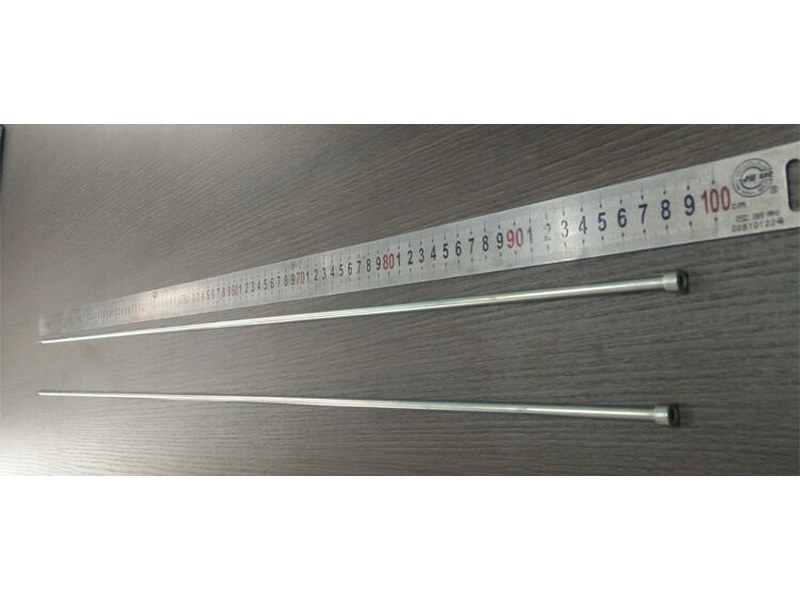
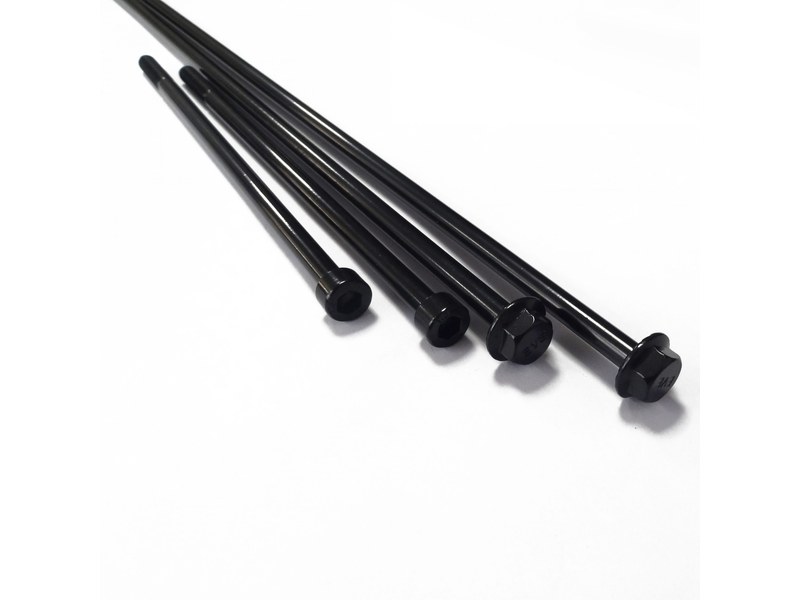
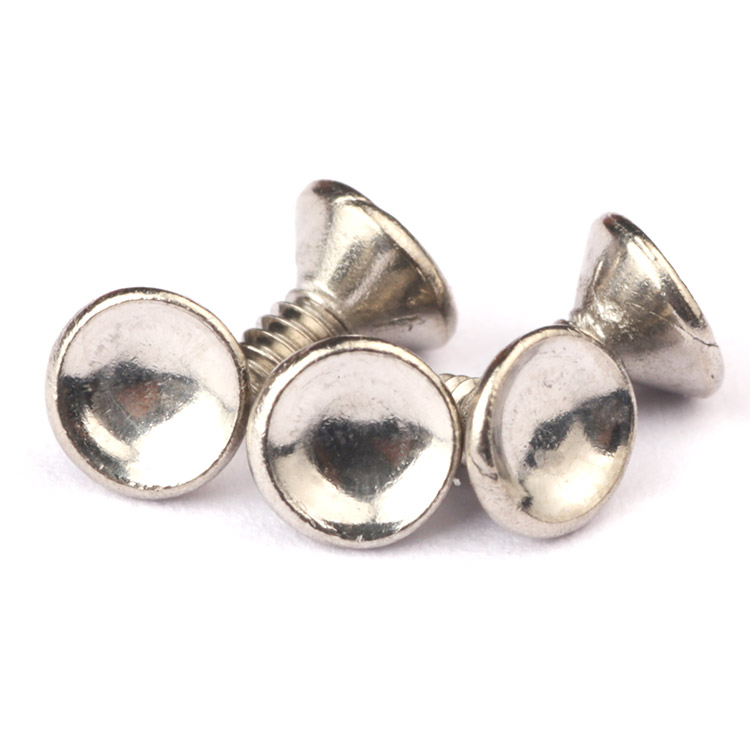
Type:Motherboard Standoff Screws
Materials:Stainless Steel
Surface treatment:Plain
Head Type:Hex Head (external)
Drive:Nut driver on hex body
Thread:Machine thread, both ends
Point:Plain, chamfered
Forming:Single Die Heading
Size:M1 M2 M3 M4 M5 M6 M7 M8 M9 M10
Number:583
We make motherboard standoff screws in plain A2 stainless as hex male-female standoffs, quoting them from M1 to M10. Across flats, body height with a stated datum, and both thread sizes come from your drawing, and the first article is fitted with a board.
Watch the factory video·Email sst@szsst88.com
ISO 9001:2015 · Manufacturing since 1998 · 8,678+ customers · 89 countries and regions
Made to order – there is no stock catalogue. Each part is produced to your drawing, and production starts after drawing review and first-article approval.
Motherboard standoff screws are hex-bodied spacers with a male thread on one end and a female thread in the other, used to hold a circuit board a fixed distance above a chassis or a plate. These are plain A2 stainless, quoted from M1 to M10 with Number 583, and the hex body is what the installer turns with a nut driver.
Hex body. A six-sided barrel that sets the clearance and provides the surface a nut driver or spanner grips.
Male thread. The stud that enters the chassis plate or the base panel.
Female thread. The tapped bore at the other end that takes the board screw.
No recess. There is no slot or socket; the drive is the outside of the hexagon.
Plain stainless. A2 grade, passivated and uncoated, so the threads and the hex are as made.
Motherboard standoff screws appear in every box with a board in it: computer chassis, control cabinets, instrumentation racks, LED drivers and power supplies. They do three jobs at once, and they do them with one part: they space the board, they isolate it from the plate, and they give the board screw something to pull against.
The dimension that matters on a standoff is not the thread, it is the height. The board has to sit at a distance set by the connectors that plug into it, the components underneath it, and the clearance the airflow needs. Change the height by half a millimetre and a card no longer seats, or a solder joint touches the plate.
That makes the height tolerance on motherboard standoff screws the real specification. A standoff is usually quoted as a body length, and the male stud adds to the overall length below the plate; two suppliers can both call a part 10 mm and mean different things. The drawing has to say whether the 10 mm is the body, the body plus the stud, or the overall length including the board-side thread.
On motherboard standoff screws the male thread is the joint that takes the load. It is a small stud relative to the hex body, so the tightening torque is limited by the stud and not by the body: a nut driver will happily shear a small stud because the hex looks strong. In practice the standoff is run down by hand until it seats, and only nipped with the driver.
The female thread of motherboard standoff screws is the one that gets damaged. The board screw goes in from above, often at an angle, into a shallow tapped bore, and cross-threading there is the most common failure in the whole assembly. A standoff with a generous chamfer at the bore and a thread that starts cleanly saves more boards than any other feature.
Stainless adds a property that matters in equipment rooms, and it is the reason motherboard standoff screws are often specified in stainless. Plated hardware can grow zinc whiskers, fine conductive filaments that form on zinc coatings and eventually bridge adjacent conductors; a standoff is exactly the kind of part that sits near a board for years. Stainless has no coating to grow anything, which is one reason it is specified in telecom and server hardware.
The recorded range is M1 to M10, with lengths made to the drawing. Custom lengths up to 2,000 mm are subject to DFM review after drawing submission. For motherboard standoff screws the quotation carries the hex across flats, the body height, the male thread size and length, and the female thread size and depth.
| Item | How it is defined | What we control |
|---|---|---|
| Hex body | Across flats and height | Across flats, height and end squareness |
| Male thread | Size and length below the body | Pitch, length and thread start |
| Female thread | Size and depth in the top | Pitch, depth and bore chamfer |
| Height | Body only, or overall | Stated datum and tolerance |
| Material | A2 stainless | Grade and heat number on the certificate |
| Finish | Passivated, plain | Thread and hex as formed |
On motherboard standoff screws the male and female threads are often different sizes, and that is normal: a standoff can take an M3 board screw on top and an M4 stud into the plate. Both belong in the same block of the drawing, and neither can be inferred from the other.
The height datum on motherboard standoff screws is the number that causes the most returns. Quoting body height alone is workable if both sides agree that the stud is excluded; quoting overall length is workable if the stud length is fixed. Mixing the two produces a part that is one thread length short.
Four features define motherboard standoff screws, and each one has a consequence in the assembly:
| Feature | What it gives | What it costs |
|---|---|---|
| Hex body | Spacing plus a drive surface | Needs clearance for a nut driver |
| Male-female thread | Board fixed without a second part | Two thread sizes to specify |
| Height tolerance | Board clearance is set by the part | Every error stacks into the connectors |
| Plain stainless | No coating, no whiskers, no flake | Galls in aluminium if over-tightened |
| No recess | Nothing to strip in the drive | Torque limited by the stud diameter |
The combined male-female form of motherboard standoff screws is what makes the part useful: one standoff replaces a spacer, a nut and a screw. The cost is that two threads have to be right, and a mistake in either end wastes the whole part.
The height requirement is absolute. A standoff cannot be adjusted after it is made, and on a rack of boards every one is the same part, so a height error repeats across the whole build rather than showing up as a single defect.
The recorded finish is passivation on A2 stainless with no coating. On board hardware that is deliberate: a plated standoff can shed particles into an enclosure and, in the case of zinc, can grow whiskers over time. Passivated stainless has a passive film measured in atoms, not micrometres.
| Option | How it protects | Effect on threads and hex | Typical use |
|---|---|---|---|
| A2 stainless, passivated | Passive chromium oxide film | Threads and hex as formed | Boards in enclosures |
| A4 stainless, passivated | Passive film with molybdenum | Threads and hex as formed | Marine and washdown racks |
| Brass, plain | None needed indoors | Softer threads; better conductivity | Earthing and RF hardware |
| Aluminium, clear anodised | Oxide layer | Build in threads; re-checked | Lightweight racks |
| Steel, zinc plated | Sacrificial zinc | Build in threads; whisker risk | Low-cost enclosures |
Where the standoff also carries an earth connection, brass or a plated steel part is sometimes chosen for conductivity, at the cost of the coating issues above. Where the part is purely mechanical, plain stainless is the simplest answer.
Where aluminium is used to save weight, the threads are anodised and the build has to be allowed for; a standoff whose female thread closes by a few micrometres will cross-thread the board screw on the first attempt.
Three assemblies where a standoff is the fixing:
| Where it sits | The standoff lifts a board off the base plate so connectors and solder joints clear it, and the board screw pulls down on the top thread. |
| When it goes wrong | The height is short and a card no longer seats fully in its slot. |
| Why it happens | The board clearance is set entirely by the standoff, and every board uses the same part. |
| What we control | Height datum and tolerance checked; first article fitted with a board. |
| Where it sits | The standoff spaces a controller board above a metal backplate where the mounting holes are already punched. |
| When it goes wrong | The stud cross-threads into the backplate and the standoff sits crooked. |
| Why it happens | The stud is small, the plate is thin, and the thread starts at a sharp edge. |
| What we control | Thread start and bore chamfer checked; first article fitted to a sample plate. |
| Where it sits | The standoff holds a driver board clear of a housing where insulation and airflow both depend on the gap. |
| When it goes wrong | The height varies between parts and the board touches the housing on the tallest. |
| Why it happens | The gap is the insulation distance, and the parts are fitted on a line. |
| What we control | Height measured on every batch; first article assembled in the housing. |
Four reasons that matter on a male-female standoff, each tied to something the drawing has to prove:
|
Height datum written down
Body height, stud length and both thread sizes are agreed with a stated datum, because a standoff quoted two ways is the usual source of a short part. Basis: Height datum agreed in writing. |
Turned and threaded in one route
The hex is formed or milled, the male stud threaded and the female bore tapped, then the parts passivated as a batch. Basis: One route from bar to passivated part. |
|
Both threads gauged
Male and female threads are gauged separately, because a standoff can pass on one end and cross-thread on the other. Basis: Both threads gauged. |
First article fitted with a board
The first article is fitted with a board and a board screw, because the bore chamfer and the clearance are only proven in the real assembly. Basis: First article fitted with a board. |
These parts are made from stainless bar: the hex body is formed or milled, the male stud is threaded, and the female bore is drilled and tapped from the other end. They are passivated as a batch, and the first part of every run is measured on across flats, body height, stud length, and both thread sizes.


|

|
The bore is the feature that decides whether motherboard standoff screws survive the assembly line. It has to be deep enough for the board screw to reach full engagement and shallow enough that the tap does not break through into the stud below. On a short standoff those two limits are close, and a bore that breaks through leaves a part that looks correct and leaks a thread into the male stud.
Threading the male stud of motherboard standoff screws is the second control, and the thread start matters as much as the length. A stud whose thread starts with a burred or incomplete turn will cross-thread into the plate even when the pilot hole is right, and the operator feels it as resistance rather than as a fault, so the standoff is driven in crooked.
What decides whether motherboard standoff screws pass is the height, the hex, the male thread and the female thread. The inspection agreement covers those four, and the criteria come from the drawing.

Height and hex across flats |

Both threads gauged |

Core hardness checked |

Salt-spray testing of the grade |
Height is measured from the stated datum, on every batch rather than by sampling alone, because a worn tool changes body height gradually and a batch-to-batch comparison would accept the drift. Across flats is checked for the nut driver, and the ends are checked for squareness.
Both threads are gauged, and a sample is assembled with a real board and board screw. That last check is the one that catches a cross-thread that no gauge shows: the board screw enters at whatever angle the assembler holds it, and the bore chamfer is what makes that angle survive.
Every batch is traceable to the bar it was made from and to the passivation batch that finished it. The grade and heat number appear on the material certificate supplied with the parts, and the inspection records follow the criteria agreed on the drawing.

ISO 9001:2015 |

RoHS test report |

Registered trademark |

Patent: security screw and driver |
With each shipment we supply the material certificate, the inspection record for the dimensions on the drawing and, where the grade is listed, the third-party report that covers it. The documents carry the drawing revision and the batch number, so a repeat order keeps the same height and the same threads.
More than 8,678 customers in 89 countries and regions have ordered from Shi Shi Tong; 87% of orders come from repeat customers and 56% through referrals. Most projects follow the same route: drawing review, first-article approval, then batches checked against that sample. On motherboard standoff screws the first article is fitted with a board and a board screw, because the clearance and the bore chamfer are only proven in the real assembly. Buyers visit during the process to review samples.
|
8,678+
customers served
|
87%
of orders from repeat customers
|
56%
of orders through referrals
|
89
countries and regions shipped to
|
Buyers and quality engineers visit for sample review, process discussion and supplier audits; the visit is arranged around production so the machines and the passivation line can be seen on the day the parts run.

Customer group visit – sample review |

Customer group visit – process discussion |

Customer group visit – factory tour |

Customer visit – project kick-off |

Danish customer – drawing review |

Industry exhibition – meeting customers |
It has to be stated. Body height excludes the male stud; overall length includes it. A standoff quoted two ways comes out one thread short.
Yes, and they often do: an M3 female thread for the board and an M4 male stud into the plate are a normal combination.
The stud sets the limit, not the hex body. Run it down by hand and nip it; a nut driver will shear a small stud.
No coating to flake into an enclosure and no zinc whiskers growing on a part that sits next to a board for years.
A chamfered bore and a clean thread start. It is checked by assembling a sample with a real board screw.
Across flats, body height with its datum, male thread size and length, female thread size and depth.
How a standoff project runs from drawing to repeat delivery:
|
1
Send the drawing and the plate
|
→ |
2
Height datum and both threads agreed
|
→ |
3
First article fitted with a board
|
→ |
4
Batch production and repeat orders
|
Each step is confirmed with you before the next one starts; the drawing revision from the first article is what repeat orders are checked against.
For a quotation, send the drawing with the across flats, the body height and its datum, the male thread size and length, and the female thread size and depth.
|
Across flats
|
Body height
|
Height datum
|
|
Male thread
|
Female thread
|
Grade
|
Sending a drawing? The form below does not take attachments. Email the PDF, DXF or STEP file to sst@szsst88.com with the part name and quantity in the subject line – the drawing is reviewed and a quotation follows.

 +86 13143444311
 sst@szsst88.com