Tel:
+86 13143444311
Email:sst@szsst88.com
Fax:+0086-755-27322278
Address:Building 9, First Industrial Zone, Tantou Industrial City, Songgang Street, Baoan District, Shenzhen 518105, Guangdong, China
Materials:Stainless steel
Surface treatment:Plain, passivated
Head Type:flat head
Drive:hexagon socket
Thread:machine thread
Socket:Hexagon socket, depth to the drawing
Point:Plain, chamfered
Forming:Turned or headed; cone and socket cut; thread rolled
Size range:M2 to M3 in the sample range
Available materials:titanium, aluminum, copper, carbon steel, stainless steel
Process:single machine
Model number:sst 0041
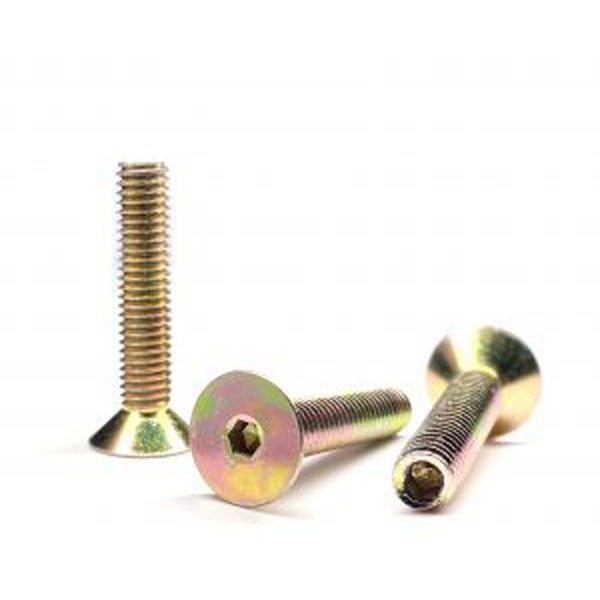
We make small stainless flat head hexagon socket screws, turned with the cone and socket formed to the drawing and passivated after machining. A countersunk head is the shallowest form there is, so at M2 size the socket runs out of depth and the key, not the thread, becomes the limit of the joint.
Watch the factory video·Email sst@szsst88.com
ISO 9001:2015 · Manufacturing since 1998 · 8,678+ customers · 89 countries and regions
Made to order – there is no stock catalogue. Each part is produced to your drawing, and production starts after drawing review and first-article approval.
A stainless steel flat head hexagon socket screw is a countersunk machine screw driven with a small Allen key, and at these sizes the drive is what makes or breaks the joint. These are the small sizes of hexagon socket screw: heads a few millimetres across, sitting flush in a thin panel, with a socket that is shallower than the head looks.
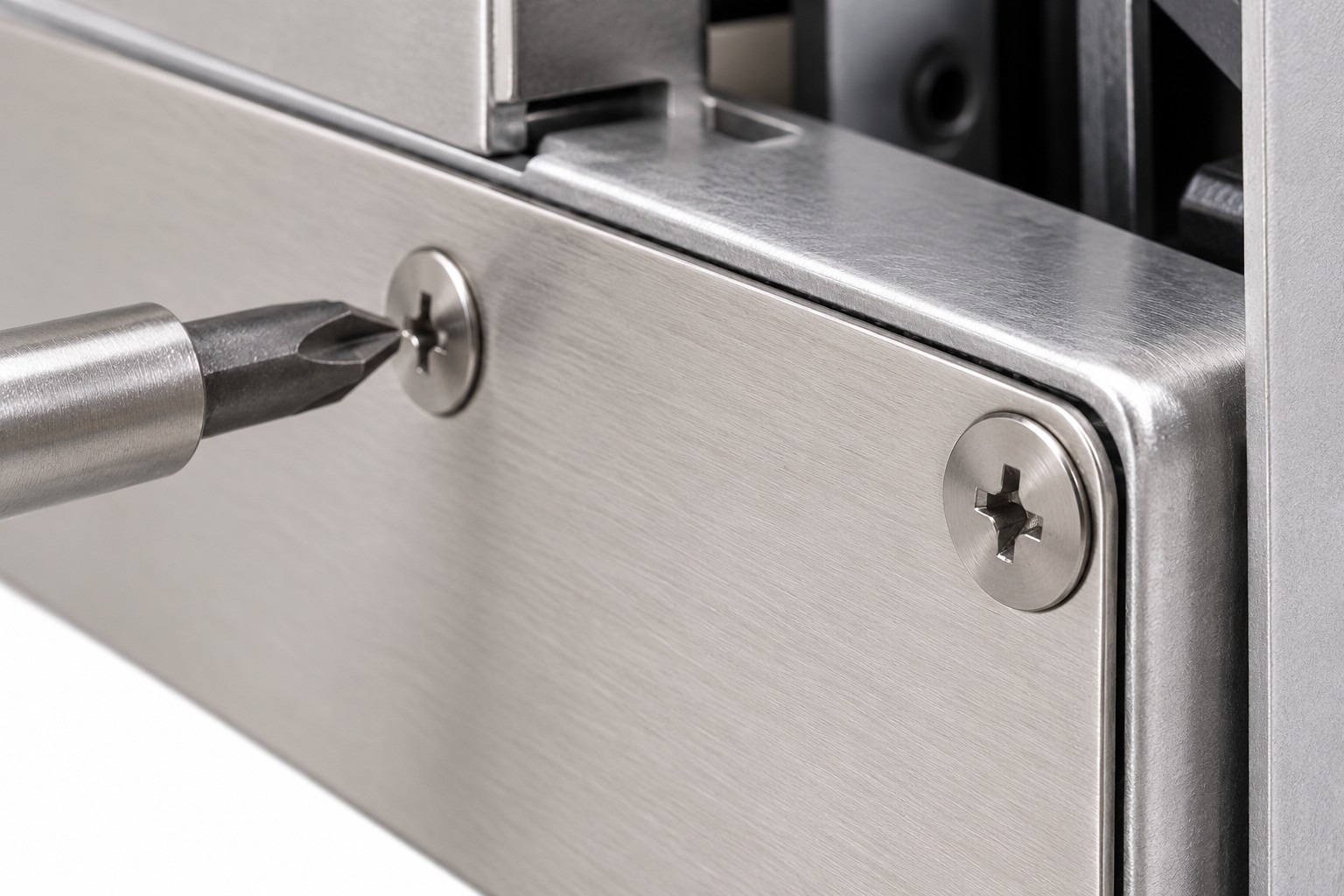
Flat head. A cone that seats in a countersink, finishing level with the surface.
Hexagon socket. Six flats in a shallow head, turned with a small key.
Stainless body. No coating to chip, and no rust at the edge of a thin head.
Machine thread. A fine thread for a tapped hole or a nut, with a plain chamfered point.
A hexagon socket screw of this size is used on instrument panels, camera hardware, small enclosures and equipment where the fixing is tiny and has to sit flush with the face.
On a hexagon socket screw a countersunk head is the shallowest head there is, and the socket needs depth to work. Put the two together at a small size and the arithmetic gets tight: an M2 countersunk head is under a millimetre high, so the socket can only be a fraction of that, and the key that fits it is thin enough to flex when it is turned.
That is the trade a small hexagon socket screw makes. The socket is deep enough to drive the screw and shallow enough that only a short length of the key engages. The key still works, but it works near its limit, and a key that is worn or a socket that is a little shallow turns a routine assembly into a rounded hexagon.
The consequence for a hexagon socket screw at this size is a low torque ceiling. A hexagon socket screw at M2 is not a screw you can lean on; it is a screw you seat. Where the joint needs real clamp load at that size, the drive is usually changed to a Torx, which puts six rounded lobes in the same depth and carries more torque for the same engagement.
A hexagon socket screw with a thin head has a second effect: the material around the socket is thin as well. A counter sunk head that is driven hard can crack from a socket corner outward, because there is little metal between the socket and the cone. That is a failure that does not happen at M6 and does happen at M2.
On a hexagon socket screw stainless adds its own constraint at these sizes. It is softer at the surface than a hardened steel screw, so the socket wears faster, and it galls against stainless in the thread, which can make the screw harder to turn at the moment the key is already working hard.
So a hexagon socket screw at this size is specified for a light joint: flush, small, and driven with a good key to a torque the head can take. At this size the design question is not which screw is strongest but which drive gives a usable socket in a head that thin.
Stainless flat head socket screws are quoted by thread size and pitch, length, head diameter and angle, head height, socket size and depth, grade and finish. Custom lengths up to 2,000 mm, subject to DFM review after drawing submission. The quotation carries the grade, the head, the socket, the thread and the passivation.
| Item | How it is defined | What we control |
|---|---|---|
| Grade | A2 or A4 stainless | Alloy and mechanical properties |
| Head | Countersunk, flat top | Diameter, angle and height |
| Socket | Hexagon socket | Across-flats and depth |
| Thread | Machine thread | Size, pitch and class |
| Length | Head top to point | Length and thread run |
| Finish | Cleaned, passivated | Surface condition and burr |
On a hexagon socket screw the socket depth is the dimension to write down at small sizes, because it is the one that gets squeezed. A drawing that carries only the across-flats leaves the depth to the tool, and the tool at M2 has very little to give.
On a hexagon socket screw the head height and the cone angle are written together. At this size a head that is a tenth lower takes the socket with it, and the joint then depends on a key that barely engages.
The grade of a hexagon socket screw is written for the service, but at small sizes both grades have the same problem: a thin wall around a shallow socket. Where the joint is repetitive, the drive is the thing to reconsider rather than the alloy.
Four properties decide this part, and each carries a cost:
| Property | What it gives | What it costs |
|---|---|---|
| Flat head | A fixing level with the surface | The shallowest head there is |
| Hexagon socket | No cam-out with a good key | A shallow socket and a thin key |
| Stainless body | No coating, no rust | Softer at the socket |
| Small size | A fixing that disappears | Everything about the head is compressed |
The value of a small hexagon socket screw is a flush, corrosion-free fixing small enough to disappear into a panel face, driven from one side with a key that fits in a pocket.
The cost of a hexagon socket screw at this size is that the head sits at the limit of what a countersunk socket can ever be: a shallow socket, thin walls and a low torque ceiling on the joint.
The recorded finish on this hexagon socket screw is plain stainless, cleaned and passivated. There is no plating to fill the socket or to chip at the cone edge, which at this size matters more than on a large screw: a few microns of film inside a 1.5 mm hexagon is a noticeable share of it.
| Option | How it protects | Effect on the socket | Typical use |
|---|---|---|---|
| Plain stainless | Natural oxide | No build; socket as cut | Instrument panels |
| Passivated | Clean, thickened oxide | No build; free of free iron | Laboratory equipment |
| Black oxide | Conversion layer | Thin, matte | Dark camera hardware |
| Dry film lubricant | Low-friction film | Thin; eases the thread | Joints opened often |
| Nickel plated steel | Hard barrier layer | Builds; socket re-checked | Cost-driven small screws |
A plated version at this size has to be checked with the key after plating, because the film inside a small socket changes the fit more than it does on a cap head.
Dry film lubricant is worth considering on any stainless joint that will be opened, because galling in the thread is what makes a small socket work hardest.
Three products where a tiny flush fixing is the requirement:
| Where it sits | The screw holds a plate or a bezel where the head must not break the surface. |
| When it goes wrong | The socket rounds on a service visit, or the head splits at a corner. |
| Why it happens | A shallow socket was driven with a worn key in a thin head. |
| What we control | Socket depth and key size specified; sample driven and re-driven. |
| Where it sits | The screw closes a panel with countersunk holes only a few millimetres apart. |
| When it goes wrong | The head stands proud, or the panel marks at the cone. |
| Why it happens | The countersink is shallower than the head, or its angle does not match. |
| What we control | Head angle matched to the countersink; sample seated and inspected. |
| Where it sits | The screw fixes a lid where space around the head is limited. |
| When it goes wrong | The key cannot reach the socket, or the screw galls in its nut. |
| Why it happens | The socket is deep enough on paper but obstructed in the assembly. |
| What we control | Access checked on the assembly; sample driven in place. |
Four points that decide whether a small socket screw can be driven at all:
|
Socket depth on the drawing
The drawing gives the depth as well as the across-flats, because at small sizes the depth is what limits the drive. Basis: Depth controlled, not implied. |
Cone and socket machined to size
The cone is cut true and the socket centred on it, then both checked on the finished part. Basis: Socket concentric with the cone. |
|
Driven with the customer key
The first article is driven with the key the line uses, at the torque the joint needs. Basis: Drive proved with the real key. |
Same socket every lot
Head height, socket depth and grade are recorded with the drawing revision, so a repeat lot drives the same. Basis: Same feel across lots. |
These parts are easy to make and easy to make undriveable, because the socket at a small size has almost no margin. These four points keep that margin where it belongs, on the sample.
These screws are turned or headed in stainless, with the cone formed in the same operation as the head, the hexagon socket cut, the thread rolled, and the parts cleaned and passivated. The first piece of every run is measured on head angle and height, socket depth, thread and length.


|

|
At small sizes the socket is cut with a very fine tool, and the depth is set against the head height rather than against the key. The key can always be made shorter; the head cannot be made taller.
The cone is finished before the socket so the two are concentric. On a head this small, a socket a few hundredths off-centre tips the key and loads one corner of the hexagon, which is how a screw that measures correctly still rounds in use.
Stainless work-hardens and the wall is thin, so the socket is cut in light passes and inspected for a torn edge. A torn edge inside a 1.5 mm hexagon is visible only under magnification and felt immediately by the key.
What decides whether a batch of small flat head socket screws passes is the socket that takes the key, the cone that seats, and the thread that clamps. The inspection agreement covers all three.

Head and socket on the projector |

Thread checked with gauges |

Material checked |

Salt-spray testing where required |
On a hexagon socket screw the socket is measured for across-flats and depth and driven with the key at the joint torque. At this size the key test is the only one that shows whether the depth is usable, because a socket that meets its number can still be too shallow for a real key.
The cone is checked for a continuous face and the head seated in a sample countersink. A cone that is one angle off bears on its rim, and on a thin head that shows as a hairline gap at the centre.
The thread is gauged and run onto its nut. Stainless galls, so a thread that runs tight is recorded rather than passed: at small sizes there is little room between galling and stripping.
Every batch of small socket screws is traceable to the bar it was made from. The material certificate states the grade, the heat number, the chemistry and the mechanical properties, and the inspection record carries the head, socket and thread against the drawing.

ISO 9001:2015 |

RoHS test report |

Registered trademark |

Patent: security screw and driver |
With each shipment we supply the material certificate and the inspection record for the head, socket and thread. The records carry the batch number, so a repeat order can be compared with the first on the socket depth that decides whether the key engages.
More than 8,678 customers in 89 countries and regions have ordered from Shi Shi Tong; 87% of orders come from repeat customers and 56% through referrals. Most projects follow the same route: drawing review, first-article approval, then batches checked against that sample. On a small socket screw the first article is driven with the customer’s own key, because at this size the drive is the part that fails. Buyers visit during the process to review samples.
|
8,678+
customers served
|
87%
of orders from repeat customers
|
56%
of orders through referrals
|
89
countries and regions shipped to
|
Buyers and quality engineers visit for sample review, process discussion and supplier audits; the visit is arranged around production so the turning cells and the passivation line can be seen on the day the parts run.

Customer group visit – sample review |

Customer group visit – process discussion |

Customer group visit – factory tour |

Customer visit – project kick-off |

Danish customer – drawing review |

Industry exhibition – meeting customers |
The head is a countersunk cone, which is the shallowest head there is. At small sizes there is very little height left for the socket.
A longer key gives more leverage, not more engagement. The socket still only holds a short length.
A shallow socket and a thin key: the key flexes and the corners take the load. A worn key makes it worse.
A Torx gives more torque for the same depth. On a repetitive small joint it is often the right change.
It is softer at the surface, so the socket wears sooner, and it galls in the thread.
Grade, head diameter and angle, head height, socket across-flats and depth, thread and length.
How a small socket screw project runs from drawing to repeat delivery:
|
1
Send the drawing and the countersink sample
|
→ |
2
Head, socket depth and thread agreed
|
→ |
3
First article driven with your key
|
→ |
4
Batch production and repeat orders
|
Each step is confirmed with you before the next one starts; the drawing revision used for the first article is what repeat orders are checked against.
For a quotation, send the drawing with the grade, head diameter and angle, head height, socket across-flats and depth, thread and length.
|
Grade
|
Head angle
|
Head height
|
|
Socket
|
Thread
|
Length
|
Sending a drawing? The form below does not take attachments. Email the PDF, DXF or STEP file to sst@szsst88.com with the part name and quantity in the subject line – the drawing is reviewed and a quotation follows.

 +86 13143444311
 sst@szsst88.com