Tel:
+86 13143444311
Email:sst@szsst88.com
Fax:+0086-755-27322278
Address:Building 9, First Industrial Zone, Tantou Industrial City, Songgang Street, Baoan District, Shenzhen 518105, Guangdong, China
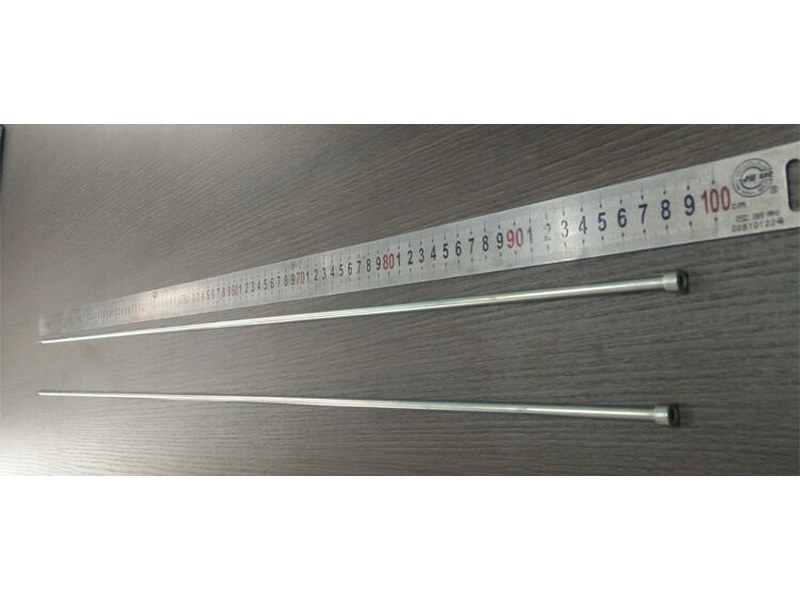
Type:175mm Screws
Materials:Carbon Steel
Surface treatment:Black Zinc Plated
Head Type:Pan head
Drive:Phillips cross recess
Thread:Machine thread, partial
Point:Plain, chamfered
Forming:Single Die Heading
Size:M1 M2 M3 M4 M5 M6 M7 M8 M9 M10
We make 175mm screws in carbon steel with a black zinc finish, pan head and cross recess, with lengths made to the drawing. The thread boundary and the length datum are agreed against your stack, and the first article is assembled in it before the batch runs.
Watch the factory video·Email sst@szsst88.com
ISO 9001:2015 · Manufacturing since 1998 · 8,678+ customers · 89 countries and regions
Made to order – there is no stock catalogue. Each part is produced to your drawing, and production starts after drawing review and first-article approval.
175mm screws are machine screws of one specific length, used where a fixing has to cross a motor mount, a spacer block or two sheet layers before it threads. The part recorded here is carbon steel with a black zinc finish, pan head and cross recess, in the 175 mm length.
175 mm length. A length chosen for a particular stack: deep enough to cross the gap, long enough to reach the thread behind it.
Pan head, cross recess. A wide bearing face on the surface and a drive that suits a hand driver or a low-torque powered one.
Partial thread. A plain shank through the clearance holes and thread only at the point end, which is what a deep stack needs.
Black zinc. A thin dark zinc passivate that keeps the fixing quiet on dark equipment.
They are used on motor mounts, equipment frames, rack panels, guards and brackets, and on any assembly where a fixing has to reach past one component to hold another and the head remains visible on the surface.
The interesting thing about 175mm screws is the number itself. It is not a standard table value in most catalogues; it is a length somebody derived from a specific assembly, and that assembly is what makes it right. The board thickness plus the spacer plus the engagement in the insert adds up to something near 175 mm, and a screw of that length either reaches or it does not.
For 175mm screws the thread boundary is the first thing to specify. On a stack this deep, thread in the clearance holes is a series of ridges that rub on every bore and carry none of the clamp; a plain shank across those holes locates the parts and lets the thread do its work at the far end. A fully threaded 175mm screw is a different joint from a partially threaded one, and the part number rarely says which.
On 175mm screws the head form follows from where the fixing sits. A pan head spreads the clamp on the surface and stands above it, which is what a cover, a motor mount or a rack panel wants. Where the fixing is between two parts that must close, that standing height is what interferes, and a different head is the answer rather than a shorter screw.
The finish on 175mm screws then decides where the part belongs. Black zinc is an indoor finish: it protects by sacrificial action, it keeps reflection down on dark equipment, and it wears through where a key or a driver bears. On a joint that is damp, the same length in stainless is the honest specification, and the black is only an appearance choice.
Nothing about 175mm screws guarantees a longer part will work in the same joint. Where a customer asks for the next length up, the answer is not a longer 175mm screw in the same design; it is a re-check of the stack, the boundary and the clearance holes, because a longer screw in the same holes simply bottoms out earlier.
The recorded product is 175 mm, with the other sizes in the same range and lengths made to the drawing. Custom lengths up to 2,000 mm, subject to DFM review after drawing submission. The quotation for 175mm screws carries the overall length, the threaded length, the head dimensions, the recess size, the thread and the finish.
| Item | How it is defined | What we control |
|---|---|---|
| Length | 175 mm under the head | Length and its datum |
| Threaded length | Thread from the point upward | Where the thread ends |
| Head | Pan head, cross recess | Diameter, height and recess depth |
| Thread | Machine thread | Pitch, class and start |
| Finish | Black zinc | Thickness and coverage |
| Stack | Clearance bores in the members | Aligned with the thread |
The length datum is under the head. On a stack that was measured to 175 mm, a part quoted from the top of the head is short by the head height, and that is the difference between reaching the thread and stopping a few turns short.
The threaded length is the second number. It has to be long enough to engage the insert properly and short enough that the plain shank covers the clearance holes; where that balance is left to the supplier’s standard, the joint may be right in one assembly and wrong in the next.
On 175mm screws the recess is bounded by the pan head height, more generous than a flat head, and it is what lets a hand driver seat. A coating inside a cross changes which bit engages, so a plated part is proved with the production bit after plating.
Four properties decide 175mm screws, and each one carries a cost:
| Property | What it gives | What it costs |
|---|---|---|
| 175 mm length | Crosses a deep stack | Only suits one stack thickness |
| Pan head | Clamp spread, easy to drive | Stands above the surface |
| Partial thread | Plain shank across the bores | Boundary must be specified |
| Black zinc | Dark indoor finish | Wears and stains if used wet |
The value of 175mm screws is a joint assembled from one side across a gap a standard length cannot cross. On a motor mount or a frame, that is the difference between a design that works and a redesign around a stud.
The cost is that the length is a commitment to one stack. Change the spacer and the 175mm screw is either short or bottoming out, and neither shows until the joint is assembled.
The trade is a length that has to be carried through the joint without losing the thread at the far side.
The recorded finish is black zinc. On 175mm screws it is an indoor appearance finish that also provides modest corrosion protection, and the length makes both aspects worth stating.
| Option | How it protects | Effect on thread and recess | Typical use |
|---|---|---|---|
| Black zinc | Trivalent zinc, dark passivate | Thin; wears at the recess | Dark indoor equipment |
| Clear zinc | Trivalent zinc, bright | Thin; wear less visible | General indoor work |
| Black oxide | Conversion film, oiled | Almost no build | Dark, dry machinery |
| Zinc flake | Lamellar coating | Low build; covers edges | Sheltered outdoor frames |
| Stainless, passivated | Passive film, no coating | No build at all | Wet and coastal joints |
A black finish on a long thread also has an assembly consequence: the film adds a little friction over every turn, and on 175 mm that is felt through the driver as the screw reaches the last part of its travel. Where the joint is driven by hand, that drag is noticeable and the recess is what takes the load when the driver slips.
Where the assembly is damp, the honest answer is stainless rather than a heavier black passivate. A dark finish that rusts at the head is worse than no finish, because the stain runs on the panel below.
Three settings where this length is derived from the stack:
| Where it sits | The screw crosses a motor flange and a spacer before it threads into the frame. |
| When it goes wrong | A shorter screw engages only a few turns and the motor shifts under load. |
| Why it happens | The stack is deep, the fixing is repeated, and the joint is serviced. |
| What we control | Length and boundary checked; first article assembled and torqued. |
| Where it sits | The screw holds a panel through a standoff into a threaded rail behind it. |
| When it goes wrong | Thread in the standoff bore rubs and the panel sits crooked. |
| Why it happens | The reach is long, the panel is visible, and the fixing is repeated. |
| What we control | Boundary matched to the standoff; first article fitted on the panel. |
| Where it sits | The screw fixes a guard where the head is visible and the joint crosses a gap. |
| When it goes wrong | A pan head that stands proud catches sleeves and tools. |
| Why it happens | The part is accessible, the head is seen, and the joint is opened. |
| What we control | Head height and finish checked; first article fitted with the guard. |
Four reasons that matter when the length comes from a stack rather than from a catalogue, each tied to something the drawing or the first article has to prove:
|
Length datum and boundary stated
The overall length under the head and the threaded length are agreed, because on 175mm screws those two numbers decide whether the joint reaches and whether it clamps. Basis: Datum and boundary stated. |
Headed, recessed, threaded and plated
The pan head and recess are formed, the thread rolled over the agreed boundary, and the batch black zinc plated with the recess re-checked. Basis: One route, recess re-checked. |
|
Length and thread measured
Overall length and threaded length are measured separately on the projector, because a batch right in one and wrong in the other will not assemble. Basis: Length and boundary measured. |
Same length across orders
The thread boundary setting and the plating lot are recorded with the drawing revision, so a repeat order crosses the same stack. Basis: Same length across orders. |
These screws are headed on single-die machines that form the pan head, cut with the cross recess, thread rolled over the agreed length and black zinc plated. The first part of every run is measured on head diameter and height, recess depth, overall length, threaded length and thread.


|

|
Rolling the thread over a set length on 175mm screws puts the plain shank across the clearance bores. The rolls stop at the boundary, and a drift in that setting moves where the thread begins, which no visual check catches and every assembly feels.
On this length the part is handled in straight trays between operations. A 175 mm screw that has been dropped or laid across other parts takes a set, and a part with a set will not start cleanly in a deep stack of clearance holes.
Plating follows and is checked in the recess as well as on the head, since the film fills a cross slightly and changes which driver seats. The batch is proved with the production bit at the line torque before packing.
What decides whether 175mm screws pass is the length, the thread boundary, the head and the recess. The inspection agreement covers those, and the criteria come from the drawing.

Boundary and recess on the projector |

Thread and start checked |

Core hardness checked |

Salt-spray testing of the black zinc layer |
Overall length is measured under the head, and the threaded length separately, because those two numbers define the joint. Head diameter, height and recess depth are read together, since the recess lives in the head.
The recess is proved with the production bit at the torque the joint calls for, and the arms are inspected under magnification afterwards. On a plated part that cycle shows whether the film has changed which bit seats.
A sample from every batch is assembled into the customer stack and checked for the head seating on the surface and the thread reaching the insert. That check is what a repeat order is compared against.
Every batch is traceable to the wire it was made from and to the plating lot that finished it. The grade and heat number appear on the material certificate supplied with the parts, and the plating thickness is recorded for the batch.

ISO 9001:2015 |

RoHS test report |

Registered trademark |

Patent: security screw and driver |
With each shipment we supply the material certificate, the inspection record for the dimensions on the drawing including the thread boundary, and the plating and RoHS reports. The documents carry the drawing revision and the batch number, so a repeat order of 175mm screws crosses the same stack.
More than 8,678 customers in 89 countries and regions have ordered from Shi Shi Tong; 87% of orders come from repeat customers and 56% through referrals. Most projects follow the same route: drawing review, first-article approval, then batches checked against that sample. On a derived length the first article is assembled into the customer stack, because 175 mm only means something there. Buyers visit during the process to review samples.
|
8,678+
customers served
|
87%
of orders from repeat customers
|
56%
of orders through referrals
|
89
countries and regions shipped to
|
Buyers and quality engineers visit for sample review, process discussion and supplier audits; the visit is arranged around production so the headers and the plating line can be seen on the day the parts run.

Customer group visit – sample review |

Customer group visit – process discussion |

Customer group visit – factory tour |

Customer visit – project kick-off |

Danish customer – drawing review |

Industry exhibition – meeting customers |
Because a stack added up to it: a board, a spacer and the engagement in an insert. The length is a joint dimension rather than a catalogue value.
No. A longer screw bottoms out earlier in the same holes. The stack and the clearance bores have to be re-checked.
Usually not. Partial thread puts a plain shank across the clearance bores and leaves the thread to engage the far member.
It is an indoor finish. A damp joint is better served by stainless, which removes the coating from the thread entirely.
Plating adds friction over a long thread, so the recess takes more load near the end of the drive. The bit has to match and reach the recess floor.
Overall length under the head, threaded length, head dimensions, recess size, thread and finish.
How a derived-length screw project runs from drawing to repeat delivery:
|
1
Send the drawing and the stack
|
→ |
2
Length and boundary agreed
|
→ |
3
First article assembled in your stack
|
→ |
4
Batch production and repeat orders
|
Each step is confirmed with you before the next one starts; the drawing revision from the first article is what repeat orders are checked against.
For a quotation, send the drawing with the overall length under the head, threaded length, head dimensions, recess size, thread and finish.
|
Overall length
|
Threaded length
|
Head diameter
|
|
Recess size
|
Thread
|
Finish
|
Sending a drawing? The form below does not take attachments. Email the PDF, DXF or STEP file to sst@szsst88.com with the part name and quantity in the subject line – the drawing is reviewed and a quotation follows.

 +86 13143444311
 sst@szsst88.com