
Tel:
+86 13143444311
Email:sst@szsst88.com
Fax:+0086-755-27322278
Address:Building 9, First Industrial Zone, Tantou Industrial City, Songgang Street, Baoan District, Shenzhen 518105, Guangdong, China
Type:Low Head Socket Head Cap Screw
Materials:Carbon Steel
Surface treatment:Black Zinc Plated
Head Type:Low head (socket)
Drive:Hexagon socket (Allen)
Thread:Machine thread
Point:Plain, chamfered
Forming:Single Die Heading
Size:M1 M2 M3 M4 M5 M6 M7 M8 M9 M10
We make low head socket head cap screws in carbon steel with a black zinc finish, quoting them from M1 to M10 with lengths made to the drawing. The reduced height and the socket depth are agreed as one pair, and the first article is fitted into your own pocket.
Watch the factory video·Email sst@szsst88.com
ISO 9001:2015 · Manufacturing since 1998 · 8,678+ customers · 89 countries and regions
Made to order – there is no stock catalogue. Each part is produced to your drawing, and production starts after drawing review and first-article approval.
A low head socket head cap screw is a cap screw whose head height is reduced while the thread and the hexagon socket stay conventional. The part recorded here is carbon steel with a black zinc finish, quoted from M1 to M10 with lengths made to the drawing.
Cap head. A cylindrical head with a flat bearing face, reduced in height for clearance.
Hexagon socket. An internal hexagon driven with a key, held in the height that remains.
Carbon steel. A material whose thread is usually stronger than the reduced head, so the head becomes the limit.
Black zinc. A trivalent zinc with a dark passivate, low in reflection and hard to inspect inside a shallow socket.
They are used where a standard cap head would foul a cover, a sliding surface or a stacked plate: instrument frames, machine covers, recessed pockets, and assemblies where a millimetre of height decides whether the parts clear each other.
Low head is not one geometry. In practice the trade uses the name for at least two different reduced heights, and the difference between them is the whole usable depth of the hexagon. A low head keeps a socket that a standard key can still seat in; a much lower head, often called an ultra-low or thin head, leaves so little height that the key engages over a fraction of the wall.
That difference cannot be seen reliably in a photograph or by eye at arm’s length. Two parts in the same bin can look the same and take the same key, and only the depth check shows that one will survive the drive and the other will round its corners on the first assembly. Which is why the height and the socket depth belong on the drawing as numbers rather than as a description.
The consequence for the joint is a shift in what fails. On a standard cap head in carbon steel the thread usually reaches its limit before the socket does. On a low head, with the same thread, the head has less material around the hexagon and less height above the bearing face, so the drive becomes the limit: the part can still be strong in tension and still be unusable in practice.
The bearing face is affected in the same direction. Reducing the head height does not change the diameter, so the face still spreads the clamp; what it loses is the stiffness that keeps the face flat under load. A thin head deflects more, the pressure moves to the edge of the face, and the panel under it shows the difference as a shallower, wider mark.
On a small screw the margin disappears quickly. At M3 the difference between a low head and a standard one is a fraction of a millimetre, and in that fraction sits the socket floor, the corner thickness and the key engagement. That is why these parts are agreed by measurement with the customer’s key, not by name.
The recorded range is M1 to M10, with lengths made to the drawing. Custom lengths up to 2,000 mm are subject to the drawing submission and DFM review. The quotation for low head socket head cap screws carries the head diameter, the reduced head height, the socket size and depth, the thread pitch and the overall length.
| Item | How it is defined | What we control |
|---|---|---|
| Head | Cap head, reduced height | Diameter and reduced height |
| Socket | Hexagon, key size per diameter | Depth and wall thickness |
| Bearing face | Flat annulus, thinner head | Flatness under load |
| Thread | Machine thread in carbon steel | Pitch, length and start position |
| Length | Overall, head included | Length tolerance and thread start |
| Finish | Black zinc | Coverage inside the socket |
Head height is the defining number and it is quoted as a value, not as “low”. Where a customer has a height budget from the assembly, that budget is what decides which of the two reduced heights will do, and the socket depth is read back from it.
Socket depth is the number that is actually felt by the key, and it is the one that separates a part that works from a part that looks right. It is measured from the socket floor to the top face, with the head height, on the projector.
Length is measured over the head so it agrees with the pocket or counterbore the head sits in. In a recessed pocket the usable thread length is the overall length minus the pocket depth, and that is what decides engagement.
Four properties decide low head socket head cap screws, and each one carries a cost:
| Property | What it gives | What it costs |
|---|---|---|
| Reduced height | Clears covers and stacked parts | Less material around the socket |
| Hexagon socket | High torque in a small space | Shorter key engagement |
| Carbon steel | Strong thread | The head now limits the joint |
| Black zinc | Dark, low-reflection finish | Hard to cover and inspect in a shallow socket |
The value is fit. A joint that needs a standard cap head’s torque but does not have its height gets a part that does the same job in less space, with the same thread and the same key size.
The cost is that the head becomes the weak link, and the failure is invisible until the part is driven. There is no way to inspect the socket’s margin by looking at the screw.
The recorded finish is black zinc, a trivalent zinc with a dark passivate. It protects by sacrificial action, it does not attract attention on dark equipment, and on a cap head it covers a shape that plating reaches easily.
| Option | How it protects | Effect on head and socket | Typical use |
|---|---|---|---|
| Black zinc | Trivalent zinc, dark passivate | Thin at the socket floor | Dark equipment and panels |
| Clear zinc | Trivalent zinc, bright | Same; easier to inspect | General indoor work |
| Zinc nickel | Higher corrosion resistance | Build in socket; re-gauged | Damp and industrial |
| Black oxide | Conversion film, oiled | No measurable build | Dark machinery, dry |
| Stainless, passivated | Passive film, no coating | No build; socket as cut | Wet and food areas |
A shallow socket is the hardest feature on the part to plate evenly, because the solution does not circulate as freely and the floor is screened by the walls. A black finish hides a thin patch that a bright finish would show, which is convenient for the supplier and unhelpful for the customer: the same feature that is least plated is the one the key bears on.
That is why the socket is checked after plating on this part. The check is not only dimensional: the floor and the corners are inspected for coverage, and the key is driven on a sample to confirm that the coating has not changed the seat.
Three settings where the height of the head decides the assembly:
| Where it sits | The screw holds a frame where a standard cap head would foul a cover that slides over it. |
| When it goes wrong | The cover binds on the heads and the panel does not sit flat. |
| Why it happens | The clearance is tight, the cover moves, and the joint is serviced. |
| What we control | Height and socket depth checked; first article fitted with the cover. |
| Where it sits | The screw closes a plate where the pocket is machined to leave no room for a standard head. |
| When it goes wrong | The head touches the pocket floor before the joint is tight. |
| Why it happens | The pocket depth is fixed, the plate is machined, and the joint is assembled dry. |
| What we control | Height measured to the drawing; first article fitted in the pocket. |
| Where it sits | The screw fixes a guard where the fixing must not catch on a sleeve, a cable or a moving part. |
| When it goes wrong | A proud head snags and the guard is damaged or loosened. |
| Why it happens | The panel is thin, the fixing is repeated, and the joint is serviced. |
| What we control | Head height and finish checked; first article fitted with the guard. |
Four reasons that matter on a head whose margin is a fraction of a millimetre, each tied to something the drawing has to prove:
|
Height quoted as a value
The reduced height is written as a number rather than described, because the trade uses the same name for more than one reduced height and they are not interchangeable. Basis: Height stated as a number. |
Headed, broached, threaded, plated
The reduced head and hexagon are formed, the thread rolled, and the batch plated and worked so the socket keeps its depth. Basis: One route, socket kept to depth. |
|
Height and socket measured together
Head height and socket depth are measured as a pair and the key driven to the floor, because a shallow socket passes a height check and still fails in use. Basis: Height and socket as one pair. |
Same height across orders
The heading punch and the broaching depth are recorded with the drawing revision, so a repeat order sits in the same pocket with the same key engagement. Basis: Same height across orders. |
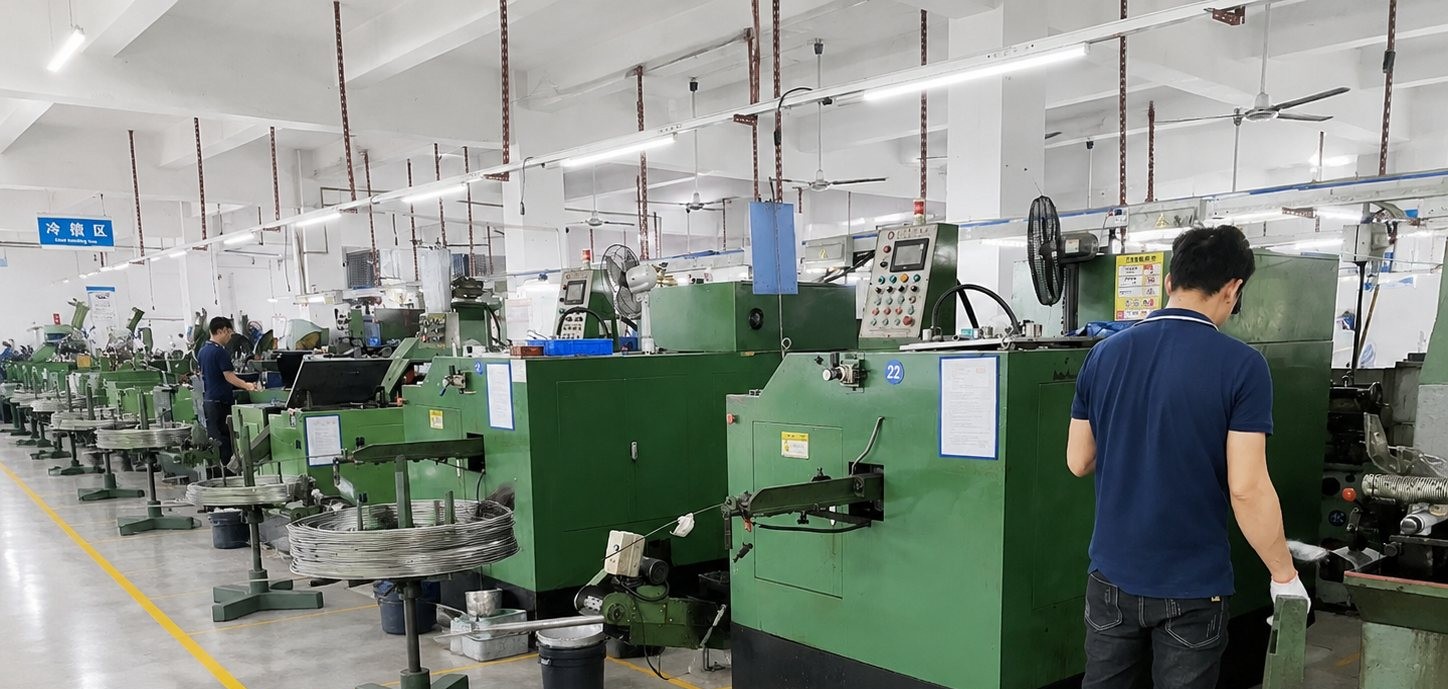
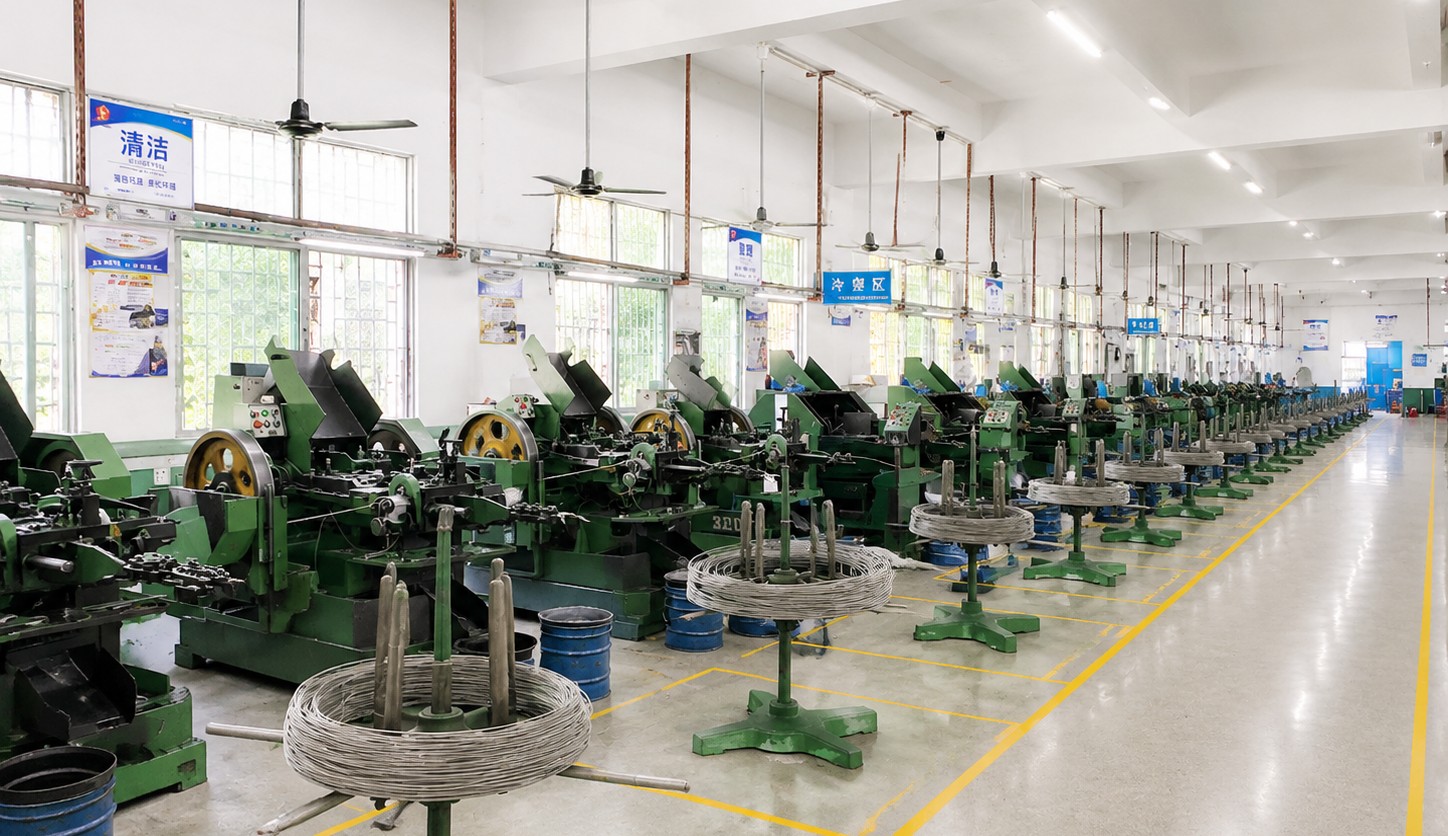
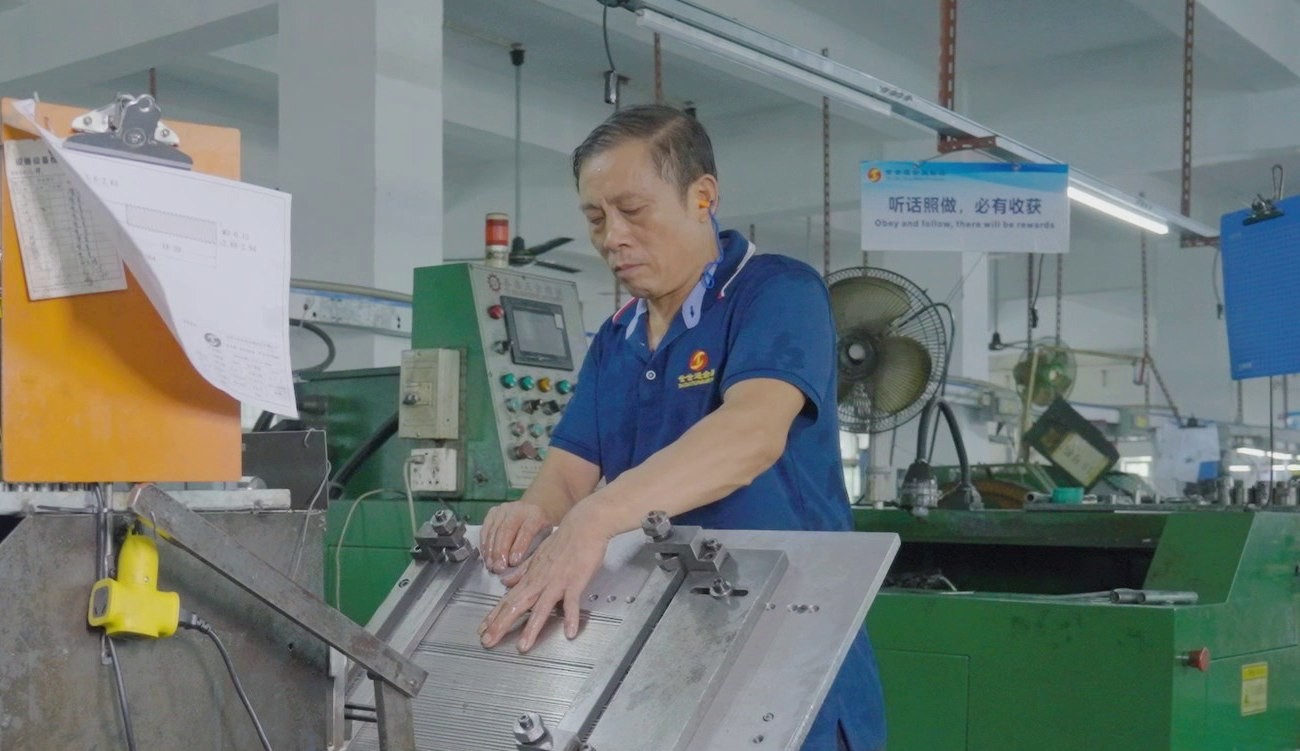
These screws are headed on single-die machines that form the reduced head in one stroke, broached with a hexagonal punch, thread rolled and zinc plated as a batch. The first part of every run is measured on head diameter and reduced height, socket size and depth, thread and length, and driven with the production key.
|
|
Forming a reduced head is a matter of where the punch stops. The metal has to fill the head diameter and the bearing face while the height comes out lower than a standard part, and if the punch is set a little too shallow the head is thicker and the socket deeper, which is the version that works. The version that fails is the one pressed slightly too far: it looks better in the bin and has a socket floor too thin to carry the drive.
Broaching follows, and on this part it is a narrow operation. The hexagon has to be deep enough for the key and shallow enough to keep a floor, and on carbon steel the walls are harder and thinner than on a larger head, so a worn punch tears corners instead of shearing them. The punch interval is kept in the tooling record.
Plating comes last and is checked inside the socket as well as on the head. A black finish on a shallow socket can look complete and be thin at the floor, which is exactly the feature that takes the key load.
What decides whether low head socket head cap screws pass is the reduced height, the socket, the bearing face and the plating. The inspection agreement covers those, and the criteria come from the drawing.

Height and socket on the projector |

Thread and start checked |

Core hardness checked |

Salt-spray testing of the plated socket |
Reduced height and socket depth are measured together on the projector, with head diameter and bearing face flatness. Those four are what the pocket and the key see, and each one can look correct while the combination does not.
The socket is proved by driving with the production key at the torque the joint calls for, then inspecting the floor and the corners under magnification. On a low head the floor is the thin feature, and a floor that has begun to dish is a part that will fail at the next service.
A sample from every batch is fitted into the customer pocket with the cover or plate in place, and the assembly is checked for clearance. That is the check that catches the wrong reduced height, which no dimensional inspection of the screw alone will show.
Every batch is traceable to the wire it was made from and to the plating lot that finished it. The grade and heat number appear on the material certificate supplied with the parts, and the inspection records follow the criteria agreed on the drawing.

ISO 9001:2015 |

RoHS test report |

Registered trademark |

Patent: security screw and driver |
With each shipment we supply the material certificate, the inspection record for the dimensions on the drawing including the reduced height and socket depth, and the plating and RoHS reports. The documents carry the drawing revision and the batch number, so a repeat order of low head socket head cap screws sits in the same pocket.
More than 8,678 customers in 89 countries and regions have ordered from Shi Shi Tong; 87% of orders come from repeat customers and 56% through referrals. Most projects follow the same route: drawing review, first-article approval, then batches checked against that sample. On a reduced head the first article is fitted into the customer pocket, because the clearance is what the part exists for. Buyers visit during the process to review samples.
|
8,678+
customers served
|
87%
of orders from repeat customers
|
56%
of orders through referrals
|
89
countries and regions shipped to
|
Buyers and quality engineers visit for sample review, process discussion and supplier audits; the visit is arranged around production so the headers, the broaching station and the plating line can be seen on the day the parts run.

Customer group visit – sample review |

Customer group visit – process discussion |

Customer group visit – factory tour |

Customer visit – project kick-off |

Danish customer – drawing review |

Industry exhibition – meeting customers |
Not always. The trade uses both names for at least two reduced heights, and the difference is the socket depth a key can reach.
Measure the head height and the socket depth. By eye they look the same and both take the same key size.
The socket and the floor under it. In carbon steel the thread is usually stronger than the reduced head.
The thread does. The head has less material and deflects more, so the bearing pressure moves towards its edge.
A dark finish hides uneven coverage, and a shallow socket plates least evenly at its floor. That is why the socket is checked after plating.
Head diameter, reduced height as a value, socket size and depth, thread pitch and overall length.
How a low head screw project runs from drawing to repeat delivery:
|
1
Send the drawing and the height budget
|
→ |
2
Reduced height and socket agreed
|
→ |
3
First article fitted in your pocket
|
→ |
4
Batch production and repeat orders
|
Each step is confirmed with you before the next one starts; the drawing revision from the first article is what repeat orders are checked against.
For a quotation, send the drawing with the head diameter, the reduced head height, socket size and depth, thread pitch and overall length.
|
Head diameter
|
Reduced height
|
Socket size
|
|
Socket depth
|
Thread pitch
|
Length
|
Sending a drawing? The form below does not take attachments. Email the PDF, DXF or STEP file to sst@szsst88.com with the part name and quantity in the subject line – the drawing is reviewed and a quotation follows.

 +86 13143444311
 sst@szsst88.com







