Tel:
+86 13143444311
Email:sst@szsst88.com
Fax:+0086-755-27322278
Address:Building 9, First Industrial Zone, Tantou Industrial City, Songgang Street, Baoan District, Shenzhen 518105, Guangdong, China
Place of Origin:Guangdong,China(Mainland)
Brand Name:Shi Shi Tong
Materials:Stainless Steel
Surface treatment:Natural colour, passivated
Head Type:Flanged head with slot
Drive:Slotted
Thread:Internal machine thread
Body:Biting body into plastic or board
Forming:CNC turning from bar; internal thread cut
Size:M5.5*6mm,Diameter 8mm
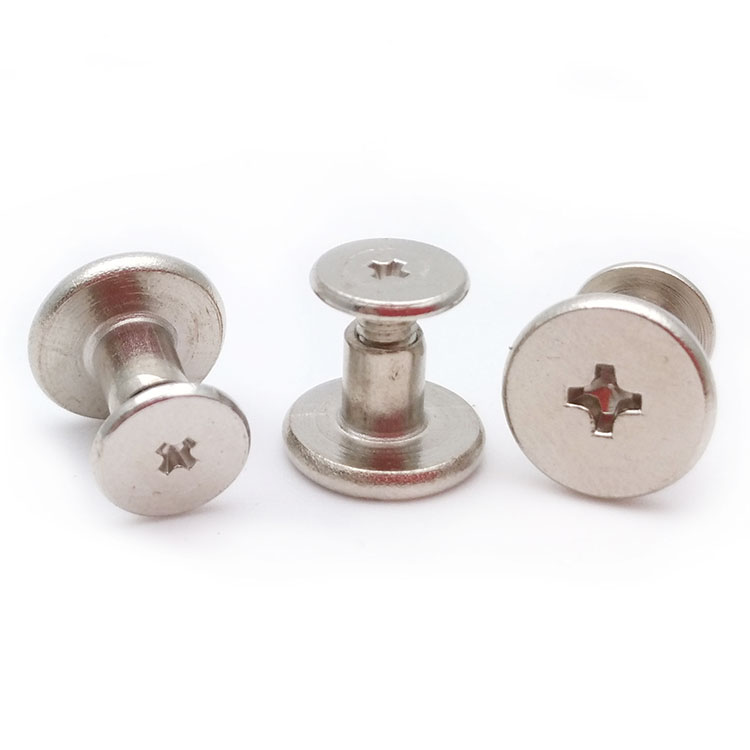
We turn stainless threaded inserts with an internal machine thread, a biting body and a flanged, slotted head, quoted with the body diameter and hole it enters. The insert puts a metal thread into plastic or board so the joint can be opened repeatedly, and the flange is what turns a pull at the screw into load spread on the face.
Watch the factory video·Email sst@szsst88.com
ISO 9001:2015 · Manufacturing since 1998 · 8,678+ customers · 89 countries and regions
Made to order – there is no stock catalogue. Each part is produced to your drawing, and production starts after drawing review and first-article approval.
A threaded insert is a small bush with an internal thread and a body that is pressed or screwed into plastic, wood or a soft panel, so a machine screw can be used where there is no metal to tap. This one is stainless steel with a flanged head and a single slot, M5.5 by 6 mm in the sample.
Internal thread. The thread the machine screw engages, sized to the screw and its class.
Biting body. An external form that grips the hole wall, by interference or by cutting.
Flanged head. A flat rim that stops the insert at the face and spreads load into it.
Slot. A single slot for driving the insert with a blade.
Threaded inserts are used in furniture, equipment mouldings, 3D-printed housings and panels where a removable screw has to hold in a material that is too soft to take a thread of its own.
A threaded insert changes where the thread lives. Instead of cutting a thread directly in plastic or wood, which wears out after a few assemblies, the insert puts a metal thread in the hole. The screw then engages steel or stainless and the joint can be opened repeatedly without the hole losing its shape.
The two threads do different jobs. The internal thread carries the screw and takes the tensile load; the external body takes the load into the material. A threaded insert therefore has two failure modes, and they look the same to the user: the screw pulls out of the insert, or the whole insert pulls out of the hole.
The flange decides which of the two happens. A flat rim that sits tight on the face spreads the pull into the panel, so the insert stays put; a flange that does not seat bears on its edge, and the load goes down the body as a wedge, which is how bosses split and inserts spin.
The hole is the other half of the fit. Too large and the body has nothing to bite, so the insert turns or pulls; too small and the material cracks as it is driven. A threaded insert is therefore specified with the hole it goes into rather than on its own, in the same way a tap is specified with its drill.
Stainless matters in a plastic boss for a different reason than in a steel joint. The insert is thin-walled, so it does not add much material; what it adds is a thread that does not corrode and does not wear, in a housing that may be washed or used outdoors.
So the insert is chosen for the material it enters and the number of times the joint opens. A threaded insert is the right answer where a screw will come out more than once; where it goes in once, a self-tapping screw into the plastic is cheaper and just as strong.
Threaded inserts are quoted by internal thread size and class, body diameter and length, external form, flange diameter and thickness, slot width, material and finish. Custom sizes are made to the drawing, and the quotation carries the material, the thread, the body, the flange and the finish.
| Item | How it is defined | What we control |
|---|---|---|
| Internal thread | Machine thread | Size, pitch and class |
| Body | Interference and bite | |
| Length | Under the flange | Depth in the material |
| Flange | Diameter and thickness | Seat and load spread |
| Slot | Width and depth | Blade fit |
| Finish | Natural colour | Surface and burr |
The body diameter is written with the hole it enters. That is the dimension that decides whether the threaded insert grips or splits the boss, and it cannot be chosen without knowing the material.
The length under the flange is written with the wall it crosses. A short insert in a deep boss leaves thread below the screw; a long one bottoms before the flange seats.
The flange is written for the face it bears on. A flange that is too small concentrates the pull at the hole edge, which is where a moulded boss fails first.
Four properties decide this part, and each carries a cost:
| Property | What it gives | What it costs |
|---|---|---|
| Metal thread | Repeated assembly without wear | An extra part and an extra operation |
| Biting body | Grip in soft material | A hole size that has to be right |
| Flange | Load spread into the face | A visible rim, and a seat to keep flat |
| Stainless body | No rust in a washed housing | Softer thread than a hardened insert |
The value of a threaded insert is a plastic or wooden housing that can be opened as often as a metal one, with the thread staying true and the screw coming out clean each time.
The cost of a threaded insert is an extra part and a hole that has to be sized and driven correctly, which is why it belongs in the design rather than in the rework.
The recorded finish is the natural colour of the stainless, cleaned and passivated. In a plastic boss that is the right choice: no plating fills the internal thread or the slot, and the insert does not rust in a housing that is washed.
| Option | How it protects | Effect on the thread | Typical use |
|---|---|---|---|
| Natural stainless | Natural oxide | No build; thread as cut | Equipment housings |
| Passivated | Clean, thickened oxide | No build; free of free iron | Food and lab equipment |
| Nickel plated brass | Barrier layer | Builds; thread re-checked | Furniture fittings |
| Zinc plated steel | Sacrificial layer | Thin; thread as cut | Indoor board assemblies |
| Dry film lubricant | Low-friction film | Thin; eases the screw | Joints opened often |
Where the insert is moulded into place rather than driven afterwards, the finish matters less and the body form matters more; where it is driven, the plating has to stay out of the internal thread so the screw runs freely.
A dry film lubricant on the internal thread is worth considering on a stainless insert that will be opened often, because stainless galls against the stainless screw that goes into it.
Three products where a screw has to come out of soft material more than once:
| Where it sits | The insert sits in a moulded boss that a cover screw engages repeatedly. |
| When it goes wrong | The insert spins in the boss, or the boss splits at the flange. |
| Why it happens | The hole is oversized for the body, or the flange does not seat. |
| What we control | Body and hole matched; first article driven and the screw run in and out. |
| Where it sits | The insert is driven into particle board to take a machine screw for a fitting. |
| When it goes wrong | The insert pulls out under load, or the board crumbles around it. |
| Why it happens | The board is too thin for the insert length, and the thread is short. |
| What we control | Insert length set from the board; sample driven and loaded. |
| Where it sits | The insert goes into a printed wall where a tapped thread would strip. |
| When it goes wrong | The wall cracks as the insert is driven, or the layers delaminate. |
| Why it happens | The wall is thinner than the body needs, and the hole is undersized. |
| What we control | Hole and wall agreed; sample driven and inspected for cracking. |
Four points that decide whether a threaded insert holds through repeated assembly:
|
Body written with the hole
The drawing gives the body diameter against the hole in the customer material, because the bite is what holds. Basis: Fit to the boss defined. |
Thread cut, body formed
The internal thread is cut concentric with the body, so the screw runs true to the insert. Basis: Thread on the body axis. |
|
Driven into the material
The first article is driven into the customer boss and the screw run in and out, the way the joint is used. Basis: Grip proved in the boss. |
Same flange every lot
Flange diameter, body size and thread are recorded with the drawing revision, so a repeat lot seats the same. Basis: Same seat across lots. |
A threaded insert is a small part with a large influence: it decides whether the joint can be opened at all. These four points are what keeps that decision repeatable.
These inserts are turned from stainless bar: the flange is faced, the body turned to its diameter, the internal thread cut, and the slot cut into the flange, then the parts are cleaned and passivated. The first piece of every run is measured on flange, body, thread and length.


|

|
The internal thread is the slower feature, because it is cut inside a small bore and the wall around it is thin. That is also where a threading tool that is running fast leaves a torn crest, and a torn crest inside an insert will gall the screw the first time it is used.
The flange is faced after the body so it is flat and square to the thread. On a threaded insert the flange is the seat, so a flange that is not flat bears on one edge and the load goes into the boss as a wedge.
The slot is cut last, into the flange. It has to be deep enough to drive with a blade but not so deep that it reaches the thread beneath, which would open the wall of the bore.
What decides whether a batch of threaded inserts passes is the internal thread that takes the screw, the body that bites and the flange that seats. The inspection agreement covers all three.

Flange and body on the projector |

Internal thread gauged |

Material checked |

Salt-spray testing where required |
The internal thread is gauged through its whole depth and run with a screw of the specified class. On a threaded insert the thread is the product, so a go gauge that enters part way is a reject rather than a note.
The body is measured for diameter at two points and the flange for thickness and flatness. Body diameter is the interference, and a body a few hundredths under is an insert that will spin.
The slot is measured and driven with the blade, and the sample is driven into a boss of the customer material. That last test is the one that shows whether the flange seats and whether the boss survives.
Every batch of threaded inserts is traceable to the bar it was made from. The material certificate states the grade, the heat number, the chemistry and the mechanical properties, and the inspection record carries the thread, body and flange against the drawing.

ISO 9001:2015 |

RoHS test report |

Registered trademark |

Patent: security screw and driver |
With each shipment we supply the material certificate and the inspection record for the thread, body and flange. The records carry the batch number, so a repeat order can be compared with the first on the body diameter that decides the bite.
Each certificate is filed against the batch number, so a repeat order can be compared with the first delivery.
More than 8,678 customers in 89 countries and regions have ordered from Shi Shi Tong; 87% of orders come from repeat customers and 56% through referrals. Most projects follow the same route: drawing review, first-article approval, then batches checked against that sample. On a threaded insert the first article is driven into the customer boss, because the fit is against the material and nothing else. Buyers visit during the process to review samples.
|
8,678+
customers served
|
87%
of orders from repeat customers
|
56%
of orders through referrals
|
89
countries and regions shipped to
|
Buyers and quality engineers visit for sample review, process discussion and supplier audits; the visit is arranged around production so the turning cells and the passivation line can be seen on the day the parts run.

Customer group visit – sample review |

Customer group visit – process discussion |

Customer group visit – factory tour |

Customer visit – project kick-off |

Danish customer – drawing review |

Industry exhibition – meeting customers |
A tapped thread in plastic wears out after a few assemblies. The insert puts a metal thread in the hole so the joint can be opened repeatedly.
Matched to the body. Too large and the insert spins; too small and the boss cracks as it is driven.
Interference between the body and the hole, plus the flange bearing on the face.
The hole is undersized, or the flange does not seat and the load goes down the body as a wedge.
Only if the flange is not seated or the thread under it is short. The load path is flange into panel.
Internal thread and class, body diameter, length, flange size, slot, the hole in the material and how often the joint opens.
How a threaded insert project runs from drawing to repeat delivery:
|
1
Send the drawing and the boss sample
|
→ |
2
Thread, body and flange agreed
|
→ |
3
First article driven and screwed
|
→ |
4
Batch production and repeat orders
|
Each step is confirmed with you before the next one starts; the drawing revision used for the first article is what repeat orders are checked against.
For a quotation, send the drawing with the internal thread and class, body diameter, length, flange size, slot, finish and the hole in the material.
|
Thread
|
Body
|
Length
|
|
Flange
|
Slot
|
Hole
|
Sending a drawing? The form below does not take attachments. Email the PDF, DXF or STEP file to sst@szsst88.com with the part name and quantity in the subject line – the drawing is reviewed and a quotation follows.

 +86 13143444311
 sst@szsst88.com