Tel:
+86 13143444311
Email:sst@szsst88.com
Fax:+0086-755-27322278
Address:Building 9, First Industrial Zone, Tantou Industrial City, Songgang Street, Baoan District, Shenzhen 518105, Guangdong, China
Place of Origin:Guangdong,China(Mainland)
Brand Name:Shi Shi Tong
Materials:Carbon Steel
Surface treatment:Zinc plated
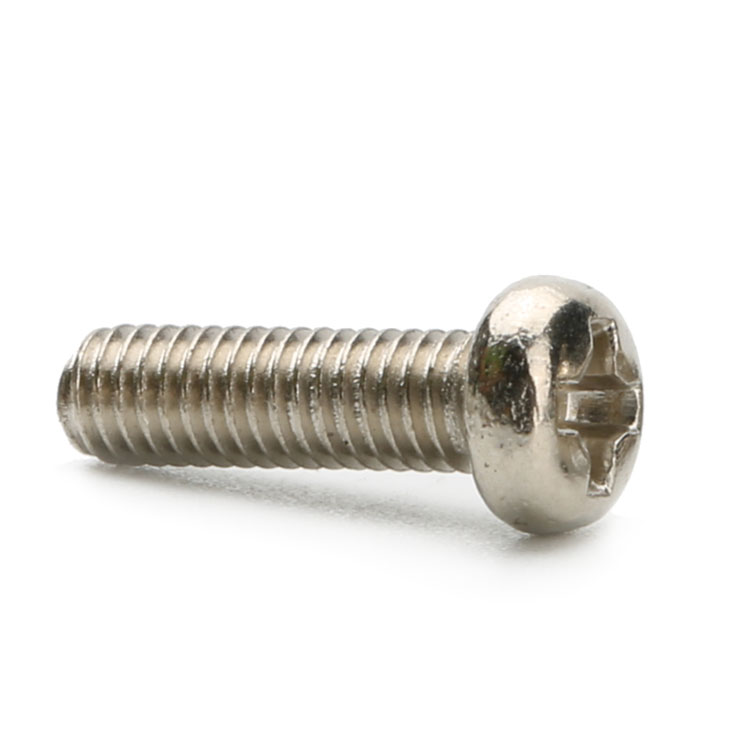
Head Type:Pan Head
Drive:Torx
Thread:Self tapping, M2.5
Point:Blunt, chamfered
Forming:Cold headed; recess formed; thread rolled
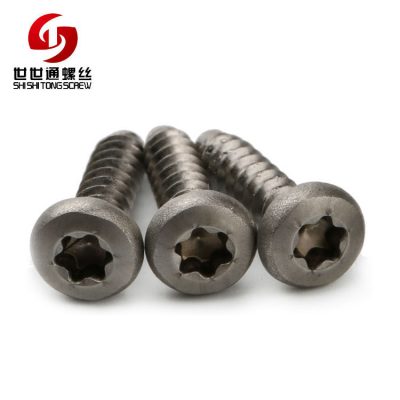
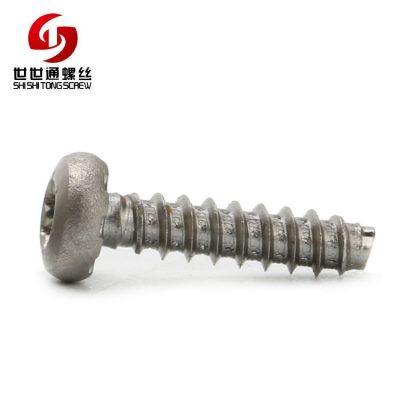
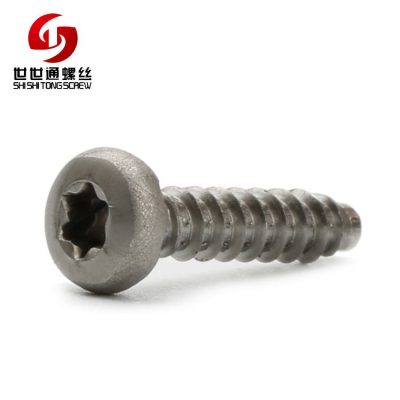
Size:M2.5*13mm,Diameter 6.8mm,Thickness 2.4mm
We make Torx self tapping screws in carbon steel, headed with the six-lobe recess formed in the die and the thread rolled before zinc plating, with the recess depth specified against the head thickness. The wide pan head spreads the clamp on plastic and thin sheet, while the plating and the pilot hole decide how hard the screw drives.
Watch the factory video·Email sst@szsst88.com
ISO 9001:2015 · Manufacturing since 1998 · 8,678+ customers · 89 countries and regions
Made to order – there is no stock catalogue. Each part is produced to your drawing, and production starts after drawing review and first-article approval.
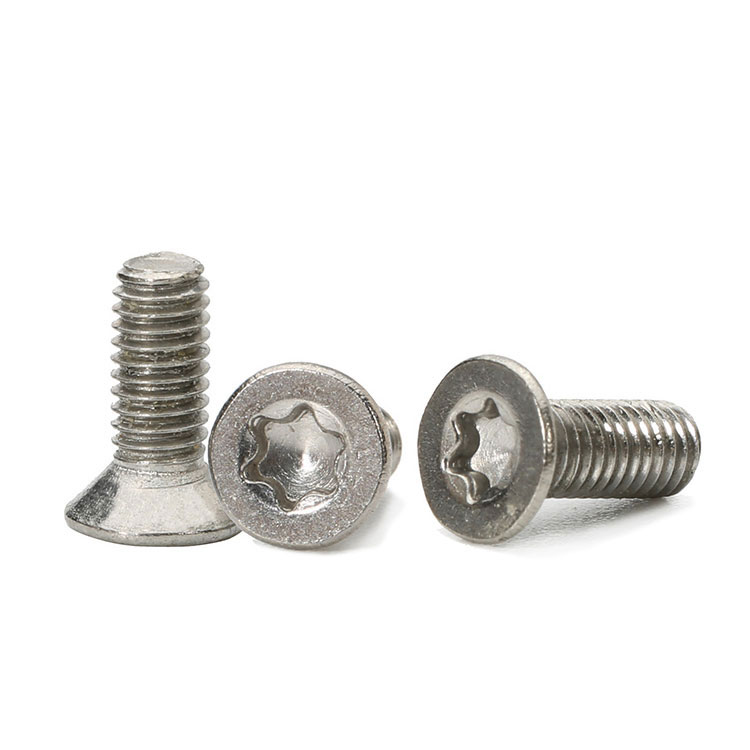
A Torx self tapping screw is a screw with a six-lobe Torx recess and a thread that forms its own mating thread in the hole. This one is a pan head screw in carbon steel, M2.5 by 13 mm, with a head 6.8 mm across and 2.4 mm thick, zinc plated after the thread is rolled.
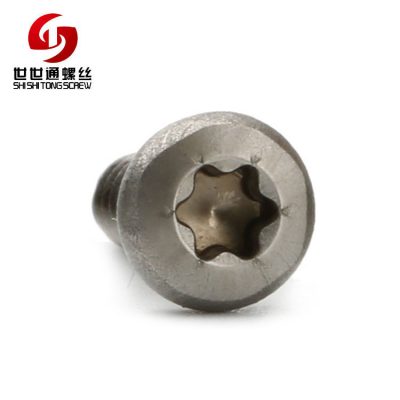
Six-lobe recess. A Torx drive that takes a matching bit and turns without cam-out.
Pan head. A wide, slightly domed head with a flat bearing face under it.
Self tapping thread. A coarse thread that cuts or forms its own thread in the hole.
Carbon steel, zinc plated. A steel body with a sacrificial coating that also changes thread and recess size.
They are used where a small screw is driven to a torque on a production line: plastic housings in electronics, small appliances, lighting and switchgear, and light sheet-metal assemblies where the hole is punched rather than tapped.
The proportions on this screw decide everything else about it. The head is 6.8 mm across and 2.4 mm thick, so the bearing face is wide for an M2.5 thread while the material above the bearing face is thin. A Torx recess needs depth to engage the bit properly, and that depth has to come out of the same 2.4 mm.
That is the central trade in a torx self tapping screw of this size. Cut the recess shallow and the bit engages only the top of the lobes, so the drive rocks, the lobes wear and the bit spins before the screw seats. Cut it deep and the recess floor comes close to the bearing face; a head that thin can bulge on the face side or crack, and a cracked head loses its clamp.
The wide head is there for the material underneath. On plastic, the clamp load has to be spread over enough area that the housing does not creep and the head does not pull through its own hole. A pan head with a 6.8 mm face does that; a smaller head of the same thread would need a washer.
The self tapping thread is what puts the torque demand on the recess. A machine screw is turned until the head seats; a self tapping screw is turned while a thread is being formed, and the torque during that forming is often higher than the seating torque at the end. A Phillips recess cam-outs at the peak of that curve, which is why a line that drives hundreds of these parts an hour moves to Torx.
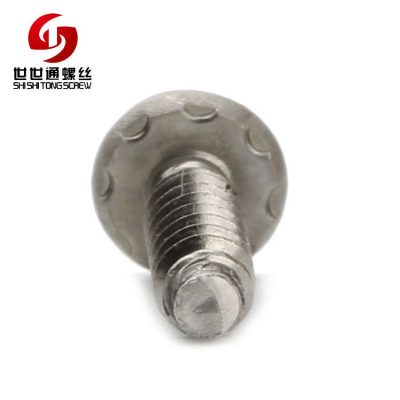
The point and the thread end decide how the thread starts. A blunt, chamfered end needs a hole with a chamfer or a countersink; a pointed end will find a plain hole. The photographed sample has a blunt end, so the hole is prepared or the part is driven into a moulded pilot.
Put together, the part is a compromise between a head thin enough to sit low on plastic, a recess deep enough to live through production, and a thread coarse enough to form rather than cut. Each of those three is written on the drawing, and none can be judged from the outside.
A torx self tapping screw is quoted by head diameter and height, recess size and depth, thread diameter and pitch, length, point, material, heat treatment and finish. Custom lengths up to 2,000 mm, subject to DFM review after drawing submission. The sample here is M2.5 by 13 mm with a 6.8 mm head, 2.4 mm thick, zinc plated.
| Item | How it is defined | What we control |
|---|---|---|
| Head | Pan head, 6.8 mm across | Diameter, height and bearing face |
| Recess | Torx, six lobes | Size, depth and lobe form |
| Thread | Self tapping, M2.5 | Diameter, pitch and length |
| Point | Blunt and chamfered | Point form and thread start |
| Material | Carbon steel | Grade and, where specified, case depth |
| Finish | Zinc plated | Thickness, coverage and colour |
The recess is specified by its Torx size and by depth, because on a thin head those two numbers are in competition. The lobe form is also specified: a recess cut with a worn punch has lobes that look right from above and do not hold the bit at torque.
The thread is specified with its pitch, not only its diameter. A self tapping thread with a fine pitch needs a smaller pilot hole and develops more torque; a coarse pitch starts more easily in a soft material and holds less in thin sheet. The pilot hole belongs on the drawing as much as the screw does.
The finish is specified with its thickness, because plating adds to the thread flanks and to the recess walls. A plated self tapping screw forms a slightly tighter thread than the same screw unplated, and a heavy coating can close the top of a small Torx recess enough that the bit no longer bottoms.
Four properties decide this part, and each carries a cost:
| Property | What it gives | What it costs |
|---|---|---|
| Torx recess | Torque without cam-out and a longer bit life | A dedicated bit, and depth to hold it |
| Pan head | A wide bearing face for plastic and thin sheet | A thin head above the bearing face |
| Self tapping thread | No tapped hole and no nut in the assembly | Higher driving torque and a pilot hole to match |
| Zinc plated carbon steel | Corrosion protection at low cost | Coating changes thread and recess size |
The value is a small screw that a line can drive at speed and at a set torque, into a hole that was never tapped, with a head that spreads the load on a soft material.
The cost is a set of tolerances that interact: the recess against the head thickness, the thread against the pilot hole, the plating against both. A torx self tapping screw bought on diameter and length alone is a screw that works on the bench and fails at the station.
The recorded finish is zinc plating, applied after the thread has been formed. Carbon steel would rust in the box without it, and the plate is also the reason the thread and the recess are measured after plating rather than before.
| Option | How it protects | Effect on thread and recess | Typical use |
|---|---|---|---|
| Clear zinc | Sacrificial layer, grey-silver | Adds to flanks and recess walls | General indoor assemblies |
| Yellow zinc | Thicker sacrificial layer | More build; thread re-checked | Appliances and hardware |
| Zinc-nickel | Higher corrosion resistance | Thin build; controlled bath | Outdoor and damp joints |
| Zinc with clear top coat | Sealing film over the plate | Slight build; recess checked | Handled visible parts |
| Black oxide and oil | Minimal protection | No build | Dry indoor electronics only |
Clear zinc on carbon steel reads as a dull grey-silver, which is what the photographed sample shows. Yellow zinc is the same kind of coating with a different passivation and a warmer colour; it is not a different thickness unless the drawing says so.
Thickness is the number that matters for fit. A few microns of zinc on an M2.5 thread moves the pitch diameter enough to change how hard the screw drives, and the same coating on the recess walls tightens the bit. Both are measured after plating on the first article.
Corrosion protection is a function of thickness and of the environment. Zinc protects steel sacrificially, so a scratch does not immediately rust, but a thin clear plate in a damp joint will still show white corrosion product and then red rust. Where that matters, the salt-spray hours are written on the drawing and a thicker or alloyed coating is chosen.
Three products where a small screw is driven at speed into a soft or thin material:
| Where it sits | The screw closes a moulded housing at a bench station, hundreds of times a shift. |
| When it goes wrong | The recess wears shiny or rounds, and the housing shows a stress crack at the boss. |
| Why it happens | A shallow recess with a worn punch, and a driver torque set above what the boss takes. |
| What we control | Recess depth and lobe form controlled; torque proved on the housing. |
| Where it sits | The screw holds a motor bracket or a panel where the joint sees vibration. |
| When it goes wrong | The joint loosens, or the head pulls into the panel. |
| Why it happens | Self tapping thread in a thin panel with no support behind it. |
| What we control | Pilot hole and pitch agreed; sample driven and vibration-checked. |
| Where it sits | The screw fixes a trim, a lens frame or a terminal cover that is serviced. |
| When it goes wrong | The screw is removed and refitted several times and the hole loses its thread. |
| Why it happens | The same self tapping thread reused in the same hole without a limit on cycles. |
| What we control | Thread and hole specified for the number of refits the part will see. |
Four points that decide whether a small Torx screw survives the line:
|
Recess and head thickness together
The recess depth is specified against the head thickness, so the bit sits without breaking through the face. Basis: Both specified. |
Thread rolled before plating
The thread is formed, plated and then gauged, so the size that reaches the driver is the plated size. Basis: Gauged after plating. |
|
Driven at line torque
The first article is driven at the torque the assembly uses and the recess checked for wear and cracking. Basis: Recess proved under drive. |
Pilot hole agreed with the part
The hole size is agreed with the screw, because a self tapping thread is only as good as the hole it forms in. Basis: Hole and screw matched. |
A torx self tapping screw fails at the recess or at the hole, and both are outside the dimensions printed on a catalogue page. These four points cover them, and they show on the first article rather than on the line.
These screws are cold headed from wire, the Torx recess is formed in the heading die, the self tapping thread is rolled, and the parts are heat treated where the drawing calls for it, then zinc plated. The first piece of every run is measured on head, recess, thread and length before plating and again after it.


|

|
The recess is formed, not cut, and that is what makes a small Torx screw economic. The punch that forms the six lobes wears, and a worn punch leaves lobes with rounded corners that still accept a bit and no longer hold it at torque. Punch life is therefore part of the process, and samples are checked against a master bit rather than by eye.
The thread is rolled, which forms the grain along the thread instead of cutting across it, and on a self tapping screw that matters at the tip where the thread starts. Rolling also means the blank diameter is set for the thread, so a change of pitch is a change of tooling rather than a change of setting.
Heat treatment, where it is specified, is chosen for the material the screw will form its thread in. A screw going into sheet steel needs a harder surface than one going into plastic, and a part that is hardened through becomes brittle in a small size.
Plating is the last step and it is done in a barrel, which means the parts touch each other. On a small screw with a 2.4 mm head, that handling can nick the plate at the head edge, and the inspection looks for nicks as well as for thickness.
What decides whether a batch of torx self tapping screws passes is the recess that holds the bit, the thread that forms in the hole and the plating that protects the steel. The inspection agreement covers all three.

Head and recess on the projector |

Thread checked after plating |

Hardness and case depth |

Salt-spray sample |
The recess is measured for depth and lobe form on the projector and then driven with a master bit at the line torque. On a torx self tapping screw the driven check is the one that predicts failure, because a recess that measures correctly can still be too shallow to hold a worn bit.
The thread is gauged after plating, and the driving torque into the specified pilot hole is recorded on the first article. A batch that drives noticeably harder than the sample is a plating thickness or a thread-roll question, and it is caught before it reaches a station.
The head is checked for diameter, height and a flat bearing face, with a particular look at the edge for nicks and at the face for any bulge left by a recess that was formed too deep.
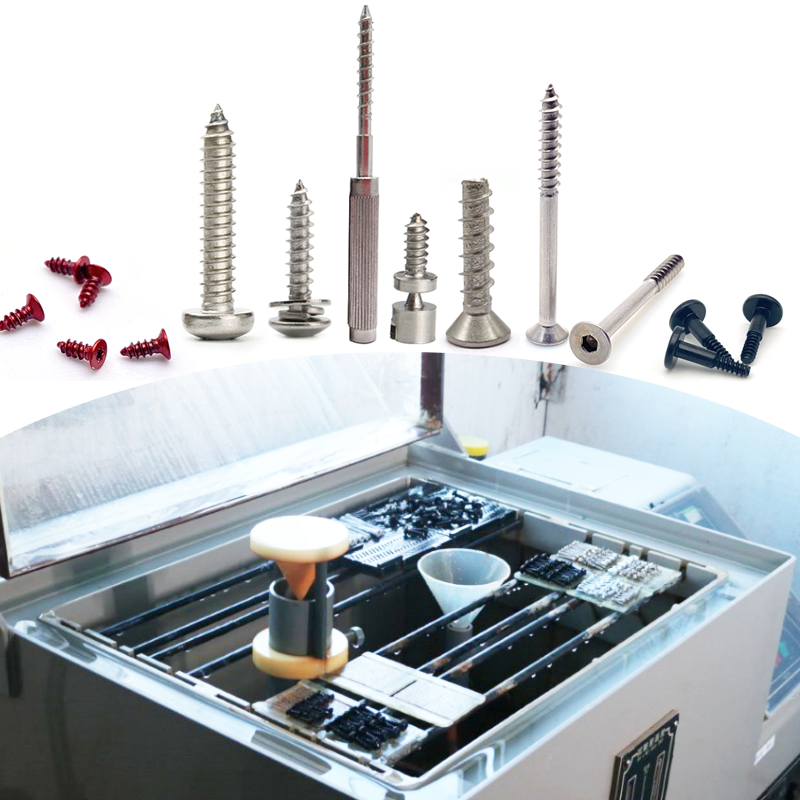
Where salt-spray hours are specified, a sample is run and the result recorded with the coating thickness. Clear zinc on carbon steel is a thin sacrificial layer, and the record states what it survived rather than implying that any carbon steel screw is corrosion proof.
Every batch of torx self tapping screws is traceable to the wire it was headed from and to the plating lot it came out of. The material certificate states the steel grade and the heat number, and the inspection record carries the head, recess, thread and plating thickness against the drawing.

ISO 9001:2015 |

RoHS test report |

Registered trademark |

Patent: security screw and driver |
With each shipment we supply the material certificate and the inspection record for the recess, thread and plating. The records carry the batch number, so a repeat order of torx self tapping screws can be compared with the first on the two numbers that decide the drive: recess depth and plated thread size.
More than 8,678 customers in 89 countries and regions have ordered from Shi Shi Tong; 87% of orders come from repeat customers and 56% through referrals. Most projects follow the same route: drawing review, first-article approval, then batches checked against that sample. On a torx self tapping screw the first article is driven into the customer’s own hole at the line torque, because the recess and the pilot hole only prove themselves together. Buyers visit during the process to review samples.
|
8,678+
customers served
|
87%
of orders from repeat customers
|
56%
of orders through referrals
|
89
countries and regions shipped to
|
Buyers and quality engineers visit for sample review, process discussion and supplier audits; the visit is arranged around production so the heading cells and the plating line can be seen on the day the parts run.

Customer group visit – sample review |

Customer group visit – process discussion |

Customer group visit – factory tour |

Customer visit – project kick-off |

Danish customer – drawing review |

Industry exhibition – meeting customers |
A Torx bit engages all six lobes, so it transmits more torque without cam-out. On a self tapping screw that matters because the driving torque is higher than the seating torque.
A self tapping screw forms or cuts a thread in a hole that already exists. A self drilling screw has a drill point and makes its own hole through sheet.
Deep enough to hold the bit at the driving torque and not so deep that it weakens the bearing face. On a 2.4 mm head that window is narrow, so depth is specified and measured.
Yes. Zinc adds to the thread flanks and to the recess walls, so the screw is gauged after plating and the pilot hole is agreed on the plated size.
A self tapping thread in plastic will hold a few refits and then lose grip. If a part is serviced repeatedly, the drawing should say so and the thread or an insert is chosen for it.
Head diameter and height, Torx size and depth, thread diameter and pitch, length, point form, material, heat treatment, finish and the pilot hole.
How a torx self tapping screw project runs from drawing to repeat delivery:
|
1
Send the drawing and the pilot hole
|
→ |
2
Recess, thread and finish agreed
|
→ |
3
First article driven at line torque
|
→ |
4
Batch production and repeat orders
|
Each step is confirmed with you before the next one starts; the drawing revision used for the first article is what repeat orders are checked against.
For a quotation, send the drawing with the head diameter and height, Torx size and depth, thread and pitch, length, point, material, heat treatment, finish and the hole the screw goes into.
|
Head
|
Recess
|
Thread
|
|
Point
|
Finish
|
Pilot hole
|
Sending a drawing? The form below does not take attachments. Email the PDF, DXF or STEP file to sst@szsst88.com with the part name and quantity in the subject line – the drawing is reviewed and a quotation follows.

 +86 13143444311
 sst@szsst88.com