Tel:
+86 13143444311
Email:sst@szsst88.com
Fax:+0086-755-27322278
Address:Building 9, First Industrial Zone, Tantou Industrial City, Songgang Street, Baoan District, Shenzhen 518105, Guangdong, China
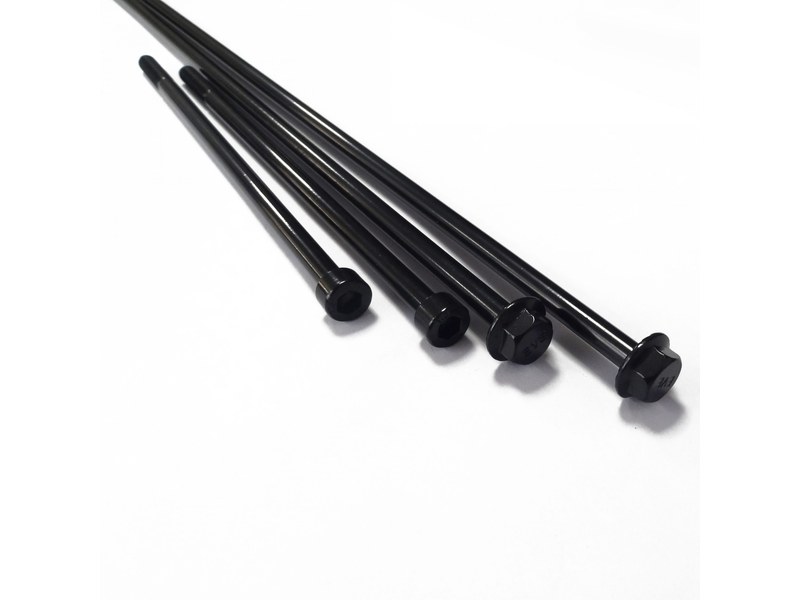
Type:Extra Long Machine Screws
Materials:Stainless Steel
Surface treatment:Plain
Head Type:Socket head
Drive:Allen hex socket
Thread:Machine thread, defined length
Point:Plain, chamfered
Forming:Turned or formed; thread produced at the end
Size:M3 M4 M5 M6 M7 M8 M9 M10
We make extra long machine screws in stainless steel with a socket head, quoting the length under the head and the thread length separately. Most of the body is plain shank that passes through the assembly, and the first article is assembled through your parts before production.
Watch the factory video·Email sst@szsst88.com
ISO 9001:2015 · Manufacturing since 1998 · 8,678+ customers · 89 countries and regions
Made to order – there is no stock catalogue. Each part is produced to your drawing, and production starts after drawing review and first-article approval.
Extra long machine screws are machine-threaded fasteners whose length is well beyond the standard range, with a socket or hex drive at one end and a thread that engages only over part of the length. The part recorded here is stainless steel left plain, with a socket head, quoted from M3 upward and made to the drawing.
Long body. Most of the length is plain shank that passes through the assembly rather than engaging anything.
Socket head. A drive at one end of a long part, where any misalignment of the key becomes a side load.
Thread at the end. A defined threaded length that engages the nut or tapped hole, with the rest of the body plain.
They are used where a fixing has to pass through a deep stack, a tube or a frame before it reaches the part that holds it. The screw is then part fastener and part shaft, and the assembly depends on the plain body reaching its thread without being forced.
On a conventional screw the length is one number, and the thread occupies most of it. On an extra long machine screw the length is two numbers that do different jobs: the length under the head, which sets how far the screw reaches, and the threaded length, which sets how much of it actually holds. The difference between them is the plain shank, and on these parts that shank is usually the bulk of the screw.
The plain shank is what passes through the assembly. It has to fit the holes it crosses, and those holes may be in several parts that are not perfectly aligned with each other, so the shank diameter is agreed with the smallest of them rather than with the thread. A shank that is a little oversize will not pass; one that is under size lets the screw move in a hole where it is supposed to be held.
The threaded length is the part that carries the load, and it is usually short. On a long screw the engagement is a few diameters at most, so the joint depends on the nut or the tapped hole more than on the screw’s total length. That is why the threaded length is stated separately on the drawing rather than left as ‘thread the whole way’.
The drive is the third consideration. On a short screw the key is close to the thread and the load path is short. On a long screw the key acts at the end of a long part, and any misalignment between the key and the axis becomes a side force that pushes the screw against the holes it passes through. The result is a thread that starts partly formed or a nut that will not run down, and the cause is at the far end.
Because of that, extra long machine screws are handled and assembled differently. They are packed so they do not bend in transit, they are usually started by hand before the key is used, and the drawing states the length in a way that can be checked with a rule rather than a gauge.
The part is quoted to the drawing with the total length, the thread length and the shank diameter stated separately. Custom lengths up to 2,000 mm, subject to DFM review after drawing submission. The quotation for extra long machine screws carries the length under the head, the thread length, the shank diameter, the head and drive, and the parts the screw passes through.
| Item | How it is defined | What we control |
|---|---|---|
| Length | Under the head | Length and cut end |
| Thread length | Engaged length | Thread start and end |
| Shank | Plain body | Diameter and finish |
| Head | Socket head | Diameter, height and socket |
| Pass-through | Customer parts | Hole sizes agreed |
| Packaging | For a long part | Support so it arrives as made |
The length under the head is the dimension the assembly needs, and it is measured from the bearing face to the end. On a long part that is a distance rather than a feature, so it is checked with a rule or a length gauge rather than on a comparator.
The thread length is measured from the end, because that is where the nut or the tapped hole starts. A thread that stops short leaves the nut unable to reach its seat; a thread that runs too far leaves a shank shorter than the holes it has to pass.
The shank diameter is agreed with the smallest hole the screw crosses. That is usually a clearance hole in a part the customer makes, so the number comes from their drawing rather than from the screw.
Four properties decide extra long machine screws, and each one carries a cost:
| Property | What it gives | What it costs |
|---|---|---|
| Long body | Reaches through a deep stack | Handling and packing become part of the job |
| Defined thread length | A predictable engagement | Two lengths to specify and check |
| Socket drive | A compact drive at one end | Key alignment matters over the whole length |
| Stainless | No rust on a visible long part | Cost above carbon steel |
The value is reach. A long screw replaces a series of short ones and a coupling, and it keeps a single thread pair at the end where the load is, which is simpler to assemble and simpler to check.
The cost is that the part is a handling problem as much as a machining one. It has to arrive as made, be started straight, and reach its thread without being forced.
The recorded finish is plain stainless steel. On a long screw that gives a body that will not rust where it passes through and a thread that is bare metal at the point of engagement, and it avoids a coating that could be rubbed off along the length during handling.
| Option | How it protects | Effect on shank and thread | Typical use |
|---|---|---|---|
| Plain, passivated | Passive film, no coating | Body and thread as made | Stainless assemblies |
| Passivated 316 | Higher alloy passive layer | No build; better in chlorides | Marine and outdoor |
| Nickel plated | Hard bright barrier | Thin build; thread re-gauged | Visible long fixings |
| Zinc plated | Sacrificial zinc | Build on body and thread | Cost-driven dry work |
| Black oxide | Conversion film, oiled | No measurable build | Dark mechanisms |
On a long part the finish has to be uniform along the whole body, because the body is what is seen. A plated long screw that is thin in the middle of its length looks different from one that is uniformly coated, and on a visible application that shows.
The thread is the part where a coating changes function. A plated thread has to be gauged after plating, since the layer sits where the nut will run and a heavy plate on a fine thread is enough to stop it.
Three assemblies where a fixing has to reach through something deep:
| Where it sits | The screw passes through a tube or a frame and threads into a plate or a nut at the far side. |
| When it goes wrong | The screw binds as it passes, or the thread starts late and the nut will not seat. |
| Why it happens | The shank diameter is oversized for the holes, or the key is misaligned. |
| What we control | Shank diameter agreed with the smallest hole; first article assembled through the frame. |
| Where it sits | The screw holds a component at a distance from the bracket where a short screw cannot reach. |
| When it goes wrong | The part sits at an angle, and the joint loosens in use. |
| Why it happens | The screw is forced in, and the thread at the far end is partly formed. |
| What we control | Length and thread length checked; first article assembled on the stand. |
| Where it sits | The screw is an adjuster where the reach is the function, and the thread end moves a part far from the head. |
| When it goes wrong | The adjustment is inconsistent, or the screw binds over part of its travel. |
| Why it happens | The shank is not matched to the guide holes, and the key applies a side load. |
| What we control | Shank and length checked; first article adjusted through the full travel. |
Four reasons that matter on a part where length is a handling problem, each tied to something the drawing or the first article proves. All four show in the sample.
|
Two lengths, stated separately
The drawing states the length under the head and the thread length, because on a long screw they are different dimensions with different jobs. Basis: Both lengths dimensioned. |
Body made to pass
The shank is made to the smallest hole the screw crosses and is kept plain over that length, so it reaches the thread without binding. Basis: Shank matched to the holes. |
|
Reached through the stack
The first article is assembled through the customer parts, because reach and clearance only show when the screw is in place. Basis: Reach proved in assembly. |
Same reach on repeat runs
Length, thread length and shank diameter are recorded with the drawing revision, so a repeat batch reaches the same point. Basis: Same reach across orders. |
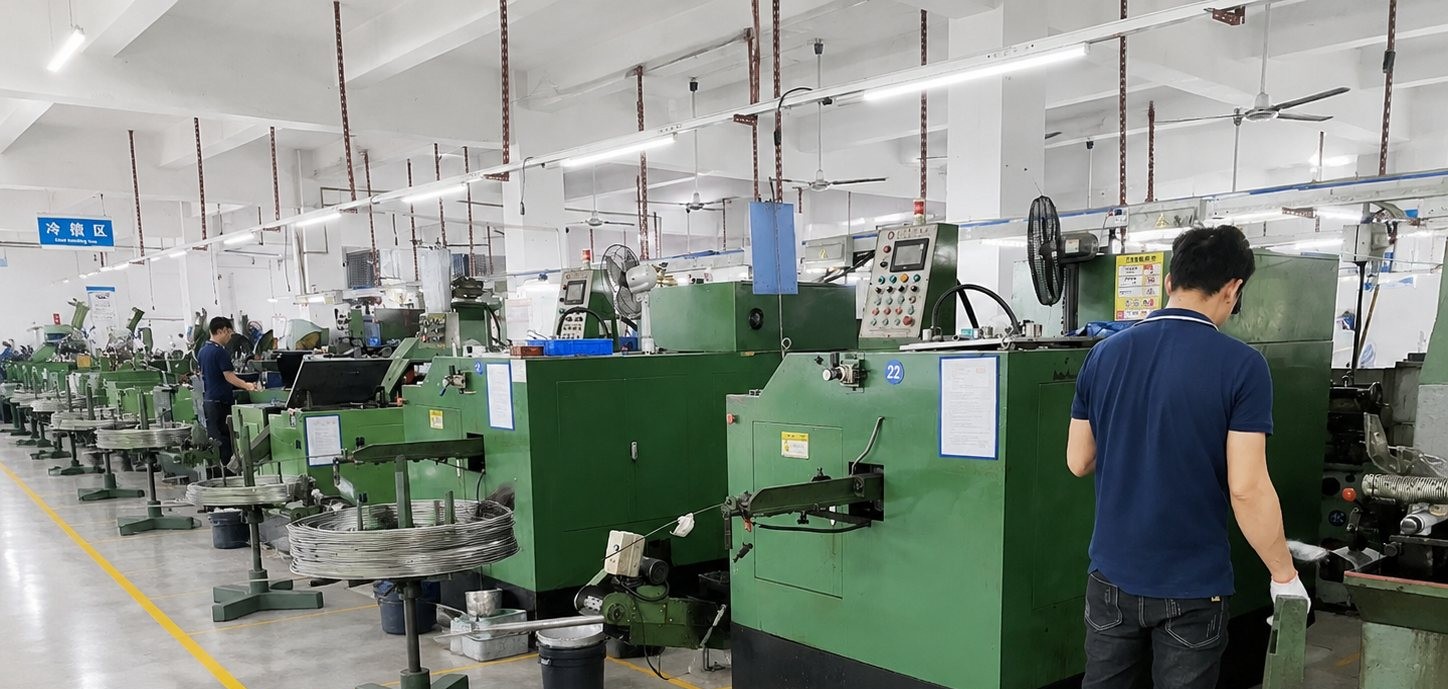
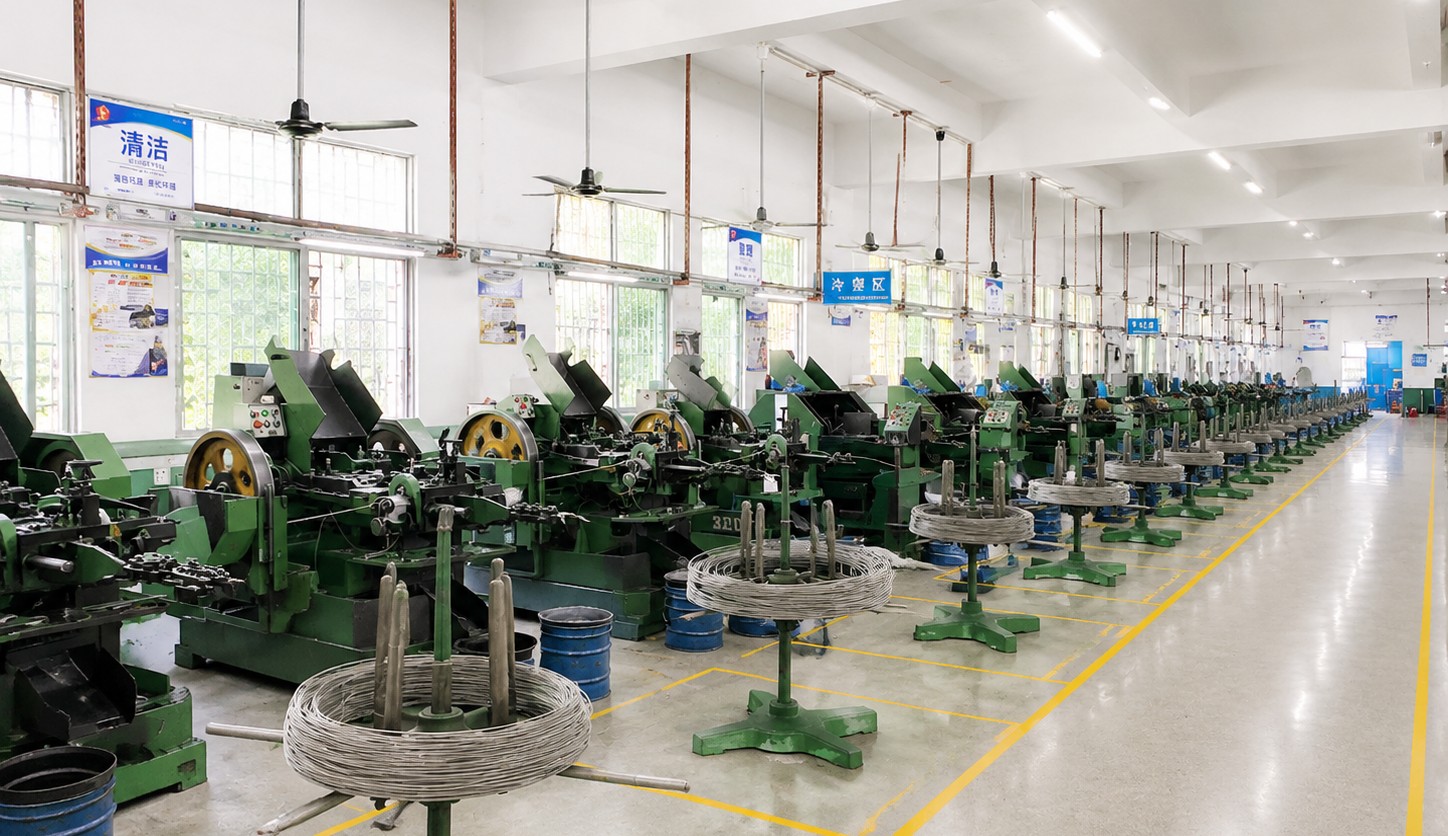
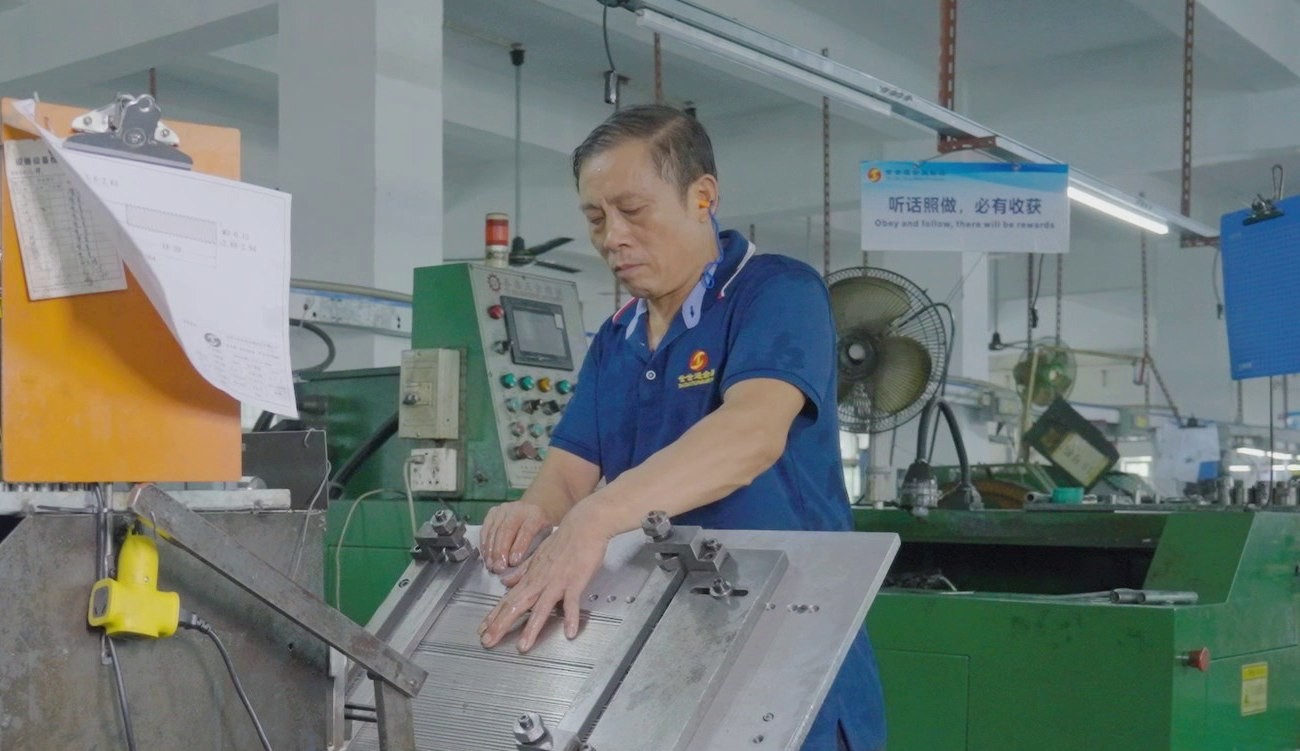
These screws are turned or formed from stainless bar and wire, with the head and socket made at one end, the body kept plain, and the thread produced at the other; the parts are cleaned, passivated and inspected. The first piece of every run is checked on length under the head, thread length, shank diameter, head and socket, and thread.
|
|
A long part is made in more than one pass of the machine, with the body supported between operations. The thread is produced at the end that will engage, and the plain body is kept free of tool marks that would change its diameter, because that diameter has to pass through holes the customer has already made.
The head and socket are made first, so the part can be held by the head for the later operations. The order matters: a part held by the shank for the socket cut can be pushed out of tolerance over its whole length, and on a long screw that is a large multiplication of a small error.
Plating and passivation come last, and the parts are then packed in a support that keeps them from bending before they reach the customer. Packing is part of the specification on these parts: a long screw that arrives with a bend in it cannot be straightened at the assembly station.
What decides whether extra long machine screws pass is the two lengths, the shank diameter and the thread. The inspection agreement covers those, and the criteria come from the drawing.

Thread and head on the projector |

Thread gauged |

Material checked |

Salt-spray testing where plated |
The length under the head is checked with a length gauge on a sample from each batch, and the thread length from the end. The two are recorded separately, because a part that is correct overall but short of thread will not hold, and one with the thread too long will not pass through the assembly.
The thread is gauged at the end where it engages, and the start is checked for a clean lead. On a long part the thread start is the only guide the nut has, so it has to be clear rather than broken or burred.
The shank is checked for diameter along its length and for marks that would change it. A sample is assembled through the customer parts to confirm that the screw reaches the thread without binding, which is the check that matters most on a long part.
Every batch of extra long machine screws is traceable to the bar or wire it was made from and to the finishing lot that completed it. The grade and heat number appear on the material certificate supplied with the parts, and the dimensional results are recorded against the drawing revision.

ISO 9001:2015 |

RoHS test report |

Registered trademark |

Patent: security screw and driver |
With each shipment we supply the material certificate, the inspection record for the dimensions on the drawing, including both lengths, and the finishing record. The records carry the drawing revision and the batch number, so a repeat order of extra long machine screws reaches the same point.
More than 8,678 customers in 89 countries and regions have ordered from Shi Shi Tong; 87% of orders come from repeat customers and 56% through referrals. Most projects follow the same route: drawing review, first-article approval, then batches checked against that sample. On a long part the first article is assembled through the customer stack, because reach is a property of the assembly rather than of the screw. Buyers visit during the process to review samples.
|
8,678+
customers served
|
87%
of orders from repeat customers
|
56%
of orders through referrals
|
89
countries and regions shipped to
|
Buyers and quality engineers visit for sample review, process discussion and supplier audits; the visit is arranged around production so the turning cell and the length inspection can be seen on the day the parts run.

Customer group visit – sample review |

Customer group visit – process discussion |

Customer group visit – factory tour |

Customer visit – project kick-off |

Danish customer – drawing review |

Industry exhibition – meeting customers |
The length under the head sets the reach and the thread length sets the hold. On a long screw they are different dimensions and are checked separately.
Only the engaged length. The rest is plain shank that passes through the assembly.
The smallest hole the screw crosses. It is usually a clearance hole in a customer part.
Often because the key is misaligned, which pushes the screw sideways against the holes. Starting it by hand before using the key avoids most of that.
In a support that keeps it from bending. A long part that arrives bent cannot be straightened on the line.
Length under the head, thread length, shank diameter, head and drive, and the holes the screw passes through.
How an extra long machine screw project runs from drawing to repeat delivery:
|
1
Send the drawing and the stack it crosses
|
→ |
2
Lengths and shank agreed
|
→ |
3
First article assembled through
|
→ |
4
Batch production and repeat orders
|
Each step is confirmed with you before the next one starts; the drawing revision from the first article is what repeat orders are checked against.
For a quotation, send the drawing with the length under the head, the thread length, the shank diameter, the head and drive, the holes the screw passes through, and the material and finish.
|
Length
|
Thread length
|
Shank diameter
|
|
Head
|
Pass-through holes
|
Material
|
Sending a drawing? The form below does not take attachments. Email the PDF, DXF or STEP file to sst@szsst88.com with the part name and quantity in the subject line – the drawing is reviewed and a quotation follows.

 +86 13143444311
 sst@szsst88.com