Tel:
+86 13143444311
Email:sst@szsst88.com
Fax:+0086-755-27322278
Address:Building 9, First Industrial Zone, Tantou Industrial City, Songgang Street, Baoan District, Shenzhen 518105, Guangdong, China
Type:150mm Decking Screws
Materials:Carbon Steel
Surface treatment:White Zinc Plated
Head Type:Pan head
Drive:Phillips cross recess
Thread:Coarse wood thread
Point:Sharp, tapered
Forming:Single Die Heading
Size:M1 M2 M3 M4 M5 M6 M7 M8 M9 M10
We make 150mm decking screws in carbon steel with a white zinc finish, pan head and cross recess, with other lengths made to the drawing. Overall length, threaded length and pilot hole are agreed together, and the first article is driven into your own board and joist.
Watch the factory video·Email sst@szsst88.com
ISO 9001:2015 · Manufacturing since 1998 · 8,678+ customers · 89 countries and regions
Made to order – there is no stock catalogue. Each part is produced to your drawing, and production starts after drawing review and first-article approval.
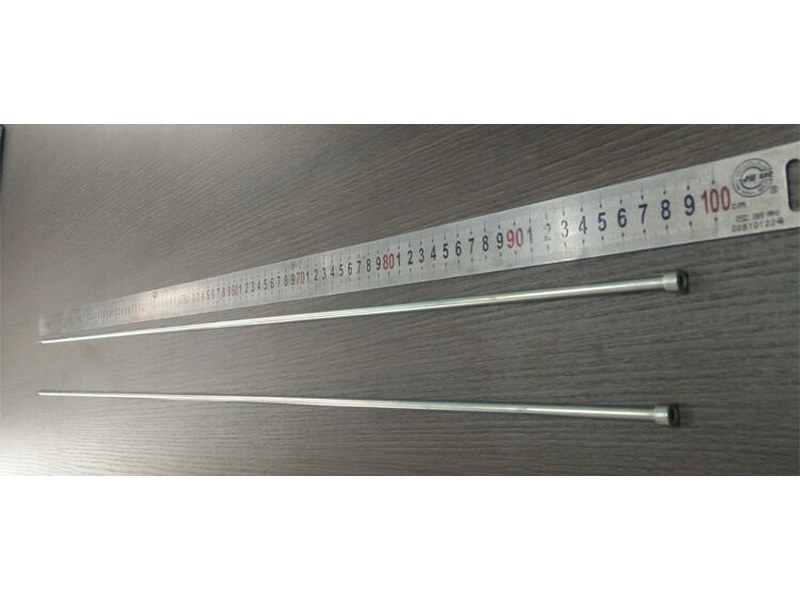
150mm decking screws are coarse-threaded wood screws of a fixed length, used to fix deck boards down to a timber joist. The part recorded here is carbon steel with a white zinc finish, pan head with a cross recess, quoted in the 150 mm length with other lengths made to the drawing.
150 mm length. A length chosen so the screw passes through the board and reaches into the joist without emerging underneath.
Coarse wood thread. A wide-pitch thread with a sharp point, designed to bite into timber rather than to form its own metal thread.
Pan head, cross recess. A head that clamps the board and a drive that can be set to a consistent torque.
White zinc. A bright trivalent zinc, which suits sheltered and indoor timber work.
They are used on decking, boardwalk, cladding battens and any outdoor timber surface fixed down over joists, where the board has to stay flat underfoot and the fixing has to stay where it was driven.
The number in the title is the interesting part. 150 mm is not a screw size in the way M6 is; it is a distance, chosen because of how thick the board is and how much of the joist the screw has to reach. Change the board and the same screw becomes wrong, even though nothing about the screw has changed.
The first job of the length on 150mm decking screws is to clear the board. A deck board is usually in the twenties or thirties of millimetres, so a 150 mm screw leaves the majority of its length in the joist. The second job of a 150mm decking screw is to stop short of the far face of the joist: a screw that breaks through the bottom leaves a sharp point under the structure and takes the corrosion risk into a place nobody inspects.
The third job is engagement. Timber needs a certain depth of thread in the joist to hold, and that depth has to be reached without the head pulling the board down so hard that it splits or cups. Threads that are too coarse for the timber split it; threads that are too fine drive slowly and strip in softwood.
Then there is movement, which is why 150mm decking screws are specified by the joint rather than by the catalogue. Decking gets wet and dries, and the board changes thickness while the screw does not. The joint is designed so that the screw keeps holding across that cycle: the head must not sink into softened timber, and the shank must not become a loose peg in a board that has shrunk around the joist.
All of that is why a decking screw page is really a joint page. The screw is fixed by the drawing; the board, the joist, the pilot hole and the finish are what decide whether the deck stays quiet underfoot after the first winter.
The recorded product is a 150 mm screw, with other lengths made to the drawing. Custom lengths up to 2,000 mm, subject to DFM review after drawing submission. The quotation for 150mm decking screws carries the length, the thread pitch and major diameter, the head diameter and height, the recess size, the point form and the finish.
| Item | How it is defined | What we control |
|---|---|---|
| Length | Overall, head included | 150 mm as standard, others to drawing |
| Thread | Coarse wood thread | Pitch, major diameter and thread length |
| Head | Pan head, cross recess | Diameter, height and bearing face |
| Point | Sharp, tapered | Point length as a share of the length |
| Finish | White zinc, electroplated | Thickness and coverage at the point |
| Pilot hole | Mating detail, on the drawing | Agreed with the first article |
Thread length relative to the overall length is the number that decides how much of the screw bites. A screw that is threaded nearly to the head will clamp a thin board hard and can split it; one with a longer plain shank leaves the board free to move slightly, which is often what a deck wants.
Point length matters at this scale. A generous point starts in the timber without wandering, but it also shortens the effective thread in the joist, and on a 150 mm screw that difference is felt in the pull-out.
The pilot hole belongs on the drawing next to the screw. In hardwood the pilot is nearly the core diameter; in softwood it is smaller, and driving a long screw into the wrong pilot is the most common reason a deck board splits along its length.
Four properties decide 150mm decking screws, and each one carries a cost:
| Property | What it gives | What it costs |
|---|---|---|
| 150 mm length | Through the board into the joist | Only suits one board and joist combination |
| Coarse thread | Fast drive in softwood | Splits thin or dry timber if the pilot is small |
| Pan head | Clamp spread on the board | Stands slightly proud of the deck |
| White zinc | Bright, low-cost protection | Limited life in full outdoor exposure |
The value of 150mm decking screws is a joint that can be driven at production speed and holds the board flat. On a deck, that is the whole requirement: no lifting edges, no heads standing up, and no split boards to replace.
The cost is that the length is a commitment. It fixes the board thickness and the joist depth it suits, and the finish limits where the deck can be built.
The recorded finish is white zinc, a bright trivalent zinc. It protects by sacrificial action, it keeps the heads looking clean, and it is the economical choice for timber that is sheltered from direct weather.
| Option | How it protects | Effect on head and thread | Typical use |
|---|---|---|---|
| White zinc | Trivalent zinc, bright | Thin; wears at the head | Sheltered and indoor decks |
| Colour zinc | Trivalent coloured zinc | Thin; tone varies by lot | Visible deck surfaces |
| Zinc flake | Lamellar coating | Covers edges and point | Exposed outdoor decking |
| Hot-dip galvanised | Thick zinc layer | Builds on thread; driving torque rises | Structural and coastal timber |
| Stainless, A2 or A4 | Passive film, no coating | No build; no coating to lose | Coastal and wet environments |
Where the deck is fully exposed to rain and sun, white zinc is the weakest of these choices and the one that shows failure first, at the head where the driver bears and at the point where the thread cuts. The honest recommendation for an exposed deck is a heavier coating or stainless, and the drawing is where that decision belongs.
Where the timber is sheltered, or where the deck is under a canopy, white zinc does the job at the lowest cost and keeps the heads visually consistent across the surface.
Three timber settings where this length is the natural choice:
| Where it sits | The screw fixes a board to a joist where the surface is walked on and the board must stay flat. |
| When it goes wrong | A short screw lifts at the edge, or a longer one breaks through the joist underneath. |
| Why it happens | The board is thick, the joint is exposed, and the surface is used daily. |
| What we control | Length and pilot agreed; first article driven and checked for breakthrough. |
| Where it sits | The screw fixes a batten where the length has to reach through the batten into the frame without showing on the far side. |
| When it goes wrong | The screw tips out of the back of the frame and shows on the inside face. |
| Why it happens | The batten is deep, the frame is shallow, and the fixings are visible. |
| What we control | Length and thread length checked; first article fitted and inspected. |
| Where it sits | The screw fixes a board where a bright head is acceptable and the timber is not rained on. |
| When it goes wrong | A heavy coating raises the drive torque and the heads start to spin. |
| Why it happens | The timber is under cover, the surface is visible, and the fixing is repeated. |
| What we control | White zinc confirmed; first article driven at the line torque. |
Four reasons that matter on a long screw whose job is decided by the joint, each tied to something the first article has to prove:
|
Length and thread length stated together
The overall length and the threaded length are both agreed, because on a long decking screw the difference decides whether the board is clamped or left free to move. Basis: Length and thread length together. |
Headed, threaded, pointed and plated
The pan head is formed in one stroke, the coarse thread rolled, the point formed and the batch plated with the point inspected afterwards. Basis: One route, point checked. |
|
Pitch and point proved in your timber
The thread pitch and the point are proved by driving into the customer timber with the customer pilot, because splitting and breakthrough only appear there. Basis: Driven into your timber. |
Same drive, same hold
The rolling dies and the point tool are recorded with the drawing revision, so a repeat order drives and holds the same way. Basis: Same drive across orders. |
These screws are headed on single-die machines that form the pan head in one stroke, thread rolled with the coarse wood profile and the point formed, then white zinc plated as a batch. The first part of every run is measured on head diameter and height, recess depth, thread pitch and length, point and overall length.


|

|
Rolling a coarse thread on a long blank, as on 150mm decking screws, is a matter of keeping the pitch consistent along the whole thread length. On a short screw a small pitch drift is invisible; on a 150 mm screw it accumulates, and the result is a screw that drives easily for the first eighty millimetres and then binds because the thread has effectively changed.
The point of a 150mm decking screw is formed in the same operation and its length is set against the overall length. A point that is too long costs engagement in the joist; one that is too short wanders on the board, and on a long screw the wander is amplified by the time the thread engages.
Plating follows forming, and the point and the head are the two features that need checking. The point is where the coating is thinnest and where the thread cuts first, and the head is where the driver bears and where the layer is rubbed away during driving.
What decides whether 150mm decking screws pass is the length, the thread, the point and the coating. The inspection agreement covers those, and the criteria come from the drawing.

Pitch and head on the projector |

Thread profile checked |

Core hardness checked |

Salt-spray testing of the white zinc layer |
On 150mm decking screws the overall length is measured over the head, and the threaded length is measured separately, since the difference is what the joint feels. Thread pitch and major diameter are checked against the agreed profile along the thread, not only at the tip.
The functional check is a drive into a sample of the customer timber with the customer pilot. That shows splitting, breakthrough at the far face of the joist, and whether the head seats without tearing the board surface.
Coating is checked at the point and at the head, which are the first places to fail. A sample goes into salt spray, and the batch is judged on those two features rather than on the shank.
Every batch is traceable to the wire it was made from and to the plating lot that finished it. The grade and heat number appear on the material certificate supplied with the parts, and the plating thickness is recorded for the batch.

ISO 9001:2015 |

RoHS test report |

Registered trademark |

Patent: security screw and driver |
With each shipment we supply the material certificate, the inspection record for the dimensions on the drawing including thread length and point, and the plating and RoHS reports. The documents carry the drawing revision and the batch number, so a repeat order of 150mm decking screws drives the same way in the same board.
More than 8,678 customers in 89 countries and regions have ordered from Shi Shi Tong; 87% of orders come from repeat customers and 56% through referrals. Most projects follow the same route: drawing review, first-article approval, then batches checked against that sample. On a long decking screw the first article is driven into the customer board and joist, because breakthrough and splitting only show in the real section. Buyers visit during the process to review samples.
|
8,678+
customers served
|
87%
of orders from repeat customers
|
56%
of orders through referrals
|
89
countries and regions shipped to
|
Buyers and quality engineers visit for sample review, process discussion and supplier audits; the visit is arranged around production so the headers, the thread rolling station and the plating line can be seen on the day the parts run.

Customer group visit – sample review |

Customer group visit – process discussion |

Customer group visit – factory tour |

Customer visit – project kick-off |

Danish customer – drawing review |

Industry exhibition – meeting customers |
It is a length chosen for a particular board and joist. Change either and the same screw no longer does the job, even though nothing about it has changed.
Enough to hold across a season of movement. The threaded length relative to the overall length is the number that decides how much bite there is.
Only if it is longer than the remaining joist depth. That is the check the first article makes, and it is why the length is a joint dimension.
For sheltered or indoor timber it is the economical choice. Fully exposed decks are better served by zinc flake, hot-dip or stainless.
Usually a pilot hole that is too small for the timber, or a coarse thread driven into dry hardwood. The pilot belongs on the drawing with the screw.
Overall length, threaded length, thread pitch and major diameter, head dimensions, recess size, point form, finish and the pilot hole.
How a decking screw project runs from drawing to repeat delivery:
|
1
Send the drawing and the board section
|
→ |
2
Length, thread and pilot agreed
|
→ |
3
First article driven in your timber
|
→ |
4
Batch production and repeat orders
|
Each step is confirmed with you before the next one starts; the drawing revision from the first article is what repeat orders are checked against.
For a quotation, send the drawing with the overall length, threaded length, thread pitch, head dimensions, recess size, point form and finish, plus the board and joist section.
|
Overall length
|
Threaded length
|
Thread pitch
|
|
Head diameter
|
Finish
|
Pilot hole
|
Sending a drawing? The form below does not take attachments. Email the PDF, DXF or STEP file to sst@szsst88.com with the part name and quantity in the subject line – the drawing is reviewed and a quotation follows.

 +86 13143444311
 sst@szsst88.com