Tel:
+86 13143444311
Email:sst@szsst88.com
Fax:+0086-755-27322278
Address:Building 9, First Industrial Zone, Tantou Industrial City, Songgang Street, Baoan District, Shenzhen 518105, Guangdong, China
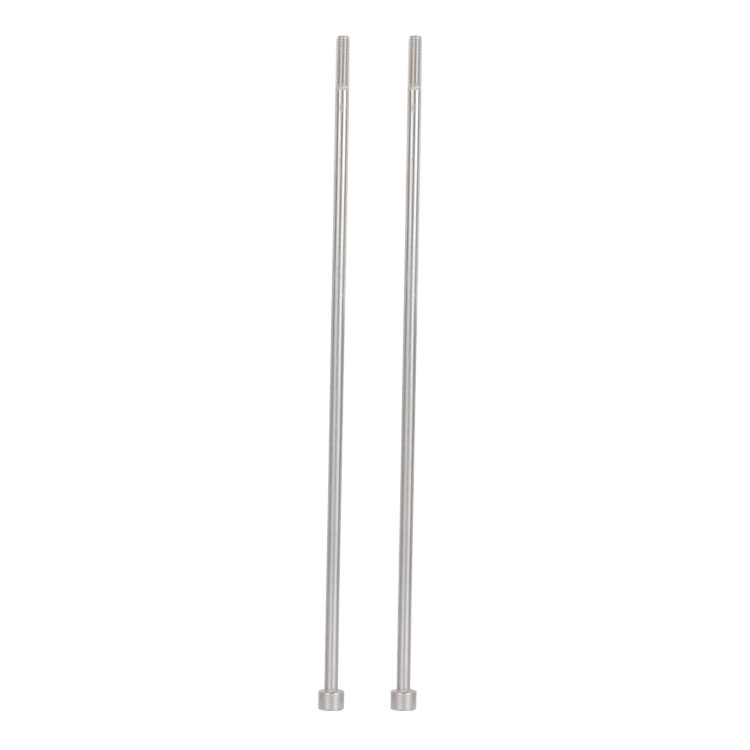
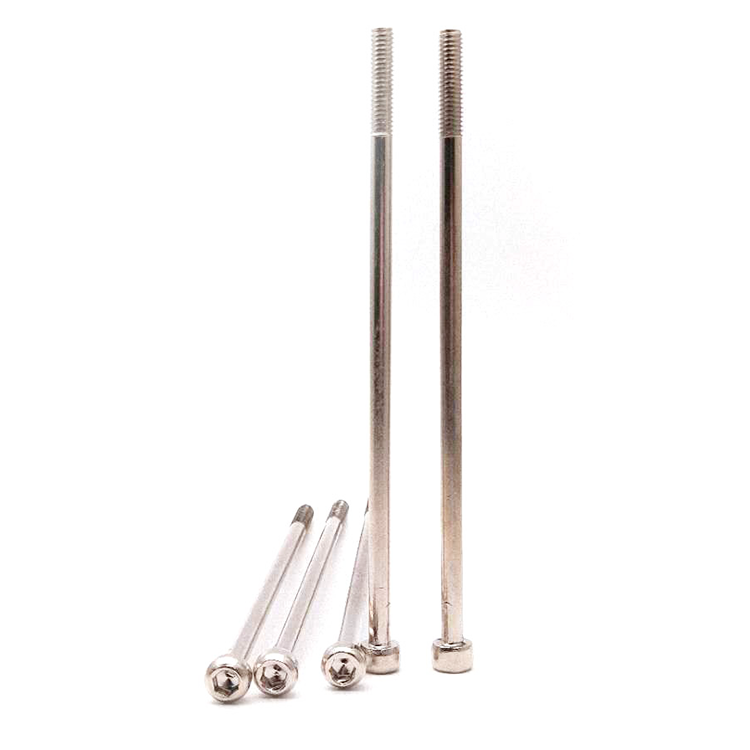
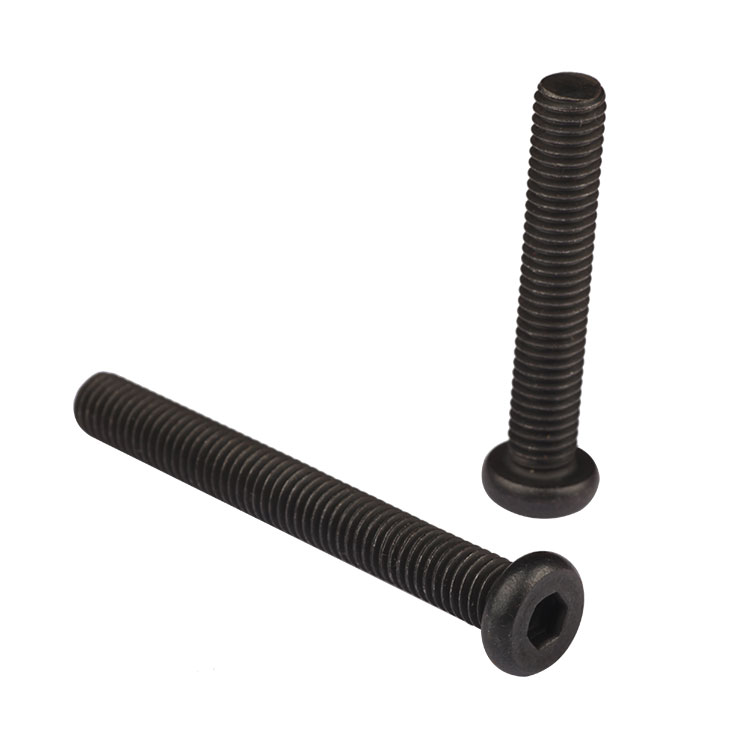
Type:100mm Socket Screws
Materials:Stainless Steel
Surface treatment:Plain
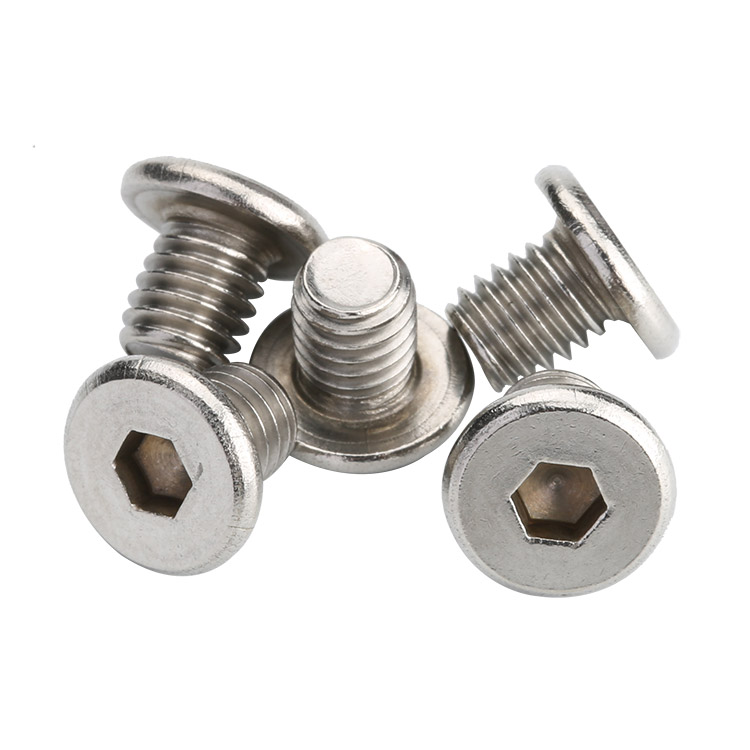
Head Type:Cap head (socket)
Drive:Hexagon socket (Allen)
Thread:Machine thread, partial
Point:Plain, chamfered
Forming:Single Die Heading
Size:M1 M2 M3 M4 M5 M6 M7 M8 M9 M10
We make 100mm socket screws in stainless steel with a cap head and a partially threaded shank, with other lengths made to the drawing. The threaded length is agreed as a dimension so the boundary falls inside your clamped part, and the first article is assembled in your stack.
Watch the factory video·Email sst@szsst88.com
ISO 9001:2015 · Manufacturing since 1998 · 8,678+ customers · 89 countries and regions
Made to order – there is no stock catalogue. Each part is produced to your drawing, and production starts after drawing review and first-article approval.
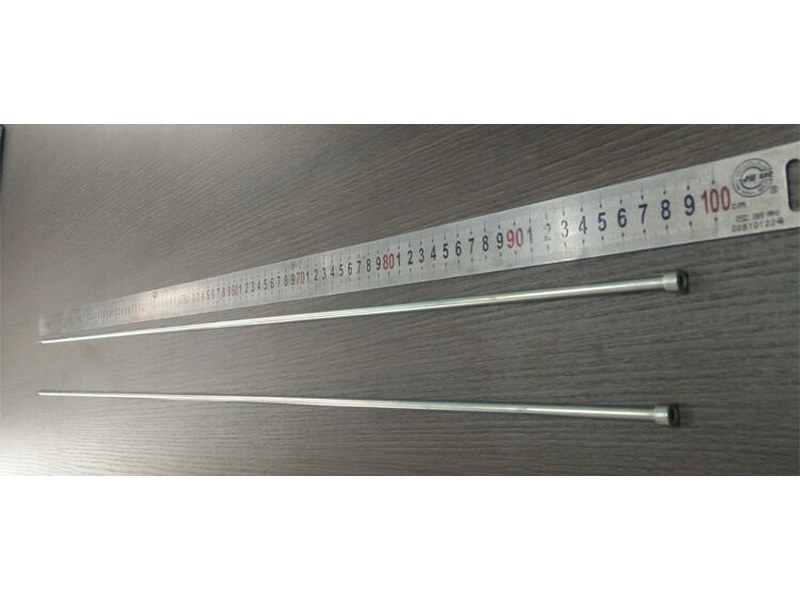
100mm socket screws are socket head cap screws supplied in a 100 mm length, used where the fixing has to pass through a deep stack of parts before it threads. The part recorded here is stainless steel with a plain finish, quoted in the 100 mm length with other lengths made to the drawing.
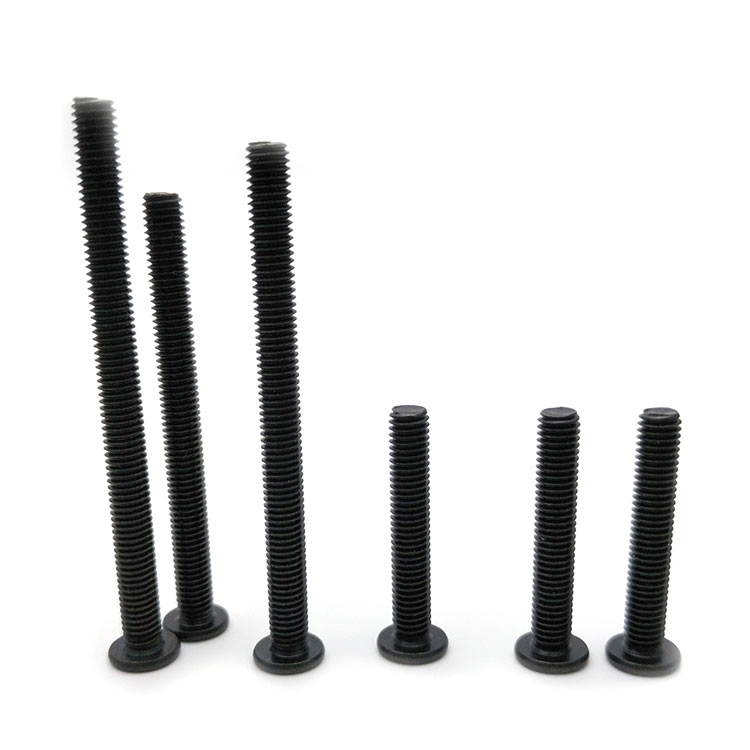
100 mm length. A stocked length that suits a column, a spacer stack or a deep bracket rather than a single plate.
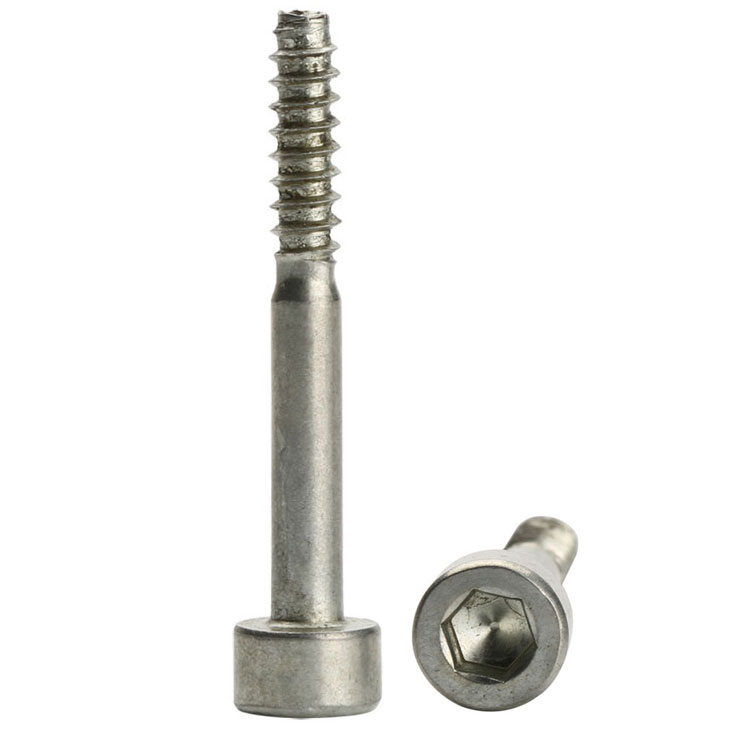
Socket cap head. A tall head with a deep hexagon, so the clamp can be applied with a key in a recess.
Thread layout. The threaded length against the overall length decides how much of the screw is a plain shank and where it sits in the stack.
Stainless, plain. No coating, so the shank keeps its finish and the thread does not rust into a deep hole.
They are used on die assemblies, clamp plates, bearing housings, jig frames and any joint where the fastener spans a gap between two parts that both need a machined face.
Short screws are joints between two surfaces, while 100mm socket screws are joints across a distance. A 100 mm screw is a joint across a distance, and the distance introduces three things the drawing has to control: where the thread starts, what the plain shank passes through, and how the head finds a seat that is a long way from the thread.
Thread layout is the first of them on 100mm socket screws. A socket screw in this length usually has a partially threaded shank, and the boundary between thread and shank is not arbitrary: it has to fall inside the part that will be clamped, not in the gap. If it lands in the gap, the thread acts as a series of ridges in the span, and the joint gains nothing but loses the smooth bearing surface the shank was meant to provide.
Where the shank passes through a bored plate, the shank diameter and the bore form a second fit, and this one is often a clearance fit for assembly rather than a locating fit. That is fine as long as someone has checked that the head, not the shank, is what locates the joint. On a long screw it is easy to assume the shank locates, and just as easy to be wrong.
The head then has to find a flat seat a long way from the thread. Any lack of squareness between the seat and the hole shows as the screw being drawn to one side of the bore, and at 100 mm the lever arm turns a small angular error into a visible offset. That is a joint-level check, not a screw-level one.
The last effect on 100mm socket screws is how the part is driven. A long screw has more of a tendency to be started with force rather than aligned, and in stainless that means a cross-threaded start is nearly invisible until the screw is halfway in. The practical control is the same as in any long joint: thread it in by hand for the first few turns, then apply the key.
The recorded product is a 100 mm screw, with other lengths made to the drawing. Custom lengths up to 2,000 mm, subject to DFM review after drawing submission. The quotation for 100mm socket screws carries the overall length, the threaded length, the head diameter and height, the socket size, the thread and the material.
| Item | How it is defined | What we control |
|---|---|---|
| Overall length | Under the head to the point | 100 mm as standard, others to drawing |
| Threaded length | Thread from the point upward | Where the thread ends |
| Shank | Plain diameter between head and thread | Diameter and surface |
| Head | Cap head with hexagon | Diameter, height and bearing face |
| Thread | Metric machine thread | Pitch, class and start |
| Material | Stainless per the drawing | Grade on the certificate |
Threaded length is the number that turns a stocked length into a joint. It is quoted as a dimension rather than as a fraction, because the fraction depends on standard practice and standard practice differs between markets.
On 100mm socket screws the shank is not a leftover. On a long screw it is the feature that passes through the bore and, where the joint is a clamp, it is the surface the clamped part slides on during assembly. Its diameter and finish therefore belong on the drawing even though they carry no thread.
Overall length is measured from under the head, which is the datum that agrees with the stack. On this length of screw the difference between measuring from the head top and from under the head is the head height, and on a 100 mm part that is easy to miss and hard to forgive.
Four properties decide 100mm socket screws, and each one carries a cost:
| Property | What it gives | What it costs |
|---|---|---|
| 100 mm length | Spans a stack of parts | Long lever arm for any angular error |
| Socket cap head | High clamp with a short head | Needs a counterbore or spot face |
| Partial thread | Plain shank through the bore | Thread boundary must fall inside the clamp |
| Stainless body | No rust in a deep hole | Lower strength than a graded steel part |
The value of 100mm socket screws is a single fastener where a stud and nut would otherwise be needed. On a joint that has to come apart, one screw from one side is faster and more repeatable than a stud that needs access at both ends.
The cost is that the length magnifies every error in the seat and the bore. On a short screw those errors are absorbed; on a long one they are visible.
The recorded finish is plain stainless. On a long screw that matters because the shank is a bearing surface during assembly and the thread sits deep in a hole where a coating failure would be hard to see.
| Option | How it protects | Effect on shank and thread | Typical use |
|---|---|---|---|
| Passivated, plain | Removes free iron; rebuilds oxide | No build; shank as formed | Default for stainless |
| Electropolished | Levels the surface | Shank finish improved; thread softened | Cleanroom and food equipment |
| Black oxide on stainless | Colours the surface | Thin film; fit unchanged | Dark assemblies |
| Nickel plated | Hard bright barrier | Build on threads; fit changes | Where a bright finish is wanted |
| Zinc plated steel equivalent | Sacrificial zinc | Build on thread; re-checked | Where stainless is not needed |
On a long screw a coating on the thread is felt more than on a short one, because the engaged length is the same but the drive is through a greater distance. A film that adds a little to the thread also adds a little to the friction over every turn, and on a deep joint that is the difference between a screw that seats by hand and one that needs a key from the start.
Plain stainless keeps the thread and shank as formed. Where colour is needed, black oxide on stainless changes almost nothing dimensionally, which is why it is usually the choice on these parts rather than a plated finish.
Three settings where a fastener has to span a stack:
| Where it sits | The screw pulls a plate down through a stack of spacer blocks where the thread has to reach the last part. |
| When it goes wrong | The thread boundary lands in the gap and the clamp is carried by thread instead of shank. |
| Why it happens | The stack is deep, the joint is heavy, and the plates must sit flat. |
| What we control | Overall and threaded length agreed; first article assembled and checked for flatness. |
| Where it sits | The screw holds a housing where the fixing passes through a bore and threads into the casting behind. |
| When it goes wrong | The head is drawn to one side of the bore because the seat is not square to the hole. |
| Why it happens | The joint is machined, the bore is deep, and the alignment matters. |
| What we control | Seat squareness checked on the customer part; first article assembled and rotated. |
| Where it sits | The screw clamps two frame members where the fixing has to pass through a tube before it threads. |
| When it goes wrong | A cross-threaded start is not noticed and the joint stalls halfway in. |
| Why it happens | The assembly is heavy, the joint is long, and the fixing is repeated. |
| What we control | Thread start and shank fit checked; first article driven by hand for the first turns. |
Four reasons that matter on a joint whose length magnifies every error, each tied to something the drawing or the first article has to prove:
|
Threaded length written as a dimension
The threaded length is agreed as a number, because the boundary between thread and shank has to fall inside the clamped part and standard fractions vary between markets. Basis: Threaded length dimensioned. |
Headed, broached, threaded and passivated
The cap head and hexagon are formed, the thread rolled over the agreed length, and the batch passivated so the shank stays as formed. Basis: One route, shank kept plain. |
|
Length and thread boundary measured
Overall length is measured from under the head and the thread boundary is measured separately, because on a long screw those two numbers define the joint. Basis: Length and boundary measured. |
Same boundary across orders
The rolling dies and the thread boundary setting are recorded with the drawing revision, so a repeat order spans the same stack the same way. Basis: Same boundary across orders. |
These screws are headed on single-die machines that form the cap head and the under-head fillet, broached with a hexagonal punch, then thread rolled over the agreed threaded length and passivated. The first part of every run is measured on head diameter and height, socket size and depth, overall length, threaded length, thread and point.


|

|
Rolling the thread over a set length is what makes 100mm socket screws a joint component rather than a length of bar. The rolls are set so the thread starts at a fixed distance from the point, and the plain shank above it is left as formed; a small drift in that setting moves the boundary, which is invisible in a photograph and decisive in assembly.
On 100mm socket screws the handling between operations matters more than on a short one. The screws are moved in trays rather than loose, because a long thin part that is dropped bends at the shank and cannot be straightened back into tolerance. That is a handling rule rather than a process step, and it is recorded with the job.
Passivation reaches the thread in a deep part less easily than on a short screw, so the bath time is set for the length rather than for the batch size. The thread and the under-head fillet are the two features checked afterwards.
What decides whether 100mm socket screws pass is the overall length, the thread boundary, the socket and the thread itself. The inspection agreement covers those, and the criteria come from the drawing.

Boundary and socket on the projector |

Thread and start checked |

Hardness against the stainless spec |

Salt-spray testing of thread and shank |
Overall length is measured from under the head, and the threaded length is measured from the point to where the thread ends. Both are recorded per batch, because a batch that is right in overall length and wrong in boundary is a batch that will not clamp.
The socket is proved with the production key at the torque the joint calls for. On a long screw the key has to reach the floor of the recess while the screw is still partly out of the hole, so the engagement is checked with the screw free as well as seated.
A sample from every batch is assembled into the customer stack and checked for the thread boundary falling inside the clamped part, and for the head seating flat on its face rather than on one side.
Every batch is traceable to the heat of stainless it was made from. The grade and heat number appear on the material certificate supplied with the parts, and the inspection record carries the measured overall length and threaded length against the drawing.

ISO 9001:2015 |

RoHS test report |

Registered trademark |

Patent: security screw and driver |
With each shipment we supply the material certificate, the inspection record for the dimensions on the drawing including the thread boundary, and the passivation records for the batch. The documents carry the drawing revision and the batch number, so a repeat order of 100mm socket screws spans the same stack the same way.
More than 8,678 customers in 89 countries and regions have ordered from Shi Shi Tong; 87% of orders come from repeat customers and 56% through referrals. Most projects follow the same route: drawing review, first-article approval, then batches checked against that sample. On a long screw the first article is assembled into the customer stack, because the thread boundary only matters there. Buyers visit during the process to review samples.
|
8,678+
customers served
|
87%
of orders from repeat customers
|
56%
of orders through referrals
|
89
countries and regions shipped to
|
Buyers and quality engineers visit for sample review, process discussion and supplier audits; the visit is arranged around production so the headers and the thread rolling station can be seen on the day the parts run.

Customer group visit – sample review |

Customer group visit – process discussion |

Customer group visit – factory tour |

Customer visit – project kick-off |

Danish customer – drawing review |

Industry exhibition – meeting customers |
It has to fall inside the clamped part. If it lands in the gap, the clamp is carried by thread and the plain shank never does its job.
Partial, where the shank passes through a bore. Full thread is used where the joint needs thread all the way to the head.
The seat is not square to the hole. On a 100 mm screw that small angle becomes a visible offset at the head.
Yes, and then the thread engagement in the hole is what decides the clamp. The depth of the tapped hole belongs on the drawing.
By hand for the first few turns, then with the key. A long stainless screw cross-threads invisibly and stalls halfway.
Overall length from under the head, threaded length, shank diameter, head dimensions, socket size and the thread specification.
How a long socket screw project runs from drawing to repeat delivery:
|
1
Send the drawing and the stack height
|
→ |
2
Length and thread boundary agreed
|
→ |
3
First article assembled in your stack
|
→ |
4
Batch production and repeat orders
|
Each step is confirmed with you before the next one starts; the drawing revision from the first article is what repeat orders are checked against.
For a quotation, send the drawing with the overall length under the head, the threaded length, the shank diameter, head dimensions, socket size and thread specification.
|
Overall length
|
Threaded length
|
Shank diameter
|
|
Head diameter
|
Socket size
|
Thread
|
Sending a drawing? The form below does not take attachments. Email the PDF, DXF or STEP file to sst@szsst88.com with the part name and quantity in the subject line – the drawing is reviewed and a quotation follows.

 +86 13143444311
 sst@szsst88.com