Tel:
+86 13143444311
Email:sst@szsst88.com
Fax:+0086-755-27322278
Address:Building 9, First Industrial Zone, Tantou Industrial City, Songgang Street, Baoan District, Shenzhen 518105, Guangdong, China
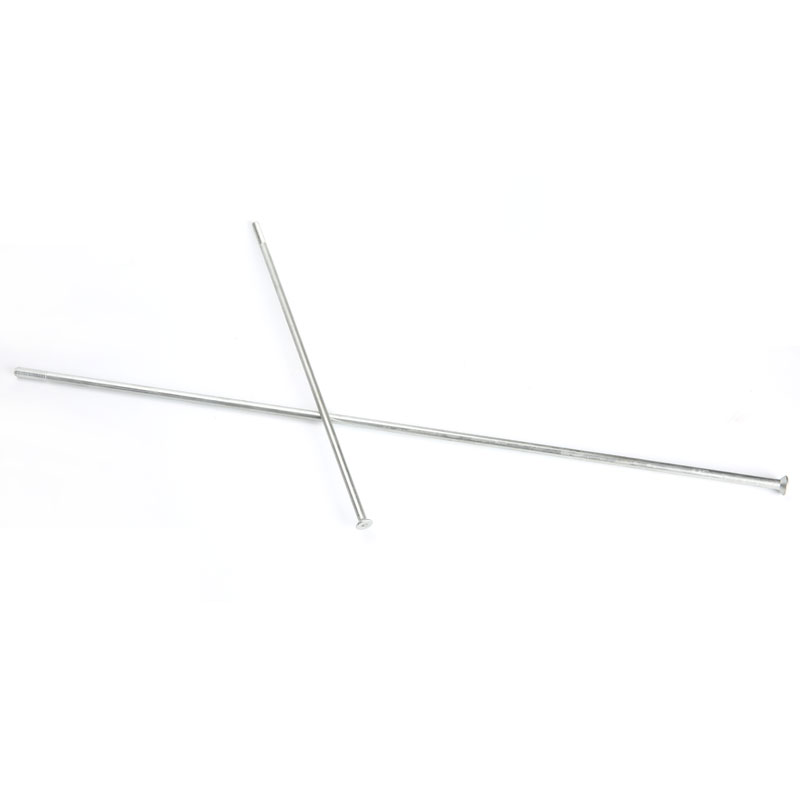
Type:1000 Decking Screws
Materials:Stainless Steel
Surface treatment:Plain
Head Type:Hexagon head
Drive:External hex (wrench or socket)
Thread:Coarse wood thread
Point:Sharp, tapered
Forming:Single Die Heading
Size:M1 M2 M3 M4 M5 M6 M7 M8 M9 M10
We make 1000 decking screws in stainless steel with a hexagon head and coarse wood thread, with other lengths made to the drawing. Length, threaded length and pilot hole are agreed together, and the first article is driven with the production socket into your timber.
Watch the factory video·Email sst@szsst88.com
ISO 9001:2015 · Manufacturing since 1998 · 8,678+ customers · 89 countries and regions
Made to order – there is no stock catalogue. Each part is produced to your drawing, and production starts after drawing review and first-article approval.
1000 decking screws are timber fasteners a metre long, used where a fixing has to pass through more than one timber member. The part recorded here is stainless steel with a plain finish, a hexagon head and a coarse thread, quoted in the 1000 mm length with other lengths made to the drawing.
One metre length. Enough to pass through a deep member and still reach the timber behind, which is a through-fixing rather than a board fixing.
Hexagon head. An external hexagon driven with a socket or a wrench, with a bearing face under the head that spreads the load on timber.
Coarse wood thread. A wide-pitch thread and a sharp point, sized to bite into structural timber.
Stainless, plain. No coating, which matters on structures that stay wet, such as boardwalks and marine timber.
They are used on heavy timber structures, boardwalk decking over thick bearers, retaining and crib structures, and any joint where a fixing has to reach through one member into another with a wrench rather than a bit.
At 150 mm a decking screw is a board fixing, while 1000 decking screws are a structural connection. At a metre it is a connection: it passes through one member and loses its length in another, and the joint’s behaviour is decided by how much of that metre ends up buried in sound timber. That is a different conversation from choosing a board screw, and it changes what the drawing has to say.
On 1000 decking screws the head form follows from the drive. A cross or a socket is driven with a bit and relies on a recess in the head; at this length the torque needed to keep a coarse thread moving through dense timber is more than a small recess will take. An external hexagon is driven with a socket over the head, so the torque goes through the outside of the head and the recess problem disappears.
The bearing face is the second reason for the hexagon. On timber, clamp load has to be spread or the head crushes into the grain. A hexagon head has a flat underside with a defined bearing area, and on soft or wet timber a washer is added under it as a matter of course; the joint is designed around the washer rather than the head alone.
Driving is the third difference on 1000 decking screws. A metre-long screw cannot be started with a driver held at arm’s length and hoped into alignment; it needs a pilot hole, a square start and a socket that stays on the head. In stainless the penalty for a cross-threaded start is severe, because the thread will not yield and the screw stalls with most of its length still outside the timber.
The material closes the picture. A structure that uses a metre of stainless per fixing is usually one that cannot be maintained easily, which is why stainless is chosen: the connection is expected to sit through wet and dry cycles without the fixing becoming the weak link.
The recorded product is a 1000 mm screw, with other lengths made to the drawing. Custom lengths up to 2,000 mm, subject to DFM review after drawing submission. The quotation for 1000 decking screws carries the overall length, the head across flats and its bearing face, the thread pitch and major diameter, the threaded length and the point form.
| Item | How it is defined | What we control |
|---|---|---|
| Length | Overall, under the head | 1000 mm as standard, others to drawing |
| Head | Hexagon head | Across flats, height and bearing face |
| Thread | Coarse wood thread | Pitch, major diameter and threaded length |
| Point | Sharp, tapered | Point length against the length |
| Washer | Mating item, on the drawing | Bearing area under the head |
| Pilot hole | Mating detail, on the drawing | Agreed with the first article |
Head across flats is the number that decides the drive: it selects the socket, and with it the torque that can be applied. On a metre of coarse thread that torque is not small, which is why the head on these parts is proportionally large.
Threaded length relative to the overall length decides how much of the screw is plain. Where the screw passes through a member that must be clamped, thread in that member acts as ridges; where it passes through a clearance hole, the plain shank is what locates.
The pilot hole belongs on the drawing with the screw. At this length the pilot controls both the driving torque and the risk of splitting, and a hole that is right for a 150 mm screw is not right for one a metre long.
Four properties decide 1000 decking screws, and each one carries a cost:
| Property | What it gives | What it costs |
|---|---|---|
| One metre length | Reaches through a deep member | Needs a pilot and a square start |
| Hexagon head | Socket drive with high torque | A socket and wrench rather than a bit |
| Coarse thread | Strong grip in structural timber | Splits dry or thin timber without a pilot |
| Stainless body | Survives wet and salt | Substantial cost per fixing |
The value of 1000 decking screws is a connection that can be made from one side. On a boardwalk or a crib structure, being able to drive from above rather than reach underneath changes the build sequence, and on some structures it is the only practical option.
The cost is in the driving. A metre of stainless coarse thread needs a pilot, a steady socket and a controlled torque, and it will not forgive a start that is out of line.
The recorded finish is plain stainless. On a fixing of this length that is the sensible choice: the connection is usually in wet or coastal timber, and a coating on a metre of thread is both expensive to apply evenly and impossible to inspect once it is buried.
| Option | How it protects | Effect on head and thread | Typical use |
|---|---|---|---|
| Passivated, plain | Removes free iron; rebuilds oxide | No build; thread as rolled | Wet and coastal timber |
| A2 stainless, plain | Passive film, no coating | No build | General outdoor structures |
| A4 stainless, plain | Molybdenum-bearing passive film | No build | Marine and salt exposure |
| Hot-dip galvanised steel | Thick zinc layer | Builds on thread; torque rises | Non-coastal heavy timber |
| Zinc flake on steel | Lamellar coating | Covers edges; lower build than hot dip | Sheltered structures |
Where the structure is marine or repeatedly wet, A4 stainless is the grade that holds; A2 is the general outdoor choice. A galvanised steel screw is legitimate on drier heavy timber, provided the increased driving torque is allowed for in the pilot and the socket.
The head is the part of the fixing that stays visible. On a plain stainless hexagon that means the surface darkens evenly rather than rusting in rings, which on a boardwalk is the difference between weathering and looking neglected.
Three timber structures where a metre of screw solves a connection:
| Where it sits | The screw passes through a thick board or a bearer and reaches into the structure below. |
| When it goes wrong | The screw does not reach sound timber and the connection works loose underfoot. |
| Why it happens | The members are deep, the site is exposed, and the fixings are loaded. |
| What we control | Length and threaded length agreed; first article driven and checked. |
| Where it sits | The screw ties timber members together where access is only available from one face. |
| When it goes wrong | A cross-threaded start stalls the screw with most of its length outside the timber. |
| Why it happens | The members are heavy, the joint is structural, and driving is by socket. |
| What we control | Pilot and socket size agreed; first article driven with the production socket. |
| Where it sits | The screw fixes timber in salt water or the splash zone where a steel fixing would not last. |
| When it goes wrong | A galvanised screw loses its coating first at the head bearing face. |
| Why it happens | The structure is wet, the fixing is exposed, and maintenance is difficult. |
| What we control | Grade confirmed as A4; first article exposed in a salt-spray test. |
Four reasons that matter on a fixing where the joint is structural, each tied to something the drawing or the first article has to prove:
|
Length and threaded length written
The overall length and the threaded length are both agreed, because a metre of screw is only useful if enough of it is buried in sound timber and the plain shank falls where it is needed. Basis: Length and threaded length dimensioned. |
Headed, thread rolled and pointed
The hexagon head is formed, the coarse thread rolled over the agreed length, the point formed, and the batch passivated with head and point checked. Basis: One route, head and point checked. |
|
Driven with your socket in your timber
The part is proved by driving it with the production socket into the customer timber and pilot, because at this length the start and the socket fit decide the joint. Basis: Driven with your socket. |
Same thread, same hold
The rolling dies, point tool and grade are recorded with the drawing revision, so a repeat order connects the same way. Basis: Same hold across orders. |
These screws are headed on single-die machines that form the hexagon head and its bearing face, thread rolled with the coarse wood profile over the agreed length, the point formed and the batch passivated. The first part of every run is measured on head across flats and height, thread pitch and major diameter, threaded length, point and overall length.


|

|
Rolling a coarse thread over a metre of blank is the operation that holds 1000 decking screws together. The dies run the length in one pass, and any drift in pitch that would be invisible on a short screw accumulates into a thread that engages easily at the head end and binds near the point, which is exactly where the fixing needs to bite.
The head is formed in the same press stroke as the bearing face, and on a hexagon head the across-flats and the face flatness are checked together: a head that is slightly out of flat loads the socket on one side and spins off under torque. That is a drive failure rather than a strength one, and on a metre of screw it stops the job.
Handling between operations is a process rule for 1000 decking screws. The screws are moved in straight trays, never loose, because a metre of threaded stainless laid across other parts takes a set that no later operation removes, and a fixing that will not go straight into a pilot is scrap on site.
What decides whether 1000 decking screws pass is the head, the thread, the point and the surface. The inspection agreement covers those, and the criteria come from the drawing.

Head and pitch on the projector |

Thread profile checked |

Hardness against the stainless grade |

Salt-spray testing of head and point |
Head across flats and height are measured with the bearing face flatness, because the socket depends on all three. The thread is gauged along its length rather than at one point, since pitch drift shows up as a variation between the ends.
Overall length and threaded length are measured separately, and the point is checked for form: a point that is too long costs engagement and one that is too short lets a metre of screw wander in the pilot.
The functional check is a drive into the customer timber with the customer pilot and socket. That shows the start, the driving torque, splitting, and whether the thread reaches sound timber at the intended depth.
Every batch is traceable to the heat of stainless it was made from. The grade and heat number appear on the material certificate supplied with the parts, and the inspection record carries the measured head across flats, thread pitch and lengths against the drawing.

ISO 9001:2015 |

RoHS test report |

Registered trademark |

Patent: security screw and driver |
With each shipment we supply the material certificate, the inspection record for the dimensions on the drawing, and the passivation records for the batch. The documents carry the drawing revision and the batch number, so a repeat order of 1000 decking screws connects the same way.
More than 8,678 customers in 89 countries and regions have ordered from Shi Shi Tong; 87% of orders come from repeat customers and 56% through referrals. Most projects follow the same route: drawing review, first-article approval, then batches checked against that sample. On a structural fixing the first article is driven with the production socket into the customer timber. Buyers visit during the process to review samples.
|
8,678+
customers served
|
87%
of orders from repeat customers
|
56%
of orders through referrals
|
89
countries and regions shipped to
|
Buyers and quality engineers visit for sample review, process discussion and supplier audits; the visit is arranged around production so the headers, the thread rolling station and the passivation line can be seen on the day the parts run.

Customer group visit – sample review |

Customer group visit – process discussion |

Customer group visit – factory tour |

Customer visit – project kick-off |

Danish customer – drawing review |

Industry exhibition – meeting customers |
It is a through-fixing for deep timber members: boardwalks over thick bearers, crib structures and retaining work, where the fixing has to reach sound timber behind the face.
A socket over the head transmits more torque than a recess in the head, and at this length the driving torque is what decides whether the screw goes in.
Usually, on soft or wet timber. The washer spreads the clamp load and is designed into the joint along with the head.
To control driving torque and splitting. A pilot for a short decking screw is not right for a metre of coarse thread.
A4, with its molybdenum content. A2 is the general outdoor grade.
Overall length, threaded length, head across flats and height, thread pitch and major diameter, point form and the pilot hole.
How a long structural fixing project runs from drawing to repeat delivery:
|
1
Send the drawing and the timber section
|
→ |
2
Length and threaded length agreed
|
→ |
3
First article driven with your socket
|
→ |
4
Batch production and repeat orders
|
Each step is confirmed with you before the next one starts; the drawing revision from the first article is what repeat orders are checked against.
For a quotation, send the drawing with the overall length, threaded length, head across flats and height, thread pitch, point form and the pilot hole.
|
Overall length
|
Threaded length
|
Across flats
|
|
Thread pitch
|
Point form
|
Pilot hole
|
Sending a drawing? The form below does not take attachments. Email the PDF, DXF or STEP file to sst@szsst88.com with the part name and quantity in the subject line – the drawing is reviewed and a quotation follows.

 +86 13143444311
 sst@szsst88.com