Tel:
+86 13143444311
Email:sst@szsst88.com
Fax:+0086-755-27322278
Address:Building 9, First Industrial Zone, Tantou Industrial City, Songgang Street, Baoan District, Shenzhen 518105, Guangdong, China
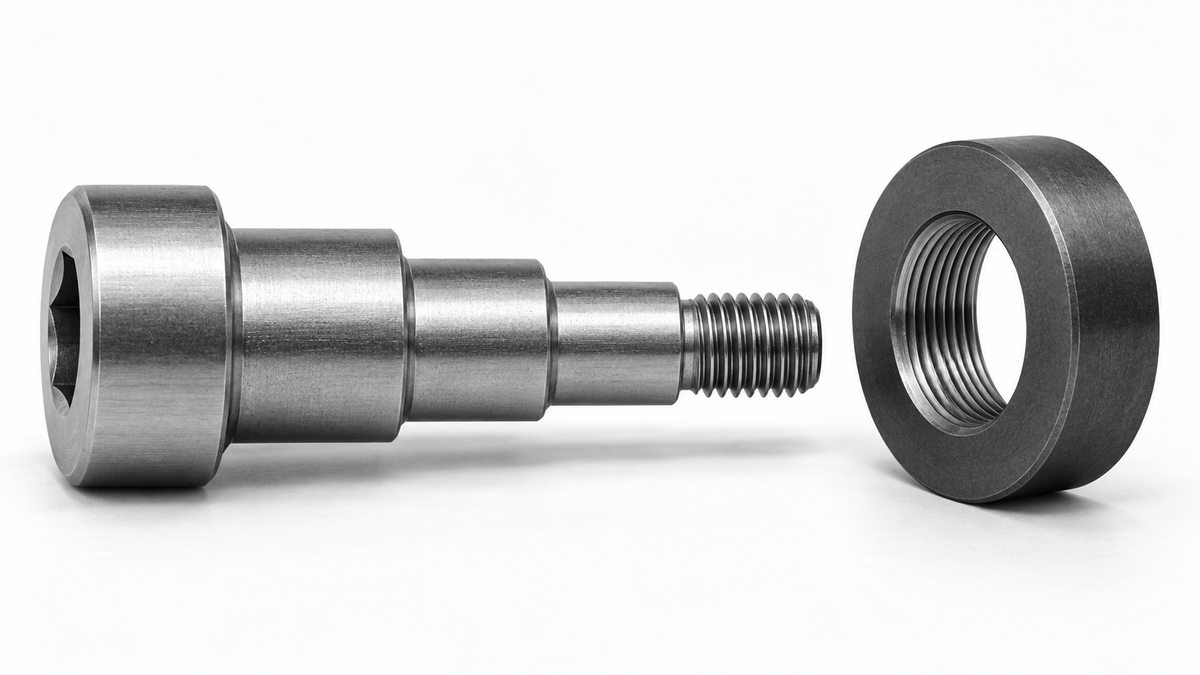
Type:Titanium Socket Head Cap Screws
Materials:Titanium
Surface treatment:Plain
Head Type:Cylindrical socket head
Drive:Allen hex socket
Thread:Machine thread
Point:Plain, chamfered
Forming:CNC turning; thread cut
Size:M1 M2 M3 M4 M5 M6 M7 M8 M9 M10
We make titanium socket head cap screws turned from titanium bar, in the grade the joint needs, with head, socket and thread to the drawing. A socket transmits torque honestly and titanium does not respond to it predictably, so the lubricant and whether the joint is tightened by torque or angle are agreed first.
Watch the factory video·Email sst@szsst88.com
ISO 9001:2015 · Manufacturing since 1998 · 8,678+ customers · 89 countries and regions
Made to order – there is no stock catalogue. Each part is produced to your drawing, and production starts after drawing review and first-article approval.
Titanium socket head cap screws are screws turned from titanium with a cylindrical head and an internal hexagon, driven with a key and used where weight, corrosion resistance or magnetic behaviour matter. The part recorded here is titanium left plain, quoted from M1 upward with the length made to the drawing.
Titanium body. Roughly half the mass of steel for comparable strength, and no rust in ordinary conditions.
Socket head. A hexagon inside a cylindrical head, so the drive stays on the axis and takes torque without slipping.
Machine thread. A thread that engages a tapped hole or a nut over a defined length.
They are used in lightweight mechanisms, marine and laboratory equipment, and anywhere a screw has to sit outside a magnetic field. Titanium socket head cap screws are also chosen where a steel screw would be visibly wrong, because a scratched plate on steel rusts while a titanium one stays metallic.
A socket head and a titanium body each bring a control problem, and they meet in the same joint. The socket gives clean torque transfer: the key does not slip, so what the tool applies reaches the thread. Titanium makes that torque reading unreliable, because the friction in a titanium thread varies with galling, surface condition and lubricant far more than in a steel thread. The result is a screw that transmits torque honestly and a joint that does not respond to it predictably.
That is why titanium joints are often tightened by angle rather than by torque. The screw is run down until it is snug, and then turned a further defined angle. The angle converts to a stretch of the screw and to a preload, and it does so without depending on the friction that the torque method is trying to measure. On a titanium socket screw, where the drive is accurate, angle control uses the one property the part has and avoids the one it lacks.
The lubricant is the other half of the method. Titanium seizes against titanium and against stainless, and a joint that galls does not reach either the torque or the angle it was designed for. The drawing has to state the lubricant, and the assembly has to apply it consistently, because an unlubricated screw and a lubricated one of the same size are not the same joint.
The material’s low modulus adds a third effect. A titanium screw stretches more under the same load than a steel one, so the same angle produces less preload. That is not a problem if the angle is specified for the material, but it is a problem if a steel specification is carried over, which is the most common mistake on a titanium socket screw.
The socket itself is the stable part. Its depth is set by the head height, and its size by the head diameter, and both are ordinary dimensions that can be measured and held. What changes with titanium is the joint around it, not the head.
The part is quoted to the drawing with the head, the socket and the thread stated separately. Custom lengths up to 2,000 mm, subject to DFM review after drawing submission. The quotation for titanium socket head cap screws carries the grade, the head and socket, the thread, the length, and the lubrication and tightening method agreed for the joint.
| Item | How it is defined | What we control |
|---|---|---|
| Grade | Commercially pure or alloy | Alloy and mechanical properties |
| Head | Cylindrical socket head | Diameter, height and bearing face |
| Socket | Hexagon in the head | Across flats and depth |
| Thread | Machine thread | Size, pitch and length |
| Lubricant | Agreed for the joint | Stated on the drawing |
| Method | Torque or angle control | Agreed with the assembly |
The grade is the first line. Commercially pure titanium is softer and more corrosion resistant; the alloy grade is stronger and is used where the screw carries load. Two screws that look the same can be either, and only the certificate distinguishes them.
The socket is specified by size and depth, and it is what makes a controlled tightening method possible at all. Without an accurate drive there is no reliable torque and no reliable angle.
The thread and the lubricant belong together on the drawing. A pitch that suits steel may be too fine for titanium at the same engagement, and a joint without a stated lubricant cannot be reproduced.
Four properties decide titanium socket head cap screws, and each one carries a cost:
| Property | What it gives | What it costs |
|---|---|---|
| Socket head | Torque without slip | Needs a key and a clear counterbore |
| Titanium body | Half the weight, no rust, no magnetism | Galling and slower machining |
| Plain finish | No coating to chip at the socket | Galling must be handled by lubricant |
| Low modulus | A shape that springs back after load | Less preload for the same angle |
The value is a screw that removes weight and stays out of a magnetic field while still being driven with a controlled method. That combination is what light mechanisms and instrument assemblies need.
The cost is that the joint has to be specified properly. A titanium socket screw with a steel torque value and no lubricant is a joint that will be either under-tightened or seized.
The recorded finish is plain titanium, cleaned. That is the natural surface: it forms its own passive oxide layer, resists corrosion without a coating, and leaves the socket at its cut size so the key fits as drawn.
| Option | How it protects | Effect on socket and thread | Typical use |
|---|---|---|---|
| Plain, cleaned | Natural passive layer | Socket and thread as cut | Mechanical and marine parts |
| Anodised, clear | Thicker oxide film | No measurable build | Wear resistance at the head |
| Anodised, coloured | Oxide film, coloured | No build; colour by voltage | Identification and visible parts |
| Dry film lubricant | Low-friction film | Thin; reduces galling | Serviced titanium joints |
| Passivated | Cleaned passive layer | No build | Medical and food contact |
Anodising is the finish that belongs to titanium, because it grows on the surface rather than being added to it. Coloured anodising is also a practical marking method on a small screw, since the colour is part of the oxide and does not rub off.
A dry film lubricant is the treatment that addresses the joint rather than the appearance. It sits thinly on the thread and reduces the galling that would otherwise stop the screw before it reaches its preload.
Three settings where weight or magnetic behaviour decides the material:
| Where it sits | The screw is part of a mechanism that moves or is carried, where total mass matters more than unit cost. |
| When it goes wrong | The mass budget is exceeded, or the joint seizes during assembly. |
| Why it happens | A steel screw was used, and the weight or the galling was not accounted for. |
| What we control | Grade and lubricant agreed; first article assembled and tightened by the agreed method. |
| Where it sits | The screw sits in salt spray or immersion where plated steel would fail and stainless would pit. |
| When it goes wrong | The screw corrodes at a scratch, or the joint seizes after a season. |
| Why it happens | The grade is not suitable for chlorides, or the socket traps moisture. |
| What we control | Grade confirmed on the certificate; first article exposed and inspected. |
| Where it sits | The screw sits next to a magnetic sensor or a motor where a steel part would disturb the field. |
| When it goes wrong | The reading drifts, or debris collects at the screw. |
| Why it happens | The screw is magnetic, and its position is close to the sensing element. |
| What we control | Grade and magnetic behaviour confirmed; first article assembled in the assembly. |
Four reasons that matter on a joint where the material changes the tightening method, each tied to something the drawing or the first article proves. All four show in the sample.
|
Grade, lubricant and method stated
The drawing states the titanium grade, the lubricant and whether the joint is tightened by torque or by angle, because the material changes all three. Basis: Three items agreed. |
Socket cut in a finished head
The socket is cut after the head is faced, so its depth is measured from the surface the key meets and the drive stays accurate. Basis: Socket depth controlled. |
|
Joint tightened the agreed way
The first article is tightened with the customer method, because a titanium joint only proves itself once it has been brought to preload. Basis: Method proved on sample. |
Same grade and method
Grade, socket and lubricant are recorded with the drawing revision, so a repeat batch behaves the same in the joint. Basis: Same limits across orders. |
These screws are turned from titanium bar, with the cylindrical head formed and faced, the hexagon broached and the thread cut; the parts are cleaned and inspected. The first piece of every run is measured on head diameter and height, socket across flats and depth, thread and length.


|

|
Titanium is turned at a lower surface speed than steel, with more coolant, because the heat of the cut stays at the edge and the material work hardens at the surface. The socket and the thread start are the two features most easily damaged, and both are checked on the first piece of every run.
The socket is cut after the head is faced, so its depth is measured from the finished surface. On a titanium screw the socket is the feature that makes a controlled tightening method possible, so a socket that is shallow or burred undermines the whole joint even though the dimensions may be within tolerance.
The thread is cut rather than rolled, so the crest stays clean and the thread does not pick up during forming. The parts are cleaned, and where a lubricant is specified it is applied to the thread rather than to the socket, so the key fit stays as machined.
What decides whether titanium socket head cap screws pass is the socket, the thread and the grade. The inspection agreement covers those, and the criteria come from the drawing.

Head and socket on the projector |

Thread and start checked |

Material checked |

Salt-spray testing where a coating is used |
The socket is measured across flats and for depth, and checked with the key on a sample from each batch. On a titanium part the socket is what carries a controlled tightening method, so the key check is the check that matters most.
The thread is gauged and the start inspected at magnification. Titanium is prone to picking up at the start, and a raised burr there will seize a nut before the joint is snug.
The grade is confirmed against the mill certificate for each heat, since no dimensional check distinguishes a commercially pure screw from an alloy one. A sample is then tightened by the agreed method into a test block to confirm the joint reaches its preload without galling.
Every batch of titanium socket head cap screws is traceable to the bar it was made from. The grade, heat number and mechanical properties appear on the material certificate supplied with the parts, and the dimensional results are recorded against the drawing revision.

ISO 9001:2015 |

RoHS test report |

Registered trademark |

Patent: security screw and driver |
With each shipment we supply the material certificate, the inspection record for the dimensions on the drawing, including the socket and head, and the finish or lubricant record. The records carry the drawing revision and the batch number, so a repeat order of titanium socket head cap screws tightens the same way.
More than 8,678 customers in 89 countries and regions have ordered from Shi Shi Tong; 87% of orders come from repeat customers and 56% through referrals. Most projects follow the same route: drawing review, first-article approval, then batches checked against that sample. On a titanium part the first article is tightened by the agreed method with the agreed lubricant, because the joint only exists once it has been brought to preload. Buyers visit during the process to review samples.
|
8,678+
customers served
|
87%
of orders from repeat customers
|
56%
of orders through referrals
|
89
countries and regions shipped to
|
Buyers and quality engineers visit for sample review, process discussion and supplier audits; the visit is arranged around production so the turning cell and the inspection bench can be seen on the day the parts run.

Customer group visit – sample review |

Customer group visit – process discussion |

Customer group visit – factory tour |

Customer visit – project kick-off |

Danish customer – drawing review |

Industry exhibition – meeting customers |
Because friction in a titanium thread varies with galling and lubricant, so the torque reading does not reliably become a preload. Angle control avoids that.
The screw is run down until snug and then turned a defined angle. The angle converts to stretch and preload without measuring friction.
It is part of the method. An unlubricated titanium screw and a lubricated one of the same size are not the same joint.
No. Titanium has a lower modulus, so the same angle produces less preload than it would on a steel screw.
Plain keeps the socket at its cut size. Anodising adds no measurable build, but coloured anodising is usually for identification.
Grade, head and socket, thread, length, lubricant and the tightening method.
How a titanium socket head cap screw project runs from drawing to repeat delivery:
|
1
Send the drawing and the mating thread
|
→ |
2
Grade, lubricant and method agreed
|
→ |
3
First article tightened to preload
|
→ |
4
Batch production and repeat orders
|
Each step is confirmed with you before the next one starts; the drawing revision from the first article is what repeat orders are checked against.
For a quotation, send the drawing with the grade, head and socket, thread and length, the lubricant, and whether the joint is tightened by torque or by angle.
|
Grade
|
Head size
|
Socket AF
|
|
Thread
|
Length
|
Method
|
Sending a drawing? The form below does not take attachments. Email the PDF, DXF or STEP file to sst@szsst88.com with the part name and quantity in the subject line – the drawing is reviewed and a quotation follows.

 +86 13143444311
 sst@szsst88.com