Tel:
+86 13143444311
Email:sst@szsst88.com
Fax:+0086-755-27322278
Address:Building 9, First Industrial Zone, Tantou Industrial City, Songgang Street, Baoan District, Shenzhen 518105, Guangdong, China
Place of Origin:Guangdong,China(Mainland)
Brand Name:Shi Shi Tong
Materials:Stainless Steel
Surface treatment:Nature Color
Head Type:Hex Head
Drive:External hexagon, wrench
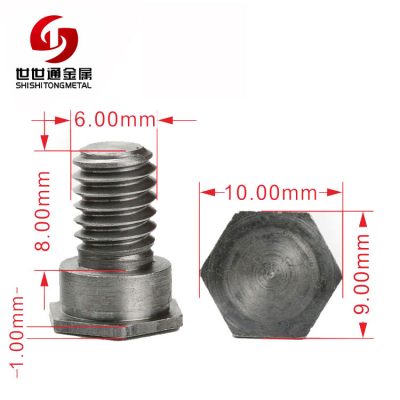
Thread:M6 machine thread
Point:Plain, chamfered
Forming:Turned from bar; hexagon milled; thread rolled
Size:6*8 mm, 9*10 mm
We turn hex head step screws from stainless bar, with the hexagon, the step, the relief and the thread made to the drawing and the step face proved square to the shank. The step is a stop rather than a locating shoulder, so its diameter and height are specified separately and the first article is fitted into the mating part.
Watch the factory video·Email sst@szsst88.com
ISO 9001:2015 · Manufacturing since 1998 · 8,678+ customers · 89 countries and regions
Made to order – there is no stock catalogue. Each part is produced to your drawing, and production starts after drawing review and first-article approval.
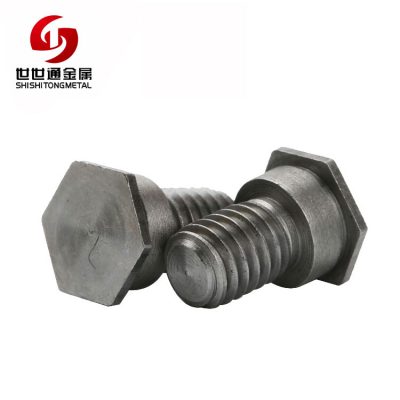
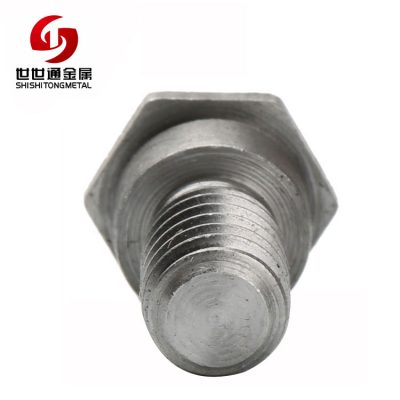
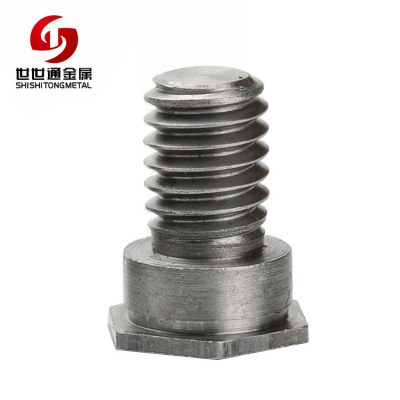
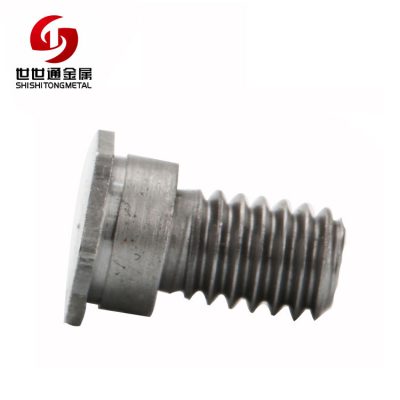
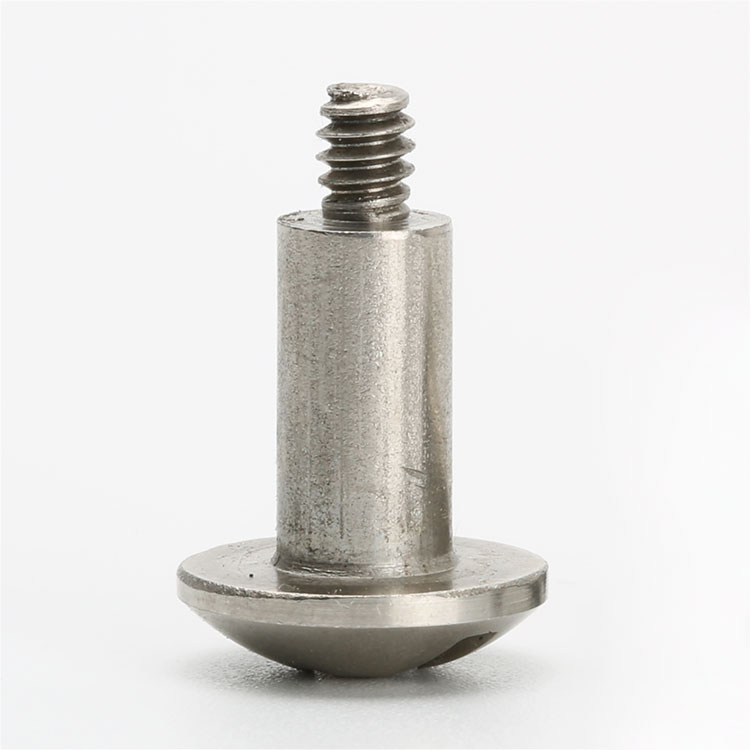
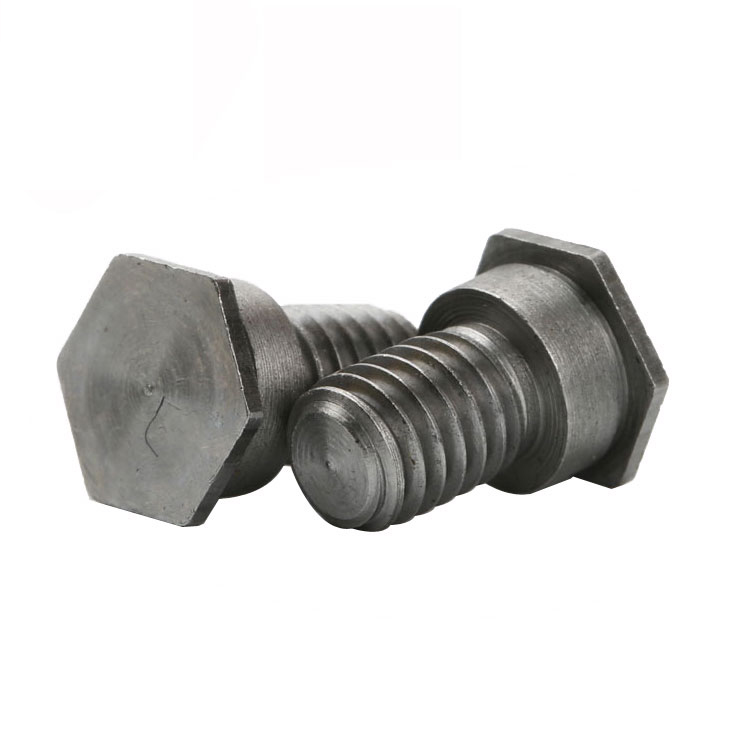
A hex head step screw is a machined fastener with a hexagon head, an unthreaded step directly under it and a threaded shank below the step. This one is turned from stainless steel, with an M6 thread 8 mm long, a hexagon measuring 10 mm across corners and 9 mm across flats, and a step about 1 mm tall at the head – the sample sizes recorded as 6 x 8 mm and 9 x 10 mm.
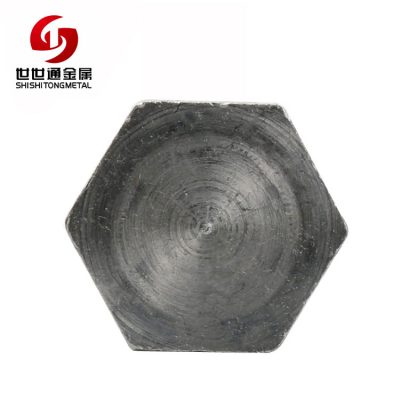
Hexagon head. Six flats for a wrench, in a head that clears a counterbore or a slot.
Step. An unthreaded collar under the head that stops the screw and spreads the clamp.
Threaded shank. A machine thread that carries the load once the step has seated.
Stainless body. Turned from bar, then cleaned and passivated, with no coating over the metal.
They are used as locating and clamping pins in locks, latches, hinges, guards and brackets, where a plain bolt head would run into the hole and the joint needs a defined depth rather than a thread right up to the head.
The step on a hex head step screw is often read as a shoulder, and that reading causes most of the trouble these parts have. A shoulder screw is specified for its diameter and tolerance because it locates a moving part on a bearing surface. The step on this screw does a simpler job: it stops the head at a defined height and gives the clamp a face wider than the thread.
That changes which dimensions matter. The step face is what bears on the part, the step height is what sets how much thread stands below it, and the step diameter has to clear the hole the screw passes through while still being larger than the thread. Get the height wrong and the screw either bottoms on the step with the thread short of full engagement, or the step hangs above the face and the joint is carried by the thread alone.
Where the part is used as a pivot, the step can be made concentric with the thread and given a diameter tolerance for the hole. That is a different drawing and a different inspection: diameter and roundness on the step, position between the step and the thread, and surface finish on the band the part turns on.
The transition between step and thread is the other structural point. On a turned part the thread has to run out somewhere, and the usual place is a relief groove at the end of the step. That groove is a change of section, so under a repeated load it is where a crack starts. The radius and the depth of the relief are written on the drawing rather than left to the tool.
The head adds a third constraint. A hexagon is wide across its corners, and a screw that has to sit inside a counterbore must clear that bore on the corners while the flats still give the wrench room to turn. On a hex head step screw the counterbore diameter and the hexagon across corners are checked as a pair.
A hex head step screw is quoted by the hexagon across flats and across corners, head height, step diameter and height, thread size and pitch, thread length, overall length, material and finish. Custom lengths up to 2,000 mm, subject to DFM review after drawing submission. On the photographed sample the thread is 6 mm by 8 mm and the head is 9 mm across flats by 10 mm across corners.
| Item | How it is defined | What we control |
|---|---|---|
| Head | Hexagon, 9 mm across flats | Across flats, across corners and height |
| Step | Unthreaded collar, about 1 mm tall | Diameter, height and face |
| Relief | Undercut at the step and thread | Radius and depth |
| Thread | M6 machine thread, 8 mm long | Size, pitch and length |
| Material | Stainless steel bar | Grade and condition |
| Finish | Cleaned and passivated | Surface and freedom from burr |
The step is written with two numbers that are easy to confuse: its diameter and its height. The diameter decides whether the screw passes through the hole and whether the face it offers is wide enough; the height decides how much thread is left below the step, which is the engagement the joint actually gets.
The relief groove is written because it is the cheapest place to lose a part. A groove that is too deep removes section at the worst point, and one that is too shallow lets the thread run into the step face and burr the bearing surface.
The hexagon is written as across flats for the wrench and across corners for the clearance. A head that is correct across flats can still foul a counterbore if the corners were not considered, and a corner that is chamfered for clearance loses the edge the wrench bears on.
Four properties decide this part, and each carries a cost:
| Property | What it gives | What it costs |
|---|---|---|
| Hexagon head | A wrench drive with no recess to strip | Wide across corners; needs clearance |
| Step under the head | A defined stop and a wider clamp face | A second diameter to hold to tolerance |
| Threaded shank | A clamp from a nut or a tapped hole | The step decides how much thread engages |
| Stainless body | Corrosion resistance with no coating to wear | Machining cost, and galling on tight threads |
The value is a fixing that stops itself at the right height, offers the part a face larger than the thread, and is driven from outside the head with a wrench rather than from a recess that can round over.
The cost is a set of related dimensions that all have to agree: the step against the hole, the step height against the thread engagement, the hexagon against the counterbore. A hex head step screw is simple to draw and unforgiving to specify loosely.
The recorded finish is the natural colour of the stainless steel, cleaned. There is no plating, so the corrosion resistance is the alloy’s own and the surface is what the tool left behind.
| Option | How it protects | Effect on the step and thread | Typical use |
|---|---|---|---|
| Cleaned and passivated | Restores the oxide layer after machining | No dimensional change | General stainless parts |
| Bead blasted | Even matte surface | Blurs tool marks; slight edge rounding | Visible machined parts |
| Electropolished | Bright, smoothed surface | Removes a few microns; thread re-checked | Hygienic and decorative |
| Passivated and oiled | Oxide layer plus a thin film | No change in size | Parts stored before assembly |
| Black oxide on stainless | Dark surface conversion | No build; colour varies by alloy | Dark visible hardware |
Passivation is not a coating. It removes free iron from the surface and lets the chromium oxide layer re-form, which is why it makes a machined stainless part behave like stainless again after the tool has smeared the surface. The step face and the thread are unaffected dimensionally, so a passivated part keeps the fit it was made to.
Where the part is visible, bead blasting gives an even matte that hides tool marks, at the cost of slightly rounded edges. A rounded step edge still bears, but the face is smaller than the drawing says, so the blast is specified before the step diameter is signed off.
Stainless on stainless galls. A thread that is tight on the bench, in a joint that will be opened and closed, is a reason to specify a lubricant or a different alloy rather than to force the parts together. That decision belongs on the drawing, not at the assembly station.
Three products where a hexagon head and a defined stop do the work:
| Where it sits | The screw sets a strike or a latch plate at a fixed height and takes the load of the door closing. |
| When it goes wrong | The plate sits proud or loose, and the screw works loose in the tapped hole. |
| Why it happens | The step height is short of the plate thickness, or the step face is too small to spread the load. |
| What we control | Step height and diameter agreed; sample fitted to the mating plate. |
| Where it sits | The screw acts as a pivot for a guard that swings, with the step running in the bore. |
| When it goes wrong | The guard rocks on the step, or the screw wears a groove in the bore. |
| Why it happens | The step diameter is undersized for the bore, and the finish on the band is rough. |
| What we control | Step diameter and finish controlled; sample turned in the mating bore. |
| Where it sits | The screw clamps a bracket to a frame and stops at a face so the bracket is not crushed. |
| When it goes wrong | The bracket deforms, or the screw bottoms before the joint is tight. |
| Why it happens | No step, or a step taller than the clearance in the bracket. |
| What we control | Step specified against the bracket; sample clamped and measured. |
Four points that decide whether a hex head step screw seats where it is meant to:
|
Step written as two numbers
Diameter and height are specified separately, because one decides clearance and the other decides engagement. Basis: Both specified. |
Step and thread on one axis
The step, the relief and the thread are turned in one set-up, so the shank runs true to the head. Basis: Concentric turning. |
|
Step face checked flat
The bearing face under the head is checked for flatness and squareness, since it is what the joint sits on. Basis: Face proved flat. |
Same bar, same drawing revision
Material grade and drawing revision are recorded with each batch, so a repeat lot seats the same. Basis: Same part across lots. |
A hex head step screw fails quietly: it goes in, it looks right, and the joint is either loose or over-compressed. These four points are the difference between a screw that stops and one that merely has a collar, and they show on the first article.
These screws are turned from stainless bar: the hexagon is milled or formed, the step and the bearing face are turned, the relief is cut and the thread is rolled or cut. The first piece of every run is measured on head, step, thread and overall length before cleaning and passivation.


|

|
A step screw is a turned part, and its cost is set by how much bar has to be removed. Where the head is much larger than the thread, the blank starts at the head diameter and the shank is reduced, which is why the head-to-thread ratio is worth a conversation at the drawing stage rather than at the quotation.
The step is turned before the thread, so the face that the joint bears on is cut in the same set-up as the shank. That is what keeps the face square to the thread, and a step face that is not square shows as a gap under one side of the head on the mating part.
The relief at the end of the thread is cut to the radius on the drawing, not to whatever the insert leaves. It is the one feature that is invisible in a photograph and decisive in a fatigue application.
After machining the parts are cleaned and passivated, with no coating that could change the step diameter or fill the thread. Parts are inspected for burr on the step edge, because a burr there holds the head off the face by its own height.
What decides whether a batch of hex head step screws passes is the step that seats, the head that fits and the thread that holds. The inspection agreement covers all three.

Step and face on the projector |

Thread checked with gauges |

Bar checked |

Salt-spray testing where required |
The step is measured for diameter and height and checked for a square, flat face. Where the screw is a pivot, the step is also checked for roundness and for its position relative to the thread, because a step that is round but off-centre makes a guard swing eccentrically.
The hexagon is measured across flats and across corners, and the corners are checked for chamfer and for burr. A corner that has been chamfered more than the drawing asks will slip in the wrench at the torque the joint needs.
The thread is gauged and the relief checked for radius and depth against the drawing. The overall length is measured from the step face, not from the head, because that is the dimension the joint feels.
Where the part is used outdoors or in washdown equipment, a salt-spray sample is run and the result recorded with the alloy and the passivation. Stainless is not automatically immune, and the result depends on the grade and on the surface left by the tool.
Every batch of hex head step screws is traceable to the stainless bar it was turned from. The material certificate states the grade and the heat number, and the inspection record carries the head, step, thread and overall length against the drawing revision.

ISO 9001:2015 |

RoHS test report |

Registered trademark |

Patent: security screw and driver |
With each shipment we supply the material certificate and the inspection record for the step, thread and overall length. The records carry the batch number, so a repeat order of hex head step screws can be compared with the first on the two step dimensions that decide where the part stops.
More than 8,678 customers in 89 countries and regions have ordered from Shi Shi Tong; 87% of orders come from repeat customers and 56% through referrals. Most projects follow the same route: drawing review, first-article approval, then batches checked against that sample. On a hex head step screw the first article is fitted into the mating part, because the step is only proved against the hole it seats in. Buyers visit during the process to review samples.
|
8,678+
customers served
|
87%
of orders from repeat customers
|
56%
of orders through referrals
|
89
countries and regions shipped to
|
Buyers and quality engineers visit for sample review, process discussion and supplier audits; the visit is arranged around production so the turning cells can be seen on the day the parts run.

Customer group visit – sample review |

Customer group visit – process discussion |

Customer group visit – factory tour |

Customer visit – project kick-off |

Danish customer – drawing review |

Industry exhibition – meeting customers |
It stops the screw at a defined height and gives the joint a bearing face wider than the thread. It is a stop rather than a locating shoulder unless the drawing says otherwise.
Yes, if the drawing gives the step a diameter tolerance, a roundness limit and a surface finish. Without those it will not repeat in a bore.
A thread cannot run out cleanly against a face, and the relief that allows it is a change of section. The step keeps the bearing face square and moves the relief away from it.
A wrench needs no recess and cannot strip the head, and the head can be turned where the part sits in a slot. The cost is that the corners need clearance in a counterbore.
It needs cleaning and passivation after machining. A coating is optional, and any coating changes the step diameter and the thread, so it is written on the drawing.
Hexagon across flats and corners, head height, step diameter and height, relief radius, thread, overall length, material grade and finish.
How a hex head step screw project runs from drawing to repeat delivery:
|
1
Send the drawing and the mating hole
|
→ |
2
Step, head and thread agreed
|
→ |
3
First article fitted to the mating part
|
→ |
4
Batch production and repeat orders
|
Each step is confirmed with you before the next one starts; the drawing revision used for the first article is what repeat orders are checked against.
For a quotation, send the drawing with the hexagon across flats and corners, head height, step diameter and height, relief, thread, overall length and material grade.
|
Hexagon
|
Step
|
Relief
|
|
Thread
|
Length
|
Material
|
Sending a drawing? The form below does not take attachments. Email the PDF, DXF or STEP file to sst@szsst88.com with the part name and quantity in the subject line – the drawing is reviewed and a quotation follows.

 +86 13143444311
 sst@szsst88.com