Tel:
+86 13143444311
Email:sst@szsst88.com
Fax:+0086-755-27322278
Address:Building 9, First Industrial Zone, Tantou Industrial City, Songgang Street, Baoan District, Shenzhen 518105, Guangdong, China
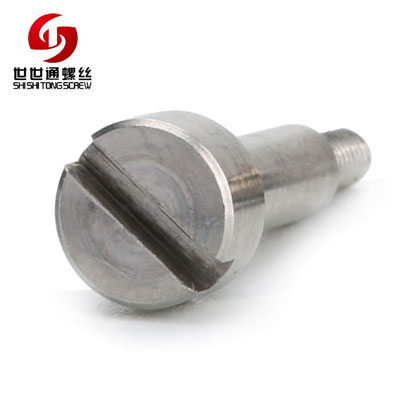
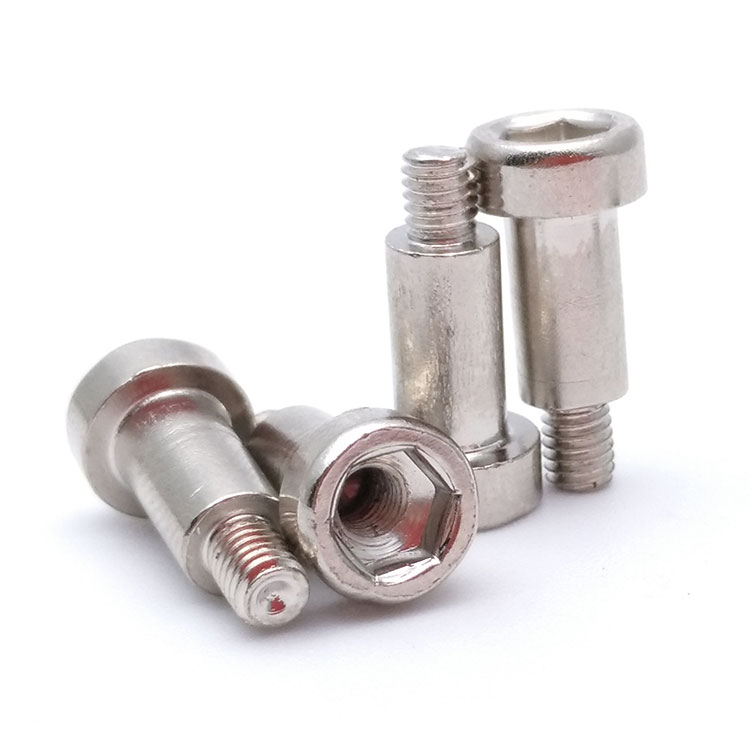
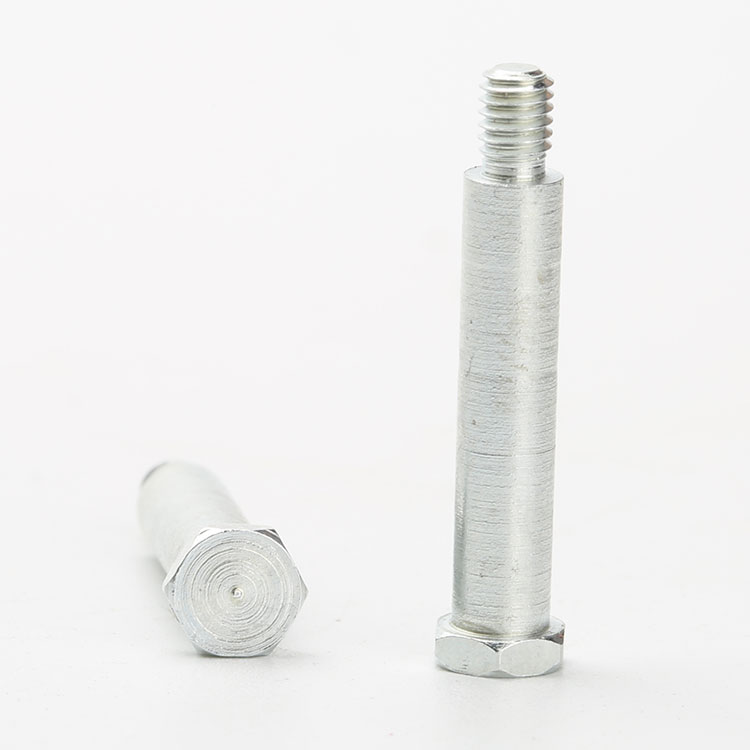
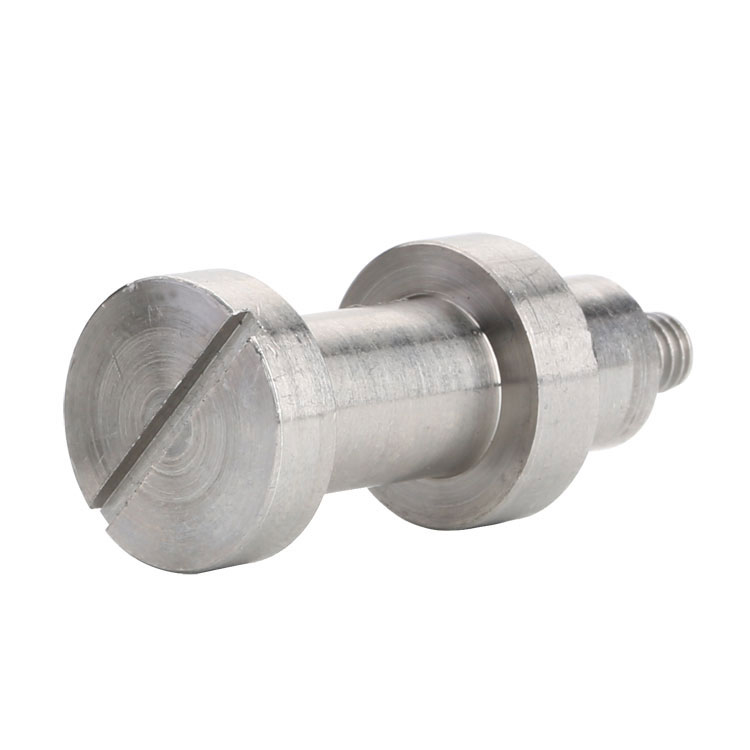
Type:Shoulder Screws
Materials:Stainless Steel
Surface treatment:Cleaned stainless
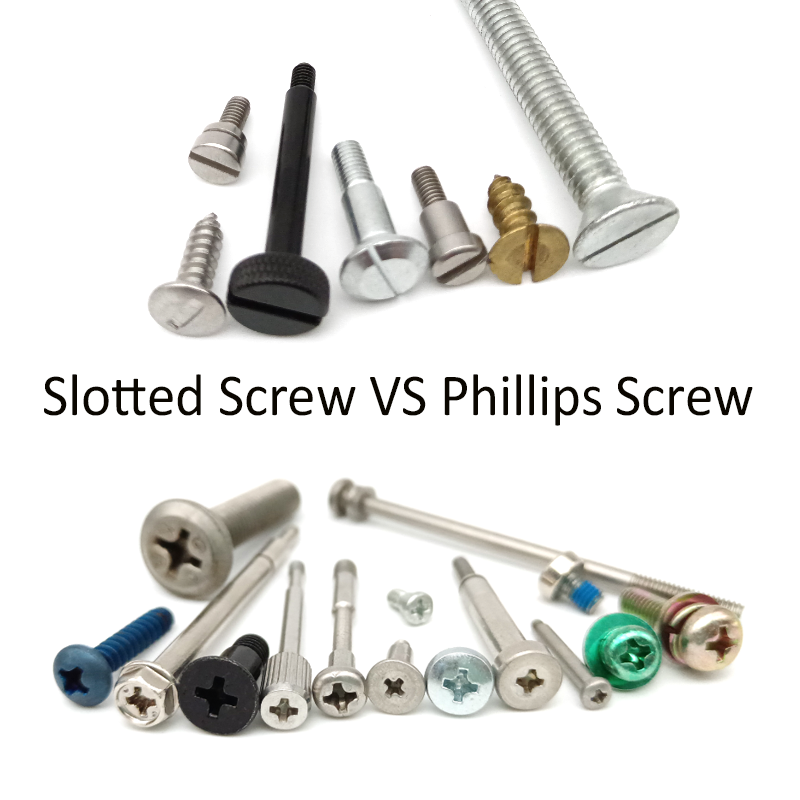
Head Type:Wide cylindrical head with slot
Drive:Slotted
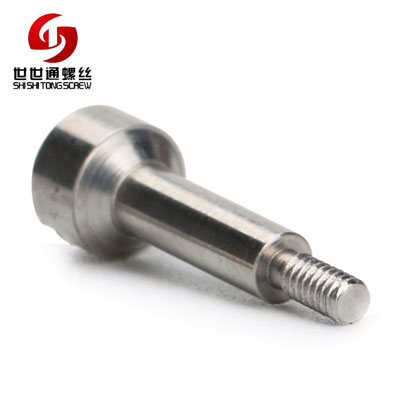
Thread:Machine thread at the end
Point:Plain, chamfered
Forming:CNC turning from bar; shoulder turned; slot cut
Size:M1-M16
We turn stainless slotted shoulder screws with a locating shoulder and a metric thread, quoting the shoulder, thread and slot access to the joint they set. The slot is used after assembly, so the part only earns its place if a blade can still reach the head once everything else is fitted.
Watch the factory video·Email sst@szsst88.com
ISO 9001:2015 · Manufacturing since 1998 · 8,678+ customers · 89 countries and regions
Made to order – there is no stock catalogue. Each part is produced to your drawing, and production starts after drawing review and first-article approval.
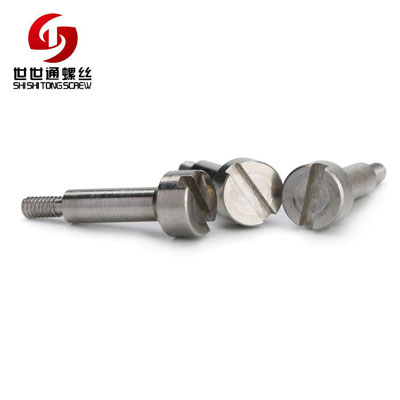
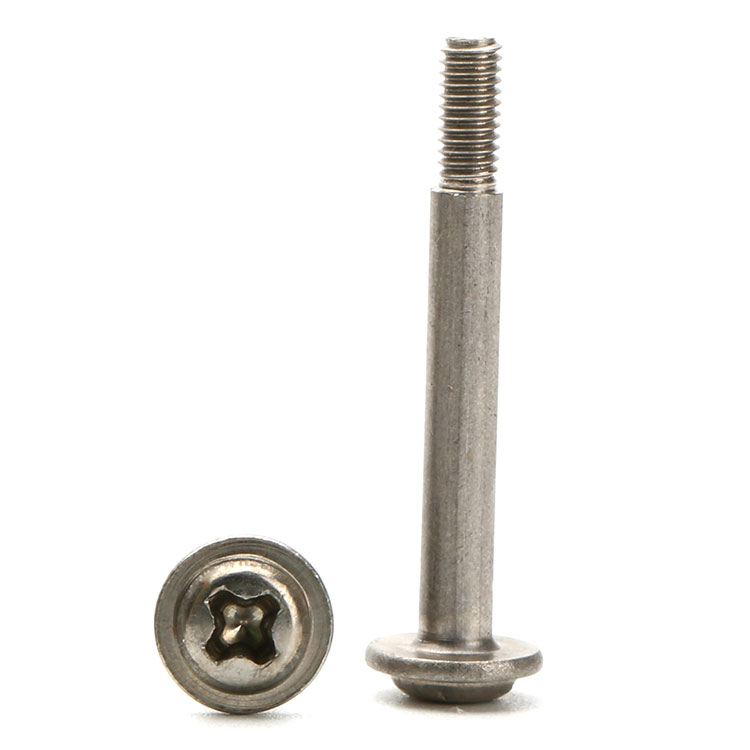
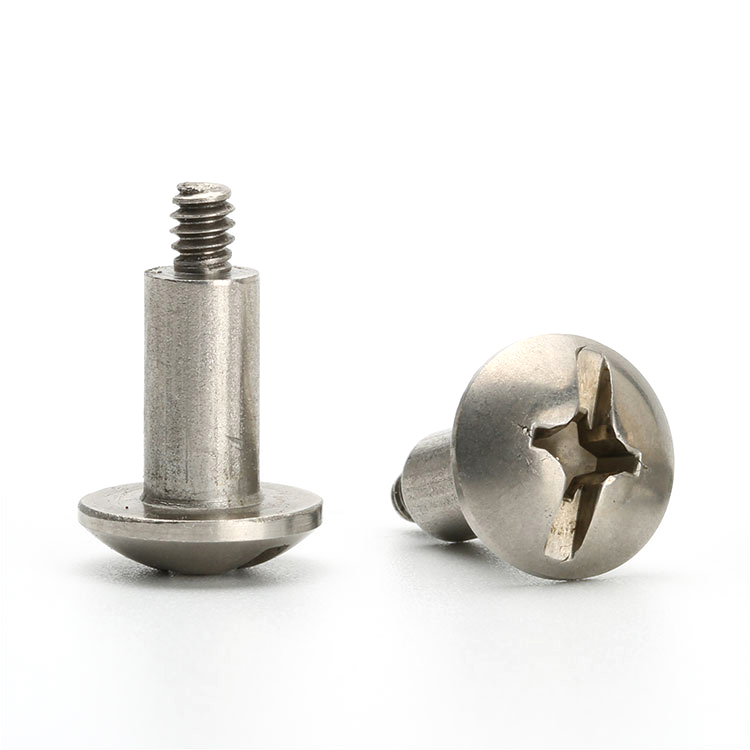
Slotted shoulder screws are shoulder screws with a single slot across the head. The shoulder locates the part, the thread at the far end takes a nut, and the slot allows the screw to be turned for adjustment after the joint is assembled. This part is stainless steel, supplied cleaned, and is quoted in metric sizes to the drawing.
Slotted head. A wide head with one slot, turned with a flat blade.
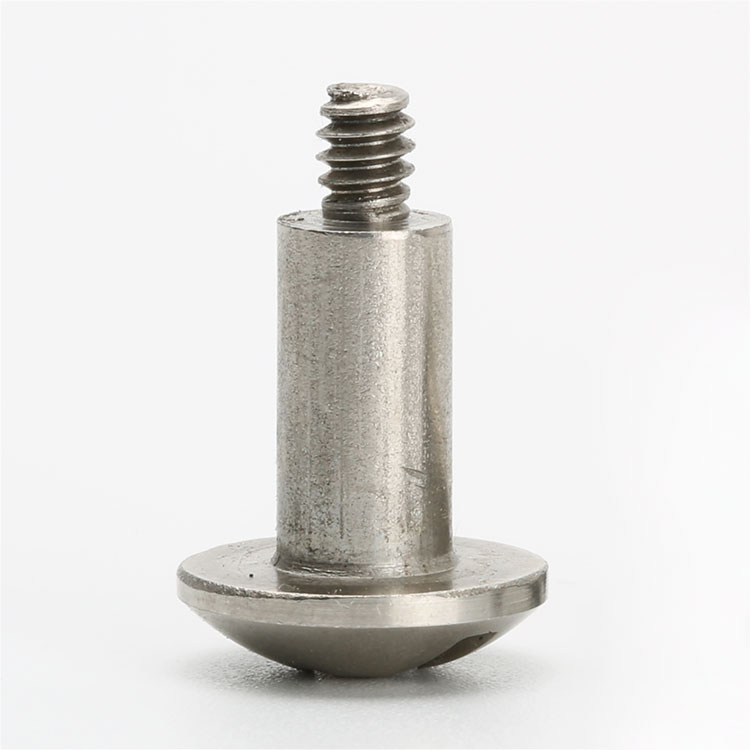
Shoulder. A smooth locating diameter that holds the parts in line and acts as a pivot.
Stainless body. No coating and no rust, so the slot stays clean enough to use years later.
Metric thread. A machine thread at the end, sized to the nut or insert on the drawing.
They are used as adjustable stops, pivot pins and locating screws in optical, medical and marine equipment, where a setting has to be made after assembly and then locked so it stays where it was set.
A slotted shoulder screw is often used as an adjustable stop: the shoulder sets a gap or a pivot position, the slot lets someone turn the screw to set it, and a nut locks the setting. In that sequence the slot is used after assembly, which means it has to remain accessible when everything else is in place.
That is where these parts go wrong. If the head ends up inside a counterbore, behind a cover, or within a recess too narrow for a blade, the screw cannot be adjusted after it is installed; it becomes a fixed pin with an inaccessible feature. The drawing has to show the access, not just the screw.
The slot width decides what tool reaches it. A blade that is thinner than the slot rocks and rounds the ends; a blade that is thicker does not enter. On a stainless head the slot edges are sharp and unworn, so the fit of the blade is easy to feel, and a good blade lasts the life of the part.
Stainless is the material that keeps this promise in service. A plated steel screw can rust in the slot within a season outdoors, and a rusty slot that has been left in place for a year will not take a blade cleanly. The stainless body has no coating to lose at the edge, which is exactly where a blade bears.
The shoulder is what the adjustment acts on. Its diameter and length set the gap, so the usable travel of an adjustable stop is the thread length at the far end, not the slot. The slot only transmits the turn; the travel happens at the thread.
So the part is specified by three things: the shoulder that defines the position, the thread that allows the adjustment and then locks it, and the access that lets a blade reach the slot. All three have to be on the drawing for the screw to be adjustable at all.
Slotted shoulder screws are quoted by shoulder diameter and tolerance, shoulder length, thread size and pitch, threaded length, head diameter and height, slot width and depth, and finish. Custom lengths up to 2,000 mm, subject to DFM review after drawing submission. The quotation carries the material, the shoulder, the thread, the head and the finish.
| Item | How it is defined | What we control |
|---|---|---|
| Shoulder | Diameter and tolerance | Fit and roundness |
| Length | Under the head | The position the screw sets |
| Thread | Machine thread at the end | Size, pitch and threaded length |
| Head | Wide cylindrical head | Diameter and height |
| Slot | Single slot | Width, depth and end radius |
| Finish | Cleaned stainless | Surface and slot condition |
The slot is written with its width and the end radius. On a stainless head the ends are where a rocking blade starts a crack, and a radius there costs nothing on the drawing.
The threaded length is given separately from the shoulder, because it sets how much adjustment travel the part has. A short thread holds the setting but gives almost no range; a long one allows adjustment over a wider gap but takes longer to lock.
The head height is written with the slot depth, since the slot is what is left of the head. A head that is reduced for clearance takes depth out of the slot as well.
Four properties decide this part, and each carries a cost:
| Property | What it gives | What it costs |
|---|---|---|
| Slotted head | A blade can adjust it in place | Little torque, and a thin slot |
| Shoulder | A located, repeatable position | Length must match the gap |
| Stainless body | A slot that stays usable outdoors | Galls against stainless in the nut |
| Metric thread | Adjustment travel and a lock | Needs a nut or an insert |
The value is a locating screw that can be set with a blade after the assembly is complete, then locked, in a material that will not rust the slot shut between commissioning and the first service visit.
The cost is that the slot is a low-torque feature, and the part only works if the slot can be reached once everything else is in place around it, which is a drawing question rather than a screw one.
The recorded finish is cleaned stainless, usually passivated. There is no plating to fill the slot or to flake at its edges, so the blade meets the metal as machined, and the surface stays bright in a wet environment.
| Option | How it protects | Effect on the slot | Typical use |
|---|---|---|---|
| Cleaned stainless | Natural oxide | No build; slot as cut | Outdoor and marine stops |
| Passivated | Clean, thickened oxide | No build; free of free iron | Medical and food equipment |
| Nickel plating | Hard barrier layer | Builds; slot re-checked | Visible instrument hardware |
| Dry film lubricant | Low-friction film | Thin; eases the thread | Joints adjusted often |
| Black oxide | Conversion layer | Thin; matte | Dry indoor fixtures |
A plated version of this head has to be checked in the slot after plating, because the film narrows it. On a stainless part that problem does not arise, which is one reason stainless is usual on adjustment screws.
Where the joint is adjusted often, a dry film lubricant on the thread keeps the nut from galling against the stainless stud, which is the other failure these parts see.
Three joints where a screw is set after assembly:
| Where it sits | The screw sets a gap that is dialled in once the machine is assembled. |
| When it goes wrong | The setting cannot be reached, or it drifts after locking. |
| Why it happens | The head is inside a counterbore, and the slot is inaccessible once fitted. |
| What we control | Access shown on the drawing; first article adjusted and locked in place. |
| Where it sits | The screw sets a pivot position that is adjusted under load. |
| When it goes wrong | The slot rounds, or the setting moves when the nut is tightened. |
| Why it happens | A blade that is too narrow was used, and the thread is too short to lock firmly. |
| What we control | Slot width and threaded length agreed; sample set and re-checked. |
| Where it sits | The screw holds a stop that is adjusted at commissioning and then left. |
| When it goes wrong | Rust fills the slot, or the thread seizes in the nut. |
| Why it happens | A plated part was used, and the slot corroded before the setting was made. |
| What we control | Stainless body and finish confirmed; sample exposed and adjusted. |
Four points that decide whether a slotted shoulder screw can actually be adjusted in place:
|
Access shown on the drawing
The drawing shows the head in its recess, so the slot can be reached after assembly rather than discovered to be buried. Basis: Adjustment possible by design. |
Shoulder turned and ground
The shoulder is turned to its tolerance and finished so the part slides into the bore without binding. Basis: Fit on the finished part. |
|
Set and locked
The first article is adjusted with a blade, locked with the nut, and checked for drift. Basis: Setting proved in the joint. |
Same slot every lot
Slot width, head height and shoulder tolerance are recorded with the drawing revision, so a repeat lot takes the same blade. Basis: Same fit across lots. |
These screws are bought for an adjustment, not for a clamp. The four points above are what makes the adjustment repeatable from the first article to the hundredth.
These screws are turned from stainless bar: the head is formed and slotted, the shoulder is turned to its locating diameter and finished, and the thread is cut or rolled on the end. The first piece of every run is measured on head, slot, shoulder, thread and length, and fitted into a bore.


|

|
The slot is cut to a measured width and depth and finished with a radius at each end. On a wide head the slot ends are where a rocking blade starts a crack, and on a stainless part a crack is not something that can be polished out.
The shoulder is the surface the joint uses, so it is measured on the finished part rather than on the blank, and handled on the head rather than on the diameter. A mark on the locating surface is a fit defect even when the dimension is correct.
Stainless work-hardens at the cut. The thread is finished with light passes and gauged at the end that takes the nut, because a thread that runs tight will gall on the first adjustment.
What decides whether a batch of slotted shoulder screws passes is the slot that takes the blade, the shoulder that locates and the thread that adjusts and locks. The inspection agreement covers all three.

Head and slot on the projector |

Thread checked with gauges |

Material checked |

Salt-spray testing of the finish |
The slot is measured for width and depth and checked with the blade, and the ends are inspected for the radius. A square-ended slot in a stainless head is where a crack begins, and it is invisible until the part is turned hard.
The shoulder is measured at two points and the length measured from the head face. On an adjusting screw the length is the setting, so it is checked with more care than the head itself.
The thread is gauged over its length and the nut run on to the shoulder side of the thread. The check that matters is that the nut can reach the end of the thread, because that is the travel the adjustment needs.
Every batch of slotted shoulder screws is traceable to the bar it was made from. The material certificate states the grade, the heat number, the chemistry and the mechanical properties, and the inspection record carries the head, slot, shoulder and thread against the drawing.

ISO 9001:2015 |

RoHS test report |

Registered trademark |

Patent: security screw and driver |
With each shipment we supply the material certificate and the inspection record for the head, slot, shoulder and thread. The records carry the batch number, so a repeat order can be compared with the first on the shoulder length that sets the adjustment.
More than 8,678 customers in 89 countries and regions have ordered from Shi Shi Tong; 87% of orders come from repeat customers and 56% through referrals. Most projects follow the same route: drawing review, first-article approval, then batches checked against that sample. On an adjusting screw the first article is set in the joint and locked, because the feature that matters is the setting, not the slot on its own. Buyers visit during the process to review samples.
|
8,678+
customers served
|
87%
of orders from repeat customers
|
56%
of orders through referrals
|
89
countries and regions shipped to
|
Buyers and quality engineers visit for sample review, process discussion and supplier audits; the visit is arranged around production so the turning cells can be seen on the day the parts run.

Customer group visit – sample review |

Customer group visit – process discussion |

Customer group visit – factory tour |

Customer visit – project kick-off |

Danish customer – drawing review |

Industry exhibition – meeting customers |
A blade is the tool that is always available on site, and the slot lets the screw be adjusted in place.
The head buried in a counterbore or behind a cover. The slot has to be reachable after assembly.
By the nut at the far end. The slot transmits the turn; the thread provides the travel and the lock.
It keeps the slot clean. A plated steel screw that rusts in the slot cannot be adjusted later.
No. A slot has little torque capacity, and on a stainless head the ends are where a crack starts.
Shoulder diameter and length, thread and threaded length, head size, slot width and depth, the recess the head sits in, and the access to the slot.
How a slotted shoulder screw project runs from drawing to repeat delivery:
|
1
Send the drawing and the joint sample
|
→ |
2
Shoulder, thread and slot agreed
|
→ |
3
First article set and locked
|
→ |
4
Batch production and repeat orders
|
Each step is confirmed with you before the next one starts; the drawing revision used for the first article is what repeat orders are checked against.
For a quotation, send the drawing with the shoulder diameter and length, thread and threaded length, head diameter and height, slot width and depth, and the recess the head sits in.
|
Shoulder dia
|
Shoulder length
|
Thread
|
|
Head
|
Slot
|
Access
|
Sending a drawing? The form below does not take attachments. Email the PDF, DXF or STEP file to sst@szsst88.com with the part name and quantity in the subject line – the drawing is reviewed and a quotation follows.

 +86 13143444311
 sst@szsst88.com