Tel:
+86 13143444311
Email:sst@szsst88.com
Fax:+0086-755-27322278
Address:Building 9, First Industrial Zone, Tantou Industrial City, Songgang Street, Baoan District, Shenzhen 518105, Guangdong, China
Place of Origin:Guangdong,China(Mainland)
Brand Name:SHI SHI TONG
Materials:Carbon Steel
Surface treatment:Dacromet
Head Type:Cylinder Head
Drive:Torx with centre pin
Thread:M2.6 self tapping
Point:Sharp point
Forming:Single-die heading; recess and pin formed; thread rolled
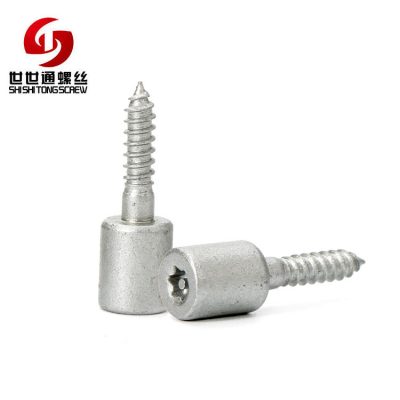
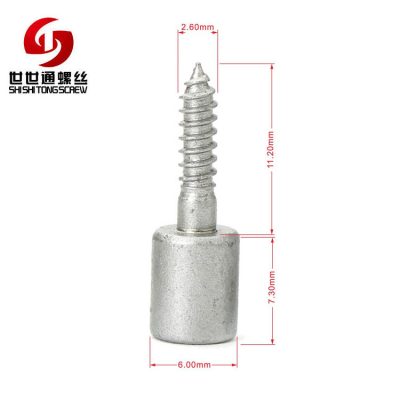
Size:M2.6*11.3mm,Diameter 6mm
Number:82
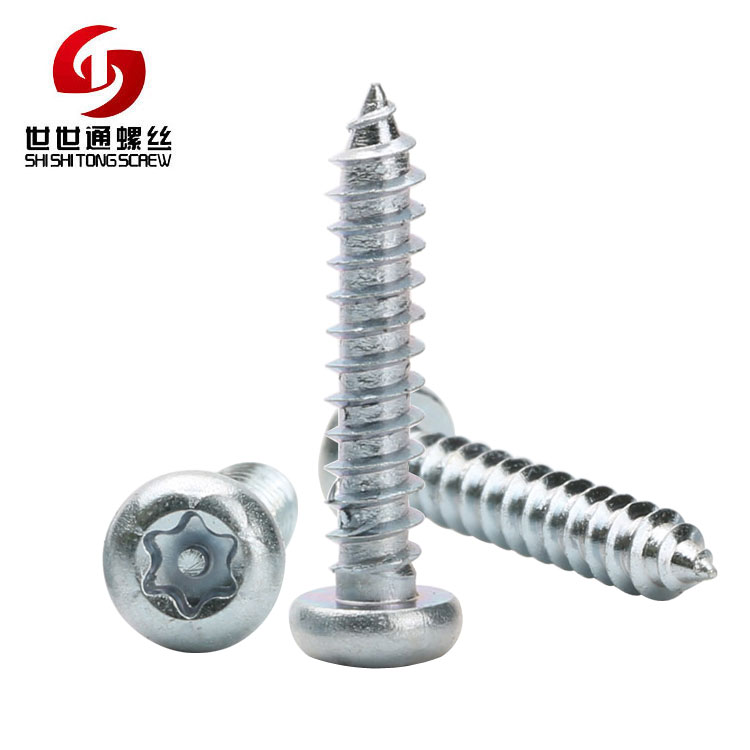
We head self tapping security screws with a cylinder head, a Torx recess and the centre pin formed in the same die, then roll the thread, form the sharp point and coat them with Dacromet. The pin is what stops a standard bit, so its height and straightness are tested against both bits rather than measured alone, and the coating is checked inside the recess where it matters.
Watch the factory video·Email sst@szsst88.com
ISO 9001:2015 · Manufacturing since 1998 · 8,678+ customers · 89 countries and regions
Made to order – there is no stock catalogue. Each part is produced to your drawing, and production starts after drawing review and first-article approval.
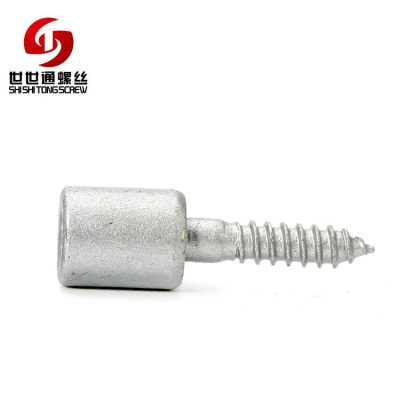
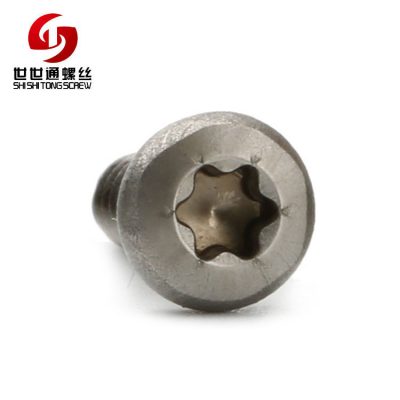
A self tapping security screw is a screw with a tamper-resistant recess and a thread that forms its own mating thread. This one has a cylinder head, a Torx recess with a pin standing in its centre, a coarse self tapping thread with a sharp point, a Dacromet coating, an M2.6 thread 11.3 mm long and a head 6 mm across.
Cylinder head. A tall, flat-topped head with no wrench flats and nothing to grip with pliers.
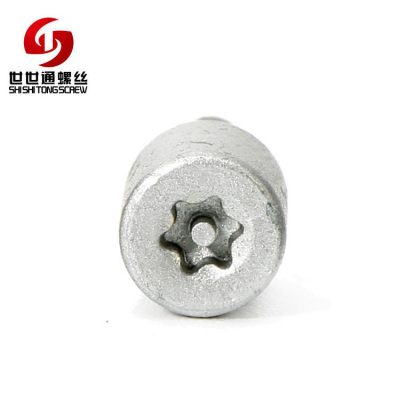
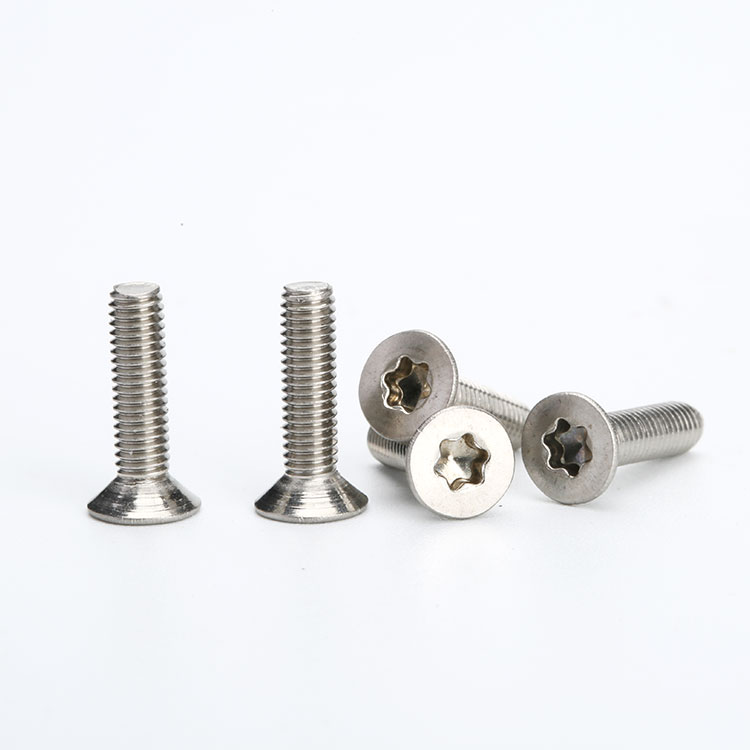
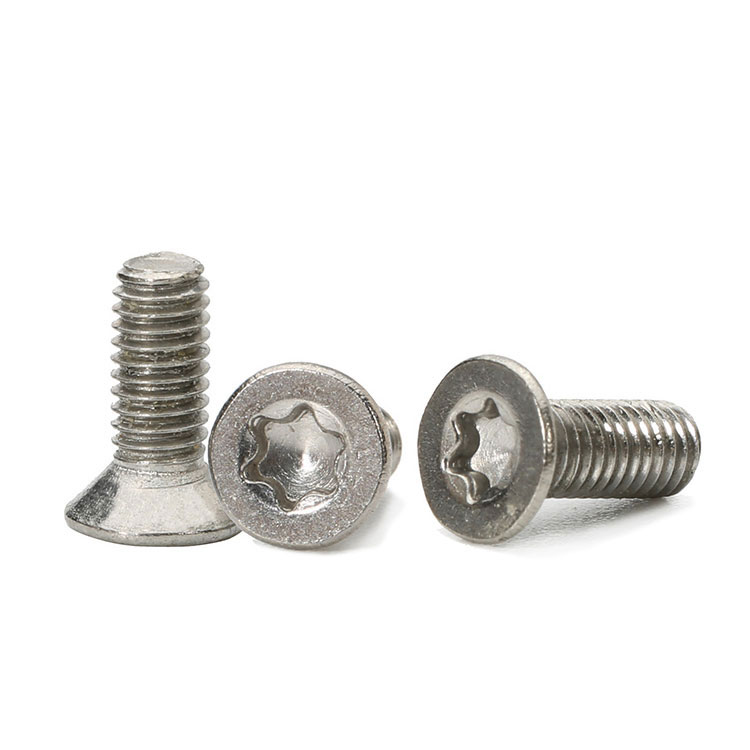
Torx recess with a pin. Six lobes with a centre pin, so a standard Torx bit cannot seat.
Self tapping thread with a sharp point. A coarse thread that starts in a plain hole, or in soft material without one.
Dacromet coating. A zinc-aluminium flake layer, matte grey, applied after the pin is formed.
They are used where a fixing is exposed to the public or to a customer: outdoor enclosures, charging cabinets, vehicle fittings, public fixtures and equipment covers that are meant to be opened only by the owner.
The security of this screw is a small steel pin in the middle of the recess. A standard Torx bit has a solid tip, so it lands on the pin and never reaches the lobes; the driver spins on the pin and the joint does not move. The matching bit is hollow in the centre, and it is the bit rather than the screw that decides who can open the joint.
That is a different kind of security from a tight torque or a smooth head. It does not resist force, it resists access: the person without the hollow bit has nothing to apply force with, and the person with it opens the screw like any other. A self tapping security screw of this kind is therefore a deterrent and an assembly-line control, not a lock.
The pin is also the weakest feature in manufacturing. It is formed by the punch that strikes the recess, and it is the finest detail in that punch. A pin that is slightly bent will not let the bit over it; a pin that is short does not block a standard bit; a pin that breaks leaves a recess that looks normal and accepts a standard bit. Pin height and straightness are therefore checked on the first article and sampled through the run.
The recess around the pin has another constraint. The lobes have to be deep enough to drive the screw, and the floor between the lobes and the pin has to keep some section, because plating and driving both take material from it. On a head 6 mm across the window is narrow, and it is why this part is headed in a single die with the recess and the pin formed together rather than cut afterwards.
The cylinder head adds to the tamper resistance in a plainer way: there are no flats, so an adjustable wrench has nothing to hold, and the head is tall enough that a thin blade cannot get under it to lever. It also gives the recess a full-depth boss to sit in, which matters on a screw this small.
The sharp point and the coarse thread are what make it self tapping. The point starts the thread in a plain hole or in soft material, the coarse pitch displaces rather than cuts, and the shallow wall of a sheet-metal or plastic enclosure is enough to hold it. The thread is not meant to be reused many times, and each refit costs some grip.
A self tapping security screw is quoted by head diameter and height, recess size and depth, pin height and diameter, thread diameter and pitch, length, point form, material and coating. Custom lengths up to 2,000 mm, subject to DFM review after drawing submission. The sample is M2.6 by 11.3 mm with a 6 mm cylinder head, Dacromet coated, and the recorded item number is 82.
| Item | How it is defined | What we control |
|---|---|---|
| Head | Cylinder, 6 mm across | Diameter, height and top flat |
| Recess | Torx, six lobes | Size, depth and lobe form |
| Pin | Centre pin in the recess | Height, diameter and straightness |
| Thread | M2.6 self tapping | Diameter, pitch and length |
| Point | Sharp point | Tip angle and thread start |
| Coating | Dacromet | Thickness, coverage and friction |
The pin is written with its own height and diameter, separate from the recess. It has to stand high enough to block a standard bit and low enough to stay below the lobes, and its diameter has to leave a wall of lobe material around it.
The recess is written with a depth that leaves material under the lobes and around the pin. On a security Torx that floor is thinner than on a plain Torx because the pin takes up the middle, and it is the dimension that decides whether the head survives a driver used slightly off-axis.
The coating is written with a thickness range, because Dacromet builds a measurable film. Inside a small six-lobe recess a heavy coat tightens the fit around the bit; on the pin it reduces the clearance a hollow bit needs. Both are checked on the plated part.
Four properties decide this part, and each carries a cost:
| Property | What it gives | What it costs |
|---|---|---|
| Centre pin | Standard Torx bits cannot seat | The finest feature in the die |
| Cylinder head | Nothing for a wrench or a blade to grip | Tall head; stands above the surface |
| Self tapping thread | A thread in a plain hole | A few refits before the grip goes |
| Dacromet | Salt spray without hydrogen embrittlement | A film that changes recess clearance |
The value is a fixing that the public cannot open with a normal tool kit, that needs no insert or tapped hole behind it, and that survives weather without a plated layer that blisters.
The cost is a small, delicate feature and a coating that has to be managed against it. A self tapping security screw is bought for the pin and lost when the pin is bent, short or missing – and none of those three can be seen from a metre away.
The recorded coating is Dacromet, which the sample shows as a matte grey surface with a slightly granular look. It is a zinc-aluminium flake coating cured on the steel, and it protects by a combination of barrier and sacrificial action rather than by a plated layer.
| Option | How it protects | Effect on the pin and recess | Typical use |
|---|---|---|---|
| Dacromet | Zinc-aluminium flakes, cured film | Builds; clearance re-checked | Outdoor and vehicle fittings |
| Zinc plated | Sacrificial layer | Thin build; recess as cut | Indoor enclosures |
| Zinc-nickel | Alloy layer | Thin; controlled bath | Damp exposed joints |
| Geomet | Zinc-aluminium flakes, different binder | Builds; clearance re-checked | Alternative to Dacromet |
| Stainless body | No coating at all | No build; pin as formed | Corrosive environments |
The reason Dacromet suits this part is hydrogen. A plated screw that is also hardened can pick up hydrogen in the plating bath and crack later under load; a flake coating is applied and cured without that bath, so a hardened self tapping screw can be coated without the risk. That is why the pairing of a hard self tapping screw and a flake coating is common on outdoor hardware.
The friction of the coating matters as much as its corrosion performance. A Dacromet film is relatively lubricious, which lowers the driving torque for the same clamp; a change of coating supplier can change how the screw feels at the station even when the thickness is unchanged.
Inside the recess the film is thinner than on the outside faces, because the coating is sprayed or dipped and the recess is a shadow. That is normal, and it is why the recess is checked for fit on the coated part rather than on the bare one.
Three products where a fixing must resist a casual tool kit:
| Where it sits | The screw closes a cabinet that the public can reach and the owner must be able to service. |
| When it goes wrong | The cover is opened and the interior is disturbed, or the screw seizes after a winter outdoors. |
| Why it happens | A standard recess, or a coating that wears at the point where the cover moves. |
| What we control | Pin and recess agreed; sample salt-sprayed and driven with the matching bit. |
| Where it sits | The screw holds a plate frame, a mirror or a trim piece exposed to weather and vibration. |
| When it goes wrong | The part is removed, or the screw rusts and cannot be undone at service. |
| Why it happens | A bright plated screw with no coating at the thread, and a head that a wrench can reach. |
| What we control | Coating thickness and pin height controlled; sample fitted and vibration-checked. |
| Where it sits | The screw fixes a sign, a housing or a service panel in a public place. |
| When it goes wrong | The panel is opened by anyone with a screwdriver, or the recess fills with dirt. |
| Why it happens | A common recess with a common bit, and an open recess that collects debris. |
| What we control | Recess and pin specified; sample exposed and cleaned before driving. |
Four points that decide whether the pin still blocks a standard bit after coating:
|
Pin written as height and diameter
The pin is specified separately from the recess, because a pin that is merely present may still let a standard bit seat. Basis: Pin specified. |
Pin formed in the die, not added later
The recess and the pin are formed in one blow, so the pin stands on the recess floor as one piece of metal. Basis: Pin integral to the head. |
|
Driven with both bits
The first article is driven with the matching hollow bit and checked that a standard bit will not seat. Basis: Both bits proved. |
Coating checked at the recess
Film thickness is measured on the head face and inside the recess, so the fit does not drift with the coating. Basis: Coating controlled inside. |
A self tapping security screw fails when the pin is bent, short or buried in coating, and all three leave a screw that looks right. These four points test the pin against the bit rather than against a drawing, and they show on the first article.
These screws are cold headed from carbon steel wire in a single die, with the cylinder head, the Torx recess and the centre pin formed in one blow, the self tapping thread rolled, the sharp point formed, and the part then Dacromet coated. The first piece of every run is measured on head, recess, pin, thread and point before coating and again after it.


|

|
The pin is made by the punch, so the punch is the part that has to be right. The pin is a slender column at the centre of a recess, and it wears, bends and eventually breaks; when it breaks the punch still forms a recess that looks normal and accepts a standard bit. Punch life is therefore counted in pieces and checked against a master bit, not left to a visual pass at the end.
A cylinder head of this height is headed in one die to keep the metal flowing into the boss. Forming it in two blows risks a lap where the head meets the shoulder, and a lap on a security screw is a place for a blade to start.
The thread is rolled and the point formed after the head, so the point and the first thread match the hole the screw is meant to start in. A sharp point that is formed off-centre will walk off a small hole, which on a 2.6 mm screw is a visible failure on the line.
Dacromet is applied by dip-spin or spray and cured, and the parts are handled in bulk. The film is measured on the head face, in the recess and on the pin, and the sample is checked with the matching bit because a heavy film on the pin is the quiet failure of this coating.
What decides whether a batch of self tapping security screws passes is the pin that blocks the wrong bit, the recess that takes the right one and the coating that keeps the steel sound. The inspection agreement covers all three.

Head, recess and pin on the projector |

Thread checked with gauges |

Hardness and case depth |

Salt-spray sample |
The pin is measured for height, diameter and straightness, and then tested functionally: the matching hollow bit must seat and drive, and a standard Torx bit must not reach the lobes. That pair of checks is the only honest test of a security recess, and it is done on the coated parts.
The recess is measured for depth and lobe form, with particular attention to the floor around the pin. A floor that is too thin will crack when a driver is used slightly off-axis, and the crack shows first as a bright line from the pin to one lobe.
The thread and the point are gauged and the first article is driven into the customer’s material. A sharp point that starts well in the sample and walks in production is usually a coating build-up on the point, and it is caught by driving before packing.
The coating is checked for film thickness, adhesion after a bend, and salt-spray hours where specified. Dacromet is a flake coating and its protection depends on film thickness and coverage at edges, so the recess and the point are included in the sample rather than only the head face.
Every batch of self tapping security screws is traceable to the wire it was headed from and to the coating lot. The material certificate states the steel grade and the heat number, and the inspection record carries the head, recess, pin, thread and coating thickness against the drawing and the item number 82.

ISO 9001:2015 |

RoHS test report |

Registered trademark |

Patent: security screw and driver |
With each shipment we supply the material certificate and the inspection record for the recess, pin, thread and coating. The records carry the batch number, so a repeat order of self tapping security screws can be compared with the first on the two features that decide the security: pin height and recess depth around it.
More than 8,678 customers in 89 countries and regions have ordered from Shi Shi Tong; 87% of orders come from repeat customers and 56% through referrals. Most projects follow the same route: drawing review, first-article approval, then batches checked against that sample. On a self tapping security screw the first article is driven with both bits, because the pin is only proved against the tool. Buyers visit during the process to review samples.
|
8,678+
customers served
|
87%
of orders from repeat customers
|
56%
of orders through referrals
|
89
countries and regions shipped to
|
Buyers and quality engineers visit for sample review, process discussion and supplier audits; the visit is arranged around production so the heading cells and the coating line can be seen on the day the parts run.

Customer group visit – sample review |

Customer group visit – process discussion |

Customer group visit – factory tour |

Customer visit – project kick-off |

Danish customer – drawing review |

Industry exhibition – meeting customers |
A standard Torx bit has a solid tip, so it lands on the pin and cannot reach the lobes. The matching bit is hollow in the centre and fits over the pin.
No. It stops someone with a normal tool kit. Anyone with the matching bit opens it like any other screw, which is why the bit is the controlled item.
A bent or short pin may still let a standard bit seat, and the security is gone. Pin height and straightness are checked on the first article and sampled in the run.
It gives salt-spray protection without a plating bath, so a hardened self tapping screw does not pick up hydrogen. It also lowers driving friction.
A self tapping thread in sheet or plastic holds a few refits and then loses grip. If a cabinet is serviced often, the thread or an insert has to change.
Head diameter and height, Torx size and depth, pin height and diameter, thread and pitch, length, point, material, heat treatment and coating.
How a self tapping security screw project runs from drawing to repeat delivery:
|
1
Send the drawing and the material it goes into
|
→ |
2
Recess, pin, thread and coating agreed
|
→ |
3
First article driven with both bits
|
→ |
4
Batch production and repeat orders
|
Each step is confirmed with you before the next one starts; the drawing revision used for the first article is what repeat orders are checked against.
For a quotation, send the drawing with the head diameter and height, Torx size and depth, the pin height and diameter, the thread and pitch, the length, the point, the material and the coating.
|
Head
|
Torx
|
Pin
|
|
Thread
|
Point
|
Coating
|
Sending a drawing? The form below does not take attachments. Email the PDF, DXF or STEP file to sst@szsst88.com with the part name and quantity in the subject line – the drawing is reviewed and a quotation follows.

 +86 13143444311
 sst@szsst88.com