
Tel:
+86 13143444311
Email:sst@szsst88.com
Fax:+0086-755-27322278
Address:Building 9, First Industrial Zone, Tantou Industrial City, Songgang Street, Baoan District, Shenzhen 518105, Guangdong, China
Type:Black Iron Screws
Materials:Carbon Steel
Surface treatment:Eco Black Zinc Plated
Head Type:Truss head
Drive:Phillips cross recess
Thread:Coarse self-tapping thread
Point:Sharp gimlet point
Forming:Cold heading; thread rolled; zinc plated and black dyed
Size:M1 M2 M3 M4 M5 M6 M7 M8 M9 M10
We cold head black iron screws in carbon steel with a truss head, a Phillips cross and a coarse self-tapping thread, then finish them in eco black zinc. On thin sheet the real limit is the torque window between seating and stripping, and the wide, low head is what widens it from the top.
Watch the factory video·Email sst@szsst88.com
ISO 9001:2015 · Manufacturing since 1998 · 8,678+ customers · 89 countries and regions
Made to order – there is no stock catalogue. Each part is produced to your drawing, and production starts after drawing review and first-article approval.
Black iron screws are the self-tapping screws sold with a black zinc finish, made from carbon steel and used where a fastener has to be dark, cheap and able to cut its own thread in sheet metal, particle board or plastic. The part recorded here has a truss head, a Phillips cross and a sharp gimlet point, quoted from M1 upward with the length made to the drawing.
Carbon steel body. Strong enough for thin sheet and hardboard, and the cheapest body that does it.
Truss head. A wide, shallow dome with the largest bearing area of any head of the same height.
Sharp point. The tapered tip starts the hole and the coarse thread cuts its own path.
Black zinc. A sacrificial zinc layer with a black dye, thin enough that it does not disturb the thread.
The name comes from the colour, not the metal. There is no iron screw under the plating that behaves differently from any other carbon steel screw; what makes black iron screws a product family is the combination of a cheap body, a permanent-looking black finish and a thread that does not need a tapped hole.
A self-tapping screw has to do two things in one turn: cut a thread and hold. In a thin panel those two requirements meet in a narrow band of torque. Below the window the screw does not seat; above it the thread strips out of the sheet and the screw spins. The distance between the two is the torque window, and almost every complaint about black iron screws in production is really a complaint that the window was too narrow for the tool that drove them.
The truss head is how the window is widened from the top. A truss head reaches the same diameter as a pan head with about two thirds of the height, and that shallow dome carries a flat bearing face almost out to its rim. The face spreads the clamp load over a wide annulus, so the sheet under it resists dishing for longer and the stripping point moves up.
The thread widens it from below. A coarse pitch removes more material per turn, so the thread engages fewer times but each engagement is deeper, and the material between the threads is thicker. In soft sheet the deeper engagement carries more load before it shears, which is what buys the upper end of the window.
The finish moves both ends. A freshly plated screw drives at one torque, an aged one at another, and a dry film lubricant shifts the whole band. That is why a drawing that states the black zinc coating and the assembly torque is more useful than one that states only the size: the torque value is only meaningful with the finish it was measured on.
The sharp point matters for the start rather than the hold. It centres the screw in a pilot mark, starts the thread on the first turn and lets the operator drive without a countersink; on a hard material it does nothing for the clamp, and on a very thin one it is the part most likely to skate.
Black iron screws are quoted by thread size, length, head diameter and thread form. Custom lengths up to 2,000 mm, subject to DFM review after drawing submission. For this range the quotation carries the body material, the head, the recess, the thread, the point and the coating.
| Item | How it is defined | What we control |
|---|---|---|
| Body | Carbon steel | Grade and hardness |
| Head | Truss head | Diameter and height |
| Recess | Phillips | Depth and width |
| Thread | Coarse self-tapping | Pitch, major diameter and length |
| Point | Sharp gimlet | Angle and centring |
| Coating | Eco black zinc | Thickness, colour and coverage |
Length is measured under the head, from the bearing face to the tip, which is the dimension that matters when the screw has to pass through a panel and bite into the material behind it. The threaded length and the plain shank are stated separately where the screw has both.
The head diameter and the thread size are chosen together. A truss head is one of the few heads that can be enlarged without making the part look heavier, and on a thin panel the available bearing area is usually the first thing to review, before the thread is changed.
The thread form is written with its pitch rather than as a nominal size alone. Two screws of the same major diameter with different pitches behave differently in the same sheet, and a substitution raises or lowers the stripping torque.
The four properties of this screw, and what each one costs:
| Property | What it gives | What it costs |
|---|---|---|
| Carbon steel body | Strength at low cost | Rusts once the coating is gone |
| Truss head | Wide bearing area at low height | Bare, flat top and no countersink |
| Coarse self-tapping thread | Cuts its own thread | Strips a thin sheet at high torque |
| Black zinc | Dark colour with sacrificial protection | Thin film, wears through at edges |
The value is one part that needs no tapped hole, no washer and no paint afterwards, on a panel that will be assembled by hand or by a constant-torque driver.
The cost is a limited number of removals. Each time the screw is taken out and put back the thread cuts a little more material away, and the window closes. A joint that will be opened repeatedly is better served by a machine screw in a tapped insert.
The shallow head is also a cosmetic decision. A truss head sits low and wide, which reads as a fixing rather than a feature; where the head is meant to be a design element, a pan or a socket head is chosen instead and the bearing area is lost.
The recorded finish is eco black zinc. The colour comes from a dye in the passivation layer over the zinc, so it is a cosmetic layer on a functional one: the black fades under abrasion and sunlight while the zinc underneath keeps sacrificing itself. Where the two are judged together, the colour is a wear indicator of sorts.
| Option | How it protects | Colour | Typical use |
|---|---|---|---|
| Eco black zinc | Sacrificial zinc plus dye | Black, deep then fading | Furniture, cabinets, enclosures |
| Clear zinc | Sacrificial zinc | Silver | Sheet metal, brackets |
| Black oxide | Conversion layer, no sacrifice | Black, stable | Cutting oils, dry indoor parts |
| Black phosphate | Conversion layer, oiled | Matte black | Fasteners in assemblies |
| Nickel | Barrier, harder | Bright dark grey | Wear at the head matters |
The first two are zinc systems and behave the same way under a scratch: the coating sacrifices itself around the damage and the steel stays bright for a while. The conversion finishes are thinner and do not sacrifice, so a scratch goes straight to the steel.
Where the joint is driven often, the coating at the head and in the recess wears first. Black zinc is thin and shows a bright edge once it is gone, which is a useful thing to see on a sample but a fault on a delivered panel.
Three places where a wide, low head and a self-cutting thread earn their place:
| Where it sits | The screw closes a cover onto a 1 mm sheet wall where the inside has to stay clean and the outside has to look finished. |
| When it goes wrong | The cover dishes around the screw and the gasket line never seats; or the thread strips on the last turn. |
| Why it happens | Bearing area is too small for the sheet thickness, and the driver torque is set by feel. |
| What we control | Head diameter against sheet thickness, and a torque window written on the drawing. |
| Where it sits | The screw closes a hinge, a rail or a back panel into particle board or MDF where there is no nut behind. |
| When it goes wrong | The screw pulls through the board edge, or wobbles after a second assembly. |
| Why it happens | Board density varies, and the same torque that holds in one panel strips the next. |
| What we control | Thread pitch and length chosen for the board; first article driven and re-driven. |
| Where it sits | The screw closes a cover onto a plastic boss where a metal insert would cost a mould change. |
| When it goes wrong | The boss splits at the seam, or the screw backs out after vibration. |
| Why it happens | Boss wall thickness is thin and the thread is too coarse for it; the drive has no stop. |
| What we control | Thread form and boss engagement reviewed from the drawing; sample assembled and re-opened. |
Four things that decide whether a black iron screw runs smoothly on a line, each of them visible in a sample rather than in a promise.
|
Torque window written down
The drawing states the coat and the assembly torque together, because the value only means something with the finish it was measured on. Basis: Torque tied to the finish. |
Headed and rolled in one room
The head is formed and the thread rolled next to the plating line, so the thread sits on the shank it was cut for. Basis: Thread on the headed blank. |
|
Driven into the real material
The first article is driven into a sample of the customer sheet or board, and re-driven, because the window depends on the material. Basis: Sample proved in the customer material. |
Same black on every lot
Coating type and colour are recorded with the drawing revision, so a repeat lot does not arrive a shade lighter. Basis: Same finish across lots. |
None of these points is exotic. They are the four places where a self-tapping screw project usually goes wrong, and each one is answered by something that can be measured on the first article rather than argued about after delivery.
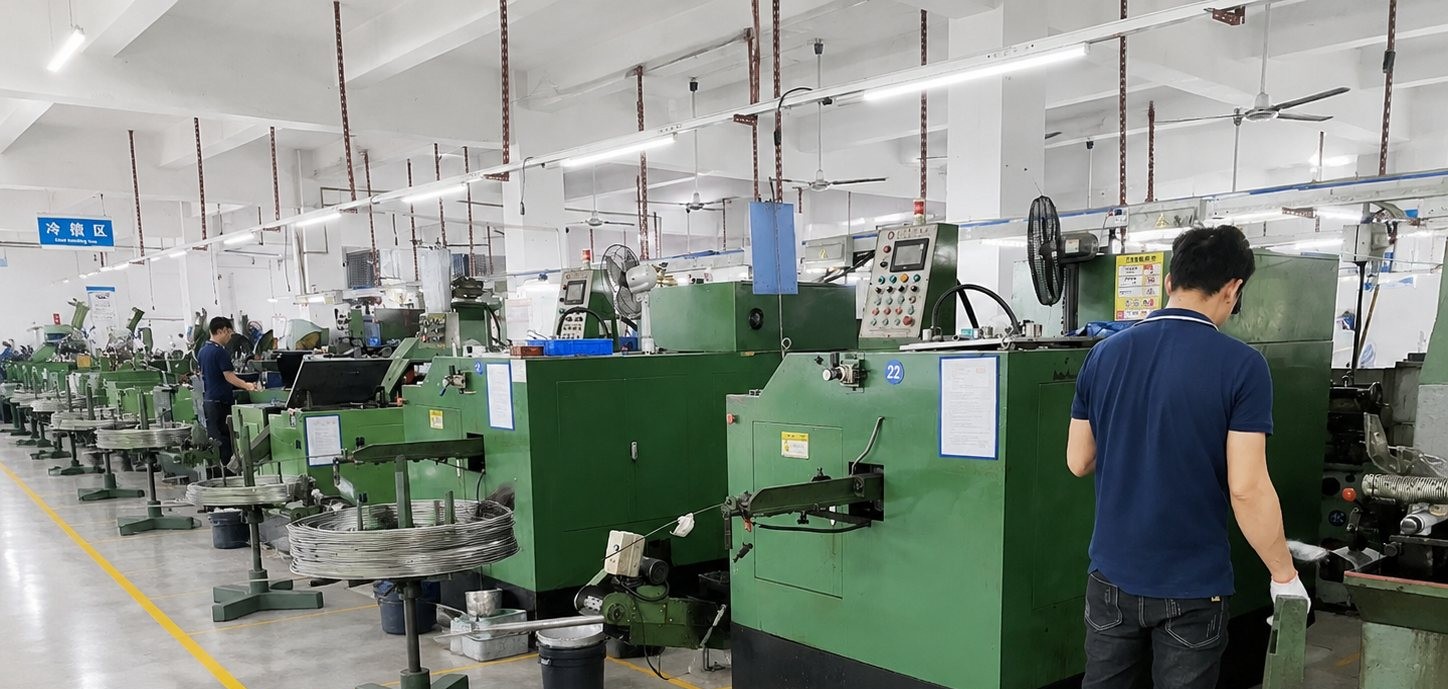
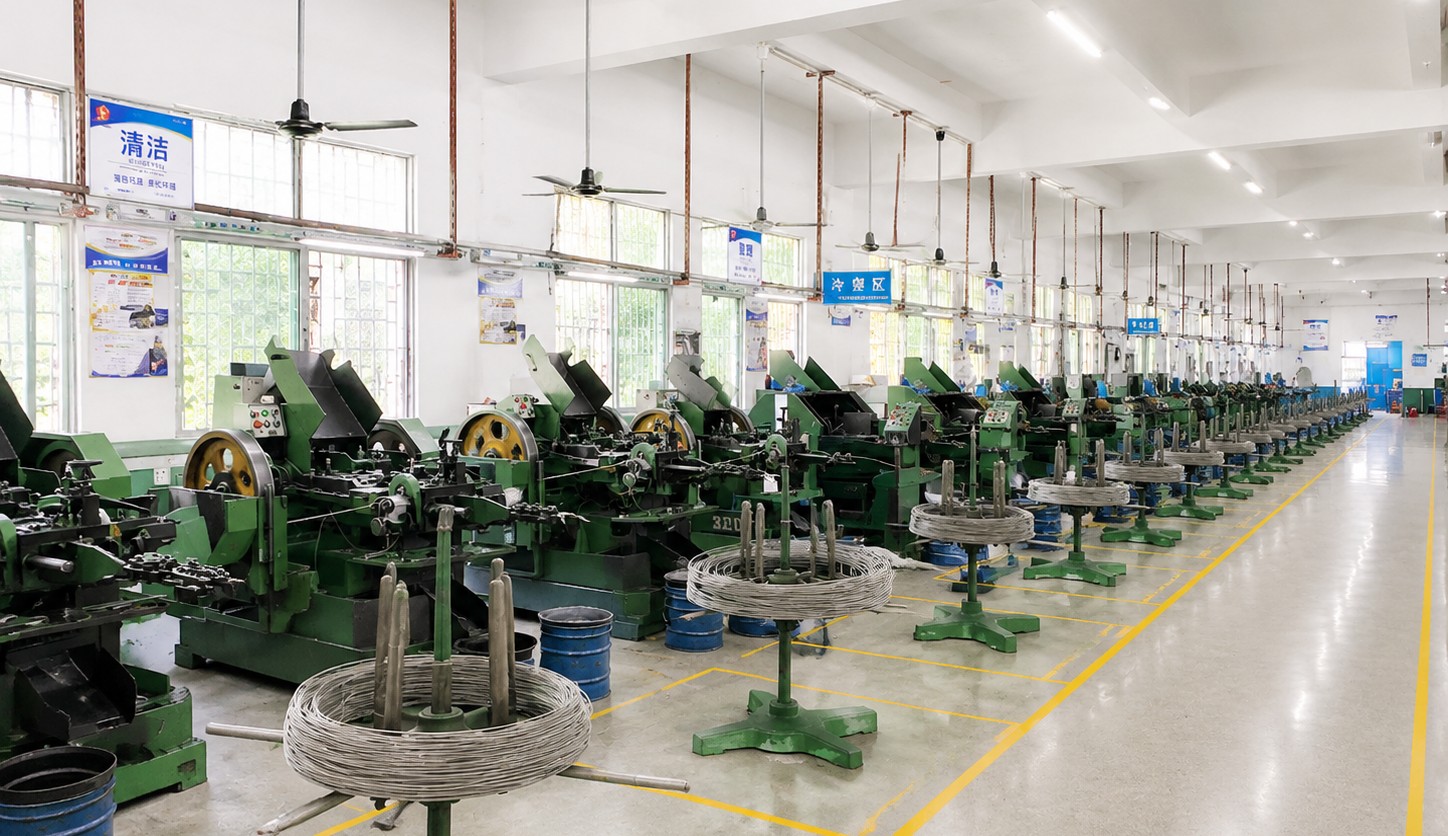
These screws are cold headed from carbon steel wire, the thread is rolled rather than cut, and the parts are then zinc plated and dyed black. The first piece of every run is measured on head diameter and height, recess, thread and length, driven into a sample of the customer material, and checked for coating thickness and colour.
|

|
Rolling the thread rather than cutting it moves metal instead of removing it, which leaves the thread crest slightly harder and gives the coarse form the material it needs to hold in soft sheet. It also means the major diameter is set by the die, and the coating has to be allowed for in that setting.
The plating follows the thread. Zinc adds a few microns to every surface, including the flanks inside the thread, so a screw plated after rolling is a slightly different screw from the one that left the die. For a self-tapping thread this is small enough to ignore; for a machine thread it is not, which is why the thread form is set with the finish in mind.
The dye is applied in the passivation step, so the colour and the corrosion protection come off the same line. A batch that is dyed too deeply looks better and protects no more, and a batch dyed too lightly is the one that fades in a window display.
What decides whether a batch of black iron screws passes is the head geometry, the thread and the coating. The inspection agreement covers those, and the criteria come from the drawing and from the driving test.

Head and recess on the projector |

Thread and point checked |

Body hardness checked |

Salt-spray testing of the coating |
The head is measured for diameter and height, since the bearing area that makes the truss head worth using is exactly the dimension that gets skimped. The recess is checked for depth and with the bit, because a shallow cross in a soft head rounds off on the second assembly.
The thread is checked with go/no-go gauges and, more usefully, by driving a sample into the customer’s sheet. The driving test records the torque at which the thread strips, and compares it with the torque at which the joint seats; the gap between the two is the window, and it is the number worth putting on the drawing.
The coating is checked for thickness and colour on the head and inside the recess. Salt-spray results on a plated part depend on the coating thickness at the edges, and the head rim is where that is thinnest.
Every batch of black iron screws is traceable to the wire it was made from and to the plating lot that finished it. The material certificate states the grade, the heat number and the mechanical properties, and the plating record carries the coating type, the thickness and the lot.

ISO 9001:2015 |

RoHS test report |

Registered trademark |

Patent: security screw and driver |
With each shipment we supply the material certificate, the inspection record for the dimensions on the drawing, and the plating record. The records carry the drawing revision and the batch number, so a repeat order of black iron screws can be checked against the same torque window as the first.
More than 8,678 customers in 89 countries and regions have ordered from Shi Shi Tong; 87% of orders come from repeat customers and 56% through referrals. Most projects follow the same route: drawing review, first article driven in the customer material, then batches checked against that sample. On a self-tapping screw the driving test is the step that decides the rest, because the window it measures is what the line will work inside. Buyers visit during the process to review samples.
|
8,678+
customers served
|
87%
of orders from repeat customers
|
56%
of orders through referrals
|
89
countries and regions shipped to
|
Buyers and quality engineers visit for sample review, process discussion and supplier audits; the visit is arranged around production so the heading cell, the thread rolling and the plating line can be seen on the day the parts run.

Customer group visit – sample review |

Customer group visit – process discussion |

Customer group visit – factory tour |

Customer visit – project kick-off |

Danish customer – drawing review |

Industry exhibition – meeting customers |
No. The body is carbon steel; black iron is the trade name for the black zinc finish the family is sold with.
It gives a wider bearing area at about two thirds of the height, so thin sheet resists dishing.
In sheet metal and board a small pilot is usual; the sharp point centres it and starts the thread.
Each re-drive cuts more material away and narrows the window; a joint opened often is better with a machine screw.
A value measured on the specified coating and material, between the seating torque and the stripping torque.
The dye fades under abrasion and light while the zinc underneath keeps protecting. It is a wear indicator, not a permanent colour.
How a black iron screw project runs from drawing to repeat delivery:
|
1
Send the drawing and a sample panel
|
→ |
2
Head, thread and coat agreed
|
→ |
3
First article driven, window measured
|
→ |
4
Batch production and repeat orders
|
Each step is confirmed with you before the next one starts; the drawing revision used for the first article is what repeat orders are checked against.
For a quotation, send the drawing with the body material, head diameter and height, recess, thread and pitch, point and coating.
|
Body
|
Head
|
Recess
|
|
Thread
|
Point
|
Coating
|
Sending a drawing? The form below does not take attachments. Email the PDF, DXF or STEP file to sst@szsst88.com with the part name and quantity in the subject line – the drawing is reviewed and a quotation follows.

 +86 13143444311
 sst@szsst88.com







