Tel:
+86 13143444311
Email:sst@szsst88.com
Fax:+0086-755-27322278
Address:Building 9, First Industrial Zone, Tantou Industrial City, Songgang Street, Baoan District, Shenzhen 518105, Guangdong, China
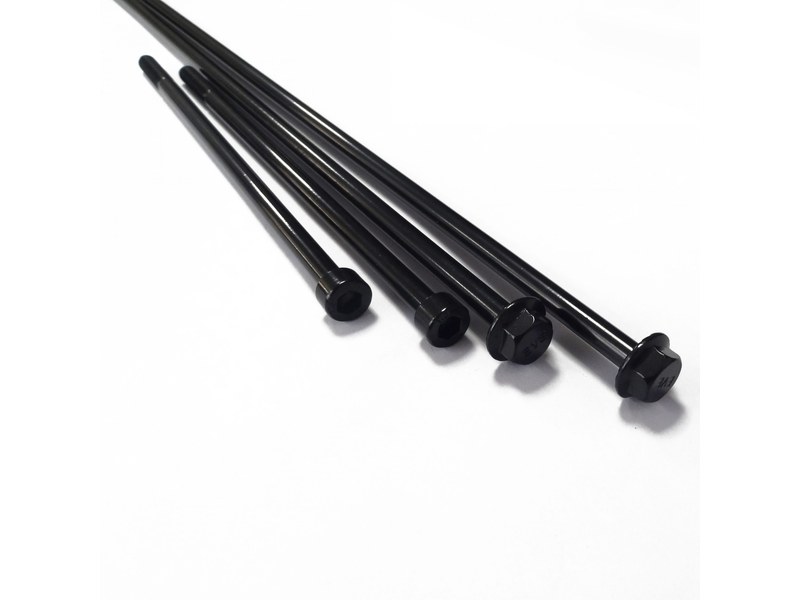
Type:Black Anodized Machine Screws
Materials:Titanium
Surface treatment:Black Anodized
Head Type:Hex Head
Drive:Hex Head
Thread:Machine Thread
Point:Blunt
Forming:Single Die Heading
Size:M1 M2 M3 M4 M5 M6 M7 M8 M9 M10 M14
Number:362
We make black anodized machine screws in titanium with a hex head and a machine thread, anodising to a controlled film so the colour is part of the metal rather than a coating. Grade, across flats, thread and film come from your drawing, and both the thread and the spanner fit are checked after finishing.
Watch the factory video·Email sst@szsst88.com
ISO 9001:2015 · Manufacturing since 1998 · 8,678+ customers · 89 countries and regions
Made to order – there is no stock catalogue. Each part is produced to your drawing, and production starts after drawing review and first-article approval.
Black anodized machine screws are screws whose surface has been converted to a dark anodic oxide, and on titanium that film is grown from the metal itself rather than applied over it. The recorded item on this page is titanium with a black anodised finish, a hex head and a machine thread, quoted from M1 to M14 with Number 362.
Titanium body. About half the weight of steel at a similar strength, immune to chlorides once its oxide film forms, and non-magnetic. It also galls badly against itself, which is the first thing to design around.
Anodised surface. An oxide grown electrochemically from the metal. The thickness of the film sets the colour by interference, and black is the deep end of that range rather than a dye poured onto the surface.
Hex head. Six flats driven with a spanner or a socket, with no recess in the top. The head is shallow for a driven head, and the drive is the outside of it.
Machine thread. A rolled thread with a blunt chamfered end, made for a tapped hole or a nut. On titanium the thread is more easily damaged than a steel one, so the joint is designed to avoid taking it apart repeatedly.
On black anodized machine screws, anodising is not a coating in the way zinc or nickel is. The metal is made the anode in an electrolyte, oxygen is driven into the surface, and a titanium oxide film grows. The film’s thickness decides what colour the part appears: thin films look gold, thicker ones purple, blue, and at the deep end dark grey to black. There is no pigment involved, and the colour shifts with the film.
That has a practical consequence for black anodized machine screws. The dark tone depends on a film thick enough to absorb and interfere with most visible light, and the process has to be controlled to reach it evenly. A batch that is a little under is graphite rather than black, and a part that is a little over starts to lose the fine detail of the knurl or the thread crest.
The film is hard and it is also thin and brittle. It will not survive being deformed, so a head that takes a hit or a thread that is cross-threaded shows bright metal at the damage. On an anodised part, damage is visible because the colour is the film.
The hex head suits the material. Titanium is expensive and difficult to machine, and a head that needs no recess operation is cheaper to make than a socket head of the same size. It is also stronger: the full material of the head resists the spanner rather than a recess resisting a bit.
The thread is where titanium asks for care. Titanium has a lower modulus and a greater tendency to seize than steel, so a thread that is a shade tight will gall rather than settle, and a thread that is over-driven will strip before the steel nut does.
The family is quoted from M1 to M14, with M1, M2, M3, M4, M5, M6, M7, M8, M9, M10 and M14 in the recorded range. Custom lengths up to 2,000 mm are subject to DFM review after drawing submission; on black anodized machine screws the head across flats and the head height are quoted with the thread, because the drive is the outside of the head.
| Item | How it is defined | What we control |
|---|---|---|
| Head | Hex head, six flats | Across flats, head height and face squareness |
| Thread | Machine thread | Pitch and length, gauged per batch |
| End | Blunt, chamfered | Chamfer cut, not deburred |
| Finish | Anodised, black | Film thickness, tone and coverage |
| Alloy | Titanium grade per the drawing | Confirmed on the material certificate |
| Length | From under the head to the end | Measured on the shop plate |
Across flats is a handling dimension and it is quoted with the grade. A titanium hex that is under size still looks like a hex, and a spanner that is loose on it will round the corners on the first pull; because the film is thin, the damage shows as bright metal immediately.
Length is measured from under the head, because that face bears. On a hex head the head height adds to the overall length, so a screw quoted into a counterbore has to allow for it or the face will never touch.
Three features define these screws: the titanium body, the anodic film and the hex head. The first decides strength and corrosion, the second decides colour and wear, and the third decides how the part is driven.
| Feature | What it gives | What it costs |
|---|---|---|
| Titanium body | About half the weight of steel, immune to chloride | Expensive, galls badly, hard to machine |
| Anodic film | Permanent colour that is part of the metal | Thin and brittle; damage shows bright |
| Hex head | Strong drive, no recess to round off | Needs spanner clearance around the head |
| Non-magnetic | No interference with sensors or fields | A choice you pay for |
| Blunt machine end | Runs into an existing thread cleanly | Needs a tapped hole or a nut |
The weight is the usual reason. On a bicycle, a drone, a racing component or a piece of aerospace hardware, replacing steel screws with titanium takes mass out of the places it hurts most — up high and out at the edges — and the anodised finish keeps the parts from looking like raw metal.
The corrosion resistance is the other reason, and it is specific. Titanium is immune to chlorides, which makes it the right answer for seawater, pool water and chemical service where stainless would pit. The film that provides that immunity is the same film that carries the colour.
The recorded finish is black anodising. On titanium the process is anodic oxidation in a bath, and the colour is a function of film thickness, not of a dye. Black sits at the thick end of the range, where the film absorbs across the visible spectrum instead of reflecting a single interference colour.
| Finish | How it is made | Effect on thread and head | Typical use |
|---|---|---|---|
| Black anodised | Thick anodic film, absorbed light | Coverage checked; hex re-gauged | Dark visible hardware |
| Natural anodised | Thin film, grey tone | Minimal change | General titanium parts |
| Coloured anodised | Controlled film thickness | Minimal change | Coded or decorative hardware |
| Polished, uncoated | Mechanical polish only | None | Bare-metal look |
| PVD coating | Deposited hard film | Builds; gauged after | Wear-critical visible parts |
Because the film is grown rather than deposited, it does not fill the thread the way a plating does, but it does grow outward slightly, and the pitch diameter of an anodised thread is not identical to the untreated one. The tread is gauged after finishing rather than before, and the first article is run into the mating part.
The film is also an electrical insulator. Where a titanium screw is part of a ground path, the anodised surface interrupts it, and the joint has to be designed to account for that — bare contact areas, a conductive washer, or a different fixings scheme.
Three assemblies where black anodized machine screws in titanium are the fixing:
| Where it sits | The screw joins a bracket or a panel where every gram counts and the part has to resist chloride and remain non-magnetic. |
| When it goes wrong | A steel screw adds weight high in the structure, and a magnetic one interferes with instruments. |
| Why it happens | The structure is weight-critical, the environment is corrosive, and the parts are inspected. |
| What we control | Grade confirmed, thread gauged after anodising, head and across flats checked. |
| Where it sits | The screw fixes a fitting where salt water is constant and stainless would pit at the thread over time. |
| When it goes wrong | A stainless screw in a titanium or carbon assembly creates a galvanic couple that eats the surrounding metal. |
| Why it happens | The joint is wet, visible, and expensive to replace. |
| What we control | Anodised film checked, thread gauged, lubricant recommended on assembly. |
| Where it sits | The screw replaces a steel fastener on a visible component where weight and finish both matter. |
| When it goes wrong | A steel screw looks wrong on an anodised part, and a heavy one adds mass where it is most noticed. |
| Why it happens | The part is visible, weight-critical, and sold on finish. |
| What we control | Film tone held to the sample, thread and hex checked, parts handled to keep the surface. |
Four reasons that matter on an anodised titanium part, each tied to what the drawing has to prove:
|
Grade, film and thread reviewed together
The titanium grade, the film thickness and the thread are reviewed as one set, so a film that would tighten a thread or a grade that would gall in its nut is raised before the batch is made. Basis: Grade, film and thread reviewed as one set. |
Heading, rolling and anodising in one route
The hex head is formed, the thread is rolled and the parts are anodised and sealed in one route, so the film covers the whole part evenly. Basis: One route from wire to anodised screw. |
|
Thread and hex checked after finishing
The thread is gauged after anodising and the across-flats dimension is checked with the spanner size, because the film changes both slightly. Basis: First article checked after anodising. |
First article fixes the setting
The first article fixes the grade, the die, the roll and the anodising bath; repeat orders are compared against that record. Basis: First article signed off before the batch is released. |
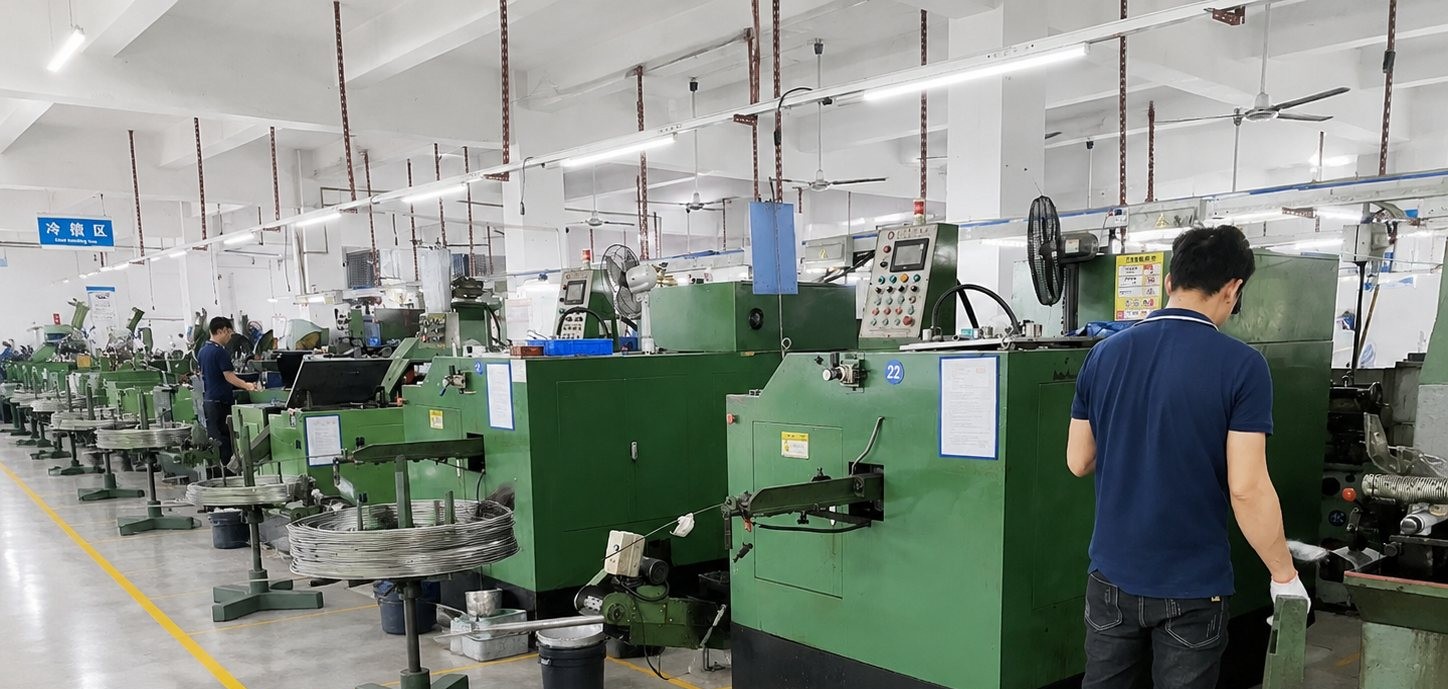
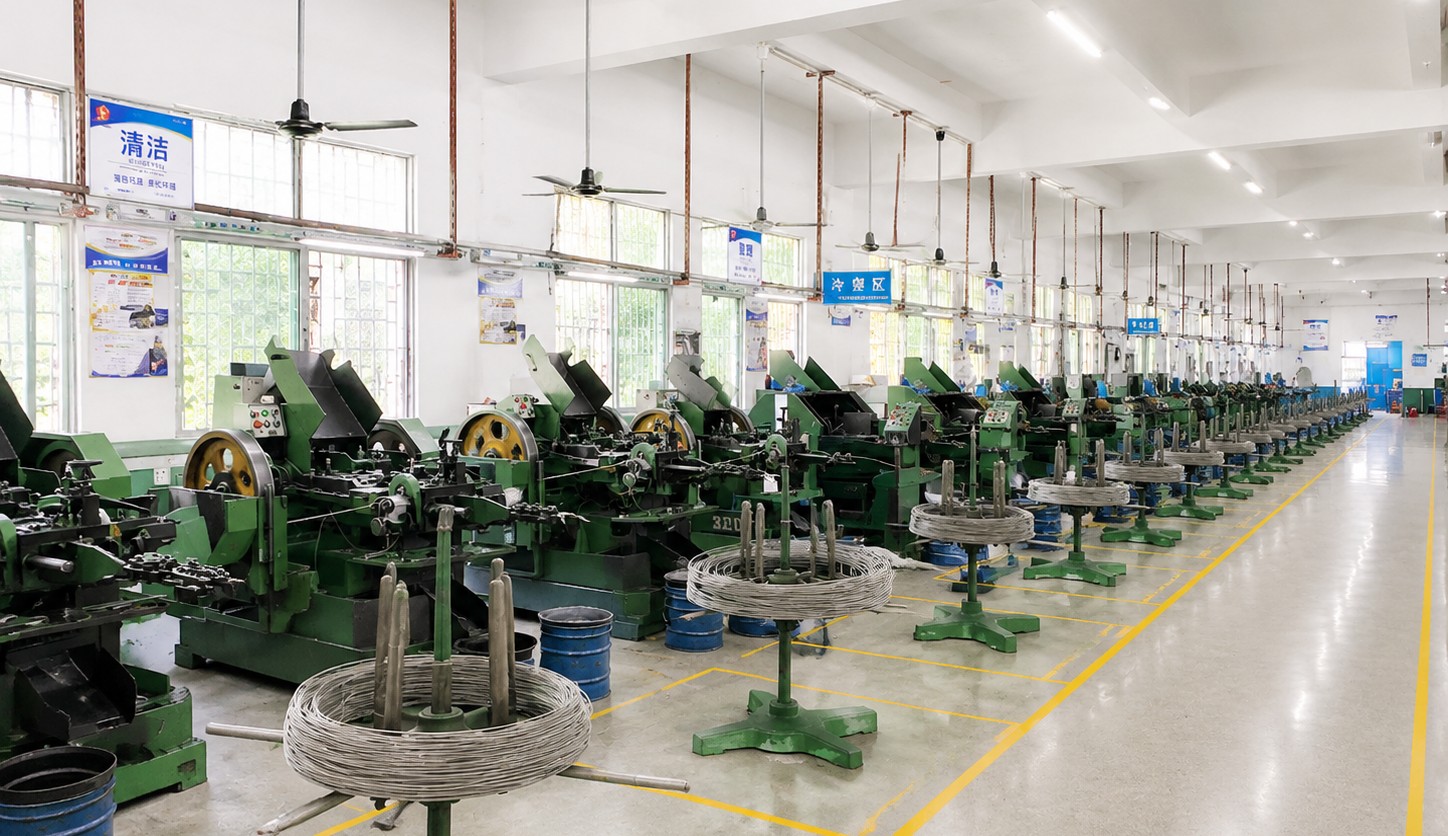
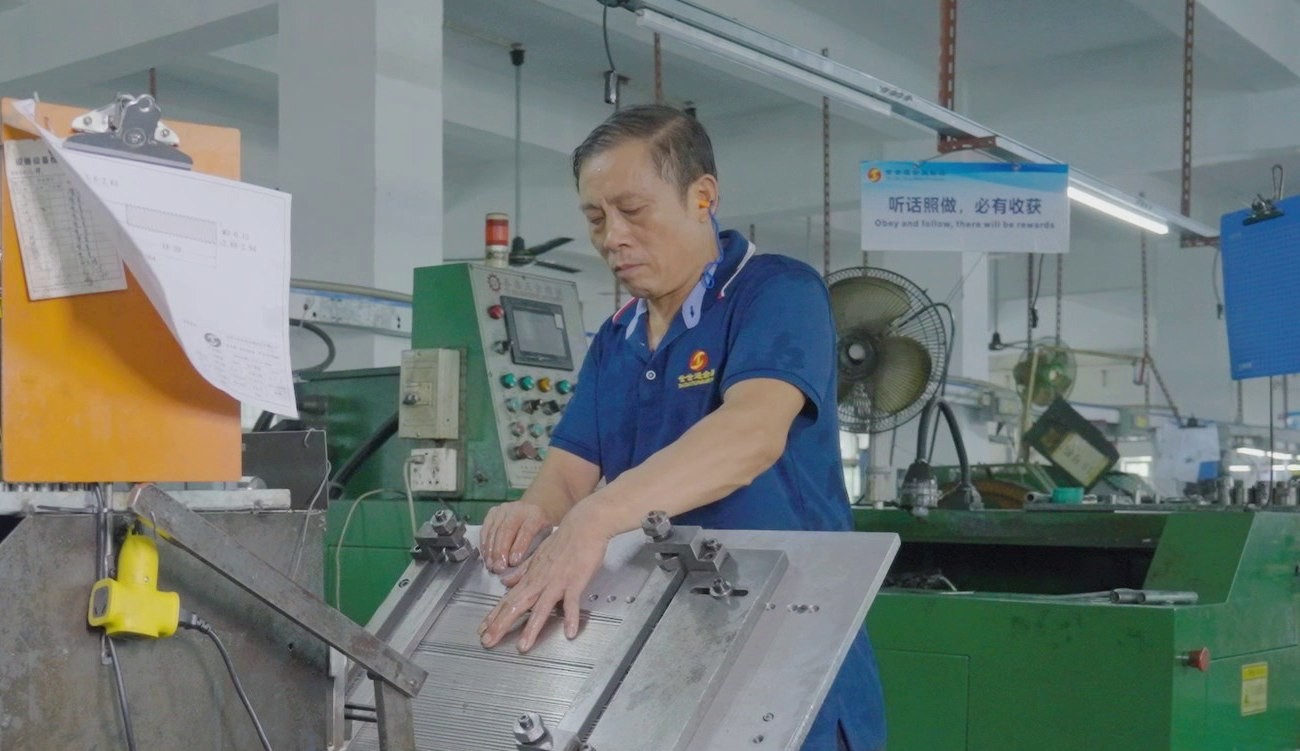
Shi Shi Tong forms these black anodized machine screws from titanium wire on single-die headers that upset the hex head, rolls the machine thread to a blunt chamfered end and anodises the parts to a controlled film before packing. The first part of every run is measured across the flats, checked for tone and film coverage, entered into a thread gauge and run into a sample nut before the batch continues.
|
|
Titanium is harder to form than steel and it work-hardens quickly, so the die and the roll have to be set for it rather than borrowed from a steel part. A roll that is set for steel leaves a slightly under-filled crest on titanium, which passes a thread gauge and strips early in a thin nut — the reason the thread is run into a real nut on the first article.
What decides whether black anodized machine screws pass is the film, the head, the thread and the grade. The inspection agreement covers those, and the criteria come from the drawing.
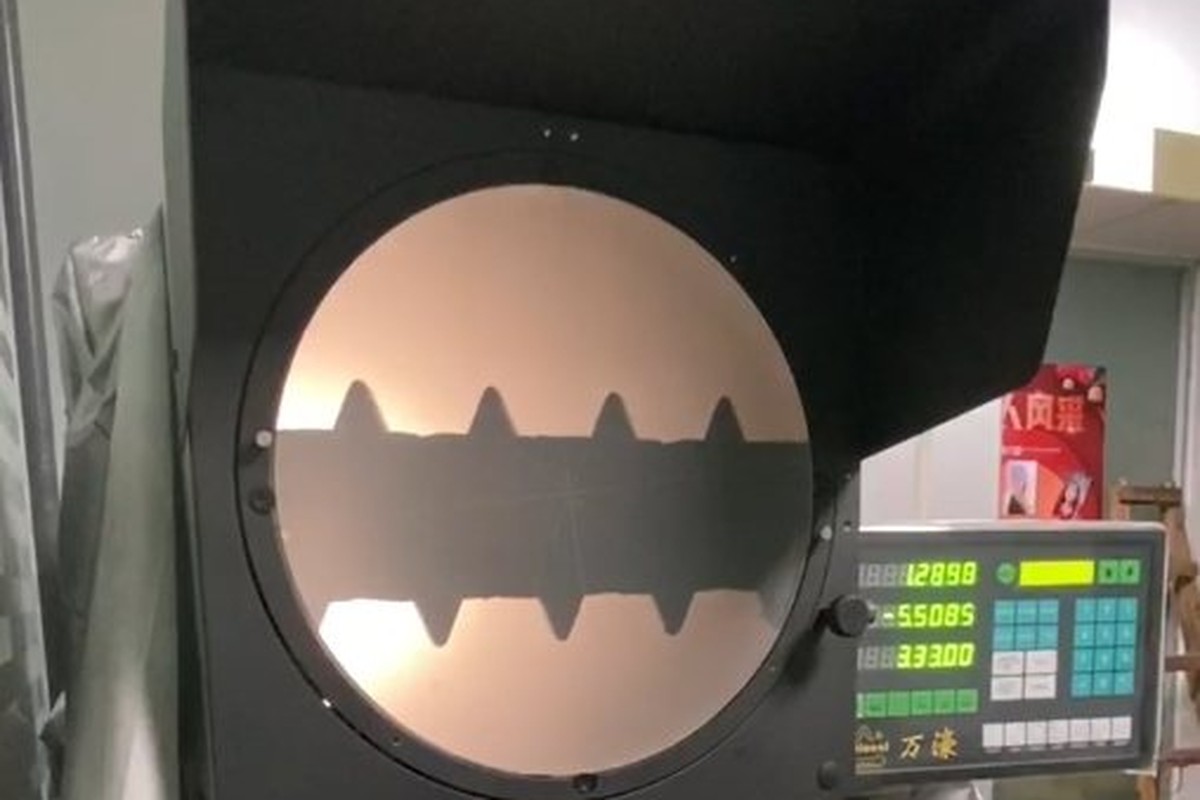
Across flats and head height on the projector |
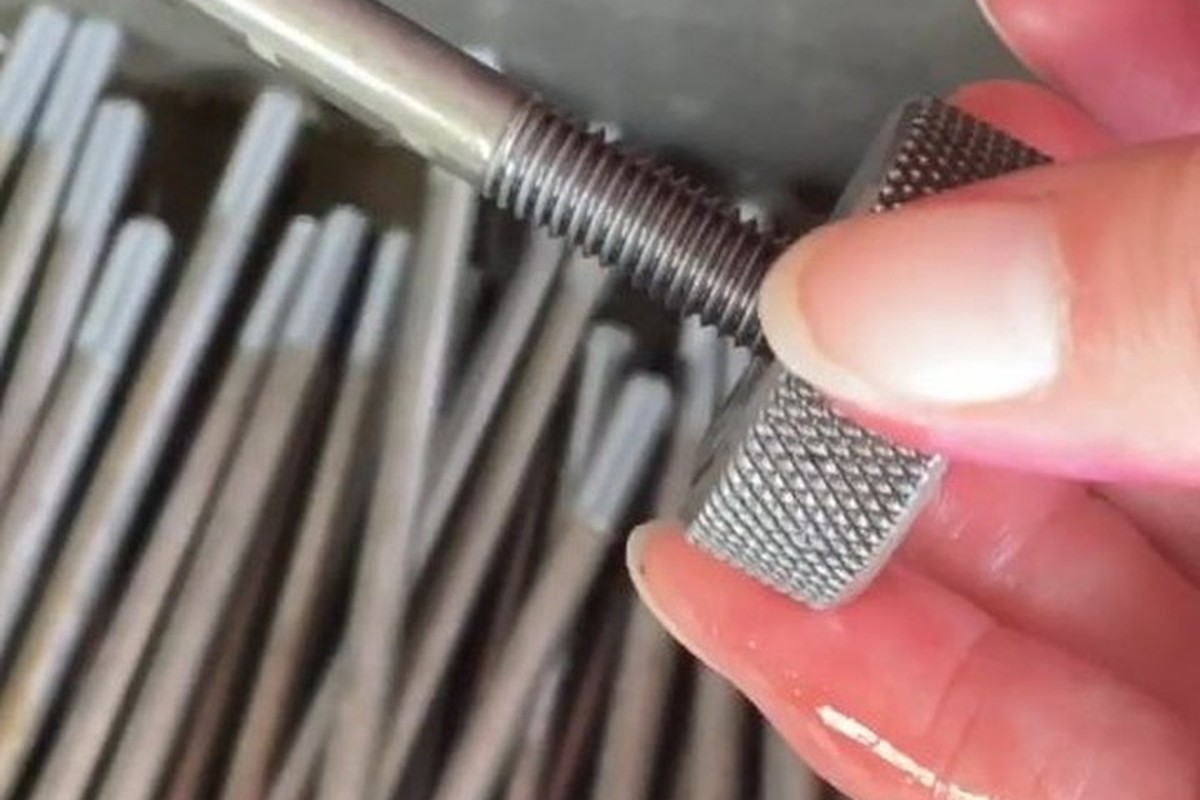
Thread gauged after anodising |
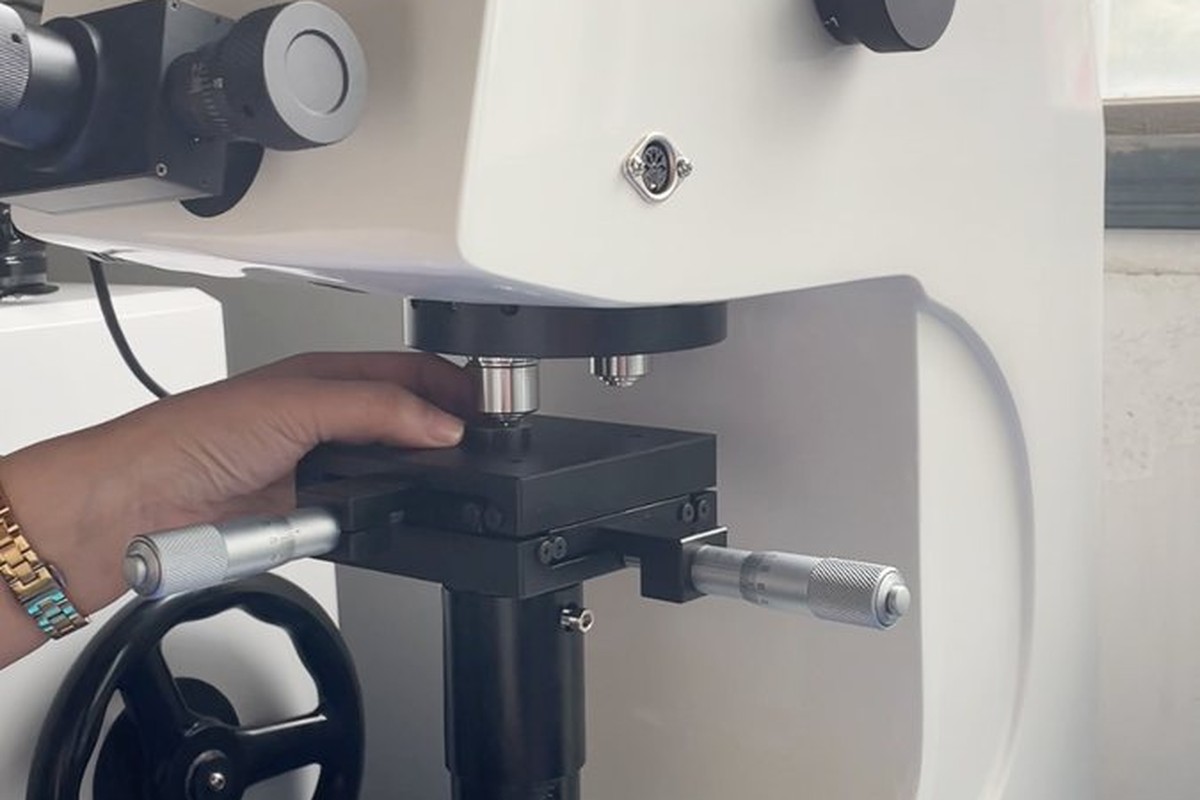
Hardness checked against the grade |
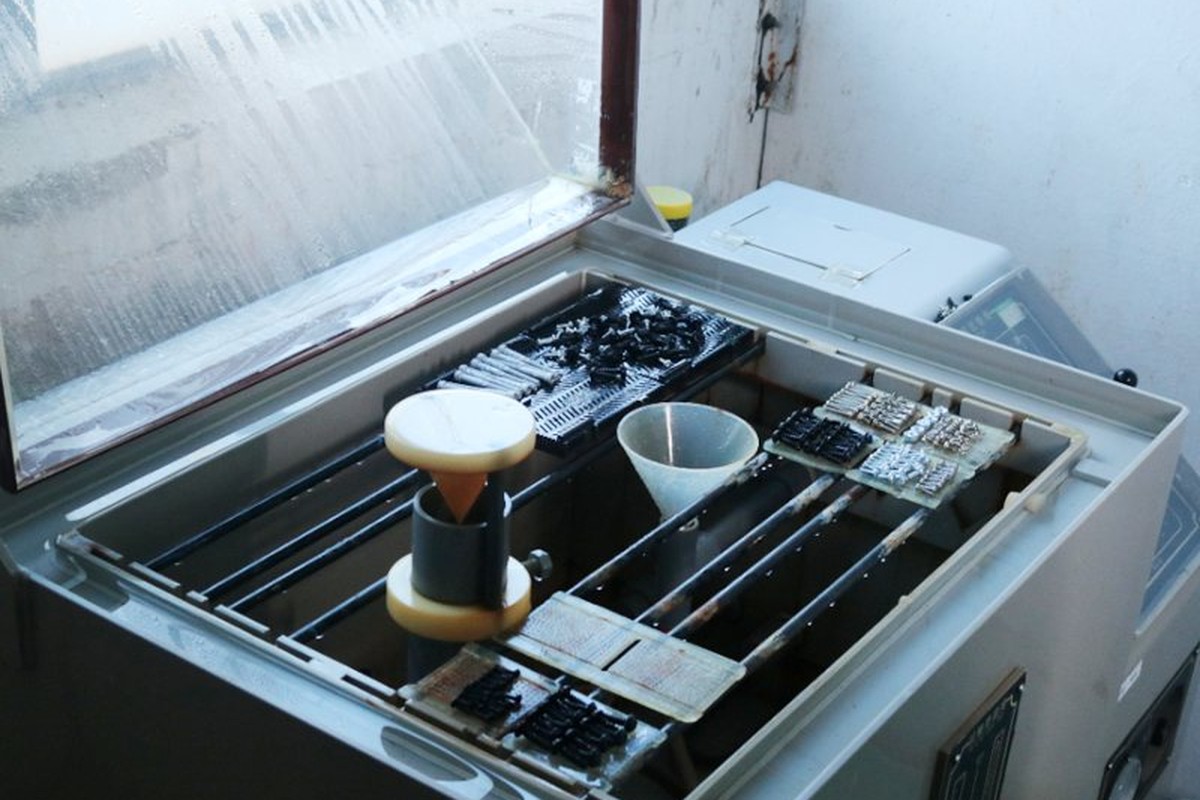
Salt-spray testing of the anodised finish |
The film is judged on colour and coverage at the same time: an even tone across the head and the thread, with no bright patches where the part was masked or contacted in the bath. On a black anodised part a contact mark is a light spot on a dark face, and it is visible from arm’s length.
The hex on black anodized machine screws is checked across flats at both ends of the head and the thread is gauged after anodising. Titanium threads are less forgiving than steel ones, so the gauge is read with a light hand and the sample nut is run on as well.
The grade is confirmed on the material certificate. Where the customer is buying titanium for weight or for chloride immunity, the certificate is the only evidence that the part is the grade specified.
Every shipment of black anodized machine screws is traceable to the wire it was made from and to the anodising batch. The grade and heat number are recorded on the material certificate supplied with the parts, and the inspection records follow the criteria agreed on the drawing.
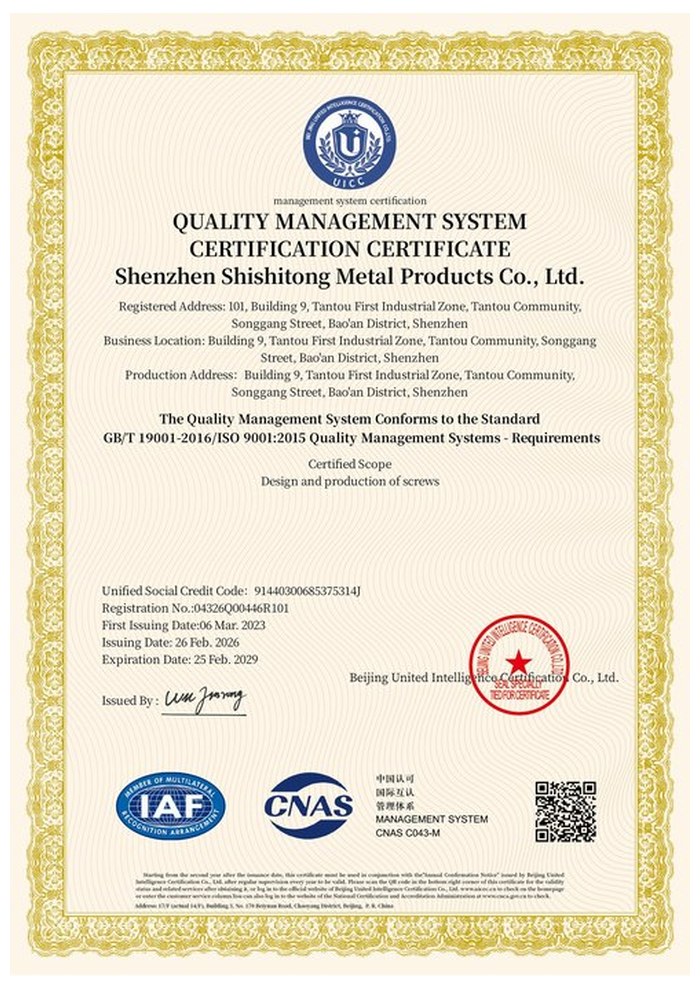
ISO 9001:2015 |
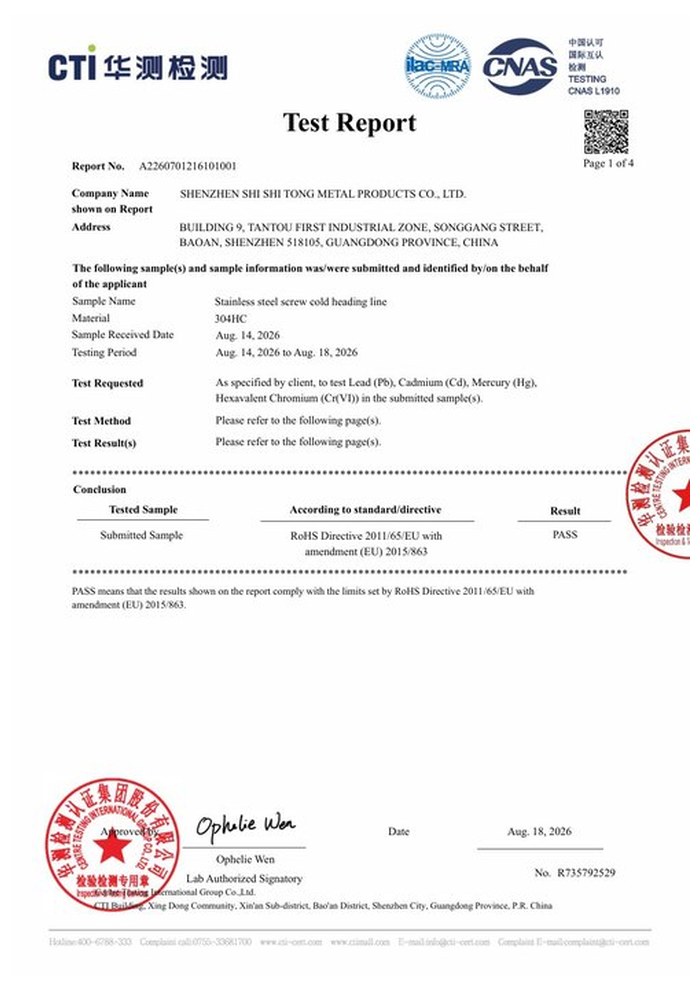
RoHS test report |
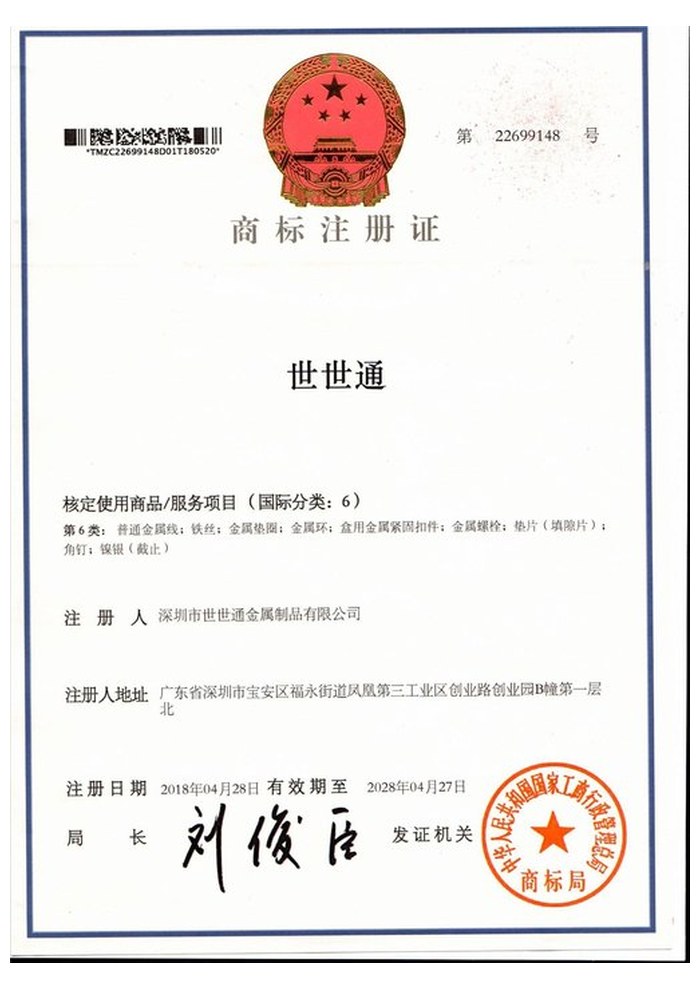
Registered trademark |
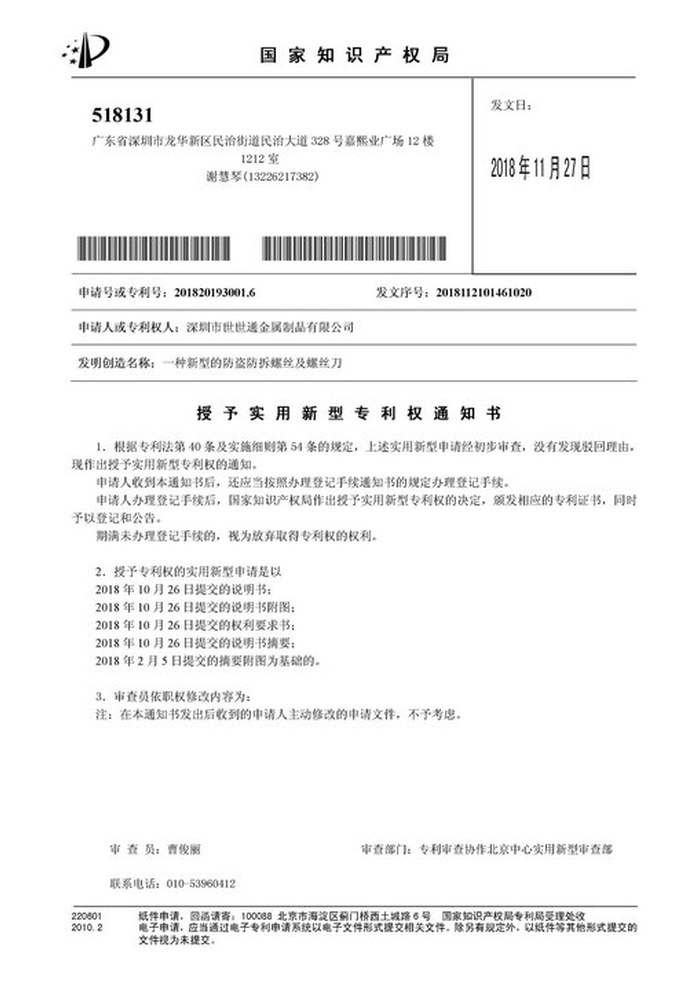
Patent: security screw and driver |
With each batch we supply the material certificate, the inspection record for the criteria on the drawing and, where it is listed, the third-party report for the grade or the finish. The documents carry the drawing revision and the batch number, so the paperwork can be matched to the parts.
More than 8,678 customers in 89 countries and regions have ordered from Shi Shi Tong; 87% of orders come from repeat customers and 56% through referrals. Most projects follow the same route: drawing review, first-article approval, then batches checked against that sample. On an anodised part the first article is also the colour sample, so a batch that is on size and wrong in tone is caught before it ships. Buyers visit during the process to review samples and to see how the heads are formed and the parts anodised.
|
8,678+
customers served
|
87%
of orders from repeat customers
|
56%
of orders through referrals
|
89
countries and regions shipped to
|
Buyers and quality engineers visit for sample review, process discussion and supplier audits; the visit is arranged around production so the headers and the anodising line can be seen on the day the parts run.
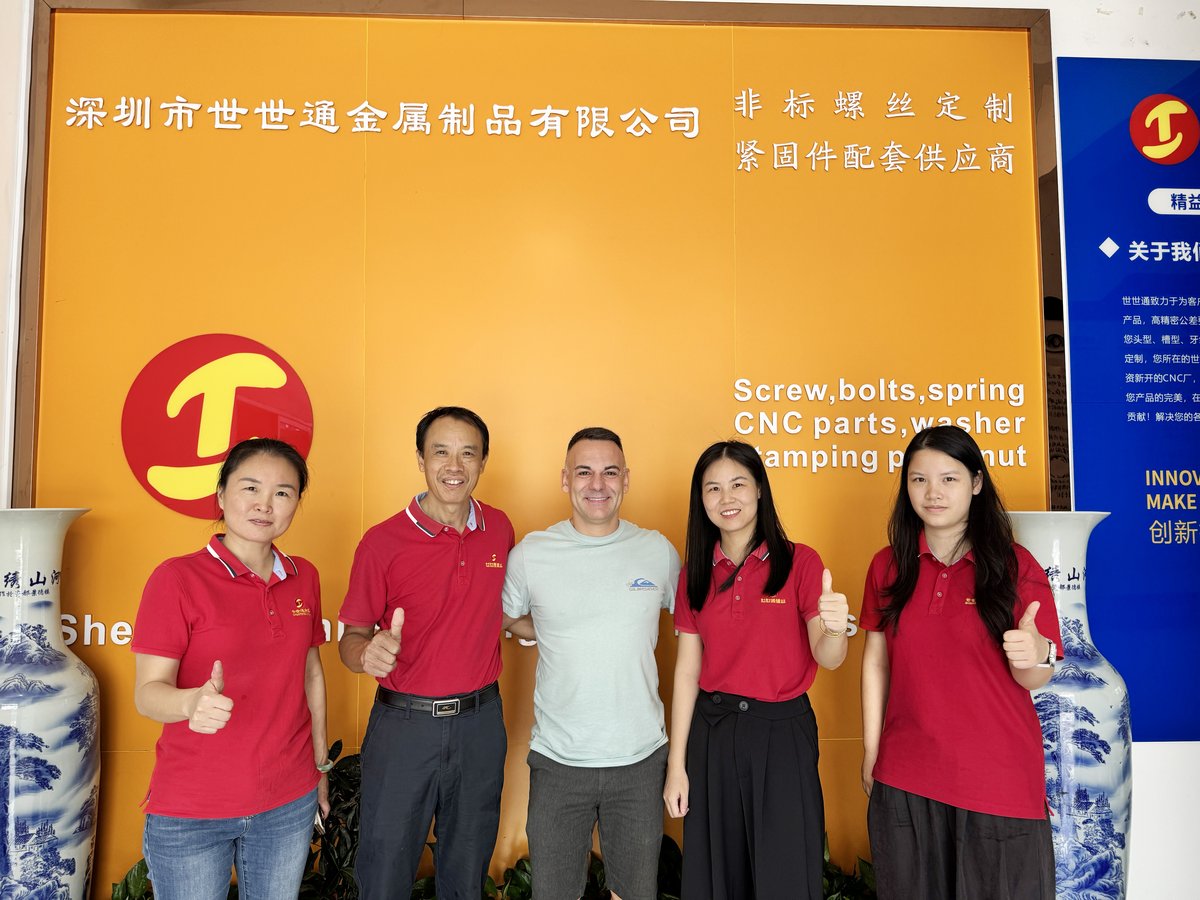
Customer group visit – sample review |

Customer group visit – process discussion |
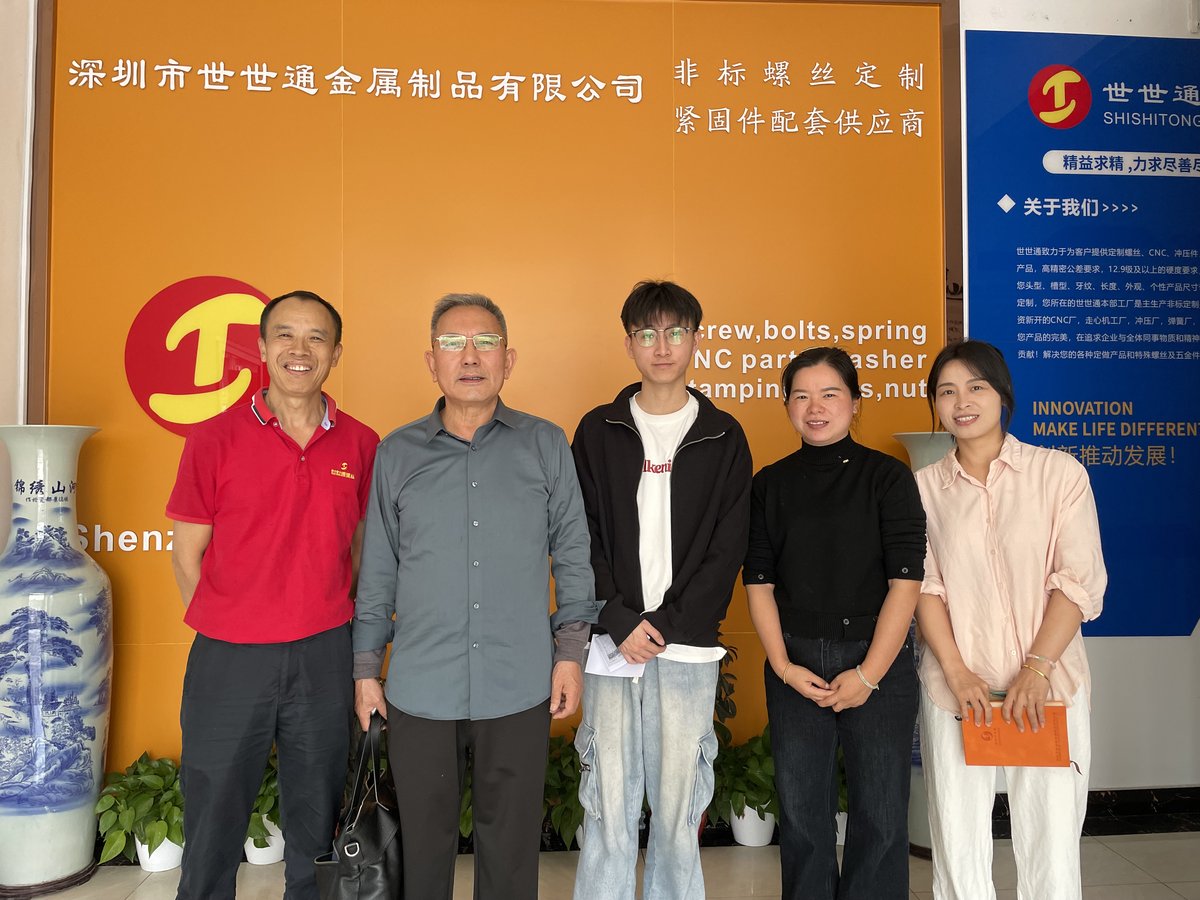
Customer group visit – factory tour |

Customer visit – project kick-off |

Danish customer – drawing review |
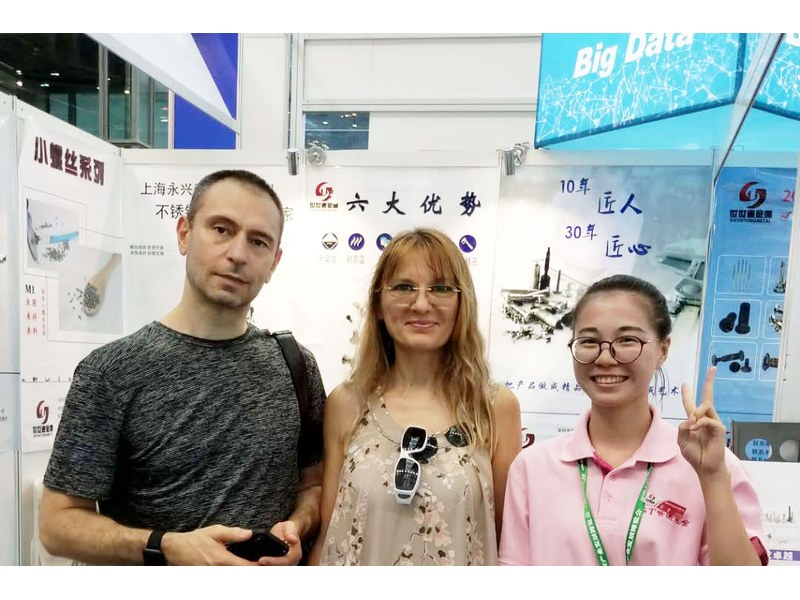
Industry exhibition – meeting customers |
No. It grows an oxide from the metal. On titanium the colour comes from the thickness of that oxide by interference, not from a dye.
Black sits at the thick end of the anodising range, where the film absorbs rather than reflects. The bath has to be controlled to reach it evenly.
It does not chip, because there is no layer to chip. It shows bright metal where the part is damaged or deformed, because the colour is the film.
Yes, badly, against itself. A titanium screw in a titanium nut needs a lubricant or a different material for one of them.
With care. Titanium is the more noble metal, so in a wet joint it accelerates corrosion of the aluminium around it. Isolation or a suitable coating prevents it.
Hex across flats and head height, thread size and length, the titanium grade, the anodised colour and film requirement, and any bare contact areas.
How a black anodized machine screw project runs from drawing to repeat delivery:
|
1
Send the drawing and the colour target
|
→ |
2
Grade, film and thread review
|
→ |
3
First article matched to the sample
|
→ |
4
Batch production and repeat orders
|
Each step is confirmed with you before the next one starts; the drawing revision from the first article is what repeat orders are checked against.
For a quotation, send the drawing with the hex across flats and head height, the thread size and length, the titanium grade, the anodised colour and film requirement, and any areas that must stay bare.
|
Across flats
|
Head height
|
Thread and length
|
|
Titanium grade
|
Anodised colour
|
Bare areas
|
Sending a drawing? The form below does not take attachments. Email the PDF, DXF or STEP file to sst@szsst88.com with the part name and quantity in the subject line – the drawing is reviewed and a quotation follows.

 +86 13143444311
 sst@szsst88.com