Tel:
+86 13143444311
Email:sst@szsst88.com
Fax:+0086-755-27322278
Address:Building 9, First Industrial Zone, Tantou Industrial City, Songgang Street, Baoan District, Shenzhen 518105, Guangdong, China
Type:4 Inch Screws
Materials:Carbon Steel
Surface treatment:White Zinc Plated
Head Type:Pan Head
Drive:Phillips + slot (combo)
Thread:Machine thread
Point:Plain, chamfered
Forming:Single Die Heading
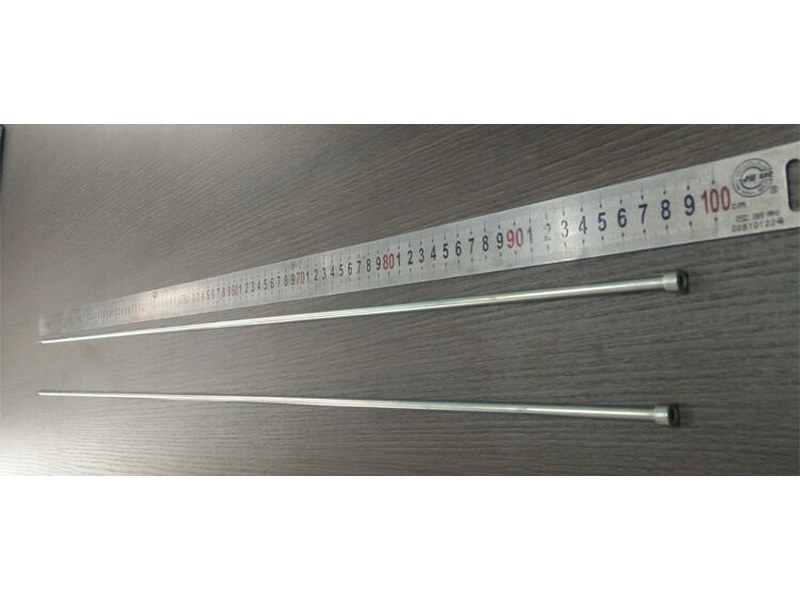
Length:About 100 mm (4 inch)
Size:M1 M2 M3 M4 M5 M6 M7 M8 M9 M10
Number:239
We make 4 inch screws in carbon steel with a white zinc plate, a pan head and a combined cross and slot drive, quoted from M1 to M10. Head, thread length and start, and overall length come from your drawing, and the first article is assembled through your joint.
Watch the factory video·Email sst@szsst88.com
ISO 9001:2015 · Manufacturing since 1998 · 8,678+ customers · 89 countries and regions
Made to order – there is no stock catalogue. Each part is produced to your drawing, and production starts after drawing review and first-article approval.
4 inch screws are machine screws around a hundred millimetres long, long enough to pass through a post, a bracket or a stack of panels and reach a nut or a tapped hole at the far end. These are carbon steel with a white zinc plate, pan head, combined cross and slot drive, quoted from M1 to M10 with Number 239.
Pan head. A rounded head with a wide bearing face, so the clamp spreads over the surface without a washer.
Combined drive. A Phillips cross with a slot cut through it, so a cross-tip bit or a flat blade will turn it.
Machine thread. A uniform thread for a tapped hole or a nut, so the joint can be opened again.
White zinc. A thin, bright zinc deposit that protects carbon steel indoors and shows wear as a dull grey.
4 inch screws are used in furniture frames, cabinet work, lighting trims, gates and light structural assemblies, where the length has to span an assembly thicker than a normal machine screw reaches and the joint is still expected to be opened with ordinary tools.
A hundred millimetres is not a custom length, but it is long enough that the shank stops behaving like a short fastener. The first thing that changes is torque: the shank twists as it is loaded, so the driver shows torque at the head before the far end has taken it up. On a short screw the two are effectively simultaneous; on these 4 inch screws they are not.
The second thing is handling. A screw this long bends under its own weight when it is picked up, marks when it rubs another, and takes a set if it is stored in a bundle. Parts are made and packed so the shank is supported rather than cantilevered, and that is part of the process rather than a detail of packing.
The third is thread position. Where the screw passes through a clearance hole and engages only at the far end, the plain shank between the head and the first thread has to be long enough to clear the whole stack. If the thread starts too early it enters the clearance hole, and the joint loses the bearing length it was designed around.
The pan head is a sensible partner for this length. It carries a wide flat bearing face, so it does not need a washer to avoid marking a panel, and it sits low enough to be unobtrusive on a visible face. With a combined drive, the screw can be run in by hand with a blade and finished with a cross-tip bit, which suits furniture and cabinet work where both tools are in the same box.
Zinc plating adds the practical limit. White zinc is a thin bright deposit that protects indoors; on a long part there is far more surface to protect and any scratch along the shank becomes a rust line that runs the whole length. The finish is adequate for what these screws are used for, and it is not adequate for outdoors.
The recorded range is M1 to M10, with lengths made to the drawing, and the 4 inch length itself is roughly a hundred millimetres. Custom lengths up to 2,000 mm are subject to DFM review after drawing submission. For 4 inch screws the quotation carries head diameter and height, thread length and start, and the overall length.
| Item | How it is defined | What we control |
|---|---|---|
| Head | Pan, rounded top | Diameter, height and bearing face flatness |
| Drive | Phillips cross with slot | PH size, slot width and depth |
| Thread | Machine thread | Pitch, thread length and start position |
| Length | Overall, head included | Length tolerance and thread start |
| Material | Carbon steel | Grade and heat number on the certificate |
| Finish | White zinc | Coating thickness and thread re-checked |
Thread length is the dimension to put on the drawing rather than to assume. On 4 inch screws the thread may run the full length or stop partway, and the difference decides whether the screw can be pulled tight against the near face or only at the far end.
Overall length is measured over the head. On a long part the tolerance applies to the whole length, and it comes from cutting and from how the part is held during threading rather than from the blank.
Four features define this length class, and each one is a trade:
| Feature | What it gives | What it costs |
|---|---|---|
| 100 mm length | Spans posts, brackets and stacks | Bends in handling; harder to feed |
| Pan bearing face | Clamp spread without a washer | Stands above the surface |
| Combined drive | Two tools fit; serviceable on site | Each shape weakens the other |
| Machine thread | Joint reopens without damage | Needs a nut or a tapped hole |
| White zinc | Bright, low cost, adequate indoors | Rust line follows any shank scratch |
The length is the reason for the part and the source of its problems. A hundred millimetres reaches through assemblies that shorter screws cannot, and the same hundred millimetres is what makes the screw flexible enough to bend when it is not handled carefully.
The combined drive is what keeps the part usable in the field. Cabinet and furniture work is done with whatever tool is in the box, and a screw that accepts both a cross-tip and a blade removes the argument about which driver to carry.
The recorded finish is white zinc over carbon steel. It is thin, bright and cheap, and it is applied after threading so the thread is protected as well as the shank. On a screw of this length the finish has more area to cover than a short screw and the same thickness of deposit, which is why the thin end of the plating range shows up first at the thread crests and at the head rim.
| Option | How it protects | Effect on a long shank | Typical use |
|---|---|---|---|
| White zinc | Sacrificial zinc, thin | Marks show as grey; rust follows scratches | Indoor furniture and cabinets |
| Colour zinc | Sacrificial zinc, thicker | More build; thread re-checked | General indoor assemblies |
| Black zinc | Sacrificial zinc, dark | Same build; wear shows earlier | Dark frames and trims |
| Dacromet | Inorganic zinc-aluminium layer | Build noticeable; thread re-checked | Outdoor and damp |
| Stainless, passivated | Passive film, no coating | No coating to damage along the length | Wet and coastal |
Where the joint is indoors and dry, white zinc is the right cost. Where it is outdoors or damp, the answer is a heavier coating or stainless, because a hundred millimetres of unprotected steel in a wet joint rusts along its whole length rather than at one point.
Where a coated screw is used, the thread is checked after plating. A zinc deposit thick enough to protect the shank also thickens the thread crest, and on a screw that has to run through a long clearance hole and then engage a nut, that difference is felt as drag.
Three assemblies where this length is the standard:
| Where it sits | The screw passes through a rail and a post to a nut or an insert, where the joint has to be tight and the head stays visible. |
| When it goes wrong | The thread starts inside the rail and the joint never pulls up. |
| Why it happens | The stack is deep, the head is on a visible face, and the joint is assembled on site. |
| What we control | Thread start and length checked; first article assembled through the joint. |
| Where it sits | The screw joins a carcass to a frame where the length spans a void and the joint is closed by hand. |
| When it goes wrong | The screw bends as it is driven and the joint pulls to one side. |
| Why it happens | The span is long, the access is awkward, and the drive is a blade or a bit. |
| What we control | Head and thread checked; first article fitted to a sample frame. |
| Where it sits | The screw holds a trim or a bracket where the length reaches through a drop and the head must sit low. |
| When it goes wrong | The coating is scratched along the shank during fitting and rusts later. |
| Why it happens | The part is long, visible, and handled before assembly. |
| What we control | Finish and length checked; first article fitted and inspected. |
Four reasons that matter at this length, each tied to something the drawing has to prove:
|
Thread start quoted
Thread length and its start position are agreed as numbers, because on 4 inch screws the start decides whether the joint pulls up at all. Basis: Thread start quoted as a dimension. |
Headed, threaded and plated in one route
The pan head and combined recess are formed, the thread rolled to position, and the parts plated in the same sequence. Basis: One route from wire to plated screw. |
|
Length measured on the part
Overall length and thread start are measured on finished parts, because both shift during threading and plating. Basis: Length and thread start measured. |
First article through your assembly
The first article is assembled through the customer joint, because reach and thread position are only proven in the stack. Basis: First article assembled in the joint. |
These screws are headed on machines that form the pan head and cut the cross recess, the slot is cut across the recess, and the thread is rolled at the position the drawing sets before the parts are white zinc plated. The first part of every run is measured on head, both drives, thread length and start, and overall length.


|

|
At this length the blank has to be supported through every operation. Heading is short, but threading and slotting a hundred millimetres of shank means the part is held at one end while the other is worked, and the support is what keeps the shank from taking a set during the operation. That is a process decision made once per run rather than a dimension on the drawing.
Plating is the last step and the one that needs the most care on a long part. The parts are racked or barrelled depending on the length, and the thread is re-checked after plating; a white zinc layer that looks even can still thicken the crest enough to change how the screw runs into a nut at the far end of a hundred millimetres.
What decides whether 4 inch screws pass is the head, both drives, the thread and the length. The inspection agreement covers those, and the criteria come from the drawing.

Head, cross and slot |

Thread and start checked |

Core hardness checked |

Salt-spray testing of the zinc layer |
Head diameter and height are measured on a projector, and the combined drive is proved with both tools: a PH bit for the cross and a blade of the stated width for the slot. Overall length is measured with the part supported along its length, and thread start is measured from the underside of the head.
A sample from every batch is assembled through the customer joint and removed. On 4 inch screws that check is what catches a thread that starts a few millimetres early or a plated crest that drags in the nut, and neither shows up in a dimensional record.
Every batch is traceable to the wire it was made from and to the plating lot that finished it. The grade and heat number appear on the material certificate supplied with the parts, and the inspection records follow the criteria agreed on the drawing.

ISO 9001:2015 |

RoHS test report |

Registered trademark |

Patent: security screw and driver |
With each shipment we supply the material certificate, the inspection record for the dimensions on the drawing and, where the plating is specified, the report for coating thickness and salt-spray performance. The documents carry the drawing revision and the batch number, so a repeat order keeps the same thread and the same length.
More than 8,678 customers in 89 countries and regions have ordered from Shi Shi Tong; 87% of orders come from repeat customers and 56% through referrals. Most projects follow the same route: drawing review, first-article approval, then batches checked against that sample. On 4 inch screws the first article is assembled through the customer joint, because reach and thread position are only proven in the stack. Buyers visit during the process to review samples.
|
8,678+
customers served
|
87%
of orders from repeat customers
|
56%
of orders through referrals
|
89
countries and regions shipped to
|
Buyers and quality engineers visit for sample review, process discussion and supplier audits; the visit is arranged around production so the headers and the plating line can be seen on the day the parts run.

Customer group visit – sample review |

Customer group visit – process discussion |

Customer group visit – factory tour |

Customer visit – project kick-off |

Danish customer – drawing review |

Industry exhibition – meeting customers |
It is a common catalogue length at roughly a hundred millimetres. The thread start and the head form are what vary between suppliers.
The thread starts inside the clearance hole. The plain shank has to clear the whole stack before the thread engages.
Not with white zinc alone. A hundred millimetres of steel rusts along its length; use a heavier coating or stainless.
So the screw can be run in with a blade and finished with a cross-tip bit, which is what site work needs.
It thickens the thread crest. The thread is re-checked after plating, because the screw has to run through a long clearance before it engages.
Head diameter and height, PH size and slot width, thread length and start, and overall length.
How a 4 inch screw project runs from drawing to repeat delivery:
|
1
Send the drawing and the stack
|
→ |
2
Thread start and length agreed
|
→ |
3
First article assembled through the joint
|
→ |
4
Batch production and repeat orders
|
Each step is confirmed with you before the next one starts; the drawing revision from the first article is what repeat orders are checked against.
For a quotation, send the drawing with the head diameter and height, the PH size and slot width, thread length and start, and overall length.
|
Head size
|
PH size
|
Slot width
|
|
Thread start
|
Thread length
|
Overall length
|
Sending a drawing? The form below does not take attachments. Email the PDF, DXF or STEP file to sst@szsst88.com with the part name and quantity in the subject line – the drawing is reviewed and a quotation follows.

 +86 13143444311
 sst@szsst88.com