Tel:
+86 13143444311
Email:sst@szsst88.com
Fax:+0086-755-27322278
Address:Building 9, First Industrial Zone, Tantou Industrial City, Songgang Street, Baoan District, Shenzhen 518105, Guangdong, China
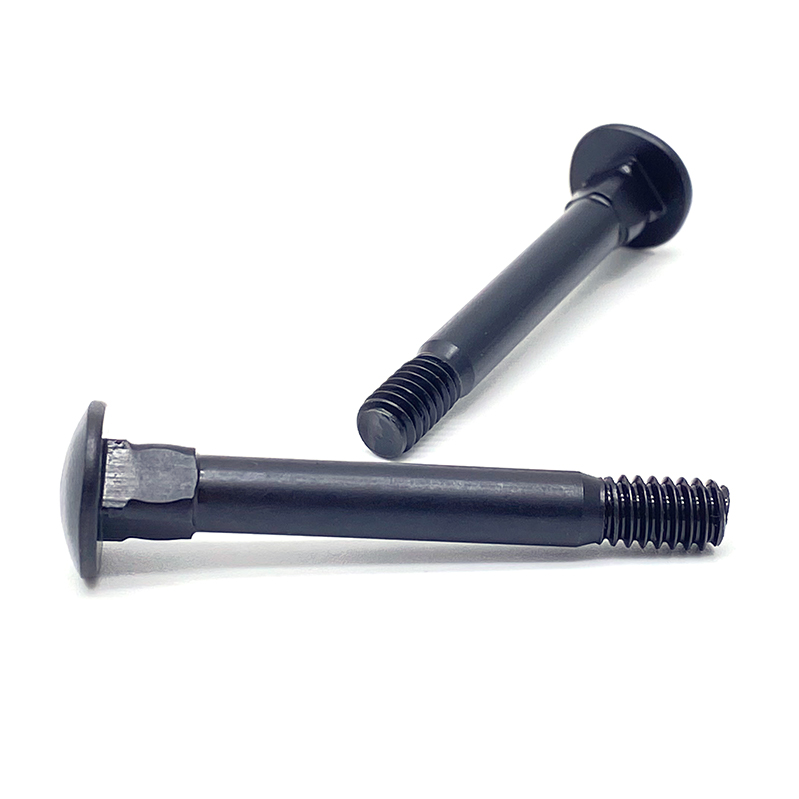
Type:Button Head Screw
Materials:Carbon Steel
Surface treatment:Eco Blue Zinc Plated
Head Type:Domed button head
Drive:Allen hex socket
Thread:Machine thread
Point:Plain, chamfered
Forming:Formed and threaded; plating applied last
Size:M1 M2 M3 M4 M5 M6 M7 M8 M9 M10
We make button head screws in carbon steel with an eco blue zinc plate, a domed socket head and a hex key drive, quoted to the drawing. The dome keeps the head from catching, and it costs socket depth and bearing area, so the socket, head and panel are agreed before production.
Watch the factory video·Email sst@szsst88.com
ISO 9001:2015 · Manufacturing since 1998 · 8,678+ customers · 89 countries and regions
Made to order – there is no stock catalogue. Each part is produced to your drawing, and production starts after drawing review and first-article approval.
A button head screw is a socket head screw with a domed top, driven with a hex key and used where the head is exposed. The part recorded here is carbon steel with an eco blue zinc plate, quoted in metric sizes from M1 upward with the length made to the drawing.
Domed head. A rounded top with no sharp edge, so nothing catches on it.
Hex socket. A hexagon inside the head, driven on the axis with a key.
Machine thread. A thread that goes into a tapped hole or a nut over a defined engagement.
They are used on equipment where the fixing is visible and handled, and where a sharp head edge would catch a hand, a cable or a moving part. In those positions the head is not just a drive and a bearing face: it is a surface the user meets, and its shape carries part of the specification.
A button head screw is a cap head with the corners taken off. The head is lower, the top is a spherical cap, and the edge is a radius rather than a chamfer. That shape is the whole point: on exposed hardware a sharp head edge catches on sleeves, cables and gloves, and a rounded head does not.
The shape is paid for in socket depth. On a button head there is less material above the shank than on a cylindrical cap head of the same diameter, and the hexagon has to be cut inside what is there. A shallower socket means a shorter key engagement, which means less torque before the hexagon rounds out. On the smallest sizes that difference is the limiting factor of the joint.
The bearing face is the second cost. The head is domed, so the flat annulus underneath is smaller than on a cap head, and on a thin panel the pressure under the head is higher. Where the panel is soft or painted, that shows as a ring pressed into the surface, and it is the reason a washer head or a plain washer is still used with button heads on light panels.
The head height matters in the other direction. A button head is lower than a cap head, so a shallower counterbore is enough, and on a compact assembly that can be the difference between a cover that closes and one that does not. That is the trade the design makes: less height, less socket, less bearing area, and a rounded top that catches on nothing.
The finish completes the part. Eco blue zinc protects a carbon steel screw at low cost and gives the blue-white appearance common on equipment hardware; the plate is thin enough that the socket still takes its key, which is checked on a sample after plating.
The part is quoted to the drawing with the head, the socket and the thread stated separately. Custom lengths up to 2,000 mm, subject to DFM review after drawing submission. The quotation for a button head screw carries the head diameter and height, the socket size and depth, the thread, the length and the plate.
| Item | How it is defined | What we control |
|---|---|---|
| Head | Domed button head | Diameter, height and dome radius |
| Socket | Hexagon in the head | Across flats and depth |
| Bearing face | Annulus under the dome | Diameter and flatness |
| Thread | Machine thread | Size, pitch and length |
| Plate | Eco blue zinc | Thickness and socket fit |
| Mating part | Customer part | Engagement and counterbore |
The dome radius is a drawing feature rather than a style. On a head that is ridden over, the radius is the running surface, and a flatter dome with a sharper transition will catch where a full radius would not.
The socket depth is limited by the head height. On a button head the depth is set as deep as the head allows, because the socket is already shallow compared with a cap head; cutting it deeper than the drawing removes the section that carries the key load.
The mating part is the customer’s dimension. On a button head the counterbore only needs to clear a low dome, but the annulus that bears under it is the surface that leaves marks, so the panel material is part of the specification.
Four properties decide button head screws, and each one carries a cost:
| Property | What it gives | What it costs |
|---|---|---|
| Domed head | No sharp edge to catch | Shallower socket, lower torque |
| Low height | A shallow counterbore is enough | Less material around the hexagon |
| Small bearing face | A tidy appearance | Higher pressure on a thin panel |
| Eco blue zinc | Protection at low cost | Not for washing or salt |
The value is a head that can be left exposed. On furniture, medical equipment and consumer hardware, a head that does not catch or scratch is worth more than the torque a cap head would give.
The cost is in the joint: less socket means less torque, and a smaller bearing face means more marking on soft panels. Both are acceptable on the applications where a button head is chosen, and neither is acceptable on a structural joint.
The recorded finish is eco blue zinc, a trivalent zinc plate with a blue-white passivation. On a visible button head it gives a bright, uniform appearance and sacrificial protection, and it is the usual finish on indoor equipment hardware.
| Option | How it protects | Effect on dome and socket | Typical use |
|---|---|---|---|
| Eco blue zinc | Trivalent zinc, blue-white | Build; socket re-checked | Visible equipment hardware |
| Clear zinc | Sacrificial zinc, thinner | Less build; socket closer to size | Indoor assemblies |
| Zinc nickel | Higher corrosion resistance | Build; socket gauged after | Damp and industrial |
| Black oxide | Conversion film, oiled | No measurable build | Dark mechanisms |
| Stainless, passivated | Passive film, no coating | No build; different strength | Wet and food areas |
On a domed head the plate is judged on the top, because that is the surface that is seen and touched. Coverage over a sphere is harder than over a flat face, and a thin plate that looks even on a flat head can look patchy on a dome.
Inside the socket the plate is a fit problem, and on a button head the socket is already shallow. A layer that reduces the across-flats is what stops a key entering, which is why the socket is checked with the key after plating.
Three settings where the head is exposed and handled:
| Where it sits | The screw holds a rail, a panel or a bracket where a patient or a carer may brush against it. |
| When it goes wrong | A sharp head edge scratches skin or catches clothing. |
| Why it happens | The head is a cap form with a chamfered edge. |
| What we control | Dome radius and socket checked; first article handled and inspected. |
| Where it sits | The screw is visible on a panel or a frame where the finish is part of the design. |
| When it goes wrong | The head marks the panel, or it looks unfinished next to a domed profile. |
| Why it happens | The bearing face is small for the panel, and the plate is bright but soft. |
| What we control | Head face and plate checked; first article assembled on the finished panel. |
| Where it sits | The screw holds a guard or a cover that is removed and refitted, and cables run past it. |
| When it goes wrong | A cable wears on the head edge, or the socket rounds out from repeated use. |
| Why it happens | The head edge is sharp, and the socket is shallow for the torque needed. |
| What we control | Dome and socket checked; first article cycled with the cover in place. |
Four reasons that matter on a head that is seen and touched, each tied to something the drawing or the first article proves. All four show in the sample.
|
Dome and socket stated
The drawing states the dome radius and the socket size, because on a button head the shape and the drive are limited by the same material. Basis: Dome and socket dimensioned. |
Socket cut in a finished dome
The socket is cut after the dome is formed, so its depth is measured from the surface the key meets. Basis: Socket depth controlled. |
|
Key and joint both checked
The first article is driven with the customer key and checked in the joint, because torque and bearing both depend on the part it sits on. Basis: Key and joint proved. |
Same limits on repeat runs
Dome, socket and plate are recorded with the drawing revision, so a repeat batch drives and looks the same. Basis: Same limits across orders. |
These screws are formed and threaded from carbon steel wire, with the button head formed and the dome finished, the hexagon broached and the thread rolled; the parts are then blue zinc plated. The first piece of every run is measured on head diameter and height, dome radius, socket across flats and depth, thread and length.


|

|
The dome is formed in the heading die, so its radius comes from the die rather than from a later operation. That is what keeps the top free of tool marks and the transition into the head consistent, both of which show on a visible fixing.
The socket is broached after the dome is formed, and the depth has to leave a section under the hexagon that can take the key load. On a button head that section is thinner than on a cap head, so the depth is controlled rather than maximised.
The thread is rolled, and the parts are plated last. Because the dome is the visible surface, the plate is checked over the whole sphere on a sample, and the socket is checked with the key in the plated state.
What decides whether button head screws pass is the dome, the socket and the thread. The inspection agreement covers those, and the criteria come from the drawing.

Dome and socket on the projector |

Thread and start checked |

Core hardness checked |

Salt-spray testing of the blue zinc |
The dome is measured for radius and height and checked for marks. On a visible head the dome is the surface that is judged, and a plate that is thin at the top of the dome shows as a dull patch under a light.
The socket is measured across flats and for depth, and checked with the key. On a button head the socket is shallow, so a burr at a corner is enough to stop the key, and the check is done with the key rather than with a gauge alone.
The bearing annulus is checked for flatness, and the thread is gauged. A sample is assembled on a panel of the customer’s material to confirm the mark the head leaves, which on a painted panel is the outcome that matters.
Every batch of button head screws is traceable to the wire it was made from and to the plating lot that finished it. The grade and heat number appear on the material certificate supplied with the parts, and the plating report carries the layer thickness and the lot number.

ISO 9001:2015 |

RoHS test report |

Registered trademark |

Patent: security screw and driver |
With each shipment we supply the material certificate, the inspection record for the dimensions on the drawing, including the dome and socket, and the plating report. The records carry the drawing revision and the batch number, so a repeat order of button head screws looks and drives the same.
More than 8,678 customers in 89 countries and regions have ordered from Shi Shi Tong; 87% of orders come from repeat customers and 56% through referrals. Most projects follow the same route: drawing review, first-article approval, then batches checked against that sample. On a visible head the first article is checked in the customer’s assembly, because the dome and the bearing face only matter once the screw is in place. Buyers visit during the process to review samples.
|
8,678+
customers served
|
87%
of orders from repeat customers
|
56%
of orders through referrals
|
89
countries and regions shipped to
|
Buyers and quality engineers visit for sample review, process discussion and supplier audits; the visit is arranged around production so the heading cell and the plating line can be seen on the day the parts run.

Customer group visit – sample review |

Customer group visit – process discussion |

Customer group visit – factory tour |

Customer visit – project kick-off |

Danish customer – drawing review |

Industry exhibition – meeting customers |
So nothing catches on it. A rounded top is safer where hands, clothing or cables pass over the fixing.
Socket depth. There is less material above the shank than on a cap head, so the hexagon is shallower and the torque it takes is lower.
Yes. The flat annulus under a dome is smaller than under a cap head, so the pressure on a thin panel is higher.
On a soft or painted panel it often does, because the annulus is what leaves the mark.
It protects carbon steel at low cost and gives the blue-white appearance used on equipment hardware.
Head diameter, height and dome radius, socket size and depth, thread, length, finish, and the mating part.
How a button head screw project runs from drawing to repeat delivery:
|
1
Send the drawing and the panel
|
→ |
2
Dome, socket and thread agreed
|
→ |
3
First article assembled and checked
|
→ |
4
Batch production and repeat orders
|
Each step is confirmed with you before the next one starts; the drawing revision from the first article is what repeat orders are checked against.
For a quotation, send the drawing with the head diameter, height and dome radius, socket size and depth, thread, length, finish, and the mating part.
|
Head size
|
Dome radius
|
Socket AF
|
|
Thread
|
Length
|
Panel
|
Sending a drawing? The form below does not take attachments. Email the PDF, DXF or STEP file to sst@szsst88.com with the part name and quantity in the subject line – the drawing is reviewed and a quotation follows.

 +86 13143444311
 sst@szsst88.com