Tel:
+86 13143444311
Email:sst@szsst88.com
Fax:+0086-755-27322278
Address:Building 9, First Industrial Zone, Tantou Industrial City, Songgang Street, Baoan District, Shenzhen 518105, Guangdong, China
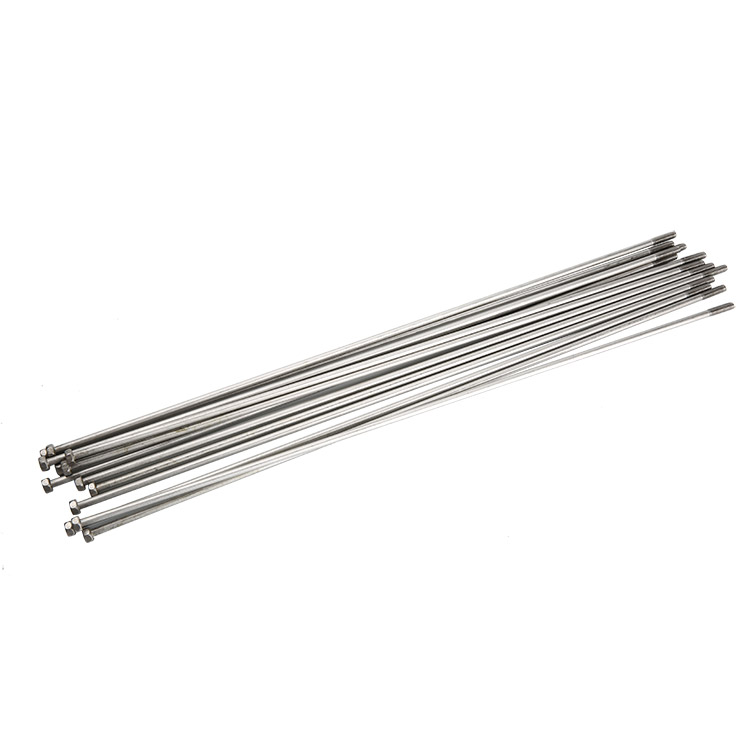
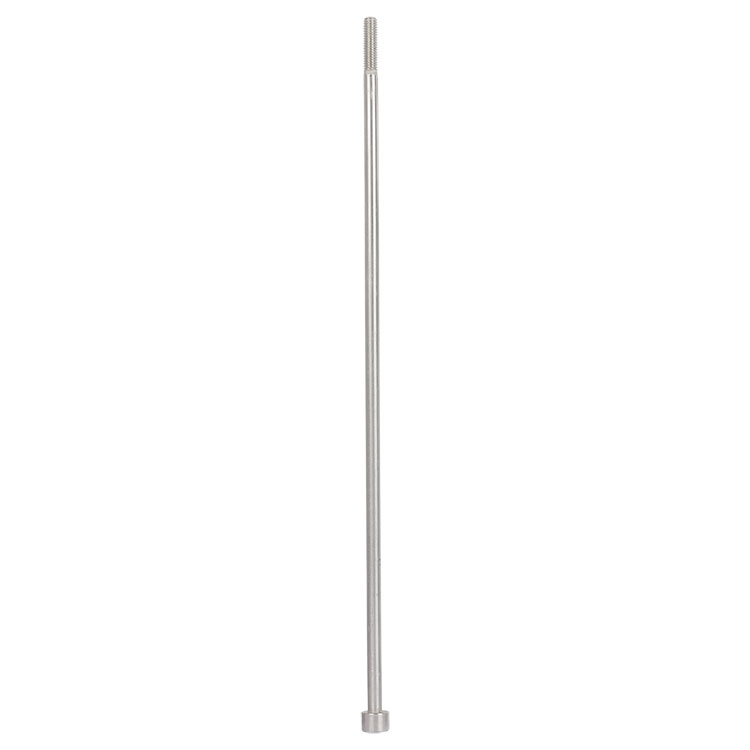
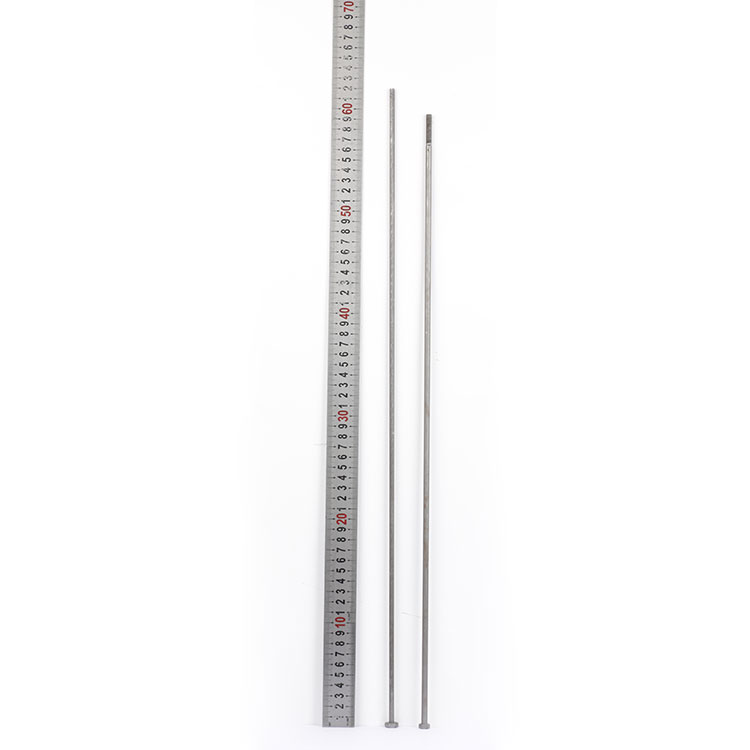
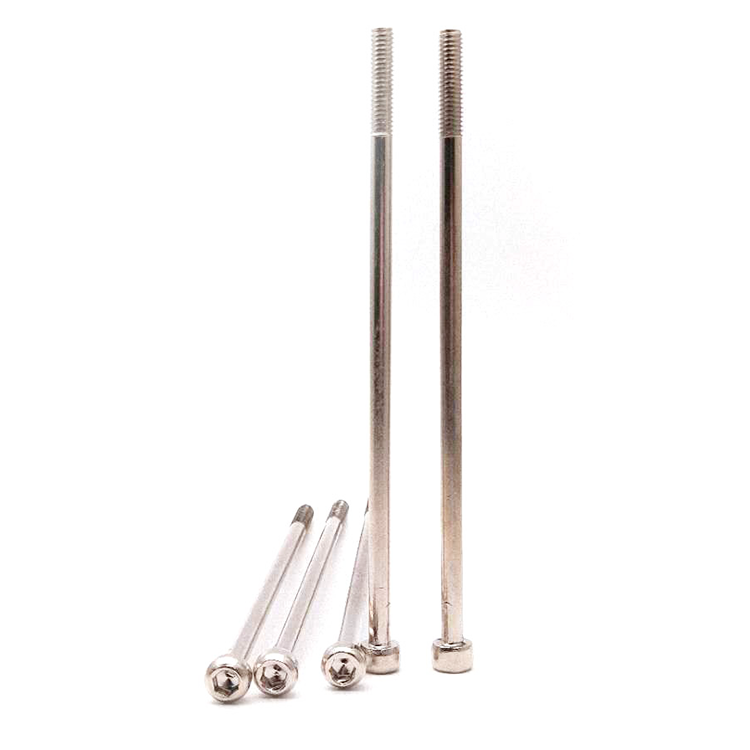
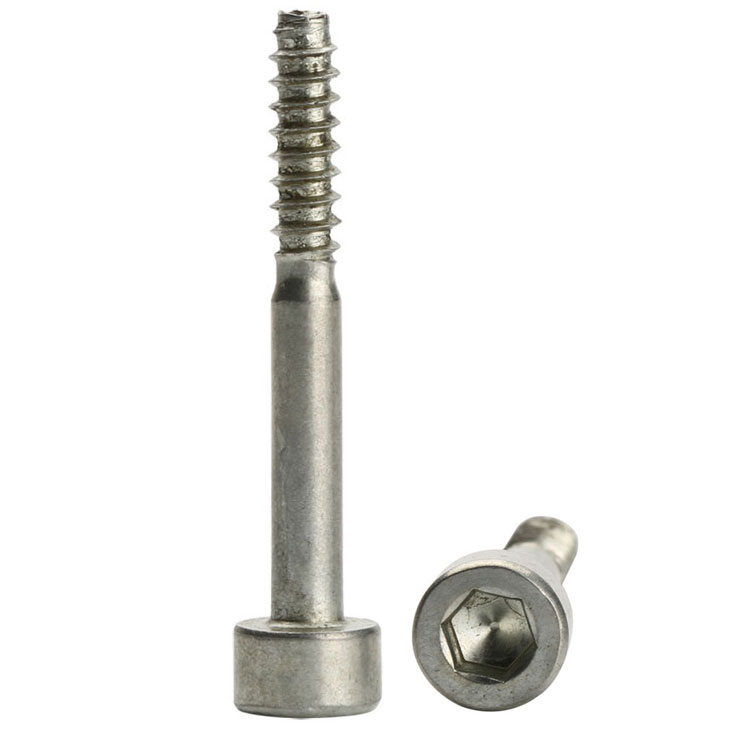
Type:150mm Stainless Steel Screws
Materials:Stainless Steel
Surface treatment:Plain
Head Type:Hexagon head
Drive:External hex (wrench or socket)
Thread:Machine thread, partial
Point:Plain, chamfered
Forming:Single Die Heading
Size:M1 M2 M3 M4 M5 M6 M7 M8 M9 M10
We make 150mm stainless steel screws with a hexagon head, plain passivated, with other lengths made to the drawing. The head across flats, the thread boundary and the grade are agreed at review, and the first article is driven with the production socket.
Watch the factory video·Email sst@szsst88.com
ISO 9001:2015 · Manufacturing since 1998 · 8,678+ customers · 89 countries and regions
Made to order – there is no stock catalogue. Each part is produced to your drawing, and production starts after drawing review and first-article approval.
150mm stainless steel screws are long machine screws with an external hexagon head, made in stainless for joints that see water and need real torque. The part recorded here is plain finish, quoted in the 150 mm length with other lengths made to the drawing.
150 mm length. A length that crosses a thick member or a two-part stack before the thread engages.
Hexagon head. An external hexagon driven with a socket or a wrench, with a bearing face under the head.
Stainless body. No coating, so the thread and the head keep their geometry in wet service.
Plain finish. The alloy is the surface, which matters where the joint is opened or adjusted in the field.
They are used on timber structures, equipment frames, marine fittings, guard rails and any joint where the head is accessible to a socket and the fixing has to clamp rather than simply hold.
A socket head transmits torque through a recess cut into the head; a hexagon head transmits it through the outside of the head. On a long screw that difference matters, because the torque needed to keep a coarse or long thread moving is more than a small recess comfortably handles, and a socket over the outside of the head has far more leverage.
The hexagon also gives a defined bearing face. Under the head there is a flat annulus, and on a joint that clamps timber or a thick frame that face is what spreads the load. On soft or wet material a washer goes under it as a matter of course, and the joint is designed around the washer as much as around the head.
The trade is access. A socket needs room around the head, at least as much as the socket’s outside diameter. Where the fixing sits inside a recess or beside a wall, the socket cannot be used, and that is exactly the situation where a socket head is the right choice instead. So the two head forms are not competitors; they are answers to different access conditions.
The length then decides which of those conditions applies. At 150 mm the screw usually passes through a deep member and is driven by a socket on a long extension, or by a wrench in an open frame. Both are jobs where the external hexagon earns its place and a recess in the head would be the weak point.
Stainless closes the choice. A joint at this length in wet timber or a marine frame cannot rely on a coating inside the thread, and a plain hexagon head keeps the bearing face and the thread as formed. That is why these parts are almost always specified plain.
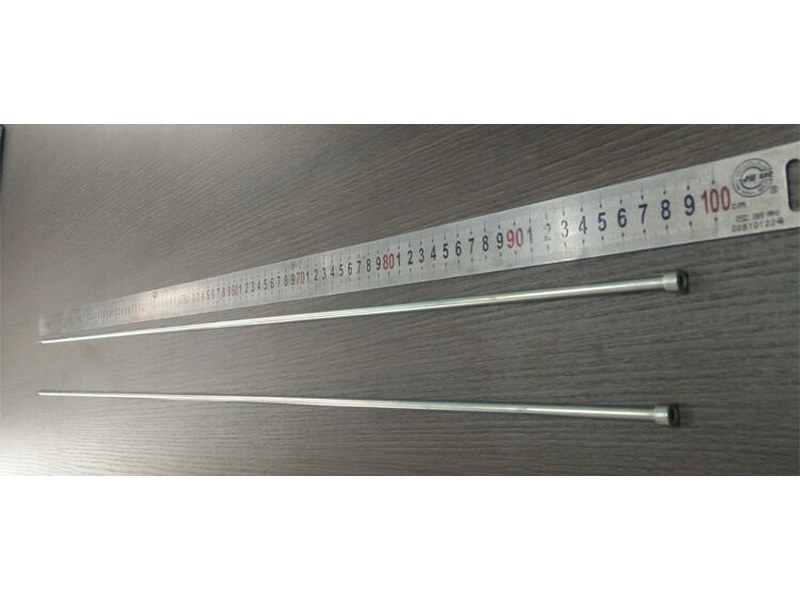
The recorded product is 150 mm, with the other sizes in the same range and lengths made to the drawing. Custom lengths up to 2,000 mm, subject to DFM review after drawing submission. The quotation for 150mm stainless steel screws carries the thread, the overall length, the threaded length, the head across flats and height, and the grade.
| Item | How it is defined | What we control |
|---|---|---|
| Length | 150 mm under the head | Length and its datum |
| Threaded length | Thread from the point upward | Where the thread ends |
| Head | Hexagon, external drive | Across flats, height and bearing face |
| Washer | Mating item, on the drawing | Bearing spread on timber or sheet |
| Thread | Machine thread | Pitch, class and start |
| Grade | Stainless grade per the drawing | Grade on the certificate |
Across flats is the number that selects the socket, and on a long screw it is worth confirming rather than assuming. Two suppliers can both offer an M8 hexagon head and differ in the size of the flats, which means a different socket on site.
The threaded length determines whether the joint clamps on a shank or on threads. On a stack this deep the plain shank should cross the clearance bores, which is the arrangement that locates the parts and keeps the thread for the member that carries the load.
The grade is part of the specification at this length because the joint is usually outdoor. A general-purpose stainless suits sheltered work, and a molybdenum-bearing grade is what holds in salt water or in contact with chlorides.
Four properties decide 150mm stainless steel screws, and each one carries a cost:
| Property | What it gives | What it costs |
|---|---|---|
| Hexagon head | Socket torque and a bearing face | Needs clearance around the head |
| 150 mm length | Crosses a thick member | Long lever arm on any seat error |
| Stainless body | No rust in wet service | Lower strength than a graded steel part |
| Plain finish | No coating to fail in the thread | Galls against similar stainless |
The value is a clamp that can be applied with a wrench in conditions where a recessed drive would either round or not reach. On structural timber and marine frames that is the whole requirement.
The cost is access and material behaviour: the socket needs room, and stainless needs a defined assembly practice where the joint will be opened again.
The trade is a long shank that has to pass through several plates without binding on the way.
The recorded finish is plain. On a hexagon head that matters at the bearing face as well as in the thread: a coating under the head changes the friction of the face and therefore how much of the wrench torque becomes clamp.
| Option | How it protects | Effect on head and thread | Typical use |
|---|---|---|---|
| A2 stainless, passivated | Passive film, no coating | No build; head as formed | General outdoor |
| A4 stainless, passivated | Molybdenum-bearing passive film | No build | Marine and chlorides |
| Electropolished | Levels the surface | Head and thread smoothed | Food and clean equipment |
| Hot-dip galvanised steel | Thick zinc layer | Builds on thread and head; torque rises | Non-coastal timber |
| Zinc flake on steel | Lamellar coating | Low build; edges covered | Sheltered frames |
Where the joint is marine, the grade is the specification: A4 resists the chlorides that will pit an A2 part over years. Where a galvanised steel screw is used instead, the coating builds on the thread over the full length and on the underside of the head, so both the driving torque and the bearing friction change.
A plain stainless head also stays workable. A galvanised head that has weathered can become tight in its socket, while a stainless hexagon unscrews with the same wrench years later, which is what a maintained structure needs.
Three settings where a long fixing is driven by a wrench in wet service:
| Where it sits | The screw ties two timber members where the head is exposed and a socket can reach it. |
| When it goes wrong | The screw does not reach sound timber and the connection works loose under load. |
| Why it happens | The members are thick, the site is wet, and the fixing is checked. |
| What we control | Length and boundary agreed; first article driven in the customer timber. |
| Where it sits | The screw holds hardware where salt water is present daily and a coating would not survive. |
| When it goes wrong | An A2 grade corrodes in chlorides and the fixing becomes the weak point. |
| Why it happens | The structure is coastal, the joint is loaded, and access is by ladder. |
| What we control | A4 grade confirmed; salt-spray sample checked before the batch. |
| Where it sits | The screw clamps a frame member where the head is accessible and the joint is opened for maintenance. |
| When it goes wrong | A socket head in a recess cannot be reached with a key and the fixing is left loose. |
| Why it happens | The frame is open, the fixing is repeated, and the joint is serviced. |
| What we control | Across flats and clearance checked; first article assembled with the socket. |
Four reasons that matter on a long fixing driven from outside the head, each tied to something the drawing or the first article has to prove:
|
Across flats and grade stated
The head across flats and the stainless grade are agreed at review, because the first selects the socket and the second decides the service life in a wet joint. Basis: Flats and grade stated. |
Headed, threaded and passivated
The hexagon head and its bearing face are formed, the thread rolled over the agreed length, and the batch passivated so the head stays as formed. Basis: One route, head as formed. |
|
Flats, bearing face and length measured
The head is measured across flats and checked for bearing face flatness, because a face that is not flat turns the socket torque into a sideload. Basis: Flats and face measured. |
Same socket, same joint
The tooling and the thread boundary are recorded with the drawing revision, so a repeat order takes the same socket and spans the same stack. Basis: Same socket across orders. |
These screws are headed on single-die machines that form the hexagon head and its bearing face, thread rolled over the agreed length and passivated. The first part of every run is measured on head across flats and height, bearing face flatness, overall length, threaded length and thread.


|

|
Forming the hexagon and keeping the bearing face flat are one operation, and on a screw of this length the face is what the joint depends on. A face that is slightly convex turns the wrench torque into bending at the shank, which on 150 mm shows as a head that sits down on one side and a joint that never quite clamps.
Rolling the thread over a set length sets the boundary between shank and thread, and on these parts that boundary is what puts the plain shank across the clearance bores. The rolls run the threaded section in one pass, and the setting is recorded with the job.
Passivation follows and reaches the full thread and the underside of the head. Both are surfaces that stay damp, and both are checked on a sample before the batch is packed.
What decides whether 150mm stainless steel screws pass is the head, the length, the thread and the surface. The inspection agreement covers those, and the criteria come from the drawing.

Flats and boundary on the projector |

Thread checked at both ends |

Hardness against the grade |

Salt-spray testing of head and thread |
Across flats and head height are measured with the bearing face flatness, since the socket and the joint both depend on the head. Overall length is measured under the head and the threaded length separately, and the thread is gauged along its run rather than at one point.
The functional check is a drive with the production socket into the customer joint. That shows whether the socket clears the surrounding geometry, whether the head bears flat, and whether the thread reaches the member it is meant to hold.
A sample from every batch is exposed in salt spray where the joint is outdoor, and the underside of the head and the thread are examined first, being the surfaces that stay wet longest.
Every batch is traceable to the heat of stainless it was made from. The grade and heat number appear on the material certificate supplied with the parts, and the inspection record carries the measured head and length against the drawing.

ISO 9001:2015 |

RoHS test report |

Registered trademark |

Patent: security screw and driver |
With each shipment we supply the material certificate, the inspection record for the dimensions on the drawing including the head across flats and thread boundary, and the passivation records for the batch. The documents carry the drawing revision and the batch number, so a repeat order of 150mm stainless steel screws serves the same joint.
More than 8,678 customers in 89 countries and regions have ordered from Shi Shi Tong; 87% of orders come from repeat customers and 56% through referrals. Most projects follow the same route: drawing review, first-article approval, then batches checked against that sample. On a long hex head the first article is driven with the production socket in the customer joint. Buyers visit during the process to review samples.
|
8,678+
customers served
|
87%
of orders from repeat customers
|
56%
of orders through referrals
|
89
countries and regions shipped to
|
Buyers and quality engineers visit for sample review, process discussion and supplier audits; the visit is arranged around production so the headers and the passivation line can be seen on the day the parts run.

Customer group visit – sample review |

Customer group visit – process discussion |

Customer group visit – factory tour |

Customer visit – project kick-off |

Danish customer – drawing review |

Industry exhibition – meeting customers |
A socket over the outside of the head transmits more torque than a recess, and the hexagon has a defined bearing face for a washer. The trade is that it needs clearance around the head.
A flat washer sized to the head, especially on timber or thin frames. The joint is designed around it, so it belongs on the drawing.
A2 for general outdoor work; A4 where salt water or chlorides are present.
It has to leave a plain shank across the clearance bores. Thread in those bores rubs and carries none of the clamp.
It can gall when dry. A defined assembly practice or a different nut material avoids it.
Thread, overall length under the head, threaded length, head across flats and height, washer size and grade.
How a long hex head project runs from drawing to repeat delivery:
|
1
Send the drawing and the joint section
|
→ |
2
Flats, length and grade agreed
|
→ |
3
First article driven with your socket
|
→ |
4
Batch production and repeat orders
|
Each step is confirmed with you before the next one starts; the drawing revision from the first article is what repeat orders are checked against.
For a quotation, send the drawing with the thread, overall length under the head, threaded length, head across flats and height, washer size and grade.
|
Thread
|
Overall length
|
Threaded length
|
|
Across flats
|
Washer
|
Grade
|
Sending a drawing? The form below does not take attachments. Email the PDF, DXF or STEP file to sst@szsst88.com with the part name and quantity in the subject line – the drawing is reviewed and a quotation follows.

 +86 13143444311
 sst@szsst88.com