Tel:
+86 13143444311
Email:sst@szsst88.com
Fax:+0086-755-27322278
Address:Building 9, First Industrial Zone, Tantou Industrial City, Songgang Street, Baoan District, Shenzhen 518105, Guangdong, China
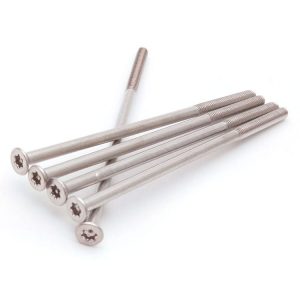
Type:Stainless Steel Screws, SS Screw Manufacturers
Materials:Stainless Steel
Surface treatment:Plain
Head Type:Pan head
Drive:Phillips cross recess (PH)
Thread:Self-tapping (spaced thread)
Point:Sharp, tapered
Forming:Single Die Heading
Size:M1 M2 M3 M4 M5 M6 M7 M8 M9 M10
Number:867
We make stainless steel screws in pan head Phillips self-tapping form, quoting them from M1 to M10 with lengths made to the drawing. The alloy, the thread and the point come from your joint, passivation is controlled on the batch, and the first article is driven into your own material.
Watch the factory video·Email sst@szsst88.com
ISO 9001:2015 · Manufacturing since 1998 · 8,678+ customers · 89 countries and regions
Made to order – there is no stock catalogue. Each part is produced to your drawing, and production starts after drawing review and first-article approval.
Stainless steel screws are fasteners cut or formed from a corrosion-resistant steel alloy, supplied unpainted and finished plain. The part recorded here is a pan head Phillips self-tapping screw in stainless steel, quoted from M1 to M10 with lengths made to the drawing.
The alloy, not a coating. The surface is stainless because of chromium in the steel, so a scratch does not expose a base metal that will rust.
Self-tapping thread. A spaced thread that cuts or forms its own path in sheet, plastic or a pre-drilled hole.
Pan head, Phillips recess. A rounded head on the surface driven from the top with a cross-tip bit.
Plain finish. No plating, so passivation is the treatment that matters and there is no layer to fill the recess.
These are the screws used on sheet metal covers, outdoor and wet-area panels, food and medical equipment and any joint where a rusting steel screw would stain the part around it. Stainless steel screws are chosen for the material first; the head, the thread and the finish are decided afterwards.
On a carbon steel screw the specification is the strength grade and the plating. On a stainless steel screw the specification is the alloy, because the alloy decides corrosion resistance, strength and how the part behaves when it is driven. Two screws that look identical and are both “stainless” can differ enough that one survives a wash-down room and the other stains within a season.
The practical split is between the common austenitic grades and the harder, magnetic ones. Austenitic grades are softer, form beautifully, weld without losing corrosion resistance and are the default for cold-headed screws. The hardenable grades allow higher strength from cold work, are magnetic, and give a sharper self-tapping action, but they resist corrosion less well and are the wrong answer for a damp joint.
The grade also decides the fastener’s strength. A stainless steel screw of a given diameter is usually weaker in tension than a plated carbon screw of the same size, so a design copied from a zinc-plated part may need a larger diameter or a different grade rather than a different coating.
The environment decides between grades. Indoors and dry, the general-purpose grade is enough. Coastal air, chlorides, cleaning chemicals and food contact push the choice to the molybdenum-bearing grade. Where the joint mixes stainless with aluminium or plain steel, the couple itself becomes a corrosion issue, and the answer is an isolating washer rather than a higher grade.
Because there is no coating, the surface finish is the corrosion resistance. Passivation removes free iron left by machining and lets the chromium oxide layer rebuild evenly, which is why the parts are passivated after heading and thread rolling rather than before.
The recorded range is M1 to M10, with lengths made to the drawing. Custom lengths up to 2,000 mm are subject to the drawing submission and DFM review. Quotations for stainless steel screws carry the alloy, the head diameter and height, the PH size, the thread type and pitch, the point form and the overall length.
| Item | How it is defined | What we control |
|---|---|---|
| Alloy | Austenitic or hardenable grade | Grade stated on the certificate |
| Head | Pan head, on the surface | Diameter, height and bearing face |
| Recess | Phillips, PH size per diameter | Arm depth and floor thickness |
| Thread | Self-tapping or machine | Pitch, spacing and length |
| Point | Sharp tapered or blunt | Point angle and length |
| Finish | Passivated, plain | No free iron; oxide layer rebuilt |
For a self-tapping screw the point and the thread are one decision. A sharp tapered point starts the cut in sheet and in plastic; a blunt point is used where the hole is pre-formed and the screw has to form its own thread without cutting through the part behind.
Thread pitch follows the material being joined. A coarse, widely spaced thread displaces more material per turn, which is right for thin sheet and for plastics where the material can flow; a finer thread suits a pre-tapped or thicker section. On stainless steel screws the choice matters more than on steel, because the material work-hardens as it is displaced and a thread that asks too much per turn will stall.
Length is measured under the head on a countersunk part and over the head on a pan head, so the datum has to match the drawing. Where the screw is used in a blind hole, the thread length and the point length both count against the depth available.
Four properties decide a stainless steel screw, and each one carries a cost:
| Property | What it gives | What it costs |
|---|---|---|
| No coating | A scratch does not start rust | No sacrificial protection at a crevice |
| Austenitic grades | Form well; weld without loss | Lower strength than a plated steel screw |
| Self-tapping thread | One step in sheet and plastic | Work-hardening can stall the drive |
| Passivated surface | Even oxide layer after forming | A step that has to be controlled, not assumed |
The value is that the fixing stops being the thing that fails. On a wet panel a plated steel screw rusts first and stains the panel around it; a stainless steel screw outlasts the part it holds. That is worth a higher unit price on anything that is seen or serviced.
The cost is that stainless is not automatically stronger or universally corrosion-proof. It is a family of alloys, and the difference between them is a design decision that has to be written down.
The recorded finish is plain, which on a stainless steel screw means passivated and free of plating. Passivation is not cosmetic: it removes embedded iron and lets the chromium oxide layer re-form uniformly across the head, the recess and the cut thread.
| Option | What it does | Effect on head and recess | Typical use |
|---|---|---|---|
| Passivated, plain | Removes free iron; rebuilds oxide | No build; recess as formed | Default for all stainless |
| Electropolished | Levels the surface as well | Bright finish; edges rounded | Medical and food equipment |
| Black oxide or black coating | Colours the surface | Thin build; recess checked | Dark equipment, low reflection |
| Vibratory polished | Mechanical smoothing | Edges softened; tone even | Decorative visible fixings |
| Plated stainless | Adds a barrier or a colour | Build measurable; recess re-gauged | Where colour must match steel |
Passivation is checked on the batch rather than assumed from the material certificate. A part that was headed on tooling that had previously run carbon steel can carry iron particles into the surface, and those particles rust in a way that looks like the stainless itself failed.
Where the joint is seen and the tone matters, an electropolished or vibratory finish gives a more even appearance than plain passivation, because it removes the fine tooling marks that hold water and catch light differently across a row of heads.
Three settings where the material, not the coating, is the requirement:
| Where it sits | The screw closes a cover where the joint is cleaned with water or chemicals and staining is not acceptable. |
| When it goes wrong | A plated screw rusts at the head and the stain runs down the panel. |
| Why it happens | The joint is washed, the head is on the surface, and it is opened for service. |
| What we control | Grade confirmed on the certificate; passivation checked before packing. |
| Where it sits | The screw holds a cover on equipment that sits in salt air for the life of the product. |
| When it goes wrong | A general-purpose grade shows surface rust at the crevice within a season. |
| Why it happens | The joint is exposed, the panel is painted or powder coated, and the fixing is visible. |
| What we control | Molybdenum-bearing grade specified; first article exposed in a salt-spray test. |
| Where it sits | The screw fixes a panel or a bracket where the surface must be cleanable and must not shed a coating. |
| When it goes wrong | A plated screw loses its layer at a cleaning cycle and the bare metal corrodes. |
| Why it happens | The equipment is cleaned daily, the joint is accessible, and hygiene is audited. |
| What we control | Electropolished or passivated surface; first article inspected under magnification. |
Four reasons that matter on an unpainted part, each tied to something the drawing or the certificate has to prove:
|
Grade written on the drawing
The alloy is agreed before quoting, because 304 and 316 behave differently in a wet or coastal joint and the certificate is the only place that difference is visible. Basis: Grade named and certified. |
Headed, threaded and passivated as one job
The pan head and cross are formed in one stroke, the thread rolled, and the batch passivated after forming, because a coating cannot hide a bad surface here. Basis: One route, then passivation. |
|
Point and thread proved in sheet
The point and the thread spacing are proved by driving into the customer material, because stainless work-hardens and a screw that stalls on the line is a thread design problem, not a torque setting. Basis: Driven into your material first. |
Same heat, same certificate
Batches are kept traceable to the heat number, so a repeat order is made from a comparable alloy and the passivation result does not drift between runs. Basis: Heat number traced forwards. |
These screws are headed on single-die machines that form the pan head and cut the cross recess in one stroke, thread rolled on the stainless shank, then passivated as a batch. The first part of every run is measured on head diameter and height, recess depth, thread and point, and driven into the customer material before the batch is released.


|

|
Stainless steel is harder to head than carbon steel. It work-hardens as it deforms, so the head is formed in one press stroke rather than in stages, and the tooling is kept sharp because a dull punch raises the hardness of the rim instead of shaping it. A head formed this way is bright and slightly harder at the surface, which is one reason stainless steel screws resist recess wear better than plated steel.
Thread rolling follows the same logic. The blank diameter is set so the rolls displace material into the thread form rather than squeezing it, and the thread is rolled rather than cut because a rolled thread keeps the grain flow continuous and leaves a compressive stress at the root. On a self-tapping screw that combination is what lets the thread cut into sheet without cracking at the root.
Passivation closes the process. The parts are cleaned, immersed in an acid bath that removes free iron from the surface, rinsed and dried, and the oxide layer rebuilds in air over the following hours. A batch that is packed too soon is a batch that can show rust in transit, so the interval is controlled rather than left to the calendar.
What decides whether stainless steel screws pass is the alloy, the head, the thread and the surface. The inspection agreement covers those, and the criteria come from the drawing and the certificate.

Head and recess on the projector |

Thread and point checked |

Hardness against the alloy spec |

Salt-spray testing of the passivated surface |
The alloy is confirmed against the material certificate for every heat, and the hardness is measured on a sample from each batch, because cold work from heading and rolling raises hardness and a part that is too hard will not tap cleanly. The recess is proved with the production bit and the thread with gauges.
Corrosion is checked by exposure rather than by appearance. A sample from every batch goes into the salt-spray chamber, and the parts are examined for rust at the recess and at the thread root, which are the two places a passivation problem shows first.
Every batch is traceable to the heat of stainless it was made from. The grade and heat number appear on the material certificate supplied with the parts, together with the mechanical properties of the heat, and the inspection records follow the criteria agreed on the drawing.

ISO 9001:2015 |

RoHS test report |

Registered trademark |

Patent: security screw and driver |
With each shipment we supply the material certificate, the inspection record for the dimensions on the drawing, and the passivation and salt-spray records for the batch. The documents carry the drawing revision and the batch number, so a repeat order can be compared with the original rather than assumed to match it.
More than 8,678 customers in 89 countries and regions have ordered from Shi Shi Tong; 87% of orders come from repeat customers and 56% through referrals. Most projects follow the same route: drawing review, first-article approval, then batches checked against that sample. On stainless steel screws the first article is driven into the customer material, because work-hardening and thread engagement only show up in the real sheet. Buyers visit during the process to review samples.
|
8,678+
customers served
|
87%
of orders from repeat customers
|
56%
of orders through referrals
|
89
countries and regions shipped to
|
Buyers and quality engineers visit for sample review, process discussion and supplier audits; the visit is arranged around production so the headers and the passivation line can be seen on the day the parts run.

Customer group visit – sample review |

Customer group visit – process discussion |

Customer group visit – factory tour |

Customer visit – project kick-off |

Danish customer – drawing review |

Industry exhibition – meeting customers |
Dry and indoor joints are usually fine in the general-purpose grade. Coastal air, chlorides, food contact and wash-down chemicals push the choice to the molybdenum-bearing grade.
They can show rust at a crevice, where free iron from tooling was left on the surface, or where a dissimilar metal is in contact. Passivation and isolation at the joint are what prevent it.
Usually not in tension at the same diameter. A design copied from a plated carbon part may need a larger diameter or a different grade.
Stainless work-hardens as it is displaced. A thread that asks too much per turn, or a hole that is too small, stalls the drive before the head seats.
An acid treatment that removes free iron from the surface and lets the chromium oxide layer rebuild evenly. It is not a coating and adds no measurable thickness.
The alloy, head diameter and height, PH size, thread type and pitch, point form and overall length.
How a stainless screw project runs from drawing to repeat delivery:
|
1
Send the drawing and the environment
|
→ |
2
Grade, thread and point agreed
|
→ |
3
First article driven into your material
|
→ |
4
Batch production and repeat orders
|
Each step is confirmed with you before the next one starts; the drawing revision from the first article is what repeat orders are checked against.
For a quotation, send the drawing with the alloy, head diameter and height, PH size, thread type and pitch, point form and overall length.
|
Alloy grade
|
Head diameter
|
PH size
|
|
Thread pitch
|
Point form
|
Length
|
Sending a drawing? The form below does not take attachments. Email the PDF, DXF or STEP file to sst@szsst88.com with the part name and quantity in the subject line – the drawing is reviewed and a quotation follows.

 +86 13143444311
 sst@szsst88.com