
Tel:
+86 13143444311
Email:sst@szsst88.com
Fax:+0086-755-27322278
Address:Building 9, First Industrial Zone, Tantou Industrial City, Songgang Street, Baoan District, Shenzhen 518105, Guangdong, China
A captive panel screw stays with its panel during service; a SEMS screw keeps one or more washers assembled to the screw. These are different functions. A retained washer does not, by itself, prevent the complete fastener from falling out of an open cover. Select the architecture by the maintenance task, then specify travel, panel thickness and the interfaces that actually retain the parts.
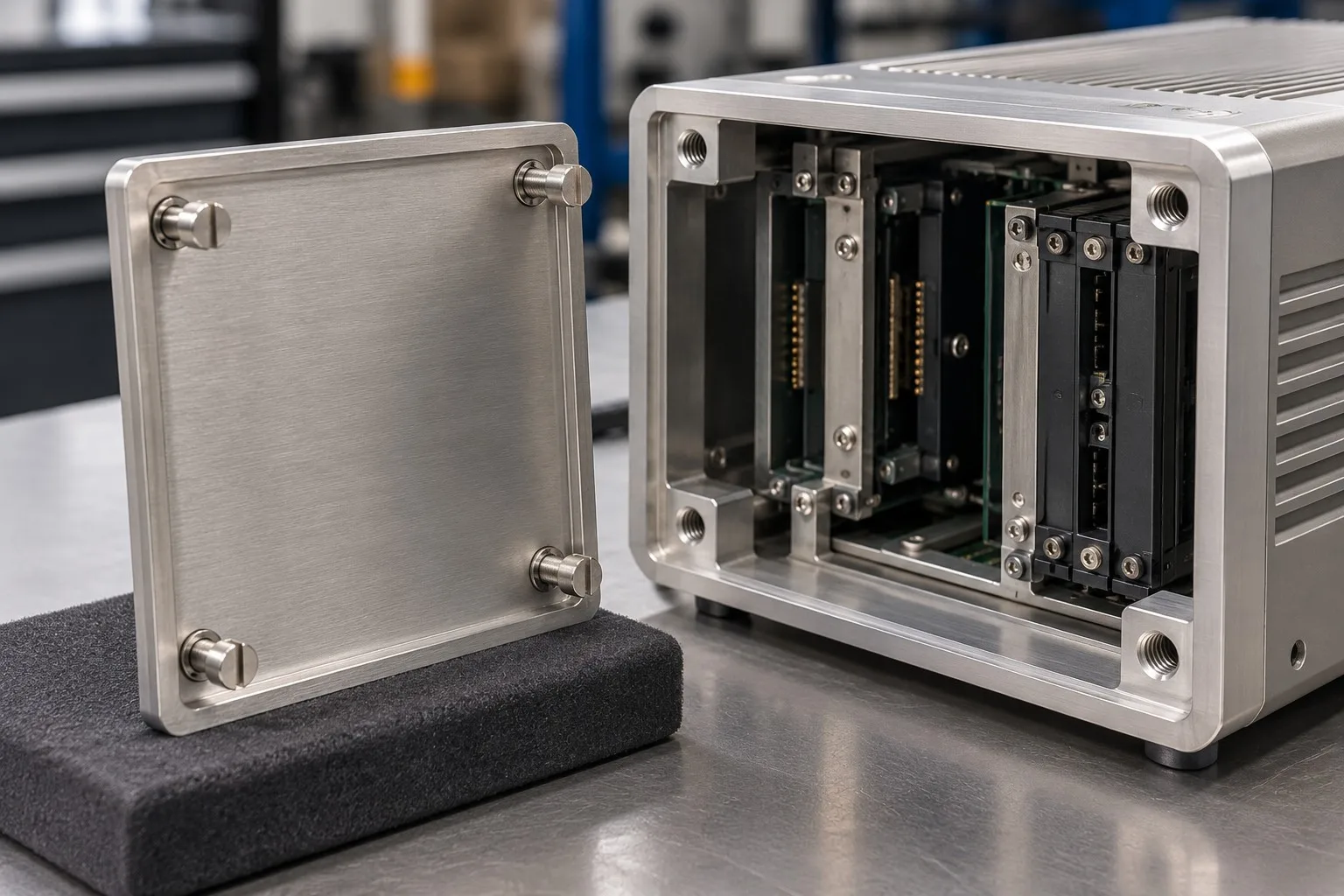
In an electronics enclosure, a dropped screw can disappear inside the cabinet. In a production station, a loose washer can be omitted during repeated assembly. Both problems involve lost hardware, but they require different design checks. A panel-retention feature controls the screw-to-cover relationship; a SEMS washer controls the washer-to-screw relationship.
| Requirement | Captive panel design | SEMS assembly |
|---|---|---|
| Screw remains with an open cover | Designed into the panel-retention interface | Not assured by washer retention alone |
| Washer remains with the screw | Depends on the chosen construction | Central function of the preassembled washer |
| Thread can leave its mating hole | Retraction travel must permit it | Normally possible, but screw may leave the panel |
| Vibration resistance | Requires separate joint validation | Depends on washer type and joint; not automatic |
The two functions can coexist in a custom assembly, but combining them adds interfaces and tolerance requirements. Do not approve a drawing simply because the description contains the word “captive.” Mark the component to which each item must remain attached.
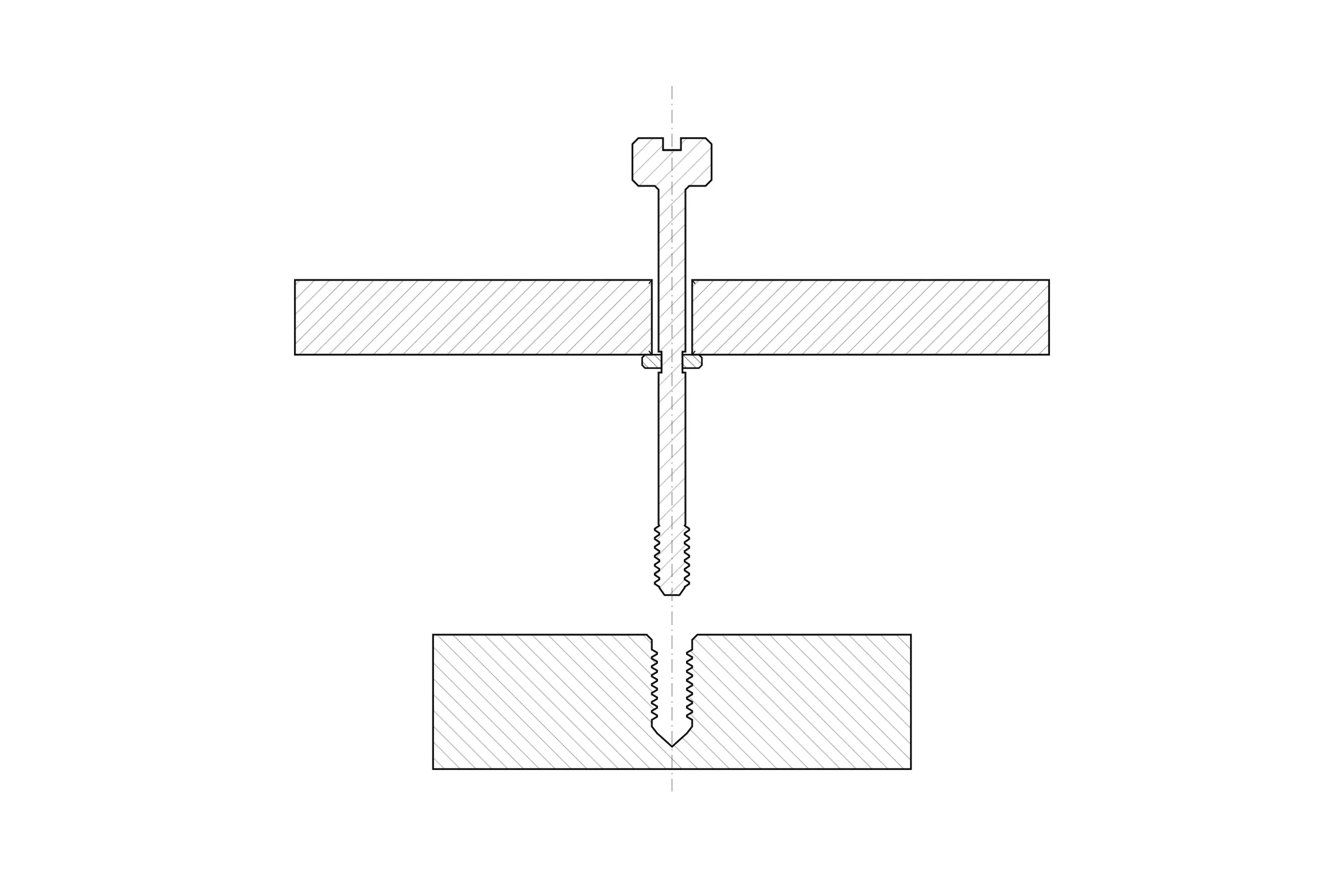
For a reduced-neck design, compare the neck diameter with the retaining opening, and compare that opening with the feature that prevents escape. Include tolerances, finish thickness and any installation deformation. For a ferrule or other retaining assembly, use that architecture’s installation and retention dimensions instead; a neck-and-washer calculation cannot represent every captive screw.
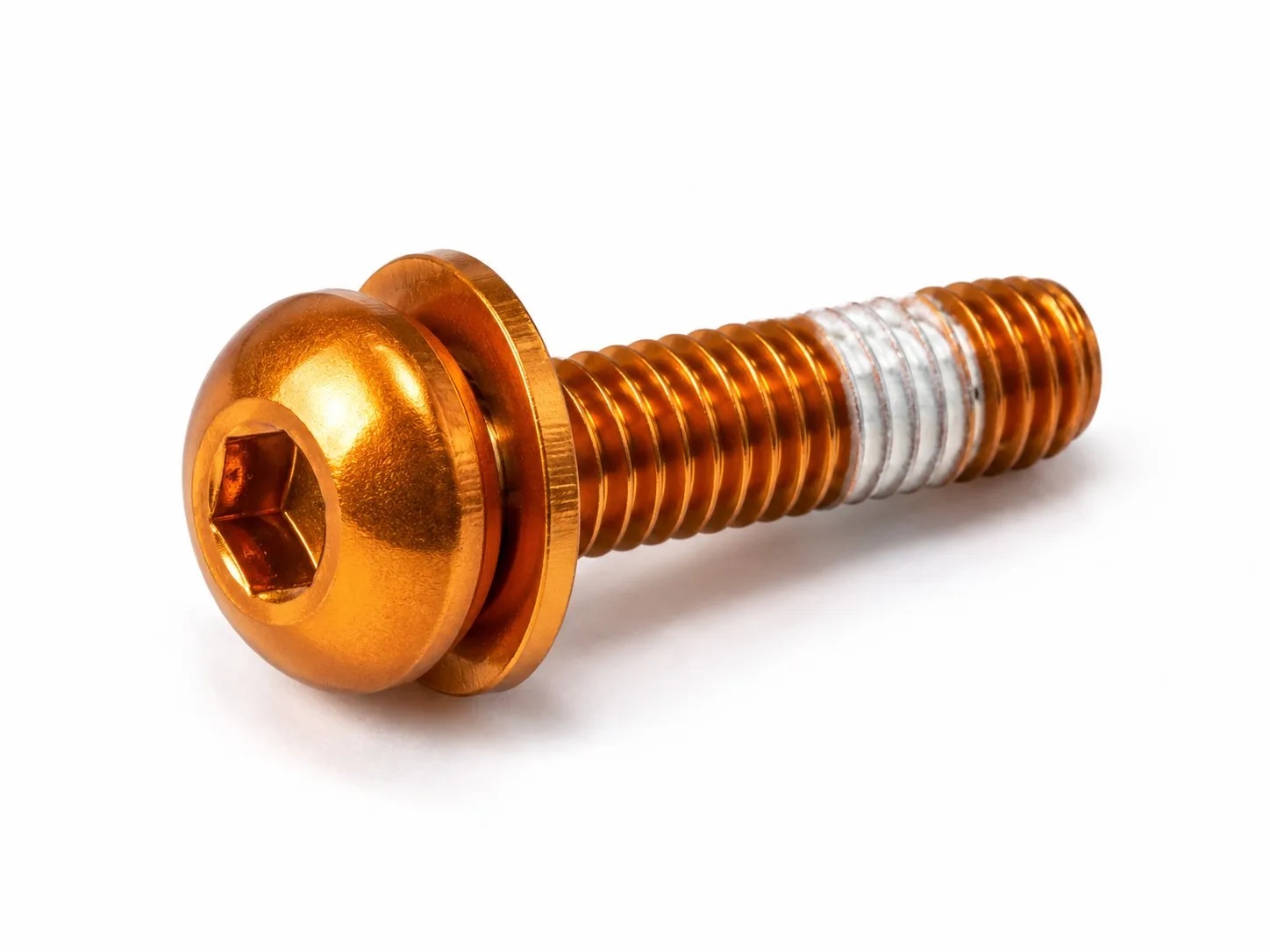
In a SEMS assembly, the washer is commonly installed before thread rolling so that the finished thread prevents its escape. Confirm washer bore, retained shank clearance, washer thickness and under-head fillet clearance. The washer must sit on its intended bearing surface without riding up on a radius or jamming against incomplete threads. See our socket-head SEMS construction for a product-level reference.
A cover can remain attached unintentionally if the screw cannot retract far enough to clear the mating thread. Measure travel from the seated position to the captive stop, along the screw axis. Compare it with the axial withdrawal needed to free the screw, including the actual threaded tip and the assembled separation geometry.
| Specified input | Calculation | Result |
|---|---|---|
| Available travel: 8.0 ± 0.3 mm | Minimum travel = 8.0 − 0.3 | 7.7 mm |
| Required withdrawal: 6.0 ± 0.2 mm | Maximum withdrawal = 6.0 + 0.2 | 6.2 mm |
| Additional handling clearance: 1.0 mm | 7.7 − 6.2 − 1.0 | 0.5 mm remaining margin |
These stated dimensions show how to calculate the margin; they are not a standard captive-screw specification. A positive axial result still does not prove that the tip clears during a hinged or angled opening. Check the cover’s actual removal path, seal compression and nearby connectors. A longer screw can improve engagement while making the service-clearance problem worse.
For a hinged control cabinet, prioritize screw retention at every permitted cover angle and access for the driver. For an instrument cover removed on a bench, consider whether the screw tips project below the cover and can scratch the surface. For a high-volume bracket assembly, washer orientation, feeding and seated bearing contact may matter more than captive travel.
A spring washer, flat washer and toothed washer perform different functions. The presence of a washer does not establish a specified clamp load, electrical bonding performance or resistance to transverse vibration. Define those requirements separately and evaluate the assembled joint under its service conditions.
| Check | What to record | Why it matters |
|---|---|---|
| Captive retention | Panel thickness, retained position, agreed pull or handling test | Confirms the screw stays with the intended component |
| Free motion | Rotation and axial travel before and after finish | Finds binding at the neck or retaining ring |
| SEMS washer | Washer identity, orientation, seating and retention | Prevents a correct screw with an incorrect washer stack |
| Service cycling | Specified opening cycles and condition afterward | Checks wear and loss of retention |
| Thread engagement | Full-thread overlap in the seated assembly | Separates retention from load-bearing engagement |
Use actual panel samples at the limiting thicknesses where practical. Record the fastener drawing revision, finish condition and mating part revision with the results. Agreement on the test method matters: a hand shake of a loose part is not equivalent to a defined axial retention test, and a screw that passes once may behave differently after repeated service.
In fastener use, SEMS refers to a screw supplied with one or more permanently retained washers. Specify the washer type and stack rather than relying on the abbreviation alone.
They keep the screw attached to a component after the mating thread has been disengaged. This reduces loose hardware during servicing when the retaining design and installation are suitable.
A regular screw can normally separate completely from the parts when removed. A captive screw has a retaining interface that limits separation from a selected panel or component.
Designs include reduced-neck arrangements, retaining washers or rings, and ferrule-based assemblies. Some include springs for retraction. Selection depends on panel installation, required travel and service access.
Only if the complete assembly independently meets the panel-retention requirement. A washer that stays on a screw does not necessarily keep that screw in the panel.
Technical reference: NBK guidance on screw-loss prevention. Product-specific installation dimensions should be checked against the selected construction.
Send the panel drawing, screw drawing, panel thickness range, mating thread and required service travel. SHISHITONG can review custom screw geometry and the proposed washer or retention interface together.
sst@szsst88.com Attach your drawing in your email app.
2026.10.24
kalyn

 +86 13143444311
 sst@szsst88.com




