
Tel:
+86 13143444311
Email:sst@szsst88.com
Fax:+0086-755-27322278
Address:Building 9, First Industrial Zone, Tantou Industrial City, Songgang Street, Baoan District, Shenzhen 518105, Guangdong, China
Titanium screw galling can cause a rising installation torque without producing the intended clamp load. Adhesive wear at sliding thread contacts can progress to seizure. The investigation must consider both mating surfaces, their condition and the installation process—not just the screw alloy. A stronger grade does not automatically solve a friction problem.
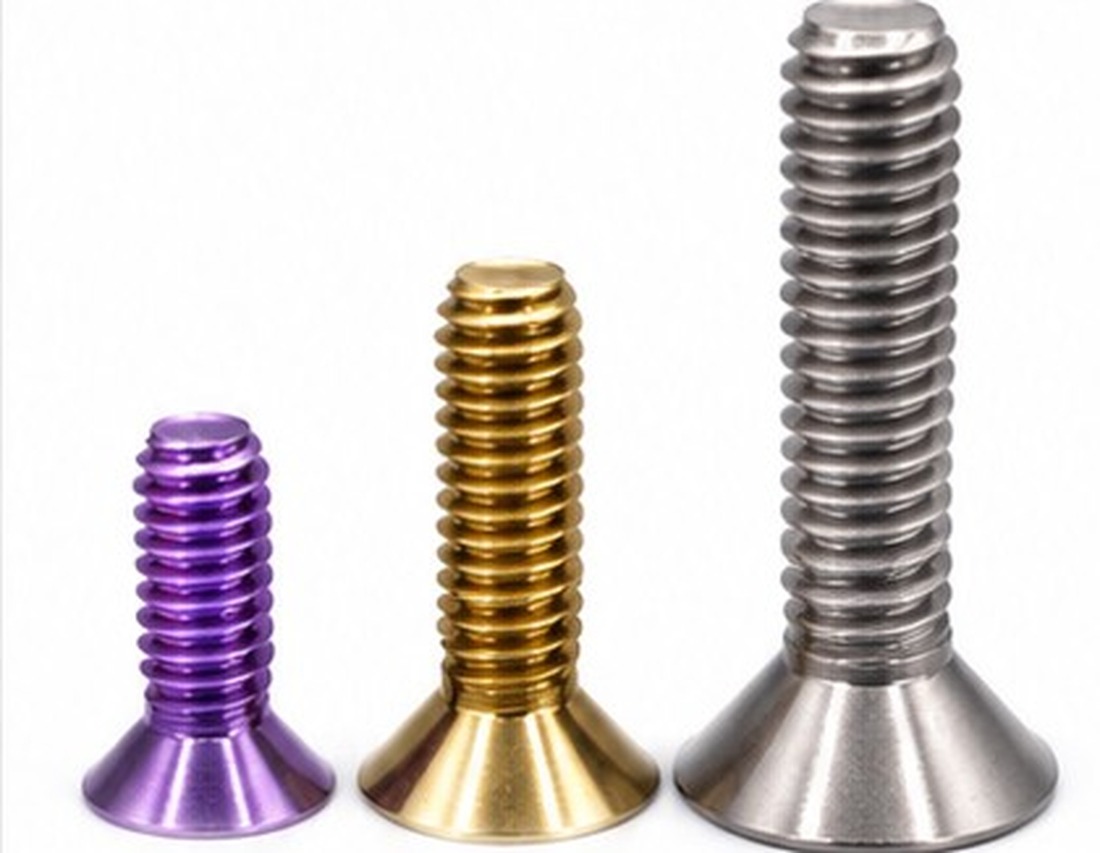
Stop an assembly that tightens unexpectedly before the head seats. Continuing with a stronger driver can damage the recess, twist the screw or tear the mating thread. Preserve both components for inspection, together with the coating, lubricant, tool and lot information.
| Observed symptom | Possible mechanism | Useful check |
|---|---|---|
| Resistance from the first turn | Misalignment, wrong pitch, contamination or damage | Confirm thread identity and hand-start alignment |
| Resistance increases during sliding | Adhesive wear or local interference | Inspect transferred material and damaged flanks |
| Hard stop at repeatable depth | Bottoming or incomplete internal thread | Compare penetration with usable hole depth |
| Torque reaches target but joint remains loose | Friction, bottoming or another obstruction | Verify seating and actual clamp response |
Surface damage can overlap: a cross-threaded part may subsequently gall. A thread gauge can help assess geometry, but it does not reproduce the friction and pressure of the loaded assembly. Bossard’s galling guidance identifies titanium among materials affected by this mechanism and discusses surface treatment and lubrication as mitigation options.
Record the screw grade, condition and finish alongside the nut or tapped-part material. “Titanium screw into metal” is too vague for process validation. Changes in hardness, surface finish, thread fit and cleanliness can alter sliding behaviour. Dissimilar materials may help in some pairings, but corrosion compatibility and service requirements still need review.
For a lightweight instrument housing, the internal thread may be the limiting component. For a repeatedly serviced cover, wear over several removal cycles can matter more than a single installation result. An insert or a different finish may be considered, but each change creates a new interface that must be checked. Do not infer performance from colour or from the titanium designation alone.
The simplified screening relation T = KFd links applied torque T, nominal diameter d, preload F and an empirical nut factor K. K is not a material constant or a direct coefficient of friction. It represents the combined effect of the tested thread and bearing interfaces.
| Stated calculation inputs | Assumed K | Calculated preload F |
|---|---|---|
| T = 2.0 N·m; d = 5.0 mm | 0.20 | 2,000 N |
| Same torque and diameter | 0.15 | 2,667 N |
| Same torque and diameter | 0.12 | 3,333 N |
These assumed K values demonstrate sensitivity only; they are not recommended factors for titanium. At unchanged torque, the calculation gives 66.7% more preload when K falls from 0.20 to 0.12. This is why applying lubricant and retaining a dry-assembly torque can overload the joint. Establish the torque–clamp relationship with the actual mating parts, finish and lubricant before releasing a production setting.
| Control | Record in the trial |
|---|---|
| Surface condition | Grade, heat treatment, finish, cleanliness and visible damage |
| Lubricant or coating | Exact product, application amount and location; service compatibility |
| Driver setup | Bit condition, alignment, speed and calibrated torque range |
| Assembly result | Seating behaviour, torque trace and clamp load where required |
| Disassembly | Removal behaviour, flank damage and permitted reuse cycles |
Choose lubricant with the equipment requirements in mind. Temperature, contamination, vacuum, cleaning chemicals and electrical contact can rule out an otherwise useful product. There is no universal “best lubricant for titanium bolts.” The approved lubricant becomes part of the process specification, and a substitution requires review.
Control installation speed and alignment in the trial. Changing multiple variables simultaneously can hide the cause of improvement. Test representative parts from the proposed production route and inspect both the male and female threads after disassembly. Retain failed samples so adhesive transfer is not confused with ordinary finish marks.
Release a combination of fastener, mating part, surface condition and installation method. A purchase description containing only grade, thread size and torque omits the variables that may have prevented seizure during development. Identify whether screws may be reused and what damage requires replacement.
Material records support alloy identity and specified properties; they do not certify an assembled joint against galling. Our published material sample test reports identify the tested samples and scope. For a new custom titanium screw, request the records and assembly validation appropriate to that order rather than treating a previous sample report as a guarantee for every part.
Susceptibility depends on the material pair and contact conditions. Titanium, stainless steel and aluminium can all experience galling; alloy name alone does not predict a specific assembly result.
Select a product compatible with service temperature, contamination limits, mating materials and the validated torque process. There is no single lubricant appropriate for all titanium joints.
Strength depends on grade, condition, geometry and the applicable specification. Strength and resistance to adhesive thread damage are separate questions.
Review galvanic corrosion when dissimilar metals contact in an electrolyte, and evaluate sliding wear separately. A corrosion-compatible combination is not automatically galling-resistant.
Do not return damaged threads to service without an approved disposition. Inspect the mating thread as well; replacing only the screw may leave the original cause in place.
Send the titanium grade, mating-thread material, finish, lubricant, torque process and photographs of both thread surfaces. Include the drawing and intended service cycles so the geometry and assembly conditions can be reviewed together.
sst@szsst88.com Attach your drawing in your email app.
2026.10.27
kalyn

 +86 13143444311
 sst@szsst88.com




